

Feds see shortage in 2018 Lake Mead water to Arizona, Nevada
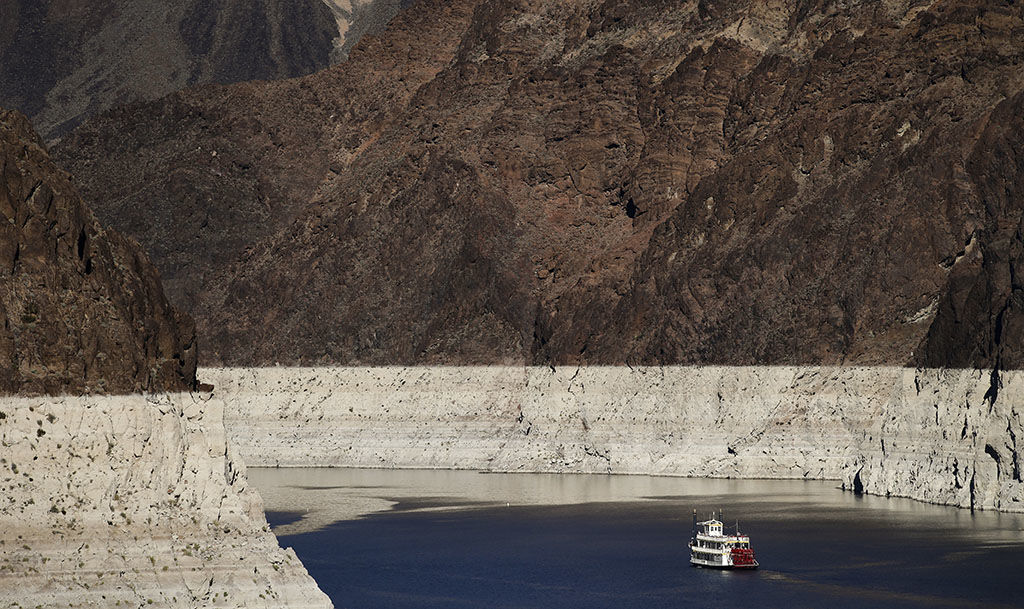
Amid punishing drought, federal water managers projected Tuesday that – by a very narrow margin- the crucial Lake Mead reservoir on the Colorado River won’t have enough water to make full deliveries to Nevada and Arizona in 2018.
A 24-month projection, issued on a day the largest reservoir on the closely controlled and monitored river was 36 percent full, showed the surface level of the lake behind Hoover Dam is expected to clear the trigger point this year to avoid a shortage declaration in 2017.
The margin is expected to be just under 4 feet, or almost 228 billion gallons of water.
For 2018, the U.S. Bureau of Reclamation projects missing the mark by under a foot, which would trigger a shortage declaration, cuts to Arizona’s water allocation by 11.4 percent, and cuts to Nevada’s water flow by 4.3 percent.
That would be enough water to serve more than 600,000 homes a year in Arizona, and about 26,000 in Nevada.
Conservationists said a close call should be a wake-up to water-users to be careful.
“We avoided a shortage by the skin of our teeth,” said Bart Miller, of Western Resource Advocates. “If no action is taken … a shortage declaration is not far off. We need to step up water conservation, reuse and innovative water management.”
Public water managers in Nevada, California and Arizona said they hoped the shortage projection wasn’t a certainty.
Most pointed to swaps and storage programs that have propped up the lake level by reducing the amount of water drawn for use elsewhere.
“It’s good to know we won’t be in shortage in 2017. We’re hopeful we can again avoid shortage in 2018,” said Chuck Cullom, Colorado River programs chief for the Central Arizona Project.
If water cuts begin, the agency, based in Phoenix, would drain underground storage supplies and cut water supplies to farmers by half. Tribal and municipal customers wouldn’t immediately be affected, Cullom said.
The Colorado River provides crucial water supplies to about 40 million residents, farms, businesses and tribal entities in seven Southwest states, also including Colorado, New Mexico, Utah and Wyoming.
– By Ken Ritter, AP


Federal judge green-lights excessive force trial against Fort Collins officers
Michael Karlik
michael.karlik@coloradopolitics.com
Updated 6 hours ago
A federal judge concluded last week that a jury will need to resolve whether two Fort Collins police officers violated a man’s constitutional rights by using excessive force after he refused to accept a citation. In a Jan. 21 order,...
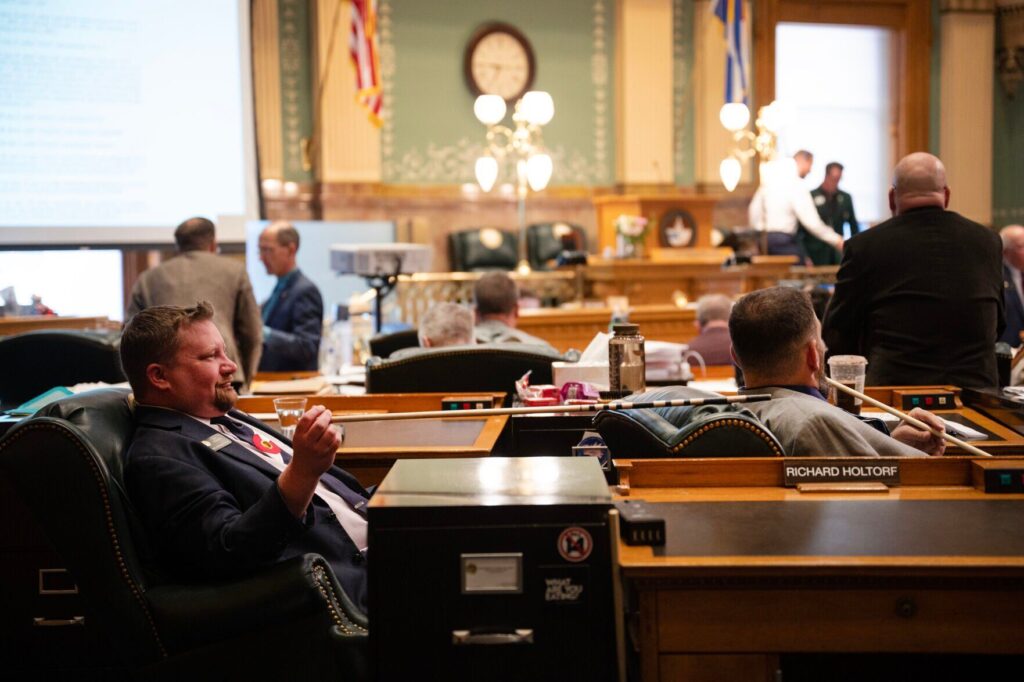
Colorado House launches ethics review of Rep. Ron Weinberg filed by fellow GOP legislator
Marianne Goodland
marianne.goodland@coloradopolitics.com
Updated 8 hours ago
The Colorado House will convene an ethics committee to review a complaint filed by Rep. Brandi Bradley, R-Roxborough Park, against fellow Republican Rep. Ron Weinberg, R-Loveland. It will be the first time since 2012 that the House has formed an...

Colorado lawmakers reverse course, OKs $2.4M funding for additional prison beds
Marissa Ventrelli
marissa.ventrelli@coloradopolitics.com
Updated 6 hours ago
The Colorado legislature’s budget panel changed course on Wednesday, reversing its previous decision to deny the Department of Corrections $2.4 million request to pay for additional prison beds. Last week, JBC members voted, 4-2, to deny the department’s request, with...
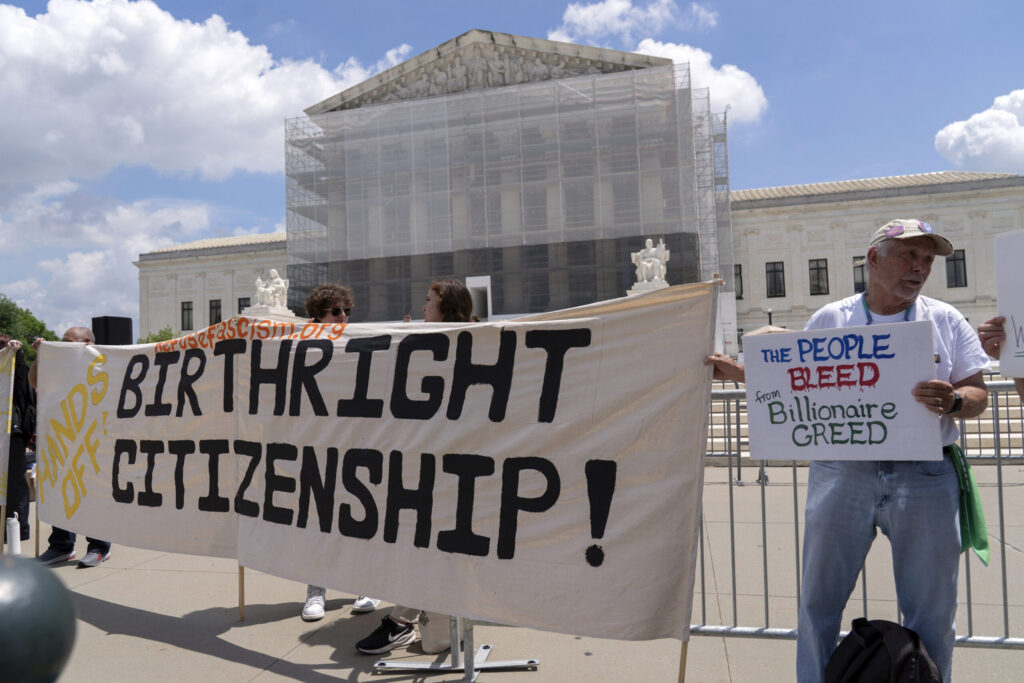
Trump allies urge Supreme Court to uphold his birthright citizenship order
Jack Birle, Washington Examiner
jack.birle.washington.examiner@gazetteedit.wpenginepowered.com
Updated 9 hours ago
The Supreme Court will soon hear a landmark challenge over precisely who can enjoy the birthright citizenship granted under the 14th amendment, and the Trump administration and its allies are urging the high court to side with the president’s view....

Trump sues IRS and Treasury for $10 billion over tax return leak
David Zimmermann Washington Examiner
davidzimmermannwashingtonexaminer@wpstage.coloradopolitics.com
Updated 8 hours ago
President Donald Trump filed a $10 billion lawsuit against the IRS and Treasury Department as one of the plaintiffs on Thursday, alleging a former IRS employee leaked his confidential tax records over six years ago. The federal lawsuit, filed in...

Party-line vote sends ‘red flag’ law expansion to Colorado Senate
Marissa Ventrelli
marissa.ventrelli@coloradopolitics.com
Updated 6 hours ago
A panel of Colorado state senators voted along party lines Tuesday to advance a bill that would further expand who can ask a judge to temporarily restrict a person’s access to firearms under Colorado’s extreme risk protection order law. The...
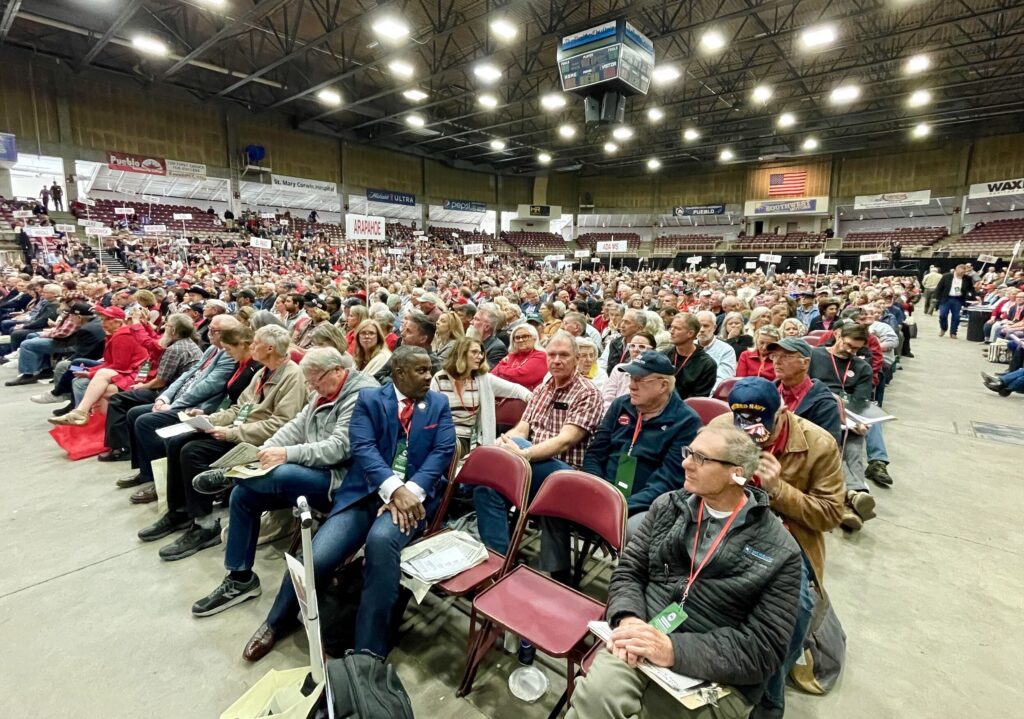
Colorado Republicans plan to return to Pueblo for 2026 state GOP assembly | TRAIL MIX
Ernest Luning
ernest.luning@coloradopolitics.com
Updated 12 hours ago
The Colorado Republican Party plans to hold its 2026 state assembly in Pueblo in April, marking a return to the largest city in the only county in the state that’s flipped from Democrat to Republican to Democrat to Republican in...

Several Denver-area school districts cancel classes Friday amid national shutdown
Michael Braithwaite
michael.braithwaite@gazette.com
Updated 6 hours ago
The protest is in response to ICE operations Several Denver-area school districts canceled classes on Friday due to staff shortages amid a shutdown campaign nationwide. The shutdown, held across the country on Friday, came about in response to recent U.S....

‘Shrek’ check: ‘Rally more, protest less,’ suggests former Parker mayor
John Moore
john.moore@denvergazette.com
Updated 13 hours ago
‘There is this major lack of empathy out there right now,’ says the bearded and burly Mike Waid, who plays three roles in controversial musical Mike Waid wonders if this country might not be so divided if we just rallied...
Federal judge declines to dismiss strike-breaking nurses’ lawsuit over wage violations
Michael Karlik
michael.karlik@coloradopolitics.com
Updated 6 hours ago
A federal judge last week declined to dismiss 39 nursing employees’ claims for compensation against a Greenwood Village-based company for its alleged violations of state and federal law. U.S. Nursing Corporation employs health care professionals to cross the picket lines...
PREV
PREVIOUS
Navajo Nation sues feds over massive Gold King mine waste spill
Leaders of one of the nation’s largest American Indian tribes blasted the U.S. Environmental Protection Agency as their attorneys sued Tuesday, claiming negligence in the cleanup of a massive mine waste spill that tainted rivers in three Western states. Navajo Nation President Russell Begaye stood on the bank of the San Juan River in northwestern […]

Few affected by court rulings voted in Kansas primary
Few of the 17,600 Kansas voters at the center of legal fights over the state’s proof of citizenship requirements actually cast ballots in the Aug. 2 primary. Voting rights advocates won temporary court rulings in federal and state courts affirming the right to vote for people who registered at motor vehicle offices but never submitted citizenship documents. […]