

Noonan: It can get expensive beating horses that have already died

Zombies, beating-a-dead-horse, stick-in-the-eye, and Lazarus Legislation are all names for certain bills at the Capitol: the ones that die one year and rise the next.
The bills are introduced to force the sides to declare their colors. The “Offenses against Unborn Children” bills — HB16-1007 and SB15-268 — tell social conservatives that Republicans are pushing great red causes.
The “Employee Leave to Attend a Child’s Academic Activities” bills — HB16-1002 and HB15-1221 — let progressive Democrats know that the blue party has their back. So does the “Middle Class College Savings Act” version one — HB15-1347 – and version one again – HB16-1003.
A partial list of these bills shows how extensive this Phoenix-like rise from the dead is each year. Ammo magazine bills HB16-1113 and 16-1024 closely repeat HB15-1041 and 15-1009. The Same-Day Voter bill in 2016 copies the Same-Day Voter bill in 2015. Republican Rep. Justin Everett’s “Deadly Force Against an Intruder at a Place of Business” is in at least its fourth annual iteration.
Sometimes the bill concept is treated slightly differently, such as with the Pay Equity Commission bill in 2015 that evolves into the State Contractors Compliance with Equal Pay bill of 2016. The Senate killed pay equity in 2015 and it will put a knife in it again in 2016.
It’s not cheap to run bills over and over.
Here’s the process: A bill starts with the legislator who sends it to Legislative Council and its writers and lawyers. Go with roughly $75/hour per person for at least eight total hours at $600. Assume some revisions for another eight hours at $600. Then the bill moves to committee with 11 members in the House at $30,000/120 days, which comes to about $31/hour per member. If a bill hearing runs five hours, because these bills are contentious, it’s about $1,705. Often, the bill writer attends the hearing as does the committee secretary. Add another $500.
When the bill passes committee, it goes to the full chamber. The House zombies cost $31 x 65 members x two hours, again, because the bills are contentious. That’s $4,030. Staff has to put the bill into the calendar, read it across the desk, print it, etc. Crank out $1,000 for the administrative work. The bill may move quickly through third reading for $1,000.
The Senate dead horses cost about half the legislator time due to fewer members. Put the Senate bills at $$6,500. Since many of the bills will cross chambers, and they may acquire amendments along the way, and they may go to Appropriations Committees, throw in an estimated $4,000 more. The repeat bills will die in the opposing chambers. The rough estimate is $13,435. The true cost is probably in the $15,000 to $20,000 range, plus all the time consumed on legislative work that’s for making a point, not law.
If legislators resisted the Lazarus Effect, the session might finish early, saving both time and money and giving everyone more time to campaign in the election year.
Paula Noonan owns Colorado Capitol Watch, the state’s premier legislature tracking platform.

It’s time to let unaffiliated voters caucus | Vince Bzdek
Vince Bzdek
vince.bzdek@gazette.com
Updated 6 hours ago
There’s no getting around it: Colorado’s 3,000 county caucuses, which just wrapped up recently, left half the electorate out in the cold. Since unaffiliated voters now make up 51% of all Colorado voters, a majority of Colorado electors are barred...
A Mile High, again: Capitol M | Week of March 21, 2026
Marianne Goodland
marianne.goodland@coloradopolitics.com
Updated 3 days ago
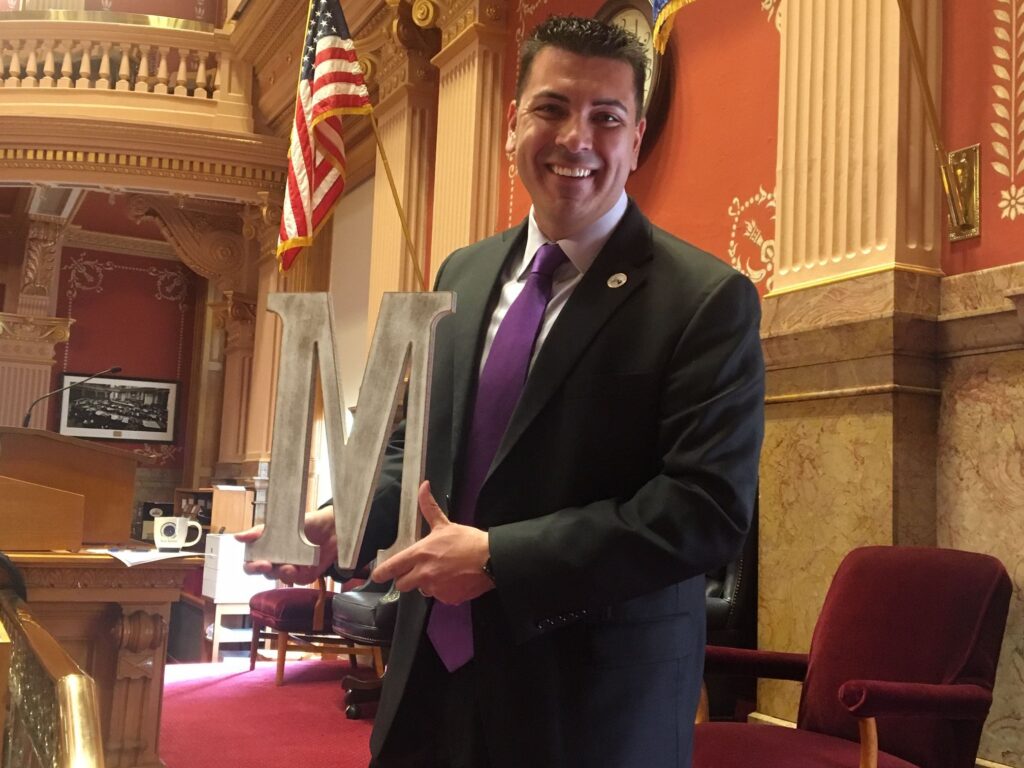
The lighter side of the Capitol, usually…. Local Journalism Day, except they forgot their very own local journalists. The state Senate on Thursday, March 19, passed a resolution recognizing Local Journalism Day. Everyone voted for it, which is good, because...

The insular bubble of caucuses and assemblies | SONDERMANN
Eric Sondermann
eric-sondermann@coloradopolitics.com
Updated 2 days ago
Nearly 30 years ago, then-Federal Reserve Chairman Alan Greenspan coined the term “irrational exuberance” to describe the overheated stock market. That descriptive phrase could also apply to much of the political realm. The hype in politics often grossly exceeds the...

Set appropriate state guidelines for critical surveillance technology | OPINION
Colorado Politics
colorado-politics@coloradopolitics.com
Updated 2 days ago
I admit it: I’m worried. I’m hearing a lot about surveillance in the public arena. I hear cameras are capturing my car’s license plate wherever I drive, my face as I go in and out of stores and health facilities,...

Puppy trafficking bill promotes inhumane breeding | OPINION
Colorado Politics
colorado-politics@coloradopolitics.com
Updated 2 days ago
By Patti Strand When Justice Thurgood Marshall wrote “The Constitution does not prohibit legislatures from enacting stupid laws,” he wasn’t wrong. He was referring to a political process sometimes ill-equipped to deal with complex issues that require subject-matter knowledge and a...

Penny wise but foolish by pounds | Paula Noonan
Paula Noonan
paula-noonan@coloradopolitics.com
Updated 2 days ago
Leadership of Colorado’s General Assembly introduced the Fiscal Year 2026-2027 Legislative Appropriation bill, HB26-1333, at $75.72 million. That will be the budget to run the state legislature next year. About $74 million comes out of the general fund and the...

Proposed evictions bill fails to improve housing stability while threatening higher rents | OPINION
Colorado Politics
colorado-politics@coloradopolitics.com
Updated 3 days ago
No landlord wants to evict a tenant for non-payment of rent. That is true for large housing providers, small “mom-and-pop” owners and nonprofit housing rental providers alike. Evictions are financially and emotionally costly for everyone involved. But when rent goes unpaid, eviction...

Prevention works — invest in conflict prevention with wolves | FEEDBACK
Colorado Politics
colorado-politics@coloradopolitics.com
Updated 2 days ago
The recent reporting on Colorado’s wolf depredation payouts exceeding $700,000 highlights a critical problem with the current approach to wolf recovery: current mainstream systems focus on compensation and ineffective reactive non-lethals. These systems are not designed to prevent conflict but attempts...

Colorado’s clean-energy future must be affordable for older adults | PODIUM
Colorado Politics
colorado-politics@coloradopolitics.com
Updated 2 days ago
By Jason DeaBueno Last winter, one of the older adults we serve at Silver Key shared something that has stayed with me. She begun turning her heat down at night — not because she wanted to, but because she was...

Why Denver should care about conservation easements — even if you’ve never set foot on a ranch | OPINION
Colorado Politics
colorado-politics@coloradopolitics.com
Updated 3 days ago
By Jason Swann I live in Denver. I drink tap water from my kitchen sink, hike close to home when I can, worry about wildfire smoke every summer, and try, like many families, to keep up with the rising cost...
PREV
PREVIOUS
Cowart: Supreme Court should reject Nortons’ ‘subsidization’ theory
Editor: Alliance Defending Freedom senior counsel Michael Norton and his client, former Colorado Department of Public Health and Environment Executive Director Jane Norton, have pursued their “subsidization” theory for decades. With the most recent determination from the Colorado Court of Appeals, that theory should be put to rest, once and for all. As Colorado […]

Marble: The Senate Republicans’ ‘Hateful, Dissident Eight’
According to a recent front-page story in The Denver Post, there are eight Republican state senators among the slim 18-17 Republican majority who have been obstructing the Republican Party leadership’s legislative agenda. We are told this presents a “threat” to the Republican Party and a crisis that had gone undetected until The Post crunched some […]