

Peppler: Renewable Fuel Standard remains critical to Colorado

Ten years ago this month, Congress enacted and President George W. Bush signed the Renewable Fuel Standard, which ensures part of our transportation fuel comes from homegrown sources. Today, biofuels are boosting America’s energy independence and national security, supporting American farmers and agriculture, cutting pollution, and lowering prices at the pump. This is why the Rocky Mountain Farmers Union supports a strong RFS, and so should Colorado’s congressional delegation.
The RFS has been a major stimulus to the nation’s economy, producing $184.5 billion in annual economic output and $46.2 billion in wages each year, and supporting more than 852,000 American jobs that can’t be outsourced. These gains have come primarily in rural economies across the nation that are making a strong comeback thanks to renewable fuel. Thanks in large part to the RFS, farm income rose 88 percent from 2006 to last year — nearly doubling. That’s keeping family farmers and the communities who rely on them in business.
Closer to home, the RFS has been a boost to Colorado farmers and our economy. According to an analysis by Fuels America, the renewable fuel sector — including conventional ethanol, cellulosic biodiesel and advanced biofuels and their suppliers — generates $2.7 billion of total economic output annually in Colorado. The sector supports 10,619 Colorado jobs and generates $642.2 million in wages annually, contributing $111.6 million in federal taxes and $62.3 million in state taxes each year.
The more renewable fuel Colorado farmers produce, the less oil we import from hostile foreign regions — and, thanks to the RFS, renewable fuel now makes up nearly 10 percent of our fuel supply. That brings America closer to energy independence, and keeps us from getting embroiled in conflicts over foreign oil interests. Thanks to the RFS, foreign oil imports are down by nearly two-thirds, the lowest level in decades.
A strong RFS will continue to provide further opportunities for innovation and investment in advanced biofuels such as cellulosic ethanol — the cleanest motor fuel in the world, made right here in America. Ninety percent of growth under the RFS is in the advanced biofuel sector, including cellulosic ethanol.
And this biofuels revolution is contributing to innovation here in Colorado at our research universities. In April, for the second year in a row, the team from the University of Colorado Boulder won an international renewable fuels competition. Their prototype vehicle, appropriately named Tatonkatoo, is ethanol-powered and gets 842 miles to the gallon.
But all of that success has been threatened by the EPA’s proposal to let the oil industry control our nation’s supply of clean, secure, American renewable fuel. The EPA must get America’s Renewable Fuel Standard back on track to ensure a cleaner, stronger, more secure future for our nation.
America’s Renewable Fuel Standard — passed with strong, bipartisan support and signed into law by President Bush — is a national success story. We need to keep it that way — and Colorado’s family farmers agree.
Kent Peppler is president of the Rocky Mountain Farmers Union, a progressive, grassroots organization founded in 1907, that represents family farmers and ranchers in Wyoming, Colorado, and New Mexico.


Denver to mull $6.9M East Colfax BRT extension, police union deal
Deborah Grigsby
deborah.smith@denvergazette.com
Updated 23 hours ago
Denver’s councilmembers will consider several items during Monday’s regular meeting, but the most notable is a resolution to overhaul contract review rules, requiring draft agreements to be shared with the Council before being heard at committee meetings. Council Resolution 26-0329...

Colorado justices confirm lawyers may ‘borrow’ allegations from elsewhere
Michael Karlik
michael.karlik@coloradopolitics.com
Updated 11 hours ago
The Colorado Supreme Court ruled on Monday that plaintiffs’ lawyers can use allegations made elsewhere to bolster their own clients’ claims, so long as the attorney first performs some degree of investigation into the “borrowed” assertions. Under Colorado’s rules for...
Colorado legislators propose $46.8 billion budget, driven by Medicaid costs
Marianne Goodland
marianne.goodland@coloradopolitics.com
Updated 14 hours ago
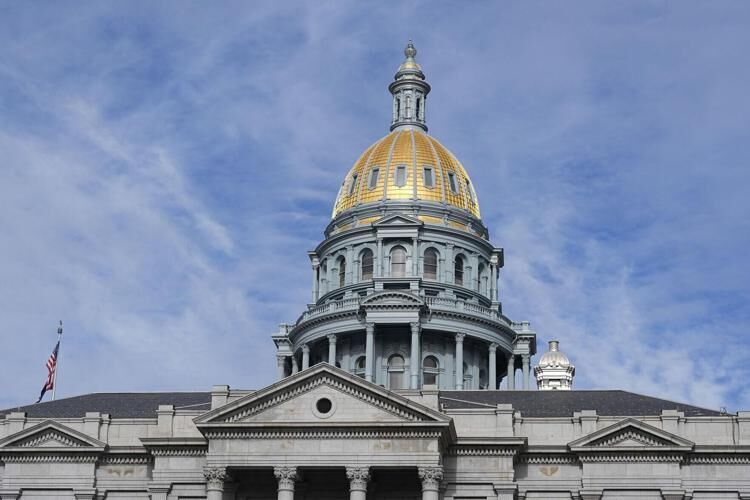
The six-member panel of legislators in charge of crafting the state budget has now turned over its plan to the Colorado legislature, proposing to spend $1.5 billion more for the Medicaid program. The increase is driven by Medicaid costs, which...

Governor signs bill expanding who can petition for weapons restrictions
Marissa Ventrelli
marissa.ventrelli@coloradopolitics.com
Updated 15 hours ago
Gov. Jared Polis on Monday signed a bill into law expanding who can ask a judge to temporarily restrict a person’s access to firearms. Established in 2019, 0Colorado’s extreme risk protection law (ERPO) initially allowed a family member or law...

Colorado justices restore RTD subcontractor’s award, reject ‘drastic’ view of public works law
Michael Karlik
michael.karlik@coloradopolitics.com
Updated 16 hours ago
The Colorado Supreme Court on Monday restored a $5.7 million award to a company that helped build a commuter rail line and, in doing so, rejected a view of state law that would nullify a subcontractor’s entitlement to any compensation...
As Colorado passes 6 million residents, housing initiatives take center stage
Marianne Goodland
marianne.goodland@coloradopolitics.com
Updated 15 hours ago
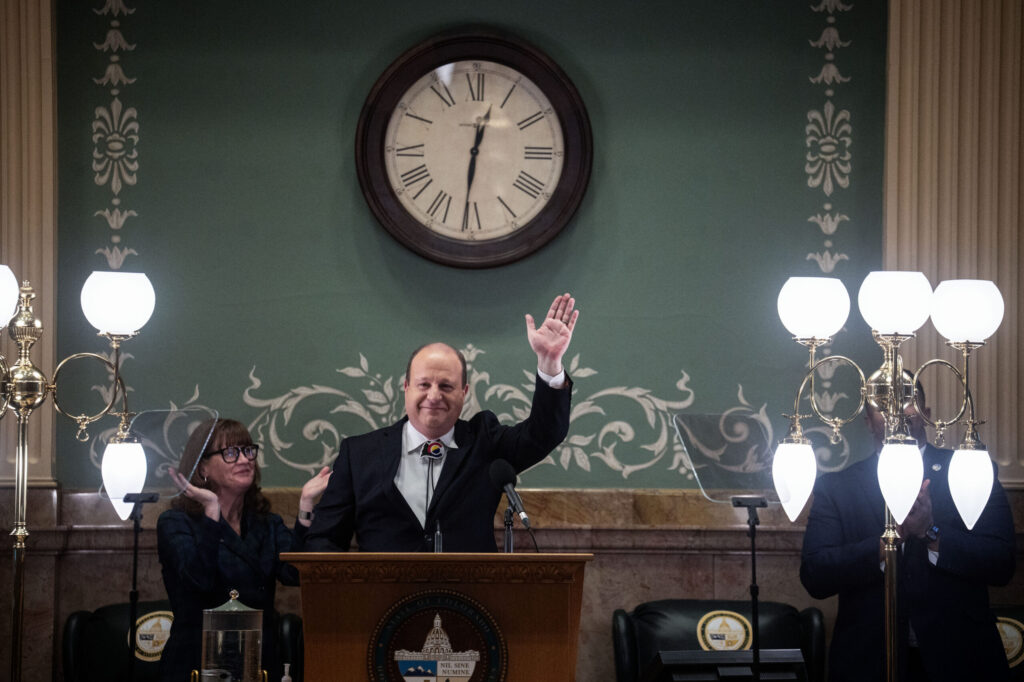
New Census data confirming Colorado’s population has topped six million is fueling renewed debate over Gov. Jared Polis’ housing agenda, as he tied the population increases to home construction. The governor said the counties experiencing the largest increases in new...

Congress urged to open antitrust investigation into Apple and OpenAI over ‘left-leaning bias’
Kaelan Deese, Washington Examiner
kaelan.deese.washington.examiner@gazetteedit.wpenginepowered.com
Updated 17 hours ago
A conservative legal group founded by senior White House adviser Stephen Miller is urging Congress to investigate a partnership between Apple and OpenAI, arguing the companies have effectively locked millions of people into a single, politically biased artificial intelligence system....

Trump threatens jail time over downed US fighter jet ‘leak’
Christian Datoc and Mabinty Quarshie, Washington Examiner
christian.datoc.and.mabinty.quarshie.washington.examiner@gazetteedit.wpenginepowered.com
Updated 17 hours ago
President Donald Trump threatened jail time Monday for the journalist who first reported that an airman was still missing after a fighter jet went down in Iran last week. The high-risk and eventually successful attempt to rescue the weapons officer...

Bill to accelerate police access to online data clears Colorado committee
Marissa Ventrelli
marissa.ventrelli@coloradopolitics.com
Updated 13 hours ago
A proposal to speed up law enforcement’s access to social media data is advancing in the Colorado Legislature, drawing testimony from the residents of Evergreen, where a school shooting took place, and questions from opponents worried about privacy and constitutional...
El Paso County defendant’s speedy trial rights violated, Colorado justices find in overturning convictions
Michael Karlik
michael.karlik@coloradopolitics.com
Updated 11 hours ago
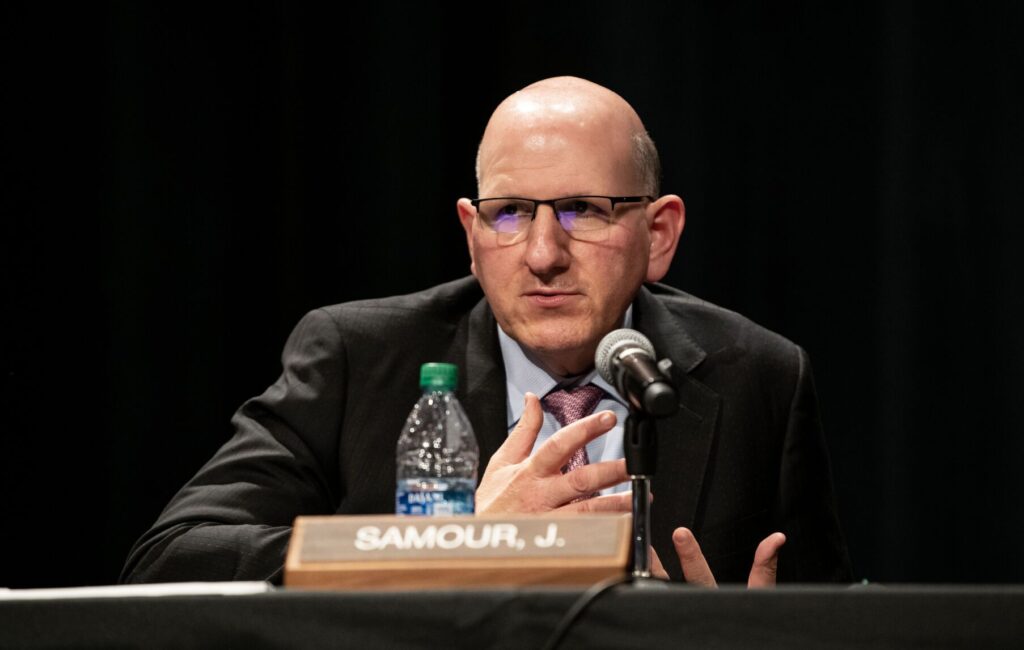
The Colorado Supreme Court concluded on Monday that an El Paso County prosecutor made an unjustified decision to file a mid-case appeal, pushing the trial beyond the legal deadline and requiring that the defendant’s convictions be overturned. In Colorado, the...
PREV
PREVIOUS

Noonan: Nature’s law of prepositions should be first law of economics
Nature’s laws trump economic principles — a rule of thumb often ignored by policy makers. Mining provides many rueful examples. It’s a dirty business to extract minerals from Colorado’s mountains, yet the state often underestimates long-term risk for short-term gain. Sometimes the long-term risk is very long term, even geologic in length. An example is […]
Glover wins national Young Dems post, Court of Appeals finalists named
Glover wins post with national Young Democrats Colorado Young Democrats Chair Danielle Glover of Adams County was elected vice president of the Young Democrats of America at the organization’s biennial convention in Los Angeles last week, becoming the first national Young Dems officer from Colorado in more than 20 years. She was part of the […]