

Lawmaker prepping red-light camera bill aimed at steering clear of governor’s veto pen
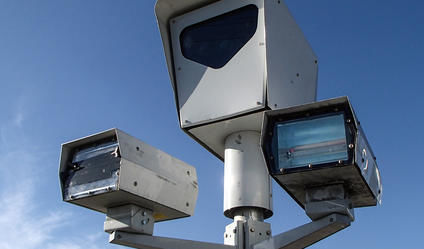
A state lawmaker thinks he has figured out how to get Gov. John Hickenlooper to sign a bill that would curb the use of red-light cameras in the state – give the governor what he wants.
State Rep. Steve Lebsock, D-Thornton, told The Colorado Statesman he is in the process of drafting a bill for next year that will include language that is “almost identical” to the kind of red-light camera and photo radar legislation Hickenlooper has suggested lawmakers take up.
The governor vetoed two bills in June, one that required local voter approval for the use of automated vehicle identification systems and another that sought to ban the use of the technology outright.
Hickenlooper said the bills went “too far.” But in his veto letters, Hickenlooper gave lawmakers direction as to the kind of legislation he would find amenable.
The governor encouraged lawmakers to enact legislation that limits the technology to specific traffic areas: school zones, construction and roadway work zones, and “areas with disproportionately high traffic and pedestrian accidents, injuries and fatalities.”
Lebsock, who sponsored efforts to curb the technology during the recent legislative session, believes a bill he is in the process of drafting will largely satisfy the governor’s request.
Lebsock said his bill would limit the use of red-light cameras and photo radar systems to school and construction zones and “major artery roads.” His legislation would ban the use of the technology everywhere else.
“We do not need a camera on every single street and every single street corner,” Lebsock said. “That’s where we’re headed now.”
Lebsock said he would rather do away with photo radar technology altogether, but said the governor’s preferred path forward “is a good first step.”
But that effort isn’t going to satisfy everyone at the Capitol.
State Sen. Tim Neville, R-Littleton, said the governor’s recommended legislation is “a non-starter, as far as I’m concerned.”
“I want to see something done, but it needs to be something that actually makes an impact and works toward getting rid of this product,” Neville said.
Neville said he doesn’t want to sign on to a bad bill “for the sake of providing political cover.”
Asked what a bad bill would look like, Neville said, “A bad bill would be basically what the governor is asking for.”
Efforts to pass legislation to curb the use of red-light cameras and other photo radar systems received bipartisan support at the Legislature earlier this year.
Those opposed to the technology argue that the systems are of little benefit to public safety and that they cause even more accidents due to drivers suddenly breaking at intersections where cameras are mounted.
Opponents of the technology also have due-process concerns over the inability of ticketed motorists to confront their accusers – as they would in cases where they are issued tickets by police officers. Many also have philosophical objections to what they say is a society under increased government surveillance.
But supporters of the systems insist the technology saves lives. Representatives from municipal groups and law enforcement say the presence of the cameras forces motorists to curb dangerous driving habits.
“While not always popular, when used correctly, radar and red-light cameras make roads safer,” Hickenlooper’s veto letter reads.
Federal investigation aids momentum
But Lebsock and Neville feel that momentum and public opinion is on their side on this issue – and they are buoyed by the recent developments in a federal bribery investigation into the former chief of one of the nation’s largest red-light camera providers.
Former RedFlex Traffic Systems Inc. CEO Karen Finley pleaded guilty last month to charges that she made campaign contributions to elected officials in Ohio in exchange for keeping red-light camera contracts with two cities there.
Finley also faces prosecution for an alleged bribery scandal in Chicago.
RedFlex cameras have been installed in Colorado, including in Denver. However, the city now uses a different company.
Although no allegations against Colorado officials have surfaced, Lebsock and Neville say they believe the existing investigation into wrongdoing elsewhere will continue to feed public resentment of the technology.
“I would hope that would help be a game-changer,” Neville said of the investigation. “And it really comes down to one person and one vote, and that’s the governor’s. And I would hope that the governor would have had a chance to take a look and realize that none of this is good for Colorado, let alone the issues that surround red light cameras to begin with.”
“I think this case, and it being written about and being covered by news agencies, brings a new light to the issue,” Lebsock said. “And it brings more attention to the issue.”
But don’t expect lawmakers to rally around a single legislative effort next year. That could open the door to what we saw earlier this year – multiple bills being heavily amended through the legislative process to the point where they read completely differently than when they were first introduced.
“There will more than likely be more than one red-light camera bill next year,” Lebsock said.
– Twitter: @VicVela1

State audit: Rape kit backlog reduced but more work needed to hit goal
Jenny Deam
jenny-deam@coloradopolitics.com
Updated 16 minutes ago
In the past year, the Colorado Bureau of Investigation has slashed the time it takes to process DNA collected in sexual assault cases, but the agency still is far short of its turnaround goal, the state auditor reported on Wednesday....

Greeley voters halt landmark development project
Hap Fry, Special to The Gazette
hap-fry@gazette.com
Updated 2 hours ago
GREELEY – The landscape-altering Cascadia development project has been put on ice, according to unofficial results of a city referendum on the project Tuesday. The proposed Cascadia amenities included an 8,600-seat multiuse arena and ice center that would be the...

Daniel Domenico to take over as Colorado’s chief federal judge
Michael Karlik
michael.karlik@coloradopolitics.com
Updated 3 hours ago
Daniel D. Domenico will become the new chief judge of Colorado’s federal trial court next week, a role that encompasses the administration of the court as well as a judicial caseload. Under federal law, the chief judge of a U.S....
10th Circuit upholds violations, sanctions against Colorado Springs mental health hospital
Michael Karlik
michael.karlik@coloradopolitics.com
Updated 4 hours ago
The Denver-based federal appeals court agreed earlier this month that the government properly cited and penalized a Colorado Springs psychiatric hospital for failing to protect its staff from known risks posed by patients. The Occupational Safety and Health Administration inspected...

Vance working with DOJ and Treasury after Trump announces ‘war on fraud’
David Zimmermann Washington Examiner
davidzimmermannwashingtonexaminer@wpstage.coloradopolitics.com
Updated 4 hours ago
Vice President JD Vance confirmed on Wednesday that he is working with the Justice and Treasury Departments to root out fraud nationwide. During the State of the Union address Tuesday night, President Donald Trump announced Vance would lead the administration’s “war on...
House Ethics Committee dismisses some claims, advances others against Rep. Ron Weinberg
Marianne Goodland
marianne.goodland@coloradopolitics.com
Updated 2 hours ago
The House Ethics Committee voted on Wednesday to accept three allegations filed against Rep. Ron Weinberg, R-Loveland, but combined two into one subject area. The two issues involve inappropriate comments made to female lawmakers in two separate incidents and the...
Bipartisan opposition sinks eviction bill in Colorado
Marissa Ventrelli
marissa.ventrelli@coloradopolitics.com
Updated 16 minutes ago
Two Democrats sided with Republicans on a legislative panel to reject a proposal that would have made several changes to eviction filings and proceedings, including requiring judges to suppress court records. Sponsored by Rep. Junie Joseph, D-Boulder, House Bill 1047...
Appeals judges tell Boulder students about workload, ‘attack mode’ during school visit
Michael Karlik
michael.karlik@coloradopolitics.com
Updated 5 hours ago
Three judges on Colorado’s second-highest court traveled to Boulder on Tuesday to hear oral arguments in real cases and field questions from students about their professional paths, their workload on the Court of Appeals, and their approach to interacting with...

State of the Union: Here’s what Trump didn’t say
W. James Antle III Washington Examiner
wjamesantleiiiwashingtonexaminer@wpstage.coloradopolitics.com
Updated 6 hours ago
President Donald Trump made the case that happy days are here again in the first State of the Union of his second term, but there was little talk of transition or pain. “The state of our union is strong,” he...
Ex-Cherry Creek superintendent must repay one month’s salary after abrupt resignation
Nico Brambila
nico.brambila@denvergazette.com
Updated 2 hours ago
Former Cherry Creek School District Superintendent Chris Smith must repay one month’s salary for failing to provide the board of education with three-month’s notice of his resignation, The Denver Gazette has learned. The board of education has not waived the...
PREV
PREVIOUS

Letter: Becky Mizel resigns as chair of Pueblo Republican Party
On Tuesday night Becky Mizel announced her immediate resignation as chair of the Pueblo Republican Party. She said in a letter to the county party’s executive committee that her views on working through “administrative challenges” the party is facing are at odds with those held by most of the committee’s members. The letter is reproduced […]
Webb: Why America needs a strong woman as president
I’ve heard some of my friends praise Hillary Clinton for her public service but then question if we are ready for such a strong female leader. I’m married to a strong woman, Wilma Webb, who served in the Colorado state legislature for 13 years and fought to get the Martin Luther King Jr. state holiday […]