

Legislators get comfortable at 1525 Sherman
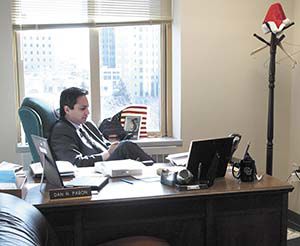
The dome isn’t the only part of the state Capitol to sport new duds for the 2015 legislative session. The House and Senate chambers were both restored to bring out architectural details from the past. A new hearing room has replaced the “bullpen” that served as offices for House members. Even the bathrooms at the north end of the capitol have gotten a makeover. But this could be the legislative session remembered for all the walking everyone will do to get from one end of the capitol complex to the other.
For the general public and lobbyists, one of the most notable changes may be where they find their legislators. Thirty from the House and 14 from the Senate are now housed across Colfax on the sixth and seventh floors of 1525 Sherman Street, in the former offices of the Attorney General — 40 on the sixth floor and four Republican House members on the seventh floor.

While the number of new legislators is among the largest in recent memory, it isn’t only the new folks who are at 1525 Sherman. Sixteen of the 30 House members are returning legislators from the previous session, including Speaker Pro Tem Dan Pabon, D-Denver.
And with the six members of the Joint Budget Committee housed at the Legislative Services Building on 14th Avenue a block south, fully half of the General Assembly is somewhere other than the actual state capitol building.
The plus side of the big move across the street is that everyone at 1525 Sherman has an individual office that they don’t have to share. Most of the legislative aides also have their own offices, cubicles just outside the legislator’s office. The seventh floor offices of the four Republican House members are much smaller — they are still in the minority, after all — and there’s also another big difference: the building is locked with a keyless entry system.
Rep. Tim Dore, R-Elizabeth, is one of the four House Republicans on the seventh floor. Last year, he was in the bullpen, so the move has been positive in a number of ways.
“I’m more efficient” in the new space, Dore told The Colorado Statesman this week. When he was in the bullpen, Dore said he was constantly interrupted by people who would just stop by and poke their heads in to say hello. Now they have to go through security on the first floor and then through the locked door into the suite. That means that people are getting better about scheduling time to see him.
“I’m much better at keeping a schedule and getting things done,” he said. If someone goes to the trouble of coming to the seventh floor, “they must really need to see me,” he added.
Pabon recently sat down with The Colorado Statesman to talk about how these new office spaces may change the legislative culture, and for the better. Pabon, who serves as the “floor warden” for 1525 Sherman, sees the move as an opportunity for positive cultural change and relationship-building that might not happen otherwise.
“I think you have a real amazing office experience that makes you feel like you’re in a professional environment” with a private office, separate space for the aide, even access to the gym in the basement, Pabon said. “The culture associated with that is one of professionalism. But there’s also cultural changes that exist when you move from one building to another. We’re trying to make it the most welcoming environment we can, to constituents and visitors.”
One of the features of 1525 is the privacy it allows legislators, something that never truly existed at the Capitol with shared offices. Legislators are no longer interrupted by activities of other legislators, and vice versa. “It’s a nice feature, and one that we all appreciate,” Pabon said.
There are still a few logistical issues to be worked out, however. One of the first problems was with what some visitors called the “gatekeeper,” a House staff person/receptionist who sat at the entrance of the sixth floor suite and checked to see if people had appointments. That led to complaints from both legislators and their visitors that it was difficult getting into the area.
Another is how legislators at 1525 Sherman will be notified if there’s a so-called “call” of the House or Senate, an official notification that members must return to the House or Senate floor for a vote. Currently that’s done by a loud bell in the Capitol, one for the House and a different one for the Senate.
Pabon noted that the JBC has had to deal with that for years, so it’s not exactly a new problem. But now it’s a larger one; the JBC needs only one staff person who can quickly reach all of its members. For now, the sixth floor receptionist will be notified of the call by the House or Senate staff and then walk the suite to alert legislators. Pabon said they also have the option of using the State Patrol’s alert system, which goes to every legislator’s phone.
Then there’s getting from 1525 Sherman to the capitol by crossing busy East Colfax. Some legislators and aides have started to call it “Frogger,” referring to the 1980s video game where the objective is to cross the road without getting run over. Just two weeks into the session, there are already several stories about close calls with legislators or aides who were in a hurry and didn’t wait for the crossing signal to change.
Suggestions have been made for a bridge, or perhaps legislators and their aides could use the tunnels that run under the Capitol to 1525 Sherman. Pabon said that liability issues make the tunnel idea a less-than-workable solution.
Another possible solution is to have the crossing light at Colfax shortened, and some conversations on that have taken place with the city of Denver, according to Pabon. However, that may make traffic on Colfax even worse. The crossing is a problem that may just have to work itself out, he explained. With the increased foot traffic between the Capitol and 1525 Sherman, the crossing signals are getting used a lot more often and that may make things a little easier and faster, he added.
To discuss some of the issues associated with the new logistics, there was recently a floor meeting attended by the representatives from both caucuses and both chambers. “It’s quite a positive benefit to be able to have access to so many legislators at one time,” said Pabon. Several ideas came out of that meeting, including a bi-weekly or monthly breakfast or maybe a happy hour “so that we can bond over our shared experience and build the camaraderie that the space is conducive to,” Pabon explained.
Pabon said they’ll keep working to resolve the growing pains and revisit some of the issues when the session ends in May. “We want to set the tone for future colleagues and legislators and this is the year to do that. If we’re thoughtful and mindful about how we create a welcoming space now, it’ll be that way for all of time.”
— Marianne@coloradostatesman.com
See full photo coverage in the Jan. 23, 2015 print edition.
Colorado Politics Must-Reads:

Gov. Lamm challenges Congress to stop ‘decontrol’ of natural gas | A LOOK BACK
Rachael Wright, Special to Colorado Politics
rachael.wright@coloradopolitics.com
Updated 2 days ago
Forty-Five Years Ago This Week: In a memo to Colorado’s congressional delegation, Gov. Dick Lamm urged them to vote against the phased pricing deregulation provisions in the Natural Gas Policy Act, a measure introduced in Congress in 1978 and still...
Colorado justices accept appeals on Netflix taxation, children pursuing neglect cases
Michael Karlik
michael.karlik@coloradopolitics.com
Updated 15 hours ago
The Colorado Supreme Court announced on Monday that it will decide whether Netflix subscriptions are subject to the state’s sales tax as “tangible personal property.” At least three of the court’s seven members must agree to hear an appeal. The...
Proposal outlines $300M deal separating Pinnacol from Colorado state government
Marianne Goodland
marianne.goodland@coloradopolitics.com
Updated 15 hours ago
Colorado lawmakers are weighing a proposal that would allow Pinnacol Assurance to sever its remaining ties to the state in exchange for a $300 million payment, a long‑debated shift that supporters say could stabilize the insurer’s future and help plug...
Bill requiring employers to grant unpaid leave to Colorado lawmakers heads to governor’s desk
Marissa Ventrelli
marissa.ventrelli@coloradopolitics.com
Updated 14 hours ago
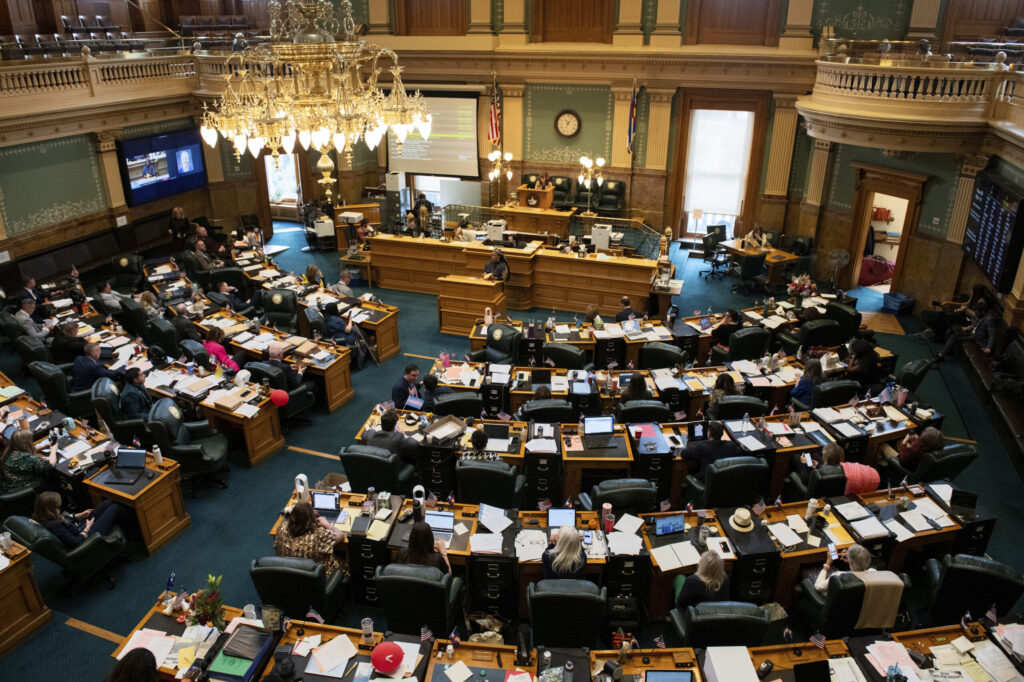
Colorado lawmakers are one step away from securing guaranteed unpaid leave from their day jobs during the legislative session after the House narrowly approved the proposal Thursday. Senate Bill 087 would require businesses to allow employees who are members of...
Redistricting fight escalates as Colorado Title Board clears competing ballot proposals
Marianne Goodland
marianne.goodland@coloradopolitics.com
Updated 14 hours ago
Colorado’s title board on Wednesday gave final approval to multiple ballot measures related to congressional redistricting, setting up a series of proposals that could alter how the state draws its U.S. House districts for the 2028 and 2030 elections. The...

Trump downplays major reform bill and says housing is ‘all about interest rates’
Zach Halaschak, Washington Examiner
zach.halaschak.washington.examiner@gazetteedit.wpenginepowered.com
Updated 17 hours ago
President Donald Trump downplayed the bipartisan housing legislation that many congressional allies hope will ease the affordability worries plaguing voters, saying instead in an exclusive Washington Examiner interview that housing is “all about interest rates.” Trump said on a phone call Thursday morning...
Colorado lawmakers propose deep cuts to close $1.2B budget gap
Marianne Goodland
marianne.goodland@coloradopolitics.com
Updated 14 hours ago
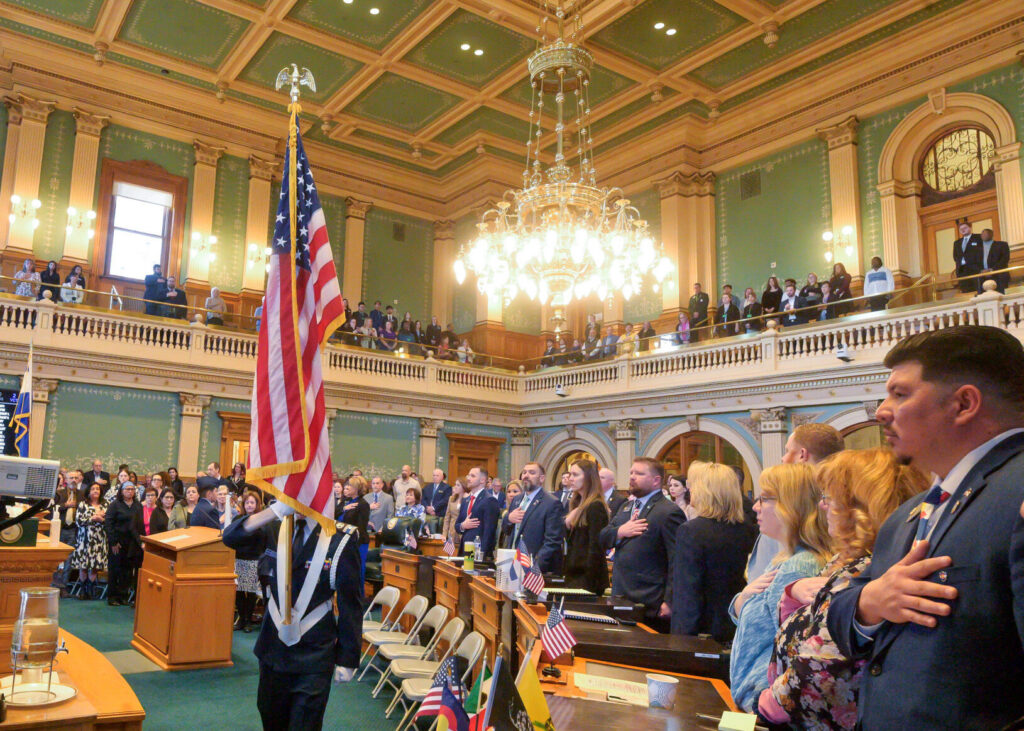
The panel of Colorado legislators in charge of crafting next year’s budget has finalized the 2026–27 spending plan built on deep cuts and one‑time cash transfers in an attempt to close a shortfall of more than $1.2 billion. The plan...
Denver judge denies Gov. Polis request to dismiss ICE-related records case
Marianne Goodland
marianne.goodland@coloradopolitics.com
Updated 18 hours ago
A year after blocking the release of state records to federal immigration agents, a Denver judge has now denied Gov. Jared Polis’ effort to end the lawsuit at the center of the dispute. The lawsuit filed against the governor in...

10th Circuit grants rare all-judges’ review of Colorado banking regulation
Michael Karlik
michael.karlik@coloradopolitics.com
Updated 19 hours ago
The Denver-based federal appeals court announced on Thursday that it will hold a rare all-judges review of a recent decision that permits Colorado to require out-of-state banks to abide by the state’s maximum interest rates when they lend to in-state...
Colorado appeals court orders new sentencing for Tina Peters, upholds convictions
Michael Karlik
michael.karlik@coloradopolitics.com
Updated 14 hours ago
Colorado’s second-highest court determined on Thursday that a trial judge improperly sentenced former Mesa County clerk Tina Peters based upon her exercise of protected speech, while at the same time upholding her convictions. The three-judge Court of Appeals panel also...