

AI data center debate reaches small southern Colorado town
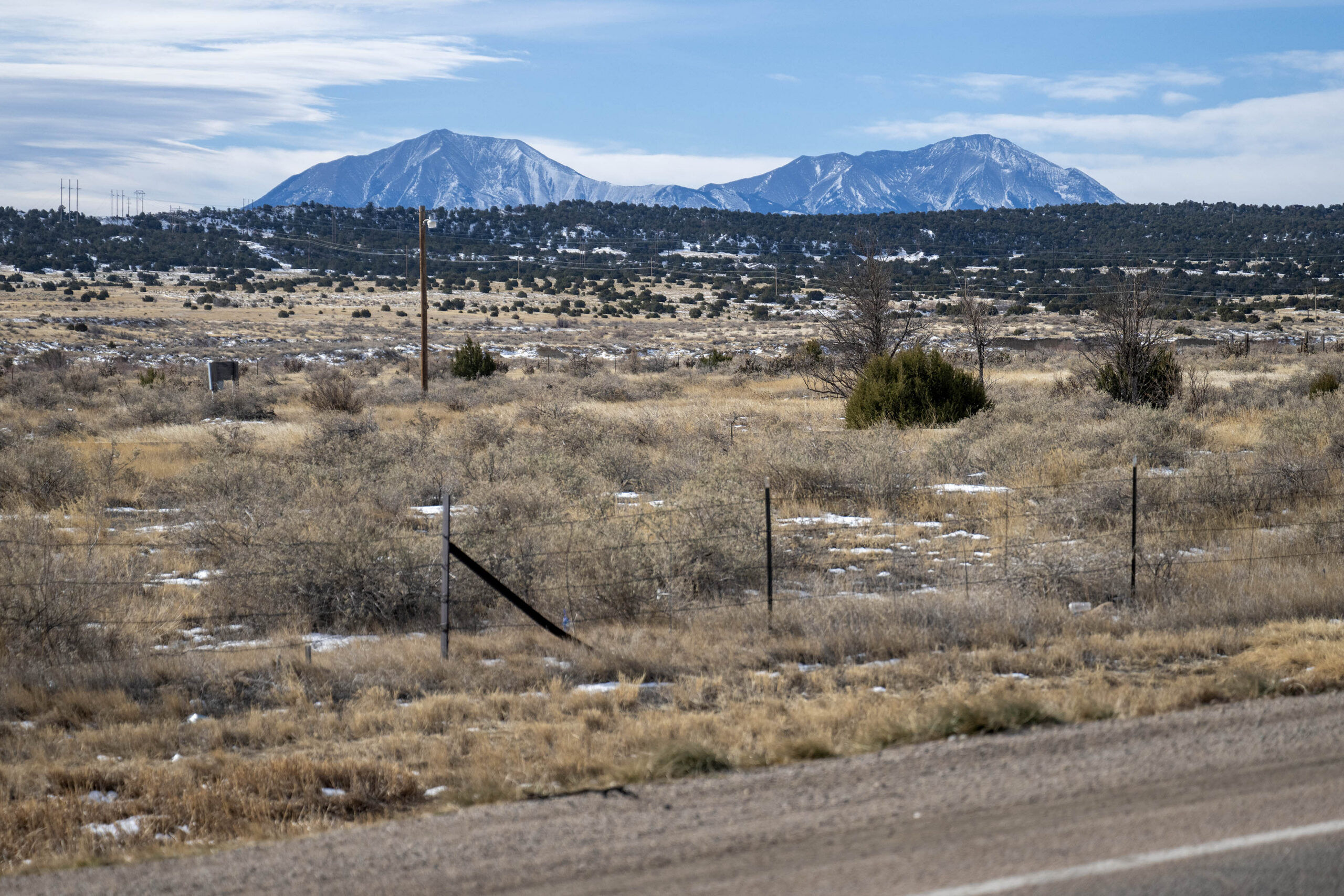
In the nondescript business parks of the Front Range’s largest metros, data centers are cropping up. Currently, 46 are planned or built in the Denver metro area, while Colorado Springs has the second most at six, according to the industry catalog Data Center Map.
The map has one outlier, deep in the heart of rural southern Colorado. BluSky AI, a Utah-based company, plans to build a facility as part of an envisioned fleet of “next-generation, scalable AI Factories,” the company said in a statement last year.
Its nearest neighbor? Walsenburg, population 3,000.
Neither the town’s mayor nor its administrator was aware of the company’s plan when The Denver Gazette reached out. According to the company’s news release, the proposed 36-acre site just north of Walsenburg has been under a purchase and sale agreement between BluSky AI and owner Snowy River Ranches since August of last year, with no action yet on the formal sale.
The idea of a data center near town produced disbelief from Walsenburg Mayor Gary Vezzani.
“It’s a wild rumor,” he said.
Robert Vallejo, a longtime Walsenburg resident working the counter at his wife’s mainstay boutique on sleepy Main Street, said he has the skepticism of a longtime flip-phone user.
“I’m not a fond person of AI,” he said.

BluSky AI could not be reached for comment. The company’s website describes a strategy of building “plug and play” modular data centers on sites with existing energy infrastructure. The company’s planned data centers are comparatively small: While the Walsenburg facility would use up to 15 megawatts of power, a typical large data center can consume over 100.
The news release said the facility would have computer infrastructure suited to “AI and machine learning workloads.”
For perspective, 1 megawatt can power about 600 to 1,000 homes, depending on average energy usage and other factors.
“This acquisition reflects our commitment to the continued efforts to AI compute while aligning with local economic development and environmental stewardship,” said Trent D’Ambrosio, CEO of BlueSky AI, in the statement.
“Walsenburg represents a convergence of power availability, infrastructure readiness, and community partnership — core pillars of our deployment mode.”
Vezzani, the town’s mayor, said he could not see Walsenburg’s City Council cooperating to provide any municipal utilities to a data center facility. While the town is open, even eager, for new development, he doesn’t think a data center would bring the jobs to replace the shuttered correctional facility or safeguard the town’s water rights.
“We’d get hung, to be honest with you,” he said.
Data centers across the West
Walsenburg is not the only small town in the Western U.S. chosen for development by BluSky AI.
Reactions have been mixed. Some welcome the possibility of a thriving tech company producing jobs and revenue for local governments. Others are wary, noting how much power and water data centers need to operate.
It’s a debate that is, in fact, occurring in small communities like Walsenburg and in major cities like Denver, whose elected officials are considering a moratorium on new facilities. Expected to last several months, the temporary halt is another salvo in Denver’s — as well as the state’s — efforts to position itself as an attractive, tech-savvy place to do business, while also trying to regulate technology.
At the state Capitol, legislators are mulling two competing proposals this year on data centers.
“They’re just trying to railroad people, and I’ll say that out loud,” said Jason Pengelly, city manager for Wells, Nev.
The town in the northeast part of Nevada has a population of less than 2,000.
According to news release from August 2025, BluSky entered a non-0binding letter of intent to lease 2 acres at a Wells cannabis cultivation facility. Pengelly briefly met with a company representative. The lack of job creation and high energy consumption made the project unappealing to him, he said.
“Wells, Nevada offers the power density, geographic resilience, and community partnership we seek as we scale modular infrastructure across the region,” said D’Ambrosio in the company’s statement on the project.
Pengelly said Wells’ elected leaders are unlikely to approve such a project. In response to the company’s interest, he said Wells is working with its county to develop rules specific to data centers.
“We just don’t want to be in that position to just start permitting data centers without doing our homework and figuring it out, limiting them,” he said.
In addition to Wells and Walsenburg, BluSky AI has acquired or hopes to purchase land and energy grid access in three other small towns: Camp Verde, Ariz., population 12,000; Central, Utah, population less than 700, and Nephi, Utah, population less than 7,000.
Nephi has welcomed the 4-megawatt project announced in September.
“For us, it’s a good fit,” said Nephi City Administrator Seth Atkinson.
He said the facility has been functionally approved, with building permits waiting for pickup at the planning office. Before greenlighting the project, the Nephi City Council voted in December to adopt two ordinances creating some restrictions on the type and scale of data centers allowed in the town.
The town’s willingness to entertain a data center came down to power capacity and a recent economic blow, said Atkinson.
He said that Nephi recently completed a project to increase the town’s energy capacity from 29 megawatts to 85 megawatts. At the same time, a major energy consumer and employer, building materials company Owens Corning, shuttered its plant in Nephi last year.
“We don’t mind selling electricity,” Atkinson said.
Data center wars
For better or worse, data centers are coming to the rural West, according to policy analysts with the environmental group Western Resource Advocates (WRA).
“There’s some real economic challenges in these communities, so it’s a hard decision for a county commissioner to look at this and say, ‘Well, this could bring in this amount of tax revenue, this could be a real boon in some ways,'” said Lindsay Rogers, a policy manager for municipal conservation at WRA.
While large cities and utilities can analyze and limit a proposed data center’s impact on resources, smaller entities may not yet be as familiar with the industry, added WRA Deputy Director of Policy Development Stacy Tellinghuisen.
The impact, especially for centers that facilitate processing-power-hungry AI, can be immense. According to a Congressional Research Service report from January, data centers accounted for 4.4% of U.S. energy consumption in 2023, with that number projected to double or triple by 2028.
Much of the energy consumption comes from cooling, which can be done in different ways. One method uses water to exchange heat, while another uses chilled air. Both have drawbacks, said Tellinghuisen.
“Their water and energy demands vary inversely,” she said.
According to a 2021 article in the Nature partner journal Clean Air, a 15-megawatt data center can use more water than three average-sized hospitals or two 18-hole golf courses.
The energy consumption specifications on BluSky AI’s proposed modular centers are not publicly available. In Nephi, the approved facility will be air-cooled, according to Atkinson. The town’s new ordinance on data centers also forbids open-loop evaporative cooling, which uses water.
While the industry is an unexpected knock on Walsenburg’s door, data center development is a big topic for Colorado legislators this year. Two competing bills seek to either limit or incentivize companies.
Senate Bill 26-102, sponsored by Sen. Cathy Kipp and Rep. Kyle Brown, would require large load data centers to source energy from new renewable energy by 2031. The bill also includes long-term contract requirements and utilities consumption reporting.
Meanwhile, under House Bill 26-1030, sponsored by Reps. Alex Valdez and Monica Duran and Sen. Kyle Mullica, data center developers could get a 100% sales and use tax exemption for 20 years in exchange for meeting requirements on investment, jobs and energy. The bill also would require the use of cooling systems that don’t directly use water.
Some advocates have said that stricter regulations on data centers could stifle opportunities for investment and construction jobs in Colorado.
During a Senate Transportation and Energy Committee hearing this month, Dan Diorio of the Data Center Coalition said that SB 102 “would close off Colorado for development by the industry.”
Rebecca White, the director of the Colorado Public Utilities Commission, told a University of Colorado Boulder panel audience this month that her office is calling the legislative debate “the data center wars.”
She said that Xcel, the state’s largest energy provider, is expected to present tariff options on large-load users in April in an effort to prevent passing the cost of growing the grid onto ratepayers.
With multiple storefronts shuttered around the 30-year-old institution of Armida’s Boutique and Stuff, Vallejo said he hopes Walsenburg can attract new industry and residents soon. A data center project would need careful consideration, he said.
“Mother Nature has to back us up,” he said.

Reporter Deborah Grigsby contributed to this article.


‘Steel for fuel’ — but bill consumers for both | PODIUM
Colorado Politics
colorado-politics@coloradopolitics.com
Updated 10 hours ago
By Sarah Montalbano In 2018, Xcel Energy, an investor-owned utility serving millions of customers across eight states, was the first U.S. utility to pledge to deliver 100% carbon-free electricity by 2050. Eight years later, Xcel is pleading with Colorado...

Mental health education for coaches can help young athletes on and off the field | OPINION
Colorado Politics
colorado-politics@coloradopolitics.com
Updated 10 hours ago
By Erin Harrop Youth athletics have become significantly more intense and competitive. The physical effects of training or injury can be grueling — but so are the mental health effects, particularly as performance pressure increases. As leaders and mentors, coaches...

Colorado leaders weigh next steps after Supreme Court rejects state ban on ‘conversion therapy’
Marissa Ventrelli
marissa.ventrelli@coloradopolitics.com
Updated 11 hours ago
Colorado leaders said they are weighing next steps after the U.S. Supreme Court on Tuesday rejected the state’s ban on “conversion therapy” for children, as critics and supporters cheered or lambasted the ruling. The court’s near-unanimous decision called the Colorado...
Federal judge dismisses U.S. government lawsuit against Colorado, Denver’s ‘sanctuary’ laws
Michael Karlik
michael.karlik@coloradopolitics.com
Updated 10 hours ago
A federal judge dismissed the U.S. government’s lawsuit against Colorado and Denver on Tuesday, which alleged that various local policies impermissibly infringed on federal immigration enforcement. U.S. District Court Judge Gordon P. Gallagher followed the lead of judges in Illinois...

Trump lashes out at allies as Iran war and strait closure push fuel prices higher
Darlene Superville
darlene.superville@associatedpress.com
Updated 14 hours ago
DUBAI, United Arab Emirates (AP) — President Donald Trump expressed frustration Tuesday with allies who have been unwilling to do more to support the U.S. war effort, telling them to “go get your own oil” as the conflict with Iran...

Denver proposes yearlong moratorium on new data centers
Deborah Grigsby
deborah.smith@denvergazette.com
Updated 13 hours ago
As Denver Water calls for a 20% reduction in water use during Stage 1 drought conditions, City Council members advanced a bill to rein in one of the largest water users — data centers — by proposing a yearlong moratorium...

Federal judge finds DOJ adequately searched for, disclosed records related to Bidens
Michael Karlik
michael.karlik@coloradopolitics.com
Updated 15 hours ago
A federal judge determined on Friday that the U.S. Department of Justice adequately searched for and disclosed records to a Colorado attorney in response to his request for documents related to former President Joe Biden’s son and brother. In November...

Colorado lawmakers push legislation to shrink RTD board, increase pay as ridership struggles continue
Marissa Ventrelli
marissa.ventrelli@coloradopolitics.com
Updated 15 hours ago
Colorado lawmakers are advancing a new push to overhaul the Regional Transportation District, proposing to shrink the board, raise member pay, and boost ridership back to pre-pandemic levels. While some stakeholders see the effort as a step forward, others warn...

Appellate court slap downs in Trump cases highlight mounting tension in the judiciary
Jack Birle, Washington Examiner
jack.birle.washington.examiner@gazetteedit.wpenginepowered.com
Updated 17 hours ago
The Trump administration has won key reversals of lower court rulings against it in appeals courts — many of which have sharply rebuked the district court’s earlier rulings, highlighting growing tensions within the judiciary. Since January 2026, federal appeals courts...

Trump officials exempt oil and gas drilling in the Gulf from endangered species rules
Matthew Brown
matthew.brown@associatedpress.com
Updated 17 hours ago
The Trump administration on Tuesday exempted oil and gas drilling in the Gulf of Mexico from the Endangered Species Act after Defense Secretary Pete Hegseth said environmentalists’ lawsuits threatened to hobble domestic energy supplies as the U.S. wages war against...