Secretary Hegseth promises to unleash small defense companies during Colorado visit

Secretary of Defense Pete Hegseth visited Colorado space companies Monday and promised to cut bureaucracy within the Pentagon to ensure smaller defense businesses have a chance to compete for contracts.
“If we are going to have space dominance and deterrence, we need to unleash every company possible,” said Hegseth, in a video filmed at True Anomaly, a company with headquarters in the Denver area. He also visited Sierra Space.
He noted that the nation’s defense can’t be reliant on five companies and or sole-source contracts. Some single-source contracts have left the Department of Defense paying billions to one company over 10 to 15 years before a product is complete.
“We can’t do that anymore,” he said during the visit that was part of his Arsenal of Freedom Tour. The visits are focused on rebuilding the American defense industrial base.
“One of the biggest wars that we are fighting is against our own Pentagon bureaucracy every single day,” he said.

Air Force Secretary Troy Meink emphasized a similar message Monday at the Air and Space Forces Association’s Warfare Symposium at the Gaylord Rockies Resort & Convention Center in Aurora, where he highlighted how the Air Force is reforming its contracting processes to encourage speed.
New portfolio acquisition executives now have greater authority to manage risk and resources across their programs to bring new technologies to bear, such as new planes, he explained. So far, the Space Force has hired two of the new executives and the Air Force has five. Eventually, the Air Force will have 18 and the Space Force will have nine.
Those executives will also have more responsibility for how much new planes or systems will cost to maintain once they are fielded, he said.

When Meink took responsibility for the Air Force as part of the new Trump administration, he observed a clear problem with the defense industry.
“The contractors were struggling to get to the production rates we had in place,” he said.
He wants to see companies make the investments necessary, such as building new facilities to increase production rates. But the government also needs to commit to longer-term deals to support private investments, he said.
Amid the public appearances, the Department of Defense told Congress in a spending plan released Monday it expected to spend the $152 billion allocated in a 2025 reconciliation bill this year, Breaking Defense reported.
As part of that plan, $500 million is set aside for space launch infrastructure, and $7.2 billion will fund “development, procurement, and integration of space-based sensors,” the online military publication reported.
Big investments in space are needed as the Space Force prepares for 2040, when it’s possible space will be dominated by autonomous technology that will sense, decide and act at machine speeds, Gen. Chance Saltzman, chief of space operations, told the crowd at the symposium.
A team within the Space Force has been dedicated to analyzing what that threat environment could look like so the small military branch can prepare for it. Most of the Space Force’s manpower is based in Colorado Springs.
The analysis helped build a plan for the systems, units, people and supporting infrastructure needed to face the possible threats, he said. Saltzman expects the plan will be republished every five years to stay relevant.
But he is not looking for perfect solutions from contractors. Part of the problem with fielding new systems has been the military’s countless requirements for new technology. So Saltzman wants to see solutions that will fill the need, rather than achieving perfection on paper.
“I am extremely confident that we are more than capable of meeting these challenges head-on,” he said.

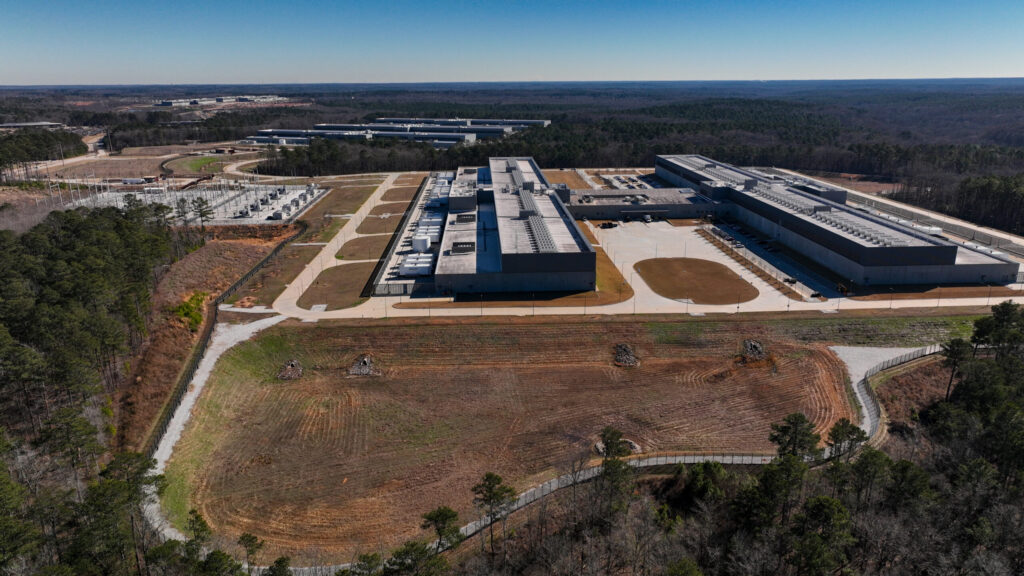
Colorado lawmakers mull competing bills on data centers
Scott Weiser
scott.weiser@gazette.com
Updated 5 hours ago
A Colorado coalition of data center developers and operators is urging lawmakers to pass a proposal that offers tax breaks to attract large facilities, while calling a competing bill a major obstacle to new investment. Meanwhile, proponents of the latter...

Cherry Creek school district to pay ex-superintendent $165K after resignation amid toxic workplace claims
Nico Brambila
nico.brambila@denvergazette.com
Updated 17 hours ago
The Cherry Creek School District will pay nearly $165,000 to former Superintendent Chris Smith following his resignation last month amid allegations of a toxic workplace. The board of education announced last week that the district is contractually obligated to pay...

Golden police chief retires after leave
Sage Kelley
sage.kelley@denvergazette.com
Updated 17 hours ago
The Golden Police Department is searching for a new chief of police after Joe Harvey stepped away from his 40-year career. Harvey, who served as the chief starting in 2023, officially announced his retirement on Feb. 16 in a news...

U.S. Supreme Court to hear bid by oil companies to toss climate suits in Boulder case
Reuters
reuters@gazette.com
Updated 16 hours ago
WASHINGTON • The U.S. Supreme Court has agreed to hear a bid by ExxonMobil and Suncor Energy to scuttle a lawsuit brought by officials in Boulder that seeks to hold the oil companies liable for allegedly helping to fuel climate...
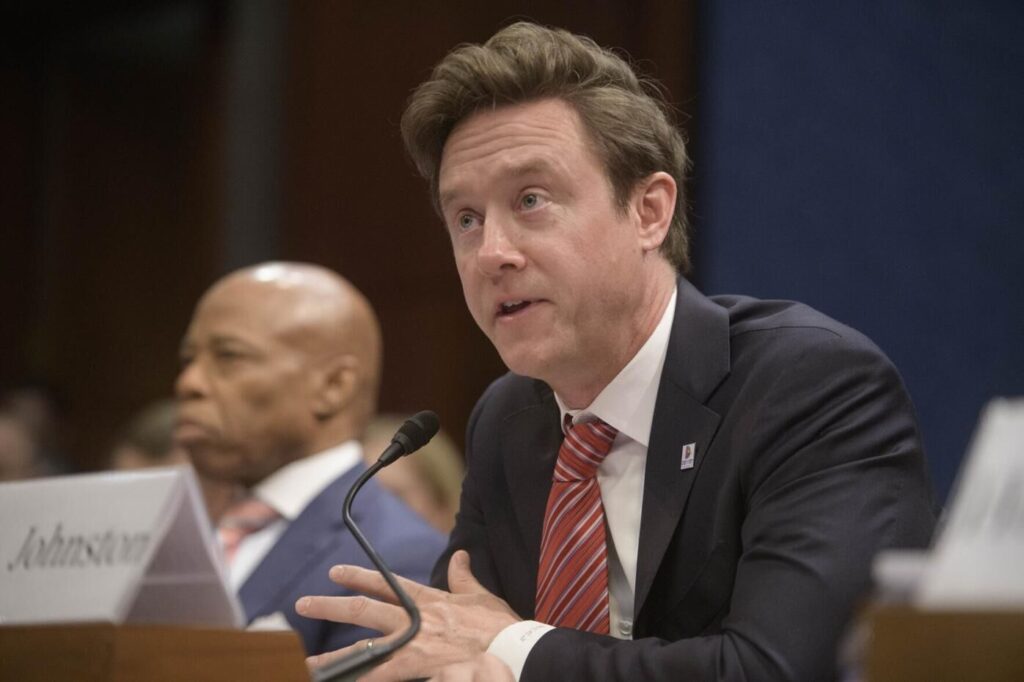
Denver plans moratorium on new data centers
Deborah Grigsby
deborah.smith@denvergazette.com
Updated 2 hours ago
As artificial intelligence drives the data center construction boom, building one in Denver is poised to get more complicated after Mayor Mike Johnston and members of the Denver City Council announced plans to impose a moratorium on new facilities. Under...
Battle lines drawn as Colorado considers decriminalizing prostitution
Marissa Ventrelli
marissa.ventrelli@coloradopolitics.com
Updated 16 hours ago
Battle lines have begun to form at the Colorado state Capitol, where legislators are preparing to tackle a proposal to decriminalize prostitution statewide. Proponents said the proposal — which would eliminate the offense of soliciting for prostitution and the prohibition...

Colorado Medicaid probe uncovers millions of dollars in alleged transport fraud ring
Nico Brambila
nico.brambila@denvergazette.com
Updated 3 days ago
Colorado Medicaid officials detected $25 million in abnormal billing over just four months two years ago — a surge that prompted a new state law and the suspension of dozens of providers in what authorities now describe as an organized...

Greeley voters to decide fate of project that includes minor league hockey arena
Hap Fry, Special to The Gazette
hap-fry@gazette.com
Updated 2 days ago
GREELEY • The fate of the Cascadia development — and quite possibly the future direction of the city — is in the hands of Greeley voters this Tuesday during a special city election on whether the landscape-altering project should be...

Democrats Michael Bennet, Phil Weiser make their cases to be Colorado’s next governor ahead of primary
Ernest Luning
ernest.luning@coloradopolitics.com
Updated 24 hours ago
Nearly eight months before ballots will be counted in Colorado’s race for the its open gubernatorial seat, voters are lining up behind two of the state’s leading Democrats, who are facing off in a primary that will likely determine which...
U.S. Supreme Court strikes down Trump’s tariffs, upending central plank of economic agenda
Lindsay Whitehurst
lindsay.whitehurst@associatedpress.com
Updated 4 days ago
WASHINGTON • The Supreme Court struck down President Donald Trump’s global tariffs on Friday, handing him a major loss on an issue crucial to his economic agenda. The 6-3 decision centers on tariffs imposed under an emergency powers law, including...