

In first Colorado visit, Trump’s labor secretary discusses balancing U.S. workforce
U.S. Secretary of Labor Lori Chavez-DeRemer made her first visit to Colorado since being sworn in to President Donald Trump’s cabinet in March on Wednesday.
The top official in the Department of Labor is traveling the country for her “America at Work” listening tour to hear from workers and employers about what federal policies are affecting the labor force. Colorado is the sixth state she’s visited so far.
Chavez-DeRemer visited Denver for the Colorado Business Roundtable’s Future of Work conference hosted at Empower Field’s conference lounge to discuss the Trump administration’s goals to balance the nation’s workforce with more trade jobs.
The labor secretary was the former mayor of Happy Valley, an Oregon town outside of Portland, before becoming a U.S. congresswoman in 2022 where she sat on several House committees covering agriculture, education and the workforce and transportation.
She also has experience as a business owner through her anesthesia management company.
On April 23, Trump signed an executive order directing the labor, education and commerce secretaries to come up with a plan addressing the nation’s workforce needs with a goal of supporting a million apprenticeships a year.
Chavez-DeRemer said Wednesday the administration will doll out federal funding to community colleges and trade schools where there is market demand to support the labor market, adding there’s been a “disconnect” between what jobs are open and what government agencies are funding.
“We’re just under about 700,000 (apprentices) annually,” she said to a crowd of state business leaders. “We have to grow that. What we want to do is fortify what’s already in place.”
But she added that they’re working to make sure there isn’t too much investment in trade jobs, that jobs requiring degrees are neglected, such as engineering or technology.
“We do not want that pendulum to swing back so far in the other direction that we’re only talking about trade. Or we’re only talking about skilled workers,” she said.
The labor secretary also said that for “far too long,” the cost of higher education hasn’t been producing enough workers with the required skills needed for the economy.
In an earlier panel of Colorado business leaders at the event, Jeanne Work – vice president of the southwest and west U.S. for engineering and construction firm Jacobs – said federal spending cuts were impacting the company.
“So much of the work we do is for public agencies,” Work said.
She added they’re remaining active despite cuts as there are other projects elsewhere in the world they can pivot their workforce to.
On the upside, Work added Trump’s massive cuts in the federal workforce is providing many opportunities for Jacobs to hire top talent that has been working at U.S. agencies.
“We’re excited to be able to evaluate how those folks can enhance our teams,” Work said.
In addition to federal cuts, Chavez-DeRemer reiterated Trump’s message that tariffs are working for the U.S. economy, citing steady job numbers and unemployment rates in April’s jobs report.
Many economists expect the job market to get hit by the trade wars at some point this year, though the labor secretary said she believes next month’s numbers will outperform again.
She added successes in the job market’s performance will come from growing manufacturing jobs across the U.S. and seeing investors spend more money within the country.
“I have a big job to do,” Chavez-DeRemer said.


Trump touts victories at border, in economy in prime-time address to the nation
The Associated Press
the-associated-press@coloradopolitics.com
Updated 15 hours ago
WASHINGTON — In a rare evening address from the White House, President Donald Trump boasted on Wednesday of his accomplishments and blamed his Democratic predecessor for soaring consumer prices as his party braces for a tough midterm election next year....
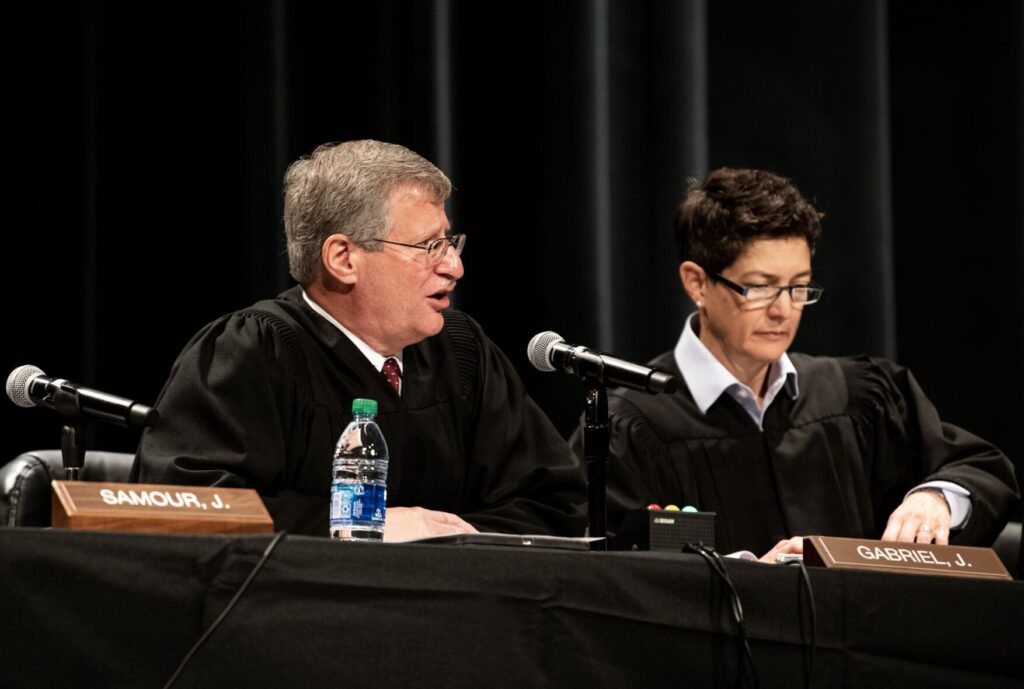
Colorado justices debate what to do when governments withhold key info from plaintiffs
Michael Karlik
michael.karlik@coloradopolitics.com
Updated 8 hours ago
Members of the Colorado Supreme Court seemed to be on different pages when they considered on Tuesday whether a woman injured by a sidewalk defect in Manitou Springs was forever barred from suing the actual entity responsible because she did...

US House passes Colorado Rep. Lauren Boebert’s bill to remove gray wolves from endangered species list
Marianne Goodland
marianne.goodland@coloradopolitics.com
Updated 6 hours ago
A bill sponsored by U.S. Rep. Lauren Boebert of Colorado to delist the gray wolf from federal protections for endangered species cleared the U.S. House late on Thursday, setting up a fight in the U.S. Senate over a measure supporters...

Lawmakers from Colorado, 6 other states condemn federal immigration tactics
Marissa Ventrelli
marissa.ventrelli@coloradopolitics.com
Updated 9 hours ago
A pair of Colorado state lawmakers joined elected officials from six other states at a media briefing Thursday to discuss their responses to federal immigration crackdowns. The meeting, hosted by State Futures, featured a dozen Democratic lawmakers from states including...
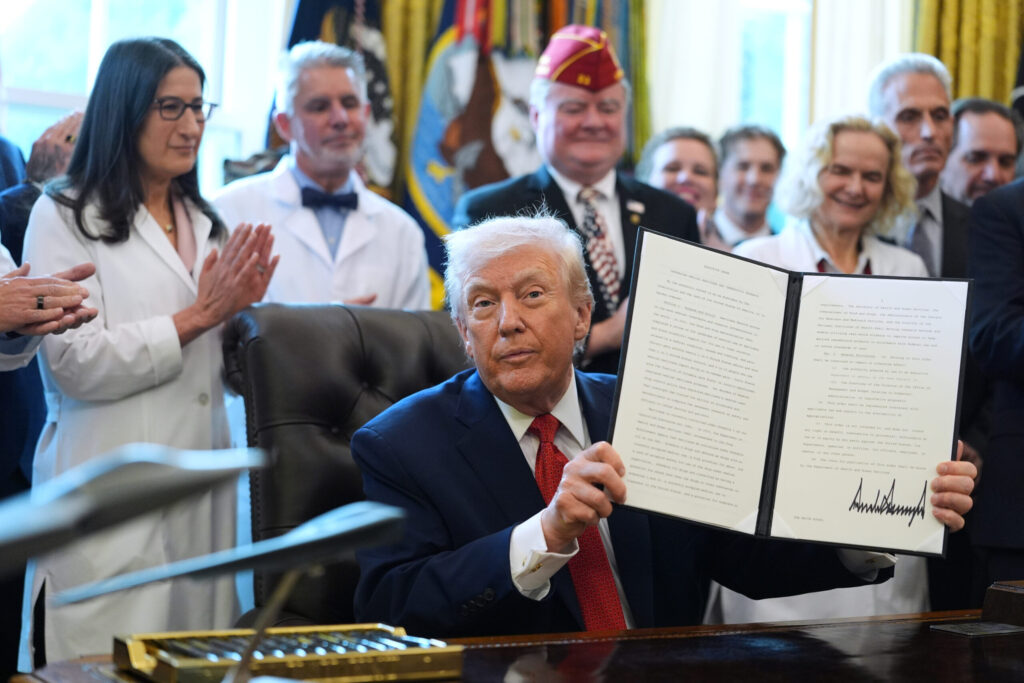
Trump signs executive order that could reclassify marijuana as a less dangerous drug
Lindsay Whitehurst
lindsay.whitehurst@associatedpress.com
Updated 12 hours ago
WASHINGTON (AP) — President Donald Trump signed an executive order Thursday that could reclassify marijuana as a less dangerous drug and open new avenues for medical research, a major shift in federal drug policy that inches closer to what many...

House passes GOP healthcare bill amid centrist Obamacare revolt
Rachel Schilke, Washington Examiner
rachel.schilke.washington.examiner@gazetteedit.wpenginepowered.com
Updated 4 hours ago
The House passed a sweeping healthcare bill on Wednesday, a vote that largely split along party lines, as Democrats and some Republicans expressed concern that the legislation allows enhanced Obamacare subsidies to expire at the end of the year. House...

Colorado justices splinter over approach to sentencing review
Michael Karlik
michael.karlik@coloradopolitics.com
Updated 7 hours ago
Members of the Colorado Supreme Court were divided on Monday about whether vehicular homicide stemming from intoxicated driving is “grave and serious” in every possible scenario, with two justices suggesting the court reconfigure its approach for determining the proportionality of...

Colorado campaign debt collection efforts aren’t much of an effort
David Migoya
david.migoya@gazette.com
Updated 9 hours ago
It was only weeks after the U.S. military in September 2011 repealed its “don’t ask, don’t tell” policy barring openly gay men and women from serving in the armed forces that Army veteran Brian Carroll announced his candidacy for a...

Colorado campaign finance penalties ‘a runaway train without an off-ramp’
David Migoya
david.migoya@gazette.com
Updated 9 hours ago
Each day, Mike Stapleton wakes up owing the state of Colorado another $1,550. By the end of each week, Stapleton’s debt for not filing nearly three dozen campaign finance reports dating to April 2018 will have grown by nearly $11,000....

Small businesses drive the rural Colorado economy, but barriers keep growing | FISCAL ROCKIES
Rachael Wright
rachael.wright@coloradopolitics.com
Updated 1 day ago
Editor’s Note: Once among the nation’s fastest-growing economies, Colorado today confronts mounting challenges that threaten its momentum. This series reveals how a state once defined by prosperity is navigating economic cliffs and ridges. We explore the impact that increased regulations, tariffs,...