

Reform exploited Rx discount program costing Colorado workers | OPINION

In Colorado, working families are being squeezed at the pharmacy counter while large billion-dollar hospital systems are exploiting a program designed to help patients and under-served communities. The tremendous growth of the Federal 340B Program is now increasing costs to our unions’ health insurance, thus increasing costs for our hardworking tradesmen. Something must be done to shed light on the effects of the unforeseen costs, and we must work to stop any action that continues to promote the program’s loopholes, allowing billions of dollars, meant to reduce costs for working families, to go to large hospitals systems’ bottom lines.
Created in 1992, the 340B Hospital Markup Program began as a vital prescription drug discount program to support critical access hospitals and health care centers serving low-income and rural communities; and the program did just that for decades. Here’s how it works: hospitals buy medications at a significant discount from manufacturers through 340B, then turn around and charge insurance plans — and by extension, workers — in many cases outrageous markups, keeping the difference. Today, the program is now unrecognizable due to lack of oversight, accountability and guardrails, allowing many large “nonprofit” tax-exempt hospital systems to “buy low and sell high,” turning it into a volume game and money-making operation — one that drives up costs on the backs of working Coloradans, showing little-to-no benefit to patients.
Let me be clear, not every 340B entity is abusing this program, but a multitude of reports show these large bad actors account for the exponential growth, while safety-net providers and patients see less benefits and services, and costs shift to Coloradans. For example, a January New York Times article reported about a woman whose hospital purchased her cancer medications under the 340B discount for $2,700 and billed her insurance $22,700 — and when the insurance company only agreed to pay the hospital $10,000, the hospital charged the patient $5,000 in out-of-pocket costs. The 340B program has ballooned from just $5 billion in 2010 to more than $66 billion in 2023, bigger than Medicaid, with no ceiling in sight. That means employers — whether it’s a union health trust, a small business, or even the state government — pay more, while hospitals quietly pocket the difference without reducing prescription drug costs to patients.
Stay up to speed: Sign up for daily opinion in your inbox Monday-Friday
The CBCTC represents Colorado’s building trades, encompassing thousands of skilled journeymen and registered apprentices in 14 crafts in construction, such as our pipefitters, sheet-metal workers, plumbers, laborers and electricians. Many of these trades act as self-insured employers, providing health benefits for their union members. This is a tremendous benefit to our tradesmen, and our union trustees work hard to lower health care costs for their members. Our health funds lose negotiated prescription drug rebates if a member, unbeknownst to them, sought treatment at a facility owned by a 340B health care system. This cycle means higher drug markups, higher copays and more money out of the pockets of hardworking Coloradans.
A 2025 IQVIA study found in 2023, the 340B program cost $152 million in lost rebates for Colorado employers, or $45 per beneficiary. It also found state legislation that allow unlimited contract pharmacies, like Colorado SB-71, will cost Colorado employers an additional $23 million annually in lost rebates.
We support the original intent of the 340B program. If drug companies pay billions in discounts, and patients and vulnerable communities receive reduced costs and increased services to that degree, a slight cost to our funds seems manageable. But that is not what is happening.
Colorado lawmakers must prioritize accountability before they consider expanding the program by looking under the hood to identify good stewards from bad, locate where the money is going, determine increased costs to the overall health care system, and put safeguards in place to ensure 340B serves its original purpose — helping patients.
For these reasons, we urge Colorado lawmakers to support SB-124, requiring meaningful transparency and patient benefit within the 340B program in Colorado, and oppose SB-071, which only continues to protect the bad actors, costing Colorado workers, taxpayers and patients more money. We also encourage legislators to ensure SB-124 includes safeguards for rural hospitals — keeping their doors open and those patients served. Gov. Jared Polis has made prescription drug affordability a priority, but without reform, the unchecked expansion of 340B will only make things worse.
If legislators want to stand with workers, they must first stand up to the bad acting hospitals’ abuse of the system, and fix 340B before it costs workers even more.
Jason L. Wardrip is business manager of the Colorado Building & Construction Trades Council.


Who has the power to declare war?
Tom Cronin Bob Loevy
tom-cronin-bob-loevy@coloradopolitics.com
Updated 20 hours ago
Our constitutional framers boldly and ambitiously granted Congress the power to declare war yet granted the executive the responsibility, after war is declared, to supervise war as the commander-in-chief. That worked well until the Cold War began. The U.S. has been...

The delicate, ever-changing dance between politics and religion | SONDERMANN
By Eric Sondermann
by-eric-sondermann@coloradopolitics.com
Updated 2 hours ago
The dance, really a marathon that brings to mind the classic movie “They Shoot Horses, Don’t They?”, has been going on as long as there have been governments and organized religion. That is to say that this delicate tango has...
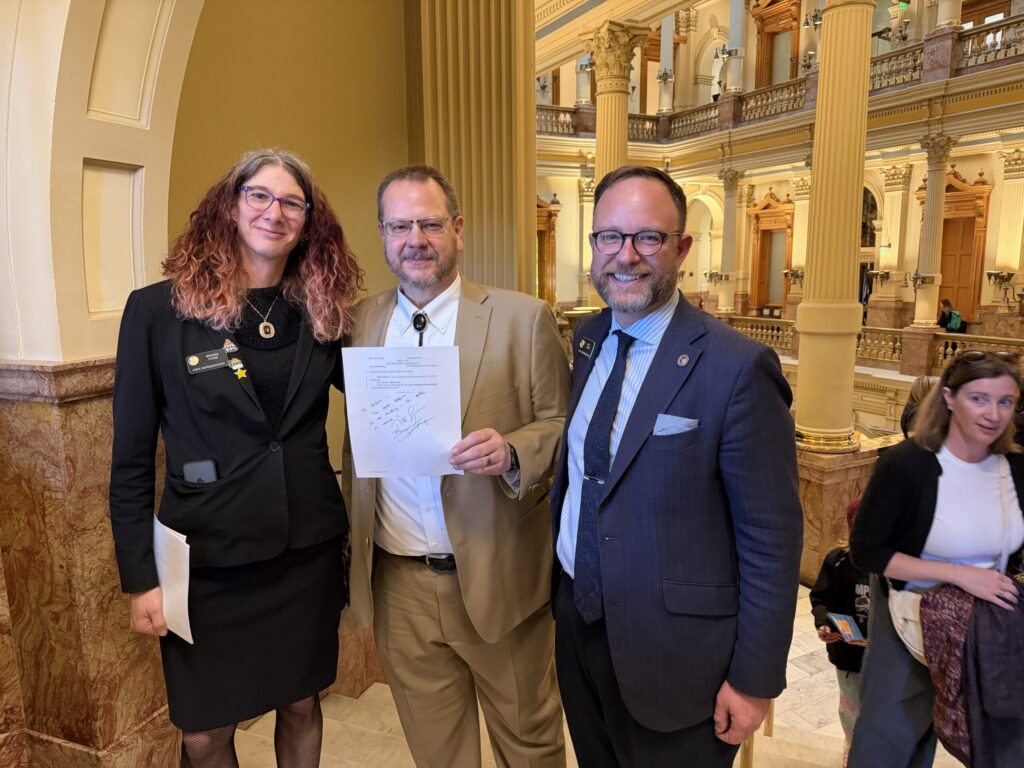
Roasts, get yer roasts, here: Capitol M | Week of March 14, 2026
Marianne Goodland
marianne.goodland@coloradopolitics.com
Updated 3 days ago
The lighter side of the Capitol, especially in the past week Apparently, the pending and eventual switch to daylight stupid time has put people in some pretty funny moods. And thank goodness! On March 4, the Senate approved the appointments...

Colorado’s election audits are built on math, not politics | IN RESPONSE
Colorado Politics
colorado-politics@coloradopolitics.com
Updated 2 days ago
By Amanda Gonzalez You don’t build a secure election system overnight. You build it over years — layer by layer — reinforcing it with stronger safeguards, better technology and more transparency. In Colorado, one of those safeguards is a little-known...

The backstory behind the school-funding TABOR ballot initiative | Paula Noonan
Paula Noonan
paula-noonan@coloradopolitics.com
Updated 3 days ago
Last session, the General Assembly took in a report on K-12 public school funding. The legislature ordered the report because an idea circulated Colorado was among the bottom five states in dollars allocated per student even though it is one...
Senate Bill 22 critical to keeping energy costs affordable, power reliable | PODIUM
Colorado Politics
colorado-politics@coloradopolitics.com
Updated 2 days ago
By Brian Wortinger I love Colorado’s outdoors. I’m an avid skier and hiker and my happiest days are spent deep in the mountains with no one around for miles. I want to protect that environment as much as anyone along...

Swipe-fee ban a giveaway to big boxes, mega-chains | IN RESPONSE
Colorado Politics
colorado-politics@coloradopolitics.com
Updated 4 days ago
By Jenifer Waller Four Colorado lawmakers recently published an op-ed in Colorado Politics calling for legislation to prohibit interchange fees on the sales tax portion of credit and debit card transactions (“Why Colorado should stop charging swipe fees on sales...

Leveling the playing field —why Colorado must fight fire with fire on redistricting | OPINION
Colorado Politics
colorado-politics@coloradopolitics.com
Updated 3 days ago
By Curtis Hubbard So Dick Wadhams suddenly cares about mid-decade redistricting — hyperventilating about efforts to “hijack Colorado’s congressional map” and calling those of us involved with the effort “amazingly naive.” Where was his outrage last year when President Donald...
You get what you pay for in your state reps | Hal Bidlack
Hal Bidlack
hal-bidlack@coloradopolitics.com
Updated 5 days ago
My regular readers will know of my affection for the Out West Roundup, a Colorado Politics feature that lets us keep up to date with the goings on out here in the western U.S., and draws attention to stories that...
A warrant should mean something — expedite carrying them out | OPINION
Colorado Politics
colorado-politics@coloradopolitics.com
Updated 5 days ago
By Aaron Ping My name is Aaron Ping. I am a father from Washington state, and I am writing because my 16-year-old son, Avery, cannot. Avery died on Dec. 19, 2024. The drugs that killed him were ordered through Snapchat....