

Ranked-choice proposition a solution in search of a problem | OPINION

Diana DeGette
As a lifelong Coloradan, I’ve been proud to watch our state’s election system reform and grow into one of the strongest in the nation. However, Proposition 131 threatens to unravel that progress.
An expensive and confusing experiment, Prop 131 creates a hybrid jungle primary and ranked-choice voting system that only applies to about half of Colorado’s candidates while giving special interests more opportunities to influence primary outcomes. In short, it is a solution in search of a problem.
Colorado’s voter turnout has ranked among the highest in the country — including significantly exceeding the national turnout for young voters. Our state also has the ability for unaffiliated voters to participate in primaries, multilingual ballot access and an expansive number of ballot drop-boxes and voting centers. Since Colorado passed major election reforms in 2013, we have consistently remained one of the top states in turnout for more than a decade. Why would we risk a system that works so well for one that could sow confusion?
One of the dangers of this initiative is its complexity. Studies have shown when voters are confronted with confusing and complicated ballots, many simply don’t vote. In places like New York City and Maine, where ranked-choice voting has been implemented, there has been an uptick in ballot errors, leading to disqualified votes and voter frustration. It is also especially burdensome for marginalized and minority communities, who may already face barriers to voting.
Additionally, Prop 131 would apply only to certain races, like those for U.S. Senate, U.S. House, statewide offices and legislative races, while leaving out other important contests. Presidential elections and local offices, such as district attorneys, countywide offices, city councils and school boards, would be elected under the current system. This inconsistency will only create further confusion for voters, hurting our voter participation and disenfranchising the very people we have worked so hard to bring into the democratic process.
Prop 131 would also open the door to manipulation. Ranked-choice voting can be exploited by wealthier candidates with greater resources to game the system. This creates an environment where candidates with more money can more easily influence voters by strategically targeting their messaging to ensure they pick up the second- or third-choice votes, while grassroots and underfunded candidates may struggle to compete.
The system also lends itself to confusion when results are delayed or outcomes appear unpredictable. In Alaska’s recent special election using ranked-choice voting, voters waited weeks before knowing the results, raising questions about the transparency and reliability of the process.
In fact, Prop 131 would change virtually all the processes and technology from our current system, costing taxpayers an estimated $21 million in the first three years. This would raise filing feeds for Colorado businesses — otherwise, lawmakers would have to find money in the state budget.
The Colorado County Clerks Association has already raised red flags about whether this system can be implemented within the two-year deadline for Prop 131. They’ve warned it would be a disaster if it is rushed.
At a time when election deniers are spreading conspiracy theories and misinformation to undermine trust in our elections, the last thing Colorado needs is a system that casts even more doubt on the results. Prop 131 would be a step in the wrong direction, and we must reject it to protect the integrity of our elections.
Diana DeGette, D-Denver, represents Colorado’s First Congressional District in the U.S. House of Representatives.


You get what you pay for in your state reps | Hal Bidlack
Hal Bidlack
hal-bidlack@coloradopolitics.com
Updated 7 hours ago
My regular readers will know of my affection for the Out West Roundup, a Colorado Politics feature that lets us keep up to date with the goings on out here in the western U.S., and draws attention to stories that...
A warrant should mean something — expedite carrying them out | OPINION
Colorado Politics
colorado-politics@coloradopolitics.com
Updated 7 hours ago
By Aaron Ping My name is Aaron Ping. I am a father from Washington state, and I am writing because my 16-year-old son, Avery, cannot. Avery died on Dec. 19, 2024. The drugs that killed him were ordered through Snapchat....

Lower Basin must adapt to Colorado River hydrology | OPINION
Colorado Politics
colorado-politics@coloradopolitics.com
Updated 7 hours ago
By Nick Peters A February deadline for determining future operating guidelines for the West’s two largest reservoirs came and went with no agreement on the table and clear lines drawn in the sand. A seven-state resolution to how Lake Mead and Lake Powell will...

Colorado’s GOP at its best — and worst | Dick Wadhams
Dick Wadhams
dick-wadhams@coloradopolitics.com
Updated 3 days ago
By Dick Wadhams Colorado Republicans are fighting to be relevant in the face of gross mismanagement by Democrats who totally control state government. While the Colorado Republican Party is mired in controversy, several Republican elected officials and candidates represent the...

Someone’s lying in latest activist embarrassment for Polis’ CPW Commission | Rachel Gabel
Rachel Gabel
rachel-gabel@coloradopolitics.com
Updated 3 days ago
Either Samantha Miller is lying, or Gov. Jared Polis is. If Miller is lying, she is so secure in the red carpet rolled out for animal activists by this administration she is willing to put words in the governor’s mouth....

Ask Secretary of State candidates if they’re in favor of independent election audits | Jon Caldara
Jon Caldara
jon-caldara@coloradopolitics.com
Updated 5 days ago
This part will disappoint angry people on Twitter: Relax. Put the pitchforks down. I am not relitigating the 2020 election or mail ballots or even Tina Peters. But I am saying people don’t trust elections like they used to. And...

Redistricting plan to give Colorado Dems 7 members of the U.S. House will split El Paso County | Bob Loevy
Bob Loevy
bob-loevy@coloradopolitics.com
Updated 3 days ago
A proposed redistricting plan, which would give Colorado seven Democratic members of the U.S. House of Representatives and only one Republican, will split El Paso County into two parts and thereby weaken the county’s influence in Congress. El Paso County,...

Can deliberation save democracy? | Vince Bzdek
Vince Bzdek
vince.bzdek@gazette.com
Updated 19 hours ago
In September 2019, 523 Americans traveled to Dallas for an experiment called “America in One Room.” The gathering was designed to test a theory: Could representative citizens deliberate productively even in an era of intense polarization? The event focused on...
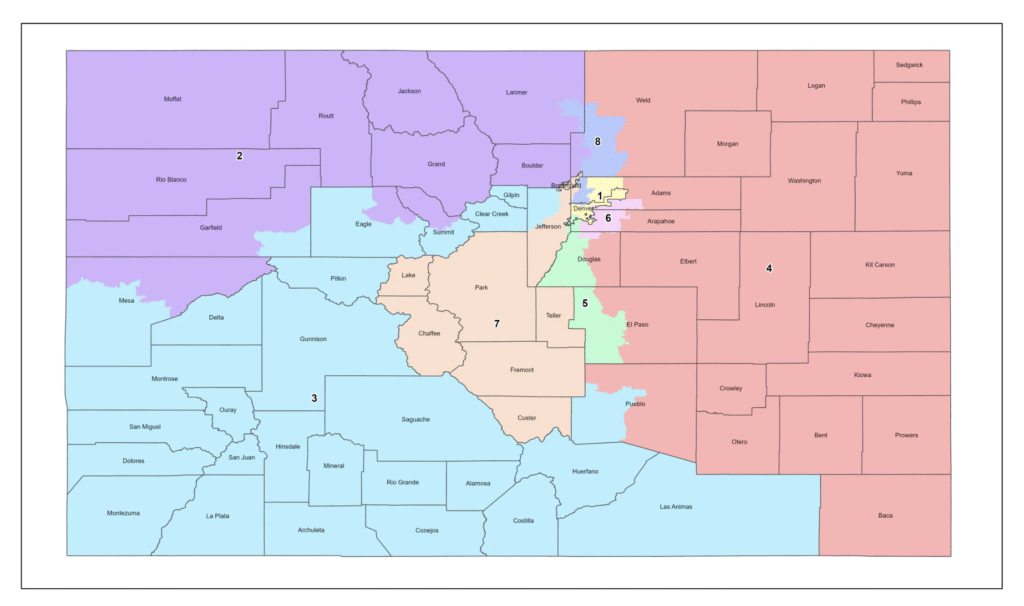
Redistricting scheme would give Colorado Democrats seven House members, split El Paso County | Bob Loevy
Bob Loevy
bob-loevy@coloradopolitics.com
Updated 2 days ago
A proposed redistricting plan, which could give Colorado seven Democratic members of the U.S. House of Representatives and only one Republican, would split El Paso County into two parts and thereby weaken the county’s influence in Congress. El Paso County,...

Is Trump a builder or just a latter-day headhunter? | SONDERMANN
By Eric Sondermann
by-eric-sondermann@coloradopolitics.com
Updated 5 days ago
It was well under 100 hours after President Donald Trump’s overly long, overly theatrical State of the Union speech that he unleashed American bombers across Iran. As I write, it is now less than 100 hours since those bombers started...