

Newest federal judge sworn in, appellate event covers wide-ranging topics | COURT CRAWL
Welcome to Court Crawl, Colorado Politics’ roundup of news from the third branch of government.
The most recent appointee to Colorado’s federal trial court held his ceremonial swearing-in this month, and the state’s appellate judges and justices spoke to attorneys about a range of hot topics.
The ‘first third’
• In January, the U.S. Senate confirmed S. Kato Crews to a lifetime appointment on Colorado’s U.S. District Court. Crews had been a magistrate judge for the previous five years. During his formal swearing-in ceremony earlier this month, Crews celebrated being the “first third”: The third magistrate judge in a row elevated to the district court bench and the third Black man to hold the seat.
• “The magistrate judges are the face of the federal court. They are in the trenches with civil litigants and they are on the front lines of ensuring due process in criminal cases,” he said.
• Crews also thanked Colorado’s legal community for publicly and privately supporting him after a less-than-ideal Senate confirmation hearing.

U.S. Magistrate Judge S. Kato Crews testifies at his confirmation hearing to be a district court judge on March 22, 2023.
• To date, the Biden administration has appointed five of the seven district judges in Colorado and there are no pending vacancies. Currently, there is one full-time magistrate judge vacancy for Crews’ old seat.
Appellate court updates
• Several of Colorado’s justices and appellate judges provided updates on topics related to appellate advocacy, including the use of artificial intelligence to perform legal research, the common pitfalls in family law appeals and how to act professionally when the other side is causing problems.
• Chief Justice Brian D. Boatright said he will swear in the next chief, Justice Monica M. Márquez, on July 26. The transition has been planned since 2020, when the Supreme Court adopted a rotational system for the chief justice seat.

Colorado Supreme Court Justice Monica M. Márquez reacts to a joke at oral arguments during Courts in the Community on Thursday, Oct. 26, 2023, at Gateway High School in Aurora, Colo. (Timothy Hurst/Denver Gazette)
• Boatright disclosed at the appellate event that the Ralph L. Carr Colorado Judicial Center still contains a “tremendous amount of damage” after a man broke in four months ago. Boatright said he initially thought the vandalism was related to the Supreme Court’s December decision on Donald Trump’s eligibility to appear on Colorado’s presidential primary ballot (it wasn’t).
• Justice Melissa Hart also advised police to “tread carefully” when interrogating suspects using misleading tactics, as courts can potentially find a confession involuntary if officers go too far.
Solicitor general visits Colorado
• The Biden administration’s solicitor general, Elizabeth B. Prelogar, visited Vail over the weekend for the Colorado Women’s Bar Association convention. She spoke with Court of Appeals Judge Jaclyn Casey Brown about advocating in front of the U.S. Supreme Court’s conservative majority and trying to influence the contours of the ultimate decision, even if the justices are hostile to the government’s position.
• Elsewhere at the convention, U.S. District Court Judge Charlotte N. Sweeney received the bar association’s “trailblazer” award. U.S. Magistrate Judge Kathryn A. Starnella also led a session for attendees about “How to Thrive,” which was not open to the media.

U.S. Solicitor General Elizabeth B. Prelogar speaks with Colorado Court of Appeals Judge Jaclyn Casey Brown on May 18, 2024 at the Colorado Women’s Bar Association conference at The Hythe luxury resort in Vail.
State Supreme Court action
• The Colorado Supreme Court sidestepped an outcome that would have likely triggered a flood of litigation, deciding the property owners adjacent to a right-of-way generally also own the mineral rights underneath that roadway to the center line.
• By 6-1, the justices determined the University of Denver could be sued for breach of contract because it allegedly failed to honor its promise of a “thorough, impartial and fair” investigation into campus sexual misconduct through its deviations from protocol.
• The court censured former Arapahoe County District Court Judge John E. Scipione, who resigned last year after admitting to using his position to seek intimate relationships with subordinates, inappropriately trying to influence a case involving his family and failing to disclose relevant information when applying to be a judge.

Former Arapahoe County District Court Judge John E. Scipione
• In an unusual case where both the prosecution and the defense agreed a woman’s conviction violated the prohibition on double jeopardy — but the attorney general’s office maintained the conviction should still stand — the Supreme Court ruled the problematic conviction needed to merge into another.
• The Supreme Court traveled to Central High School in Pueblo as part of its “Courts in the Community” program, where the justices heard cases and took questions from students. Members of the court answered an array of familiar inquiries, but also a novel question: Do the female justices get treated any differently than their male counterparts? The consensus was they do not get treated differently while on the bench hearing cases, but bias manifests itself in other ways.
• The Supreme Court heard oral arguments in a case that questions whether officers can use a search warrant covering an Internet Protocol address and apply it to a physical space. Although the defense warned that such warrants could sweep up people walking by on the street and residents of communal housing, the justices weren’t sure they needed to reach those other contexts.
• When do parties to potential litigation have the duty to preserve evidence? The court considered whether a Littleton landlord who knew about their tenants’ possible exposure to meth fumes was properly sanctioned for not retaining evidence of the alleged drug manufacturing.
• The justices entertained the idea of asking the legislature to abolish “peremptory strikes” — which typically allow lawyers to dismiss jurors for no reason — as a means of combating racial discrimination in jury selection.
• The Supreme Court seemed unlikely to agree that Colorado’s “Make My Day” law authorizing deadly force against home intruders could serve as a defense to reckless manslaughter.

FILE PHOTO: Students from Pine Creek High School ask the justices of the Colorado Supreme Court questions after watching them hear arguments from two cases in the high school auditorium on Nov, 17, 2022. Pictured from left to right are Justice Richard L. Gabriel, Justice Monica M. Márquez, Chief Justice Brian D. Boatright, Justice William W. Hood III and Justice Melissa Hart.
• Even if the Supreme Court doesn’t find that a defendant’s convictions must be automatically reversed because his lawyer was simultaneously being prosecuted by the same district attorney’s office, the justices were uneasy with the attorney’s conflict of interest.
• The justices heard that if they abolish the rule prohibiting attorneys from receiving referral fees, it will give rise to an industry of middlemen who take cases only to farm them out to other lawyers and pocket the fee. On the flip side, supporters of the change suggested connecting clients with competent attorneys is a desirable outcome regardless.
Heard on appeal
• Although the state’s Court of Appeals agreed no intentional racial discrimination had taken place, it chastised a Hispanic prosecutor for using her own ethnicity as evidence she couldn’t have discriminated against a Hispanic juror by dismissing him from the trial.
• The Court of Appeals agreed a private contractor, not the Regional Transportation District, was responsible for $111.5 million in costs related to the faulty rollout of the commuter rail lines’ grade crossing equipment.
In federal news
• By 2-1, the U.S. Court of Appeals for the 10th Circuit concluded anonymous staff at the University of Colorado’s medical campus should have their faith-based exemptions to the COVID-19 vaccine granted. The majority ripped into CU for acting with “animus” against certain religions, while the dissent believed that characterization wasn’t factual.
• The 10th Circuit agreed an Aurora officer didn’t have reasonable suspicion to detain a man who, other than his race, looked nothing like what a 911 caller reported.
• Current and former federal judges encouraged lawyers to take cases — or even parts of cases — pro bono because of the difference an attorney can make to the trajectory of a plaintiff’s claim.

Attorney Matthew Skeen, U.S. District Court Judges Gordon P. Gallagher and S. Kato Crews, retired U.S. Magistrate Judge Kristen L. Mix and attorney Kevin Homiak speak on a panel about pro bono opportunities for lawyers at Colorado’s federal trial court on May 8, 2024.
• John C. Eastman, the attorney who drew up the plan for former President Donald Trump to unlawfully remain in office after the 2020 election, withdrew as counsel from a civil lawsuit in Colorado’s federal court because his professional discipline rendered him not in good standing.
• A federal judge is considering whether to block Colorado from requiring out-of-state banks that lend to Colorado residents to comply with Colorado’s own ceilings on interest rates.
• After 4.5 years in which a family of Gunnison landlords largely ignored the nondiscrimination agreement they signed with the federal government, a judge has said time’s up and an independent property manager will be appointed to ensure compliance.
Vacancies and appointments
• The governor has appointed Magistrate Kellie L. Starritt to succeed retiring longtime Chief Judge J. Steven Patrick on the Seventh Judicial District Court (Delta, Gunnison, Hinsdale, Montrose, Ouray and San Miguel counties).
• The governor appointed Magistrate Audrey A. Galloway to the Weld County District Court, where she succeeds retiring Judge Meghan Saleebey.
• The governor also selected Magistrate Hiliary A.P. Gurney and El Paso County Court Judge Dennis L. McGuire to fill a pair of vacancies on the Fourth Judicial District Court (El Paso and Teller counties). Gurney will succeed Judge Marla Prudek and McGuire will succeed Judge Scott Sells.
• Finally, the governor picked criminal defense lawyer and Edgewater municipal judge Miles A. Cabral to succeed retiring Lincoln County Court Judge Truston Lee Fisher.
• There are three finalists to succeed Mesa County District Court Judge Richard T. Gurley, who is resigning to become a federal magistrate judge: Scott J. Burrill, Mesa County Court Judge Craig P. Henderson and Montezuma County Court Judge JenniLynn Everett Lawrence.
• Applications are due by July 16 to succeed retiring Chief Judge Michael A. O’Hara III of the 14th Judicial District (Grand, Moffat and Routt counties).
• Applications are due by July 18 to succeed retiring Mesa County District Court Judge Valerie J. Robison.

Members of the Colorado Supreme Court and Chief Justice Brian D. Boatright, at right, applaud for outgoing deputy public information officer Jon Sarché, left, during a “Courts in the Community” event at Central High School in Pueblo on May 9, 2024.
• The Judicial Department’s longtime deputy public information officer, Jon Sarché, has stepped down from his role after 17 years. The Supreme Court gave him a round of applause during its “Courts in the Community” event this month.
• U.S. Attorney Cole Finegan announced he will resign at the end of this month.
Returning after Memorial Day
• Court Crawl will take Memorial Day off and return in June.

Appeals court shuts down path to challenge convictions if lawyer tells jury that defendant is guilty
Michael Karlik
michael.karlik@coloradopolitics.com
Updated 17 hours ago
Colorado’s second-highest court concluded on Wednesday that defendants cannot challenge whether the evidence was sufficient to sustain their convictions if their lawyer argues to the jury that it should find the defendant guilty. The U.S. Supreme Court has provided guidance...

Colorado senator, local officials push for new Colorado Springs federal courthouse
Michael Karlik
michael.karlik@coloradopolitics.com
Updated 2 days ago
Local officials and one of Colorado’s U.S. senators urged the judiciary earlier this year to explore placing a new federal courthouse and judge’s chambers in Colorado Springs, while the district court is cautioning that Congress must establish new judgeships before...
A year of developments in the CBI forensic lab scandal
Jenny Deam
jenny-deam@coloradopolitics.com
Updated 2 days ago
As the scandal at the Colorado Bureau of Investigation forensic lab moved through its second year, a series of startling developments and revelations emerged with no clear end in sight and the full toll still unknown. At the heart of a scandal unlike any before in state history,...
Federal judge sides with Douglas County School District in ex-admin’s discrimination lawsuit
Michael Karlik
michael.karlik@coloradopolitics.com
Updated 2 days ago
A federal judge concluded last week that a former high school administrator had not proven his claims of religious discrimination against the Douglas County School District. Corey McNellis had worked at Ponderosa High School since 2002 and served as the athletic...
Appeals court orders new menacing trial after faulty self-defense instruction
Michael Karlik
michael.karlik@coloradopolitics.com
Updated 18 hours ago
Colorado’s second-highest court ordered a new trial last week for an El Paso County defendant convicted of felony menacing, concluding an erroneous self-defense instruction may have influenced the verdict. Under Colorado law, self-defense is an affirmative defense, meaning the prosecution...
Appeals court clarifies framework for parents’ First Amendment rights in child-naming disputes
Michael Karlik
michael.karlik@coloradopolitics.com
Updated 3 days ago
Colorado’s second-highest court overturned a Jefferson County judge’s order last week in a long-running dispute about whether two ex-spouses must call their child by his first name or middle name outside the home. In doing so, a three-judge Court of...
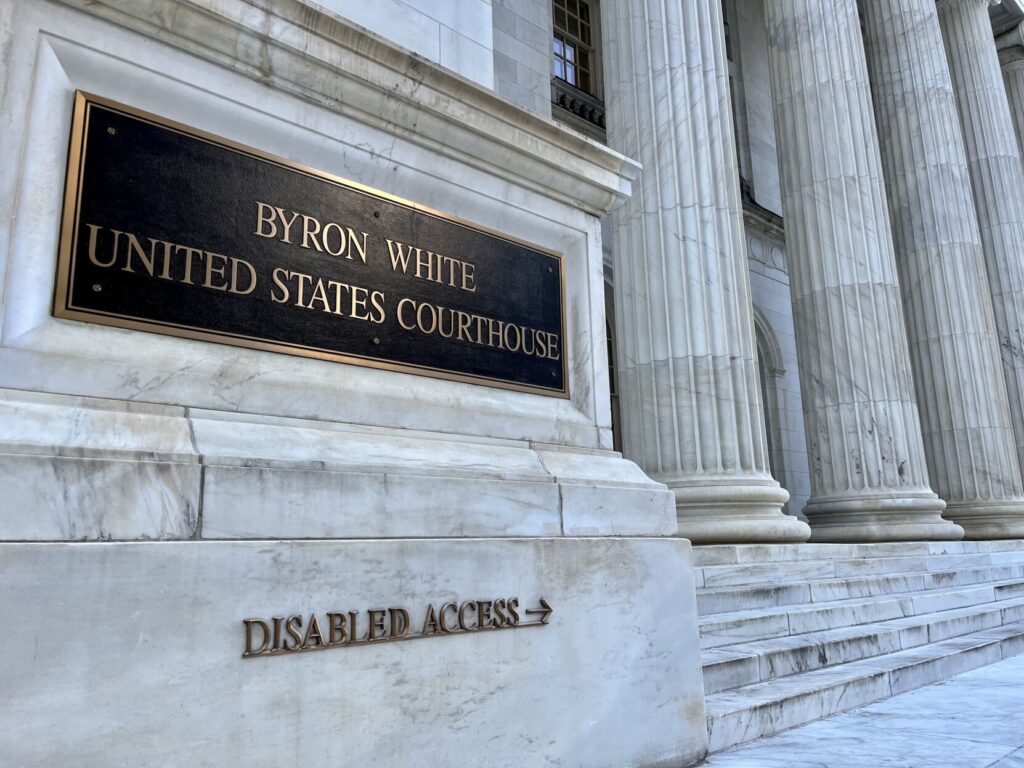
10th Circuit judges recap do’s and don’ts for lawyers
Michael Karlik
michael.karlik@coloradopolitics.com
Updated 3 days ago
Two members of the Denver-based federal appeals court spoke to attorneys on Monday about how to present cases effectively, and when it is helpful for outside entities to weigh in on pending appeals. Judges Robert E. Bacharach of Oklahoma and...
Divided appeals court overturns defendant’s $350,000 restitution obligation
Michael Karlik
michael.karlik@coloradopolitics.com
Updated 3 days ago
Colorado’s second-highest court overturned a defendant’s obligation to pay nearly $350,000 in crime victim restitution last week because an Arapahoe County judge issued the restitution order beyond the legal deadline. The divided decision of a three-judge Court of Appeals panel...
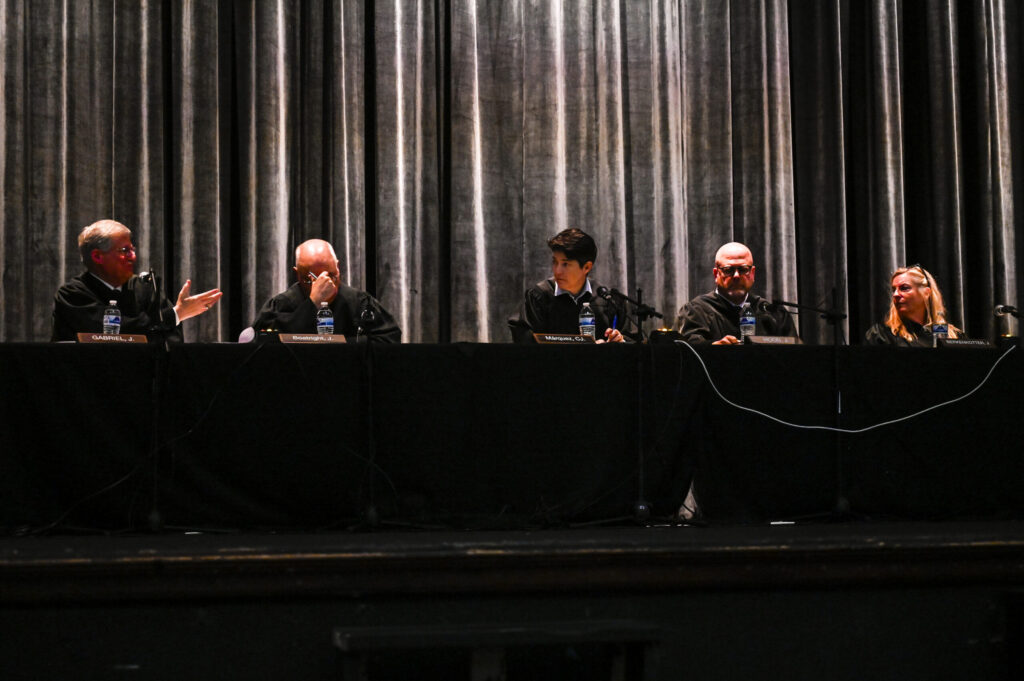
2025 Unfiltered: Colorado Supreme Court vacancy, surge in federal filings and more
Michael Karlik
michael.karlik@coloradopolitics.com
Updated 6 days ago
This year was awash in legal news nationally, with federal courts taking an outsize role in responding to executive branch actions. In Colorado, that effect was evident, but it was not the only factor at play. Here are the top...
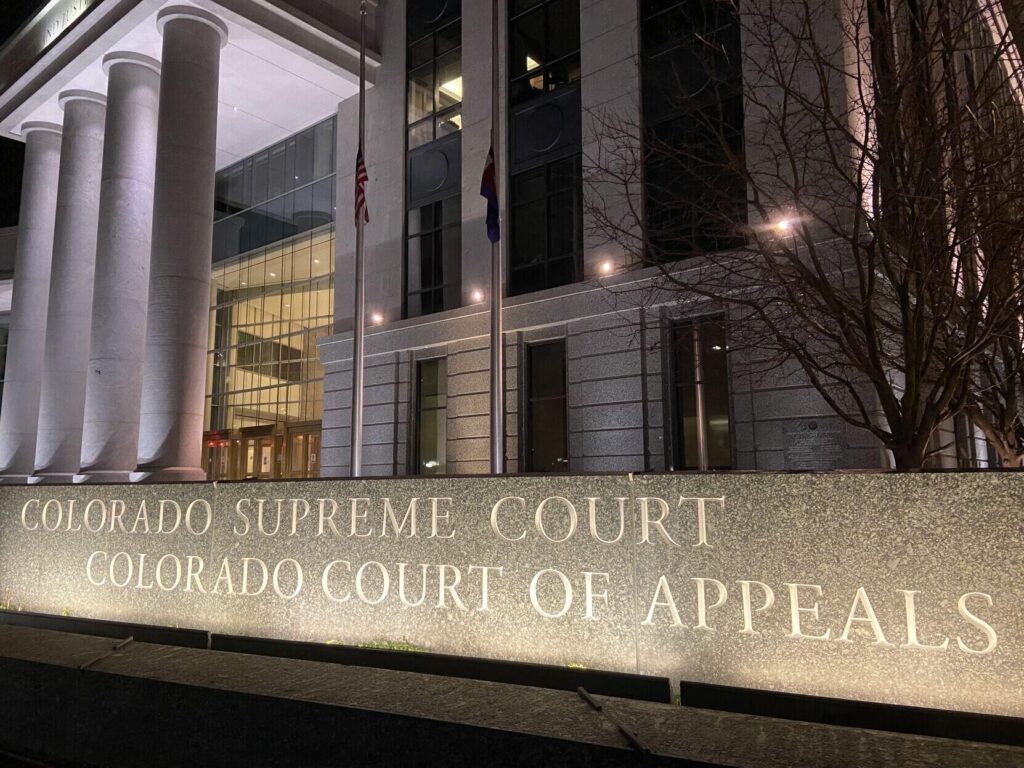
$3 million penalty upheld against for-profit college following half-decade of appeals
Michael Karlik
michael.karlik@coloradopolitics.com
Updated 6 days ago
Colorado’s second-highest court upheld a $3 million penalty against a defunct for-profit college on Wednesday, agreeing the state had proven multiple violations of its consumer protection law. The Court of Appeals’ decision against CollegeAmerica followed a trial judge’s order in...