

Bill to make Colorado youth mental health program permanent passes first hurdle
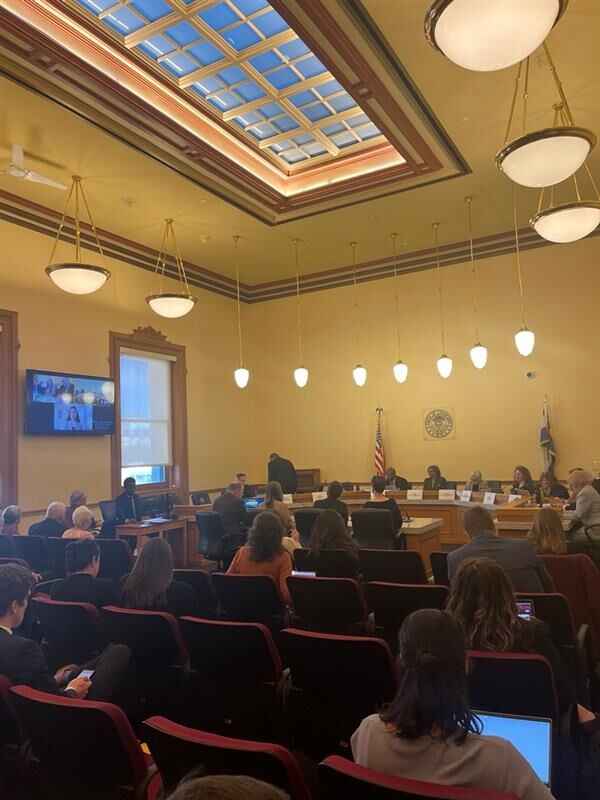
A bill that would make the state’s $11 million youth mental health program permanent passed through the Senate health committee on Wednesday.
In debating the measure, proponents say I Matter has delivered positive results while opponents say it takes away parental rights. Opponents countered that it encroaches on parental rights and might create barriers to parent-child relationships, as children 12 and above won’t not need parental consent under the legislation.
The Senate Health and Human Services Committee advanced the measure, 7-2.
The I Matter program, established in March 2021 under a bipartisan legislation to address the youth mental health crisis that became worse during the COVID-19 pandemic, is set to expire on June 30. Senate Bill 001, sponsored by Rep. Kyle Brown, D-Louisville, and Sens. Dafna Michaelson Jenet, D-Commerce City, and Lisa Cutter, D-Littleton, seeks to make the program a permanent fixture.
The bill also aims to streamline reporting requirements. It will reduce the times the Colorado Department of Human Services must submit a report on the program to once a year, instead of every six months.
Also under the measure, the Behavioral Health Administration will conduct annual surveys on youth participants and survey providers to determine the program’s efficacy.
Over 8,000 children 18 and younger from 62 of Colorado’s 64 counties have received therapy services through the I Matter program. Participants receive up to six free in-person or virtual appointments with one of over 200 therapists who specialize in issues like anxiety and depression. Upon completing their sixth session, participants connected with a professional to help them navigate additional care if necessary.
“The success of I Matter has been huge for Colorado students, and for the first time in a decade, youth suicide rates have declined – but we must do more to address the mental health crisis gripping our kids,” said Michaelson Jenet. “That is why making the I Matter program permanent is so important. This critical tool is a game changer, and I am excited to get this bill passed and ensure Colorado students can access the free mental health care they need to thrive.”
Witnesses who spoke before the committee in favor of the bill included representatives from the American Academy of Pediatrics, the National Alliance on Mental Illness, and Children’s Hospital Colorado.
Caitlin Hochul of the mental health advocacy organization Inseparable spoke of the effects I Matter has had on youth since its creation and the support the program has garnered throughout the state.
“I matter sessions have already helped thousands of youth get the support and treatment they need in a timely manner,” she said. “The program is exactly the type of early prevention shown to improve outcomes and save lives. It is also extremely popular with Colorado parents in every corner of the state.”
Hochul said that a recent poll her group conducted with Healthier Colorado showed that 91% of parents agree to mental health services available to young people at no cost.
“And that is fundamentally what I Matter does,” Hochul said.
Laura Love, who lost her 14-year-old son Sam to suicide in 2023, was looking through his phone after his death and found texts to his friends about I Matter, and a brochure for the program in his guitar case.
“I believe Sam saw I Matter as a resource for his friends who were hurting,” she said. “This program even got the attention of a teenage boy who had a hard time sitting still long enough to finish his homework. He picked [the brochure] up, and he shared it with friends who were hurting. There is a mental health epidemic with our kids. We may not be fixing everything, but this program is working. You are reaching people through this legislation.”
Several opponents of the bill argued that it encroaches on parental rights and could be detrimental to parent-child relationships since children 12 and older do not need parental consent to receive therapy through the I Matter.
“This bill breaks trust within families,” said Amanda Monk, a mother and former educator from Yuma. “Mental health issues concerning Colorado’s youth should be used for an opportunity to unify, to heal, to connect and restore children with active parental involvement in choosing the right fit for counselors for each child’s unique needs.”
In response, Cutter said, “I wish every child had a family that they could count on and trust. It’s a sad reality that they don’t. Not all children have that healthy, supportive connection with their family. And this legislation addresses reality. We care about the mental health and well-being of children who don’t have a loving and supporting home.”
Judy Papenfuss, a mother and grandmother from Fort Collins, said she “was absolutely stunned” by some of the questions in the survey used to determine what specific mental services students may need from I Matter, if any.
“One of the questions that they asked was whether or not I had used alcohol or pot or gotten high in the last 12 months,” she said. “It’s just putting these ideas into kids’ heads. It’s sad for me and I know that this is happening. Planting these ideas into a 14-year-old or a 12-year-old is crazy.”
Sens. Perry Will, R- New Castle, and Janice Rich, R- Grand Junction, voted no to the measure, saying while they support the program, they believed more amendments are needed before making it law.
The bill, which will cost the state $11 million in general funds, will now proceed to the Appropriations Committee.
An amendment was also made to the bill to remove specific data points designated to be collected by the vendor, along with a survey of program participants and their parents.
Michaelson Jenet said these things are already happening and do not need to be included in the bill’s text.
marissa.ventrelli@coloradopolitics.com

Colorado leaders weigh next steps after Supreme Court rejects state ban on ‘conversion therapy’
Marissa Ventrelli
marissa.ventrelli@coloradopolitics.com
Updated 7 hours ago
Colorado leaders said they are weighing next steps after the U.S. Supreme Court on Tuesday rejected the state’s ban on “conversion therapy” for children, as critics and supporters cheered or lambasted the ruling. The court’s near-unanimous decision called the Colorado...
Federal judge dismisses U.S. government lawsuit against Colorado, Denver’s ‘sanctuary’ laws
Michael Karlik
michael.karlik@coloradopolitics.com
Updated 6 hours ago
A federal judge dismissed the U.S. government’s lawsuit against Colorado and Denver on Tuesday, which alleged that various local policies impermissibly infringed on federal immigration enforcement. U.S. District Court Judge Gordon P. Gallagher followed the lead of judges in Illinois...
Denver proposes yearlong moratorium on new data centers
Deborah Grigsby
deborah.smith@denvergazette.com
Updated 10 hours ago
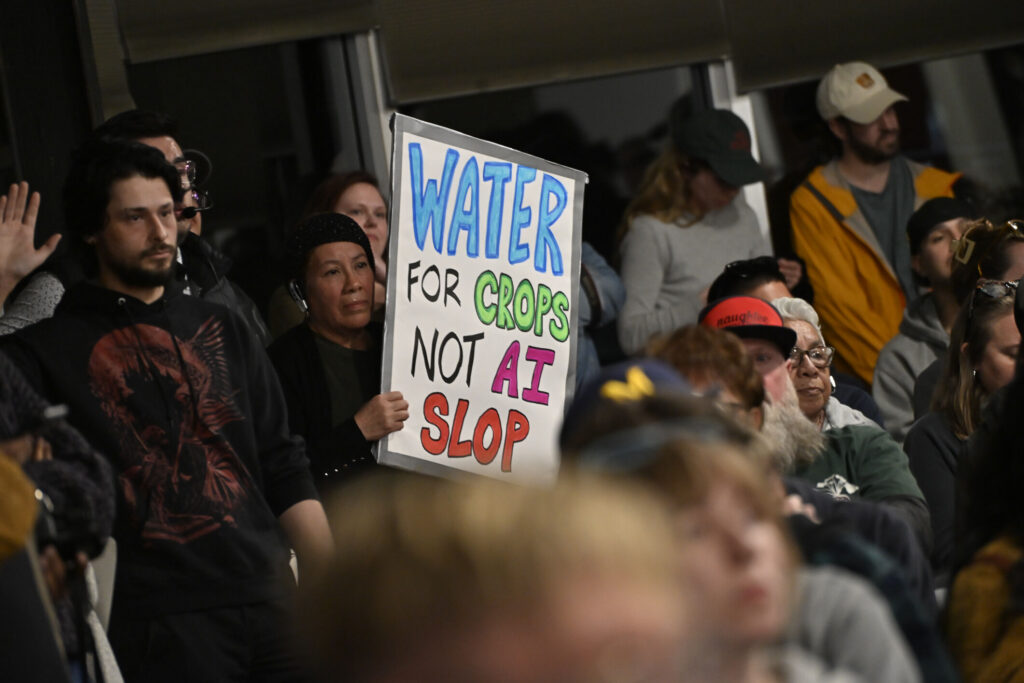
As Denver Water calls for a 20% reduction in water use during Stage 1 drought conditions, City Council members advanced a bill to rein in one of the largest water users — data centers — by proposing a yearlong moratorium...
Federal judge finds DOJ adequately searched for, disclosed records related to Bidens
Michael Karlik
michael.karlik@coloradopolitics.com
Updated 11 hours ago
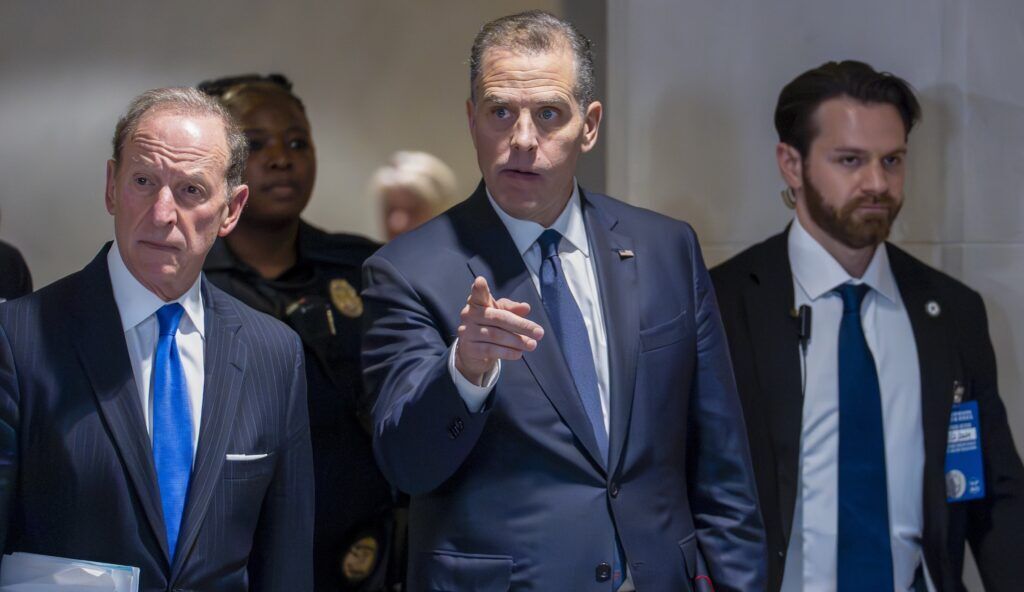
A federal judge determined on Friday that the U.S. Department of Justice adequately searched for and disclosed records to a Colorado attorney in response to his request for documents related to former President Joe Biden’s son and brother. In November...

Colorado lawmakers push legislation to shrink RTD board, increase pay as ridership struggles continue
Marissa Ventrelli
marissa.ventrelli@coloradopolitics.com
Updated 11 hours ago
Colorado lawmakers are advancing a new push to overhaul the Regional Transportation District, proposing to shrink the board, raise member pay, and boost ridership back to pre-pandemic levels. While some stakeholders see the effort as a step forward, others warn...
Appellate court slap downs in Trump cases highlight mounting tension in the judiciary
Jack Birle, Washington Examiner
jack.birle.washington.examiner@gazetteedit.wpenginepowered.com
Updated 13 hours ago
The Trump administration has won key reversals of lower court rulings against it in appeals courts — many of which have sharply rebuked the district court’s earlier rulings, highlighting growing tensions within the judiciary. Since January 2026, federal appeals courts...

10th Circuit warns lawyers after finding fake case in filing
Michael Karlik
michael.karlik@coloradopolitics.com
Updated 5 hours ago
The Denver-based federal appeals court warned attorneys to be more careful last month after discovering one lawyer cited a fake case in his arguments. In recent months, federal and state judges in Colorado have begun cautioning lawyers explicitly about the...

Colorado legislators drove up cost of Medicaid program
Marissa Ventrelli
marissa.ventrelli@coloradopolitics.com
Updated 13 hours ago
Some of Colorado’s spending woes in Medicaid can be traced to lawmakers who had approved new or expanded programs in the last few years, driving up state costs to the tune of tens of millions of dollars. Just three measures...
Supreme Court rules against Colorado ban on ‘conversion therapy’ for LGBTQ kids
Lindsay Whitehurst
lindsay.whitehurst@associatedpress.com
Updated 17 hours ago
WASHINGTON (AP) — The Supreme Court on Tuesday ruled against a law banning “conversion therapy” for LGBTQ+ kids in Colorado, one of about two dozen states that ban the discredited practice. An 8-1 high court majority sided with a Christian...

A perfect storm: Pine beetles thriving following warm, dry winter in Colorado
O'Dell Isaac
odell.isaac@gazette.com
Updated 15 hours ago
The warmest winter in Colorado history could lead to record-breaking proliferation of a tiny insect, about the size of a grain of rice, that has killed millions of acres of trees across the Centennial State and contributed to the rapid...
PREV
PREVIOUS

Contentious exchanges punctuate hearing on GOP's challenge to Colorado primary law
A federal judge heard closing arguments on Wednesday about whether the 48% of Colorado voters who are unaffiliated should be barred from participating in the state’s Republican Party primary, with multiple contentious exchanges in the hearing’s final hours. The Colorado Republican Party is alleging a 2016 voter-approved law violates its First Amendment rights by forcing […]

Kansas judge to pitch in on Coloado's federal court during vacancy
Toto, he’s not in Kansas anymore. Colorado’s federal trial court announced this week that retired U.S. Magistrate Judge James P. O’Hara of Kansas will be filling in, while a committee screens candidates for a vacancy on the magistrate judge bench. Earlier this month, senators confirmed S. Kato Crews to be a life-tenured district judge, restoring […]