

All eyes on U.S. Supreme Court as Trump appeal is expected this week; new candidates emerge in 3rd, 4th districts | WHAT YOU NEED TO KNOW

Today is Jan. 2, 2024, and here’s what you need to know:
All eyes are on the Supreme Court now that former President Donald Trump has been found ineligible on two state primary election ballots for the 2024 race, prompting confidence among legal experts that the nine justices will resolve the unprecedented dilemma.
The Colorado Supreme Court on Dec. 19 ruled that Trump is ineligible to serve as president under Section 3 of the 14th Amendment, which includes a clause that blocks anyone who has “engaged in insurrection or rebellion” against the government from holding elected office if the individual had previously taken an oath “to support the Constitution of the United States.”
Maine’s Democratic secretary of state made a similar decision on Wednesday night, a unilateral move absent any court review.
Colorado’s justices and Maine’s election official both put their rulings on hold, anticipating a final decision from the U.S. Supreme Court and Maine’s justices, respectively.
Meanwhile, both Michigan and Minnesota high courts have allowed Trump to remain on their primary ballots, and California’s secretary of state also decided that the former president could remain on the primary ballot.
Advocates and critics of the marijuana industry offered contrasting assessments of the drug 10 years after its legalization, with the former calling its decade-long existence a successful model for the rest of America, while the latter insist it has harmed Coloradans.
Voters legalized marijuana use in 2012. Today, the industry has more than 2,500 active cannabis business licenses, including 912 retail establishment licenses. In addition, some 36,000 active occupational licenses have been issued to workers in the industry.
“Colorado’s launch of a regulated adult-use cannabis market was a major inflection point in our nation’s relationship with marijuana. It set a compelling example not only for other states, but also for countries around the globe,” said Mason Tvert, who co-directed the legalization campaign.
Luke Niforatos of Smart Approaches to Marijuana characterized the drug’s legalization as a disaster for the state.
“We have seen an addiction-for-profit industry produce and promote stronger, more addictive drugs in order to maximize their bottom line,” he said. “From increases in traffic fatalities due to impaired drivers to more emergency department visits, Coloradans are being harmed by these drugs. Simply, the legalization of marijuana has not made Colorado a better state to live and raise a family in.”
Denver Mayor Mike Johnston on New Year’s Eve claimed his administration reached the goal of getting 1,000 homeless people out of the city’s streets.
Johnston, who made curbing homelessness his priority upon taking office in July, vowed to house 1,000 people by Dec. 31. In pursuit of that goal, his administration and Denver officials spent tens of millions of dollars to acquire hotels, buy “tiny” shelters and set up “micro-communities,” where he plans to send homeless people to.
The campaign has been expensive.
Johnston said the campaign to move 1,000 homeless people indoors cost the city $45 million this year.
That translates to roughly $45,000 per homeless person. By comparison, the state spends roughly $9,500 on average per student.
Weld County Republican Peter Yu on Friday filed paperwork to run in next year’s GOP primary in Colorado’s 4th Congressional District, joining a already crowded field of candidates vying to replace retiring U.S. Rep. Ken Buck.
Yu’s entry comes days after Republican U.S. Rep.Lauren Boebert announced she’ll run for another term in Congress in the 4th CD rather than seek reelection in the more competitive, Western Slope-based 3rd Congressional District, which she has represented for two terms.
In all, eight GOP candidates have so far declared candidacies in the heavily Republican 4th CD, which covers Douglas County and the state’s Eastern Plains, including portions of Larimer and Weld counties.
A finance and mortgage consultant and the child of immigrants, Yu was the 2018 Republican nominee in the neighboring 2nd Congressional District but lost to Democrat Joe Neguse. He ran unsuccessfully for the U.S. Senate last year.
“As a candidate who grew up in Loveland, and now lives in Weld County, I am excited to be the voice of my home city and the entire district that has been so good to my family and I all these years,” Yu told Colorado Politics in an email.
Republican Ron Hanks, a former state lawmaker and an ardent supporter of former President Donald Trump, announced late Friday that he’s seeking the GOP nomination in Colorado’s 3rd Congressional District just days after its incumbent, Republican U.S. Rep. Lauren Boebert, switched to run for another term in a different district.
Hanks faces a primary against Grand Junction attorney Jeff Hurd, a first-time candidate endorsed by numerous current and former elected Republicans. Hurd mounted a primary challenge earlier this year against Boebert, who narrowly won reelection to a second term last year in the closest congressional race in the country.
Democrat Adam Frisch, who trailed Boebert by just 546 votes last year, is seeking a rematch. The former Aspen City Council member had raised more than three times as much as the incumbent before Boebert declared this week that she’s jumping to the 4th Congressional District, which is represented by retiring Republican U.S. Rep. Ken Buck.
Calling the GOP-leaning, Western Slope-based 3rd CD “vital to the Republican majority in the U.S. House,” Hanks said in a written statement that he’s running to keep the seat in conservative hands, adding, “Not moderate, establishment, or RINO,” using a derisive acronym for Republicans in name only.


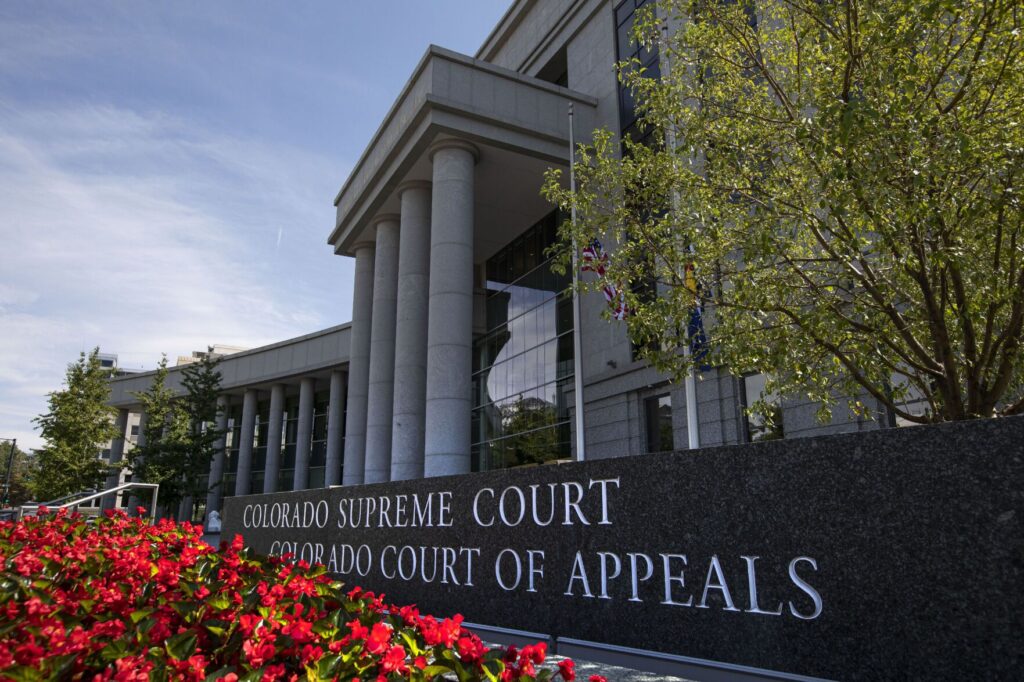
Appeals court decides violations of child custody orders may be prosecuted per child
Michael Karlik
michael.karlik@coloradopolitics.com
Updated 12 hours ago
Colorado’s second-highest court concluded for the first time on Wednesday that a defendant may be charged with violating a child custody order based on the number of children affected, not the number of orders violated. Mesa County jurors convicted Tiffany...

Douglas County judge violated defendant’s right to counsel at sentencing, appeals court finds
Michael Karlik
michael.karlik@coloradopolitics.com
Updated 12 hours ago
A Douglas County judge violated a defendant’s constitutional right to the counsel of her choice by refusing to postpone sentencing until her lawyer returned to the country, Colorado’s second-highest court concluded on Wednesday. In early 2023, Lyndie J. Felsher received...
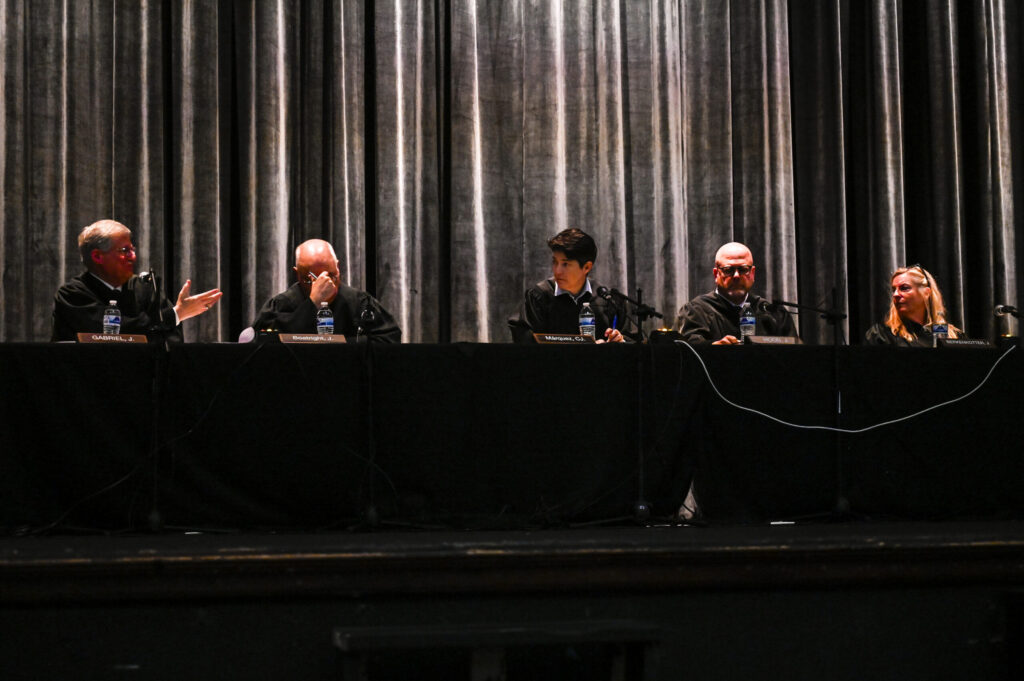
‘Lawyers haven’t gotten the message’: Colorado justices hear debate about proposed AI rule
Michael Karlik
michael.karlik@coloradopolitics.com
Updated 1 day ago
The Colorado Supreme Court heard comments from members of the legal profession last week about a proposed rule change intended to remind attorneys that misuse of new artificial intelligence tools can violate longstanding professional obligations. Court of Appeals Judge Lino...

Marijuana companies spent millions on lobbying ahead of Trump rescheduling order
Robert Schmad, Washington Examiner
robert.schmad.washington.examiner@gazetteedit.wpenginepowered.com
Updated 2 days ago
Political committees, consultants, and lobbyists linked to President Donald Trump made out with millions of dollars in payments from the marijuana industry in the months leading up to his executive order demanding the substance’s reclassification, according to public records reviewed...

Inflation and affordability loom over midterm elections
Zach Halaschak, Washington Examiner
zach.halaschak.washington.examiner@gazetteedit.wpenginepowered.com
Updated 1 day ago
Inflation and affordability were the top considerations of voters in the 2024 elections and remain so at the end of 2025 — and they could determine the outcome of the 2026 midterm elections. The 2025 off-year elections offered a warning...
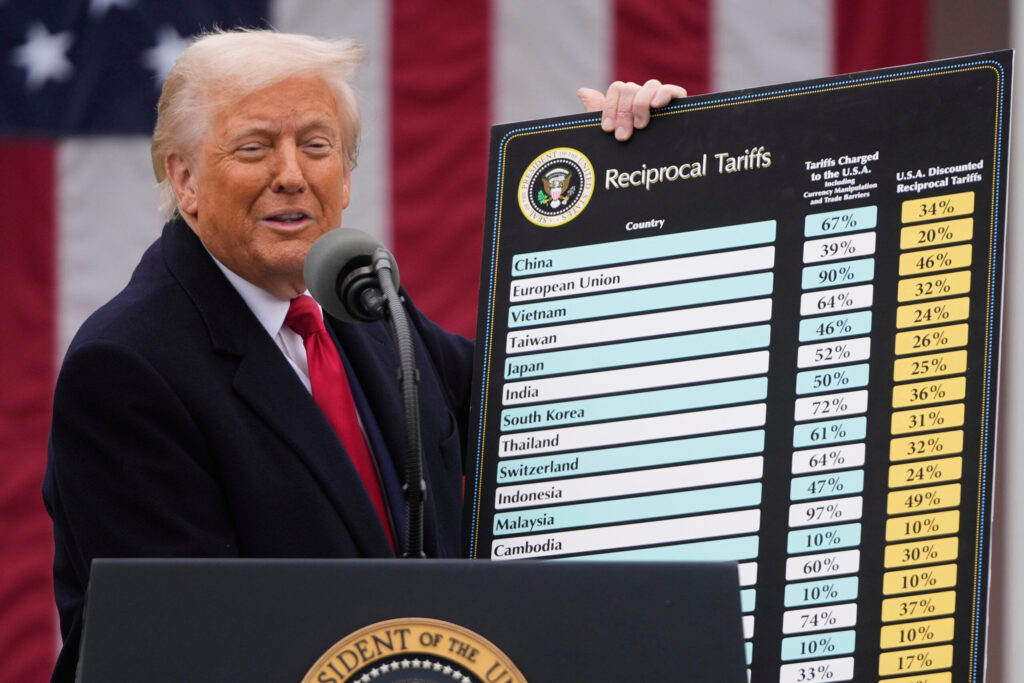
Are Republicans doomed to suffer an Obama-like personality crisis in a post-Trump world?
Lauren Green, Washington Examiner
lauren.green.washington.examiner@gazetteedit.wpenginepowered.com
Updated 1 day ago
President Donald Trump has dominated Republican Party politics for a decade, but, being term-limited, the big question in 2026 and beyond is who can step out of his huge shadow and assume leadership of the movement. The Democrats have suffered...
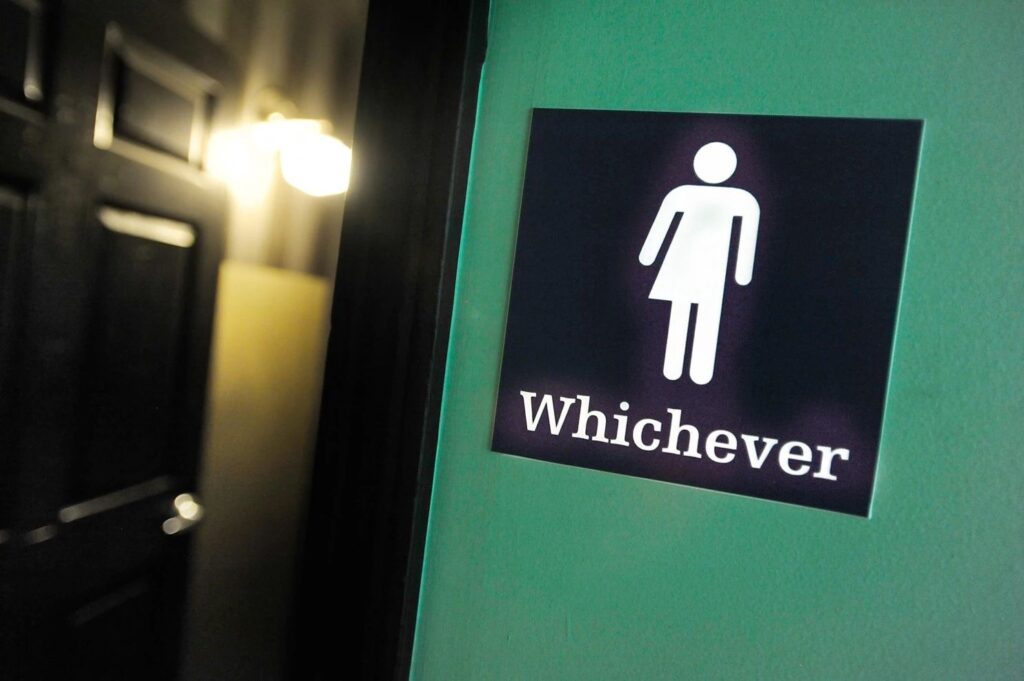
Judge rules California schools cannot hide student gender identity from parents
Jack Birle, Washington Examiner
jack.birle.washington.examiner@gazetteedit.wpenginepowered.com
Updated 2 days ago
A federal judge handed a group of parents and teachers a major victory late Monday by ruling the state of California ran afoul of the Constitution with a public school policy to hide students’ gender identity and preferred pronouns from...

Supreme Court denies Trump bid to deploy National Guard to Chicago
Jack Birle, Washington Examiner
jack.birle.washington.examiner@gazetteedit.wpenginepowered.com
Updated 2 days ago
The Supreme Court denied the Trump administration’s request to lift a lower court order blocking the federalization and deployment of National Guard troops to Chicago, marking a rare loss for President Donald Trump on the high court’s emergency docket. In...

Judge accepts new plea agreements for Return to Nature owners
Mackenzie Bodell
mackenzie-bodell@coloradopolitics.com
Updated 2 days ago
Jon and Carie Hallford will not see 2026 trials after all, as an El Paso County judge ruled to accept the most recent plea agreements for the pair Monday, despite heavy opposition from families who used their funeral services. The Hallfords came...

As Aurora police worry about court ruling’s impact on crime, council sees opening to revisit penalties
Kyla Pearce
kyla.pearce@gazette.com
Updated 2 days ago
Aurora’s top police official is worried about the impact of a Colorado Supreme Court decision about penalties on the city’s crime rate, while progressive councilmembers see an opening to reverse decisions made by previous city councils. The court ruled on...
PREV
PREVIOUS

Conservation groups sue over lack of plan for railroad to reduce grizzly deaths | OUT WEST ROUNDUP
MONTANA Groups sue railroad over plan to reduce grizzly deaths HELENA – Two wildlife conservation groups have filed a lawsuit against BNSF Railway over delays in finalizing a plan to reduce the number of federally protected grizzly bears that are killed by trains in northwestern Montana and northern Idaho. WildEarth Guardians and the Western Environmental […]

Rocky Mountain Gun Owners bring legal challenge against state's "Ghost Gun" ban
Gun rights advocacy group Rocky Mountain Gun Owners has filed a federal lawsuit challenging the constitutionality of Colorado’s recently enacted ban on unregulated firearms, also known as “ghost guns”. The lawsuit argues the ban, which went into effect on January 1 as Senate Bill 23-279, constitutes a violation of Second Amendment rights. Ghost guns are […]