

Wildlife managers capture wandering Mexican wolf, attempt dating game | OUT WEST ROUNDUP

NEW MEXICO
Wandering wolf captured, readied for dating game
ALBUQUERQUE – A match made in the wilds of New Mexico?
An endangered Mexican wolf captured in early December after wandering hundreds of miles from Arizona to New Mexico is now being readied for a dating game of sorts as part of federal reintroduction efforts.
But only time will tell whether the U.S. Fish and Wildlife Service can succeed in finding a suitable mate for the female wolf numbered F2754. The newly captured wolf will be offered a choice among two brothers that are also housed at the federal government’s wolf management facility in central New Mexico.
It could be late February or early March before biologists know if their efforts are successful.
It has been 25 years since Mexican gray wolves were first reintroduced into the Southwestern U.S. Through captive breeding and targeted releases, wildlife managers have been able to build up the population of what is the rarest subspecies of gray wolf in North America.
Federal and state wildlife managers had been tracking the lone female wolf for months, waiting for an opportunity to capture her again. Her journey began in the mountains of southeastern Arizona and crossed the dusty high desert of central New Mexico before reaching the edge of Valles Caldera National Preserve.
Officials said the goal is that the match-making efforts net pups in the spring and more wolves can be released to boost the wild population.
The recovery area spanning Arizona and New Mexico is currently home to more than 240 of the endangered predators. There also is a small population in Mexico.
Governor proposes $500M to treat fracking wastewater
SANTA FE – New Mexico would underwrite development of a strategic new source of water by buying treated water that originates from the used, salty byproducts of oil and natural gas drilling, and help preserve its freshwater aquifers in the process, under a proposal from the state’s Democratic governor.
The initiative from Gov. Michelle Lujan Grisham, announced on Dec. 5 from the international climate conference at Dubai in the United Arab Emirates, would set water purification standards and purchase treated water that originates from oil fields as well as the state’s vast natural underground reservoirs of brine. It requires legislative approval.
The idea is to create a government-guaranteed market for the commodity – treated water – and attract private enterprise to build desalinization and treatment facilities, securing new sources of water for industrial applications. The administration hopes to make the water available to businesses ranging from microchip manufacturers to hydrogen fuel producers that separate the element from water in an energy-intensive process.
Lujan Grisham said she’ll ask the legislature to set aside $500 million to underwrite acquisition of treated water. The arrangement would harness the state’s bonding authority and financial reserves held in its multibillion-dollar Severance Tax Permanent Fund. The trust, founded in the 1970s, is sustained by taxes on the extraction of oil, natural gas and other minerals from state land.
Lujan Grisham said the goal is avoid a reckoning on fresh-water supplies as the Rio Grande and underground fresh-water aquifers recede. The state also has extensive underground reservoirs of salty water that have been of limited use.
That brackish water is a crucial component in hydraulic fracturing, or fracking, and advanced drilling techniques that have helped turn New Mexico into the No. 2 oil production state in the U.S.
KANSAS
Courts’ computer systems heads back online after cyberattack
TOPEKA – The court system in Kansas has started bringing its computer system for managing cases back online, two months after a foreign cyberattack forced officials to shut it down along with public access to documents and other systems, the judicial branch announced on Dec. 14.
The case management systems for district courts in 28 of the state’s 105 counties are expected to be back online by Dec. 18, with others following by the end of the week. Online access to documents for the public will be restored after that, though counties that go back online will be able to offer access through terminals at their courthouses, the judicial branch said.
The courts also have restored systems that allow people to apply for marriage licenses online and file electronic requests for orders to protect them from abuse, stalking and human trafficking.
The Kansas Supreme Court’s seven justices, who oversee administration of the state courts, said last month that the judicial branch was the victim of a “sophisticated foreign cyberattack.” Criminals stole data and threatened to post it on a dark website “if their demands were not met,” the justices said.
However, judicial branch officials have not publicly disclosed the hackers’ demands, whether a ransom was paid or how much the state has spent in restoring judicial branch systems.
The long outage has forced courts in the affected counties to return to having documents filed on paper. Judicial branch officials acknowledged that it could take weeks for the courts to electronically log all of the filings since the Oct. 12 shutdown.
NEBRASKA
Critics pan $450M stadium renovation as academics face cuts
OMAHA – The University of Nebraska is planning a $450 million renovation of the Cornhuskers’ football stadium in Lincoln and at the same time looking to cut millions of dollars from the university system, leading critics to question whether officials care more about athletics than academics.
Faculty at Nebraska and nationally acknowledge the importance of athletics at a Big Ten university but said the divergent funding plans send a message that teaching and research take a back seat to Nebraska’s football program.
The high-priced Memorial Stadium renovation was given preliminary approval this fall, even as the four-campus University of Nebraska system faces a $58 million budget shortfall that threatens to cut staff and academic programs. That includes deep cuts at the University of Nebraska at Kearney, where students and staff have protested the school’s announced elimination of its geography and theater programs, as well as cuts to other humanities offerings and its cybersecurity program.
The University of Nebraska-Lincoln – the system’s flagship campus and home of the Nebraska Cornhuskers – and the University of Nebraska-Omaha also are anticipating academic program cuts to deal with shortfalls blamed on inflation, stunted revenue growth and declining enrollment.
Critics also decried the ballooning salaries of university administrators, such as the $1 million annual pay to the outgoing NU President – a nearly 40% increase over his predecessor – as academic programs are being cut.
University officials say the stadium project will not use taxpayer money, instead relying on private fundraising and the athletic department’s surplus funds.
MONTANA
Miner curbs expansion, lays off 100 as palladium plunges
The owner of two precious metals mines in south-central Montana is stopping work on an expansion project and laying off about 100 workers because the price of palladium fell sharply in the past year, mine representatives said on Nov. 30.
Sibanye-Stillwater announced the layoffs at the only platinum and palladium mines in the United States, near Nye, Montana, and other Sibanye-owned facilities in Montana, including a recycling operation. Another 20 jobs have gone unfilled since October, officials said.
Another 187 contract workers – about 67% of the mining contract workers at the mine – will also be affected. Some contract work has been phased out over the past couple of months, said Heather McDowell, a vice president at Sibanye-Stillwater.
Palladium prices have since fallen from a peak of about $3,000 an ounce in March 2022 to about $1,000 per ounce now. Platinum prices also have fallen, but not as dramatically.
Platinum is used in jewelry and palladium is used in catalytic converters, which control automobile emissions.
South Africa-based Sibanye bought the Stillwater mines in 2017 for $2.2 billion. The Montana mines buoyed the company in subsequent years at a time when it was beset by strikes and a spate of worker deaths at its South Africa gold mines.


Appeals court decides violations of child custody orders may be prosecuted per child
Michael Karlik
michael.karlik@coloradopolitics.com
Updated 13 hours ago
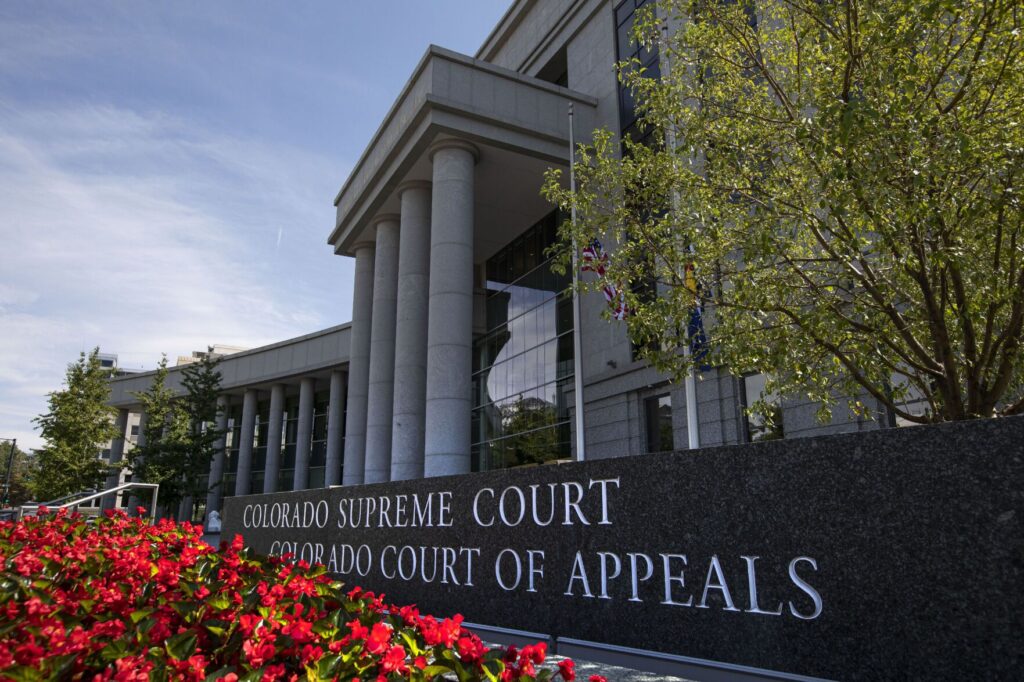
Colorado’s second-highest court concluded for the first time on Wednesday that a defendant may be charged with violating a child custody order based on the number of children affected, not the number of orders violated. Mesa County jurors convicted Tiffany...

Douglas County judge violated defendant’s right to counsel at sentencing, appeals court finds
Michael Karlik
michael.karlik@coloradopolitics.com
Updated 13 hours ago
A Douglas County judge violated a defendant’s constitutional right to the counsel of her choice by refusing to postpone sentencing until her lawyer returned to the country, Colorado’s second-highest court concluded on Wednesday. In early 2023, Lyndie J. Felsher received...

‘Lawyers haven’t gotten the message’: Colorado justices hear debate about proposed AI rule
Michael Karlik
michael.karlik@coloradopolitics.com
Updated 1 day ago
The Colorado Supreme Court heard comments from members of the legal profession last week about a proposed rule change intended to remind attorneys that misuse of new artificial intelligence tools can violate longstanding professional obligations. Court of Appeals Judge Lino...

Marijuana companies spent millions on lobbying ahead of Trump rescheduling order
Robert Schmad, Washington Examiner
robert.schmad.washington.examiner@gazetteedit.wpenginepowered.com
Updated 2 days ago
Political committees, consultants, and lobbyists linked to President Donald Trump made out with millions of dollars in payments from the marijuana industry in the months leading up to his executive order demanding the substance’s reclassification, according to public records reviewed...

Inflation and affordability loom over midterm elections
Zach Halaschak, Washington Examiner
zach.halaschak.washington.examiner@gazetteedit.wpenginepowered.com
Updated 2 days ago
Inflation and affordability were the top considerations of voters in the 2024 elections and remain so at the end of 2025 — and they could determine the outcome of the 2026 midterm elections. The 2025 off-year elections offered a warning...

Are Republicans doomed to suffer an Obama-like personality crisis in a post-Trump world?
Lauren Green, Washington Examiner
lauren.green.washington.examiner@gazetteedit.wpenginepowered.com
Updated 2 days ago
President Donald Trump has dominated Republican Party politics for a decade, but, being term-limited, the big question in 2026 and beyond is who can step out of his huge shadow and assume leadership of the movement. The Democrats have suffered...

Judge rules California schools cannot hide student gender identity from parents
Jack Birle, Washington Examiner
jack.birle.washington.examiner@gazetteedit.wpenginepowered.com
Updated 2 days ago
A federal judge handed a group of parents and teachers a major victory late Monday by ruling the state of California ran afoul of the Constitution with a public school policy to hide students’ gender identity and preferred pronouns from...

Supreme Court denies Trump bid to deploy National Guard to Chicago
Jack Birle, Washington Examiner
jack.birle.washington.examiner@gazetteedit.wpenginepowered.com
Updated 2 days ago
The Supreme Court denied the Trump administration’s request to lift a lower court order blocking the federalization and deployment of National Guard troops to Chicago, marking a rare loss for President Donald Trump on the high court’s emergency docket. In...

Judge accepts new plea agreements for Return to Nature owners
Mackenzie Bodell
mackenzie-bodell@coloradopolitics.com
Updated 2 days ago
Jon and Carie Hallford will not see 2026 trials after all, as an El Paso County judge ruled to accept the most recent plea agreements for the pair Monday, despite heavy opposition from families who used their funeral services. The Hallfords came...

As Aurora police worry about court ruling’s impact on crime, council sees opening to revisit penalties
Kyla Pearce
kyla.pearce@gazette.com
Updated 2 days ago
Aurora’s top police official is worried about the impact of a Colorado Supreme Court decision about penalties on the city’s crime rate, while progressive councilmembers see an opening to reverse decisions made by previous city councils. The court ruled on...
PREV
PREVIOUS

An ode to a year of excess and overload | SONDERMANN
It’s the end of the year, amidst holiday cheer After this loathing and fear, will someone please hold my beer Even in rose-colored glasses, 2023 was not all that stout Let’s take stock of what happened and what it’s about By George, the new Rep. Santos was exposed as a con His tall tales […]

Q&A with Lora Thomas | Douglas County commissioner and certified firebrand
Douglas County Commissioner Lora Thomas says she’s never seen herself as part of the establishment. Thomas is heading into her eighth and final year as a Douglas County commissioner. She previously served four years as the county’s coroner, and has also twice run for sheriff. Fast Facts Born: Walsenburg, Colorado. Moved to Denver shortly thereafter and […]