

Dem state chair calls out Gov. Love over federal funding stance | A LOOK BACK
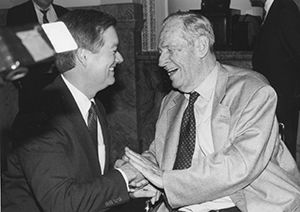
Sixty Years Ago This Week: Gov. John Love’s administration was failing to address the many problems surrounding Colorado’s rapidly growing population, and the governor was, “frantically looking for new ways to increase taxes,” said Colorado Democratic Party chairman Robert Maytag.
Maytag lobbed the partisan attacks – as pointed as they were unsurprising – at a Prowers County Democratic Party meeting in Lamar, warning that, in his view, Colorado was staggering “toward deficit spending, reduced institutional programs and limited educational opportunities.”
Not only had Love allowed avoidable problems to ferment, Maytag exclaimed in his speech, but the governor also wanted to pull Colorado, and the nation, backwards. He referenced one of Love’s speeches in which the governor had implied his support for U.S. Sen. Barry Goldwater’s bid for president. And, to boot, Goldwater, a Republican from Arizona, had made statements opposing the United Nations, social security and the graduated income tax – inexcusable platforms in Maytag’s humble opinion.
“Apparently the governor has his gears stuck in reverse and wants to back the country into the 19th century,” Maytag said. “The list of services the federal government has provided to Colorado are numerous.”
“Since 1960, Colorado has seen, amongst others, almost $100 million in federal funding for highway projects, $20 million in REA loans and $5 million in matching funds to solve water pollution problems,” Maytag said.
“While the governor talks about the evils of turning to the federal government for assistance, his administration just received financial assistance from the same federal government for financing his investigation of unemployment compensation.”
Editor’s Note: This was an excerpt from an article that was originally published in The Colorado Democrat, a Democratic Party partisan newspaper that is part of the lineage of the former nonpartisan Colorado Statesman and today’s nonpartisan Colorado Politics magazine. As a result, the article’s original author did not look to members of the Republican Party for a response to Maytag’s claims.
Forty Years Ago: Former state Senate candidate Gerry Frank was being taken to court for nearly $5,000 in unpaid fines, which had accumulated after a he filed his required financial disclosure statement two years late.
“I’m not responsible for the fine,” Frank told The Statesman, contending that former Secretary of State Mary Estill Buchanan had promised him immunity from having to pay up unless he became a candidate in the future.
“I have no current intentions of running in the next two years,” Frank said. “So, I don’t really understand why (Secretary of State) Natalie Meyer is pressing the matter.”
Meyer, Buchanan’s successor, said that she authorized legal proceedings against Frank as a routine matter after she was elected and took over the office.
“That letter (referring to a letter from Buchanan that Frank had produced) is truly not a possible agreement for an elected official to have made,” Meyer said. “You either dismiss the fine or else fine them.”
Meyer further argued that she had no knowledge of Buchanan’s ‘”novel arrangement” with Frank and again expressed her disbelief that Buchanan would offer such an “easy out.”
Frank remained steadfast that Buchanan had authored the letter and that the fine was to be kept on record, but he was simply excused from having to pay it.
“Besides,” Frank said, “whether anyone owes a fine or not, it’s the campaign treasurer’s responsibility, not mine.”
Frank’s treasurer at the time, Walt Epting, did admit to being lax in meeting state election filing requirements. Official follow-up requests had also sent to Epting, but without Frank’s knowledge, according to Frank’s account.
“I didn’t want responsibility for the campaign finances and reports,” Frank said. “I never saw any letters from the Secretary of State’s office warning me of the penalties for late filings.”
Meyer said that while she recognized that a campaign treasurer was responsible for making sure forms were filed, the ultimate responsibility lay with the candidate. Plus, Meyer argued, the matter was now in the hands of the state’s collections agency and there was no settlement offer in the making.
“I have no plans to meet with Gerry Frank,” Meyer said. “Not even for a drink.”
Rachael Wright is the author of the Captain Savva Mystery series, with degrees in Political Science and History from Colorado Mesa University, and is a contributing writer to Colorado Politics and The Gazette.


Denver Council narrowly approves deal with Axon
Deborah Grigsby
deborah.smith@denvergazette.com
Updated 27 minutes ago
After weeks of delay, the Denver City Council narrowly approved a one-year $150,000 contract with Axon for 50 automated license plate-reading cameras and the necessary system hardware, replacing the city’s former vendor, Flock. The 7-6 vote came during Tuesday’s regular...

Colorado leaders weigh next steps after Supreme Court rejects state ban on ‘conversion therapy’
Marissa Ventrelli
marissa.ventrelli@coloradopolitics.com
Updated 14 hours ago
Colorado leaders said they are weighing next steps after the U.S. Supreme Court on Tuesday rejected the state’s ban on “conversion therapy” for children, as critics and supporters cheered or lambasted the ruling. The court’s near-unanimous decision called the Colorado...

Aurora homeless shelter opened too early, CEO says, as mold and plumbing issues emerge
Kyla Pearce
kyla.pearce@gazette.com
Updated 22 minutes ago
Aurora’s largest homeless services project launched “way too early,” its CEO told city leaders Tuesday, saying the rushed opening left residents living amid mold, plumbing failures, and other issues inside the former hotel. During Tuesday’s Housing, Neighborhood Services and Redevelopment...
Federal judge dismisses U.S. government lawsuit against Colorado, Denver’s ‘sanctuary’ laws
Michael Karlik
michael.karlik@coloradopolitics.com
Updated 13 hours ago
A federal judge dismissed the U.S. government’s lawsuit against Colorado and Denver on Tuesday, which alleged that various local policies impermissibly infringed on federal immigration enforcement. U.S. District Court Judge Gordon P. Gallagher followed the lead of judges in Illinois...
Denver proposes yearlong moratorium on new data centers
Deborah Grigsby
deborah.smith@denvergazette.com
Updated 16 hours ago
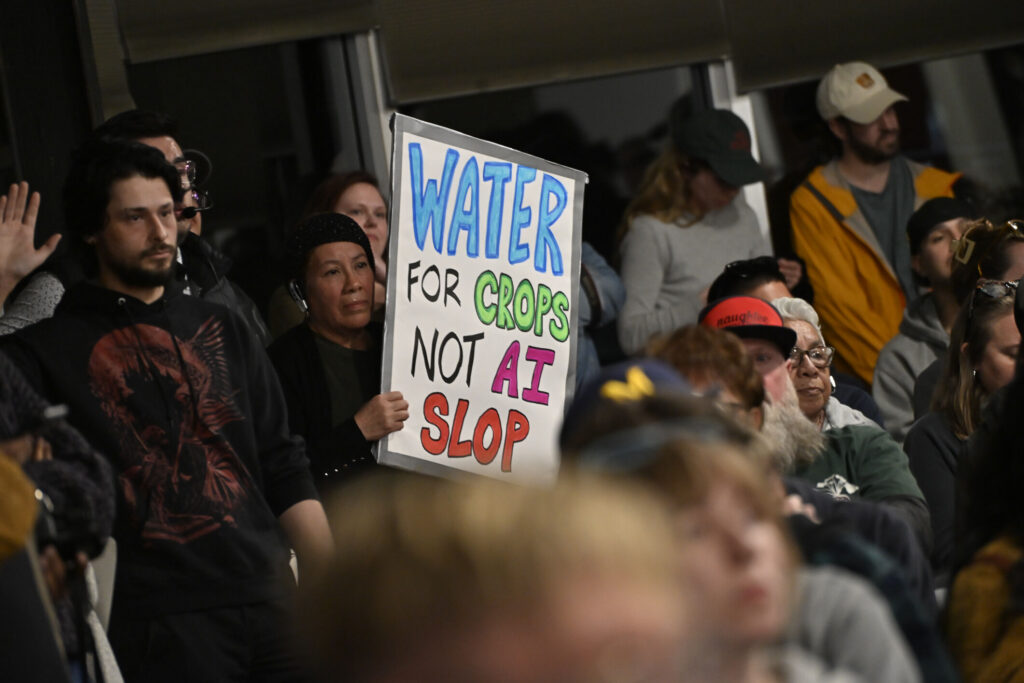
As Denver Water calls for a 20% reduction in water use during Stage 1 drought conditions, City Council members advanced a bill to rein in one of the largest water users — data centers — by proposing a yearlong moratorium...
Federal judge finds DOJ adequately searched for, disclosed records related to Bidens
Michael Karlik
michael.karlik@coloradopolitics.com
Updated 18 hours ago
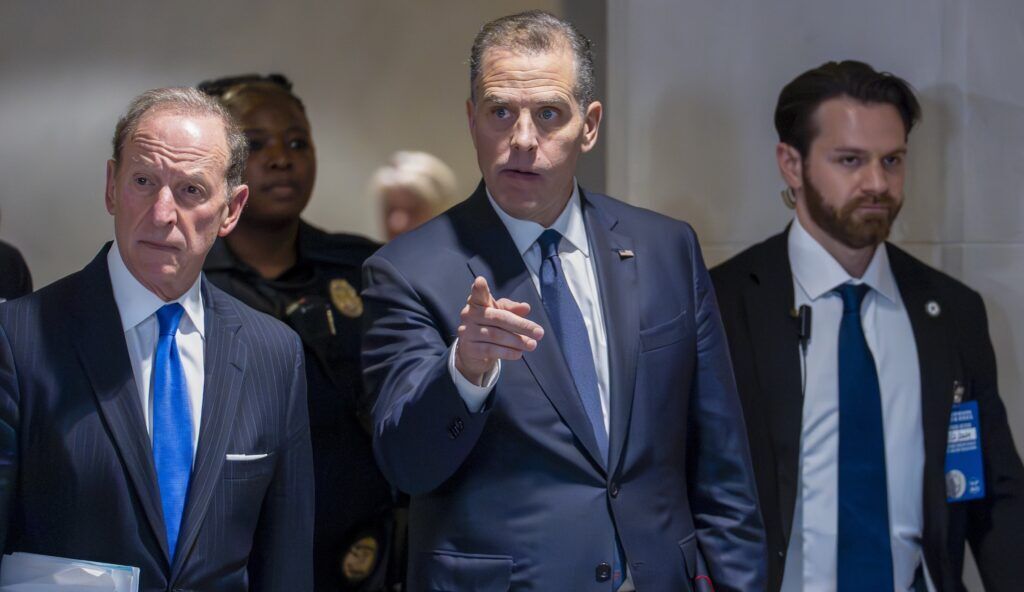
A federal judge determined on Friday that the U.S. Department of Justice adequately searched for and disclosed records to a Colorado attorney in response to his request for documents related to former President Joe Biden’s son and brother. In November...

Colorado lawmakers push legislation to shrink RTD board, increase pay as ridership struggles continue
Marissa Ventrelli
marissa.ventrelli@coloradopolitics.com
Updated 18 hours ago
Colorado lawmakers are advancing a new push to overhaul the Regional Transportation District, proposing to shrink the board, raise member pay, and boost ridership back to pre-pandemic levels. While some stakeholders see the effort as a step forward, others warn...
Appellate court slap downs in Trump cases highlight mounting tension in the judiciary
Jack Birle, Washington Examiner
jack.birle.washington.examiner@gazetteedit.wpenginepowered.com
Updated 20 hours ago
The Trump administration has won key reversals of lower court rulings against it in appeals courts — many of which have sharply rebuked the district court’s earlier rulings, highlighting growing tensions within the judiciary. Since January 2026, federal appeals courts...
10th Circuit warns lawyers after finding fake case in filing
Michael Karlik
michael.karlik@coloradopolitics.com
Updated 11 hours ago
The Denver-based federal appeals court warned attorneys to be more careful last month after discovering one lawyer cited a fake case in his arguments. In recent months, federal and state judges in Colorado have begun cautioning lawyers explicitly about the...

Colorado legislators drove up cost of Medicaid program
Marissa Ventrelli
marissa.ventrelli@coloradopolitics.com
Updated 20 hours ago
Some of Colorado’s spending woes in Medicaid can be traced to lawmakers who had approved new or expanded programs in the last few years, driving up state costs to the tune of tens of millions of dollars. Just three measures...
PREV
PREVIOUS

6 months or more: Federal judges in Colorado have trouble moving cases forward | COVER STORY
When Charlotte N. Sweeney took the bench as a federal district judge last summer, she inherited hundreds of pending motions on her first day, some of which had been lingering for years. “You have to dig out of that or you will never, ever, ever catch up,” she warned at a legal event in July. Some […]

State of Wyoming seeks updated historic landmark designation for Capitol | OUT WEST ROUNDUP
WYOMING State seeks updated historic designation for Capitol CHEYENNE – When Gov. John Allen Campbell signed an act granting women’s suffrage in 1869, Wyoming became the first state in the country to give women the right to vote. The room where the act was signed, known as the Historic Supreme Court Room, resides within the […]