

What’s behind the best cattle brands | GABEL
The best cattle brands, other than the ones that bring lost cattle home, don’t smudge. In Colorado, brands are registered through the Colorado Department of Agriculture’s brands division, though the first brands in the state were registered in each county, resulting in duplicate brands when the secretary of state’s office became the registering agency.
Brand books are printed every five years by the Colorado Brand Board. Brand inspectors, who in Colorado inspect the brand and ownership of cattle when they change ownership or move, and ranchers use these reference books. If a brand is a return address stamp, a brand book is the White Pages. Inspections deter theft, especially in Colorado, which is home to some of the most stringent brand laws in the country. Cattle theft does still occur, though I’ve met a lot of the brand inspectors and none of them bear striking resemblance to Casey Dutton or regularly engage in exchanging gunfire a la “Yellowstone.” They are, however, law enforcement officials. Inspections facilitate commerce, allowing for animals to change ownership, for the protection of livestock owners and lenders, for accurate tracking of livestock movements for use in disease traceability, and for facilitating the return of stolen or stray livestock.
There are 68 brand inspectors around the state. Together, they travel more than 1 million miles each year inspecting more than 4 million head of livestock. The livestock producers who pay for inspections and brand assessment fees fund the department’s $4 million budget each year. There are currently about 30,000 brands registered in the state. Since 1947, there have been only six brand commissioners, the leaders who oversee all the miles, staff and brands. Much to my chagrin, current Commissioner Chris Whitney has announced his retirement. The livestock industry will be thanking Whitney for his 12 years of leadership and welcoming a new commissioner in the coming months. This decision will be led by the five appointed members of the Brand Board.
The first brand book was printed in 1884 by the Colorado Cattlemen’s Association, which is still in existence and pre-dates the state. In 1887, the brand book included grazing districts. Multiple ranchers partner to graze in these districts cooperatively, and the cattle are all run together, making the brands important to determine ownership. In 1899, another brand book was printed by the Colorado Secretary of State’s office with a handful of smaller addendum booklets printed as well.
Stay up to speed: Sign-up for daily opinion in your inbox Monday-Friday
In 1900, the first brand book printed by what we know today as the Colorado Brand Board was printed. It is a red leather book with a flap that protects the page edges and serves as a bookmark of sorts. The inside front cover contains advertisements from the Kansas City Stock Yards, the Denver Union Stock Yard Company, Hermann H. Heiser Stockmen Saddles, and F.H. Fisher makers of tents, wagon covers, cow-boy (sic) sheets and slickers.
A friend in Nebraska purchased a box of books at a garage sale for $1. In the box, she found a beautiful copy of the 1914 Colorado brand book. Knowing that I love collecting vintage books she gifted it to me for Christmas and for that, I’m very grateful. I was put in contact with a man who has become a friend and I was able to have lunch with him last week. At 83-years old, he has witnessed the years in which his dad registered a slew of brands and used them to keep straight the cattle he purchased at the auctions around the state once they were co-mingled. This allowed him to monitor their performance and determine if he wanted to purchase calves from that producer again the following year. He has gone on to be a brand speculator, buying and selling – and collecting – brands but he also has a nearly complete collection of brand books. He brought several with him to lunch and I was able to thumb through them all, including the 1884 copy. I nearly fainted. He purchased it through a vintage bookseller years ago and is glad he did, as he has never seen another like it for sale.
My favorite story of his about purchasing brands is when he purchased the I V Bar brand. He called the man who it was registered to, an elderly rancher who had since retired. He told him he was interested in purchasing it. He could hear the old man put the phone receiver to his chest and call to his wife.
“Ivy,” he called out. “Ivy, this man wants to buy your brand. Do you want to sell it?”
Ivy agreed and he said it’s a brand he’ll never sell.
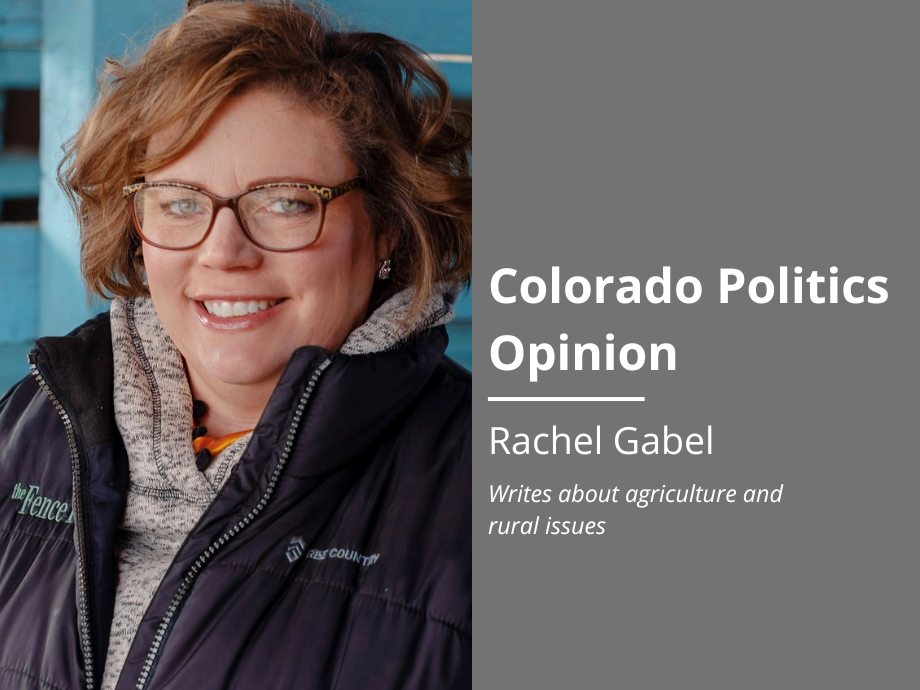
Rachel Gabel writes about agriculture and rural issues. She is assistant editor of The Fence Post Magazine, the region’s preeminent agriculture publication. Gabel is a daughter of the state’s oil and gas industry and a member of one of the state’s 12,000 cattle-raising families, and she has authored children’s books used in hundreds of classrooms to teach students about agriculture.

The backstory behind the school-funding TABOR ballot initiative | Paula Noonan
Paula Noonan
paula-noonan@coloradopolitics.com
Updated 10 hours ago
Last session, the General Assembly took in a report on K-12 public school funding. The legislature ordered the report because an idea circulated Colorado was among the bottom five states in dollars allocated per student even though it is one...

Colorado’s election audits are built on math, not politics | IN RESPONSE
Colorado Politics
colorado-politics@coloradopolitics.com
Updated 11 hours ago
By Amanda Gonzalez You don’t build a secure election system overnight. You build it over years — layer by layer — reinforcing it with stronger safeguards, better technology and more transparency. In Colorado, one of those safeguards is a little-known...
Senate Bill 22 critical to keeping energy costs affordable, power reliable | PODIUM
Colorado Politics
colorado-politics@coloradopolitics.com
Updated 10 hours ago
By Brian Wortinger I love Colorado’s outdoors. I’m an avid skier and hiker and my happiest days are spent deep in the mountains with no one around for miles. I want to protect that environment as much as anyone along...
Swipe-fee ban a giveaway to big boxes, mega-chains | IN RESPONSE
Colorado Politics
colorado-politics@coloradopolitics.com
Updated 1 day ago
By Jenifer Waller Four Colorado lawmakers recently published an op-ed in Colorado Politics calling for legislation to prohibit interchange fees on the sales tax portion of credit and debit card transactions (“Why Colorado should stop charging swipe fees on sales...

Leveling the playing field —why Colorado must fight fire with fire on redistricting | OPINION
Colorado Politics
colorado-politics@coloradopolitics.com
Updated 23 hours ago
By Curtis Hubbard So Dick Wadhams suddenly cares about mid-decade redistricting — hyperventilating about efforts to “hijack Colorado’s congressional map” and calling those of us involved with the effort “amazingly naive.” Where was his outrage last year when President Donald...
You get what you pay for in your state reps | Hal Bidlack
Hal Bidlack
hal-bidlack@coloradopolitics.com
Updated 2 days ago
My regular readers will know of my affection for the Out West Roundup, a Colorado Politics feature that lets us keep up to date with the goings on out here in the western U.S., and draws attention to stories that...
A warrant should mean something — expedite carrying them out | OPINION
Colorado Politics
colorado-politics@coloradopolitics.com
Updated 2 days ago
By Aaron Ping My name is Aaron Ping. I am a father from Washington state, and I am writing because my 16-year-old son, Avery, cannot. Avery died on Dec. 19, 2024. The drugs that killed him were ordered through Snapchat....

Lower Basin must adapt to Colorado River hydrology | OPINION
Colorado Politics
colorado-politics@coloradopolitics.com
Updated 2 days ago
By Nick Peters A February deadline for determining future operating guidelines for the West’s two largest reservoirs came and went with no agreement on the table and clear lines drawn in the sand. A seven-state resolution to how Lake Mead and Lake Powell will...

Keep kids safe without overregulating childcare | OPINION
Colorado Politics
colorado-politics@coloradopolitics.com
Updated 2 days ago
By Tamra Ryan As the Coors Economic Mobility Fellow for Common Sense Institute, I have written several reports in the past two years about the challenges related to affordability and availability of child care in our state. Though there are many factors affecting the dearth of...

Colorado’s GOP at its best — and worst | Dick Wadhams
Dick Wadhams
dick-wadhams@coloradopolitics.com
Updated 10 hours ago
By Dick Wadhams Colorado Republicans are fighting to be relevant in the face of gross mismanagement by Democrats who totally control state government. While the Colorado Republican Party is mired in controversy, several Republican elected officials and candidates represent the...
PREV
PREVIOUS

Ken Buck, completely wrong — kinda | CALDARA
Jon Caldara Have you ever had an imaginary argument with your dog, and then the dog gets some really good shots in? It happened between me and my dog the other day after eight U.S. representatives helped oust the Speaker of the House, a first in U.S. history. Colorado’s own U.S. Rep. Ken Buck joined […]
Sunshine in a shady place | HUDSON
Miller Hudson Forty years ago, communications with and among Colorado legislators was a largely observable phenomenon. There were no cell phones, no emails – only beepers that would notify you when a message was waiting in your electronic mailbox. Just off the House floor at the Capitol were wall phones available for placing calls together with […]