

Wildlife managers to review plight of Western bird linked to piñon forests | OUT WEST ROUNDUP

Wildlife managers agree to review the plight of pinyon jay
ALBUQUERQUE – U.S. wildlife managers announced on Aug. 16 that they will investigate whether a bird that is inextricably linked to the piñon and juniper forests that span the Western United States warrants protection under the Endangered Species Act.
The pinyon jay’s numbers have declined over the last half-century as persistent drought, more severe wildfires and other effects of climate change have intensified, leaving the birds with less food and fewer nesting options as more trees die or are removed.
Environmentalists also are concerned that without the pinyon jay – a social bird that essentially plants the next generation of trees by stashing away the seeds – it’s possible the piñon forests of New Mexico, Arizona, Nevada and other Western states could face another reproductive hurdle.
The U.S. Fish and Wildlife Service’s decision to review the jay’s status comes in response to a petition filed more than a year ago that included research showing the species’ numbers have declined by an estimated 80% over the last five decades, a rate even faster than that of the greater sage grouse.
Piñon-juniper forests cover more than 75,000 square miles in the United States, and wildlife managers in several Western states already have classified the bird as a species of greatest conservation need.
While environmentalists say there still is much research to be done on pinyon jays, it was well known by the 1970s that the birds’ habits revolved around harvesting, stashing and later retrieving pine seeds. In one case, a researcher watched a bird carry 56 seeds in one trip.
Researchers have said that understanding the bird’s needs and effects on its habitats will be fundamental to managing Western environments to ensure pinyon jay colonies can be protected.
Federal judge rejects parts of state campaign finance law
ALBUQUERQUE – Some parts of a New Mexico campaign finance law limiting the amount of money state political parties can give are unconstitutional, a federal judge ruled.
Chief U.S. District Judge William P. Johnson issued an opinion on Aug. 17 on a lawsuit first filed 11 years ago by the Republican Party of New Mexico and other plaintiffs with GOP ties, the Albuquerque Journal reported.
The campaign finance regulations are part of the state’s Campaign Reporting Act. State Republican officials and GOP-leaning organizations challenged five of the set limits.
Johnson found three violated the First Amendment. They include an $11,000 limit on state parties’ contributions to gubernatorial candidates or candidate committees and a $5,500 limit for all other candidates and county parties each election cycle.
The limits on candidate donations were lower compared to other states’ limits and lower than limits upheld by the U.S. Supreme Court, according to Johnson.
In regards to contributions to county political parties, the judge ruled the state didn’t show enough evidence proving there was a risk of a “quid pro quo corruption” or the appearance of it.
But the judge dismissed the suit’s challenge to a $27,500 cutoff on contributions from individuals and entities to state political parties. He also left intact a $27,500 limit on contributions from national political parties to state political parties for federal elections.
IDAHO
Federal appeals court upholds block of transgender athletes law
A federal appeals court on Aug. 17 upheld a decision blocking Idaho’s first-in-the-nation ban on transgender athletes in girls and women’s sports.
A three-judge panel of the 9th U.S. Circuit Court of Appeals upheld a judge’s preliminary injunction against the 2020 law, which would prohibit transgender women and girls from playing on female sports teams sponsored by public schools, colleges and universities.
The judges ruled that the ban discriminates not just against transgender women but all women, citing a provision in the law that allows for anyone to dispute the sex of a female student athlete in Idaho. That provision would require the athlete to verify their gender through medical procedures, including gynecological exams.
The ruling follows a historic wave of new state laws around the country restricting the rights of transgender people, especially trans youth. More than 20 states have enacted similar sports restrictions since Idaho’s.
The American Civil Liberties Union challenged the ban on behalf of Lindsay Hecox, a transgender student at Boise State University who had been planning to try out for cross country and play club soccer. A cisgender high school athlete had also challenged the ban over its “sex verification” testing provision.
A federal judge blocked the law in 2020. Idaho Gov. Brad Little signed the measure, passed by Republicans during the 2020 state legislative session, into law despite warnings from legal experts that it wasn’t likely to survive court challenges. Little’s office and the state attorney general’s office did not immediately respond to messages Thursday afternoon.
Supporters of the bans have said they are needed to provide an equal playing field and to protect female athletes’ access to scholarships. But the appeals court said there was no evidence of a transgender woman receiving an athletic scholarship over a cisgender woman in Idaho.
NEBRASKA
Planned Parenthood appeals ruling that let abortion ban stand
OMAHA – Planned Parenthood of the Heartland has appealed a judge’s ruling that left a new Nebraska law intact that bans abortions after 12 weeks of pregnancy and imposes restrictions on gender-affirming surgery.
Planned Parenthood filed its appeal on Aug. 18 with help from the American Civil Liberties Union of Nebraska, one week after a judge sided with the state and rejected the challenge to the law Nebraska lawmakers approved earlier this year.
The lawsuit had argued that the law violated a Nebraska constitutional rule that bills cannot contain more than one subject, but the judge disagreed. Lawmakers added the abortion ban to an existing bill dealing with gender-related care.
The law outlaws abortion after 12 weeks of pregnancy with exceptions for rape, incest and to save the life of the mother. As of Oct. 1, it also will prevent people under 19 from receiving gender-affirming surgery and restricts the use of hormone treatments and puberty blockers for minors.
Ruth Richardson, president and CEO of Planned Parenthood North Central States, said Planned Parenthood will continue to provide abortions to women up to the 12th week of pregnancy in compliance with state law, and it will work with anyone who needs care later in pregnancy to find treatment in another state.
SOUTH DAKOTA
Natural history museum closes due to taxidermy chemicals
SIOUX FALLS – A South Dakota museum has closed after almost 40 years over concerns that the chemicals in its taxidermy collection could endanger visitors and staff, the affiliated zoo announced on Aug. 17.
The Great Plains Zoo said that it is has closed the Delbridge Museum of Natural History in Sioux Falls. The zoo’s CEO Becky Dewitz said strong chemicals were used in the taxidermy process and that tests found detectable levels of those chemicals in the museum, KELO-TV reported. It wasn’t an easy decision to close the museum but it’s the right one, she said.
“The specimens were harvested in the 1940s through the 1970s. Prior to the 1980s, it was common to use strong chemicals in the taxidermy process all over the world for preservation of the hides,” the zoo said in a statement on its website.
The museum’s collection of animals on display was one of the largest in the region, including animals from six continents. Photos of the collection show an elephant, giraffe, rhinoceros, zebras and other animals.
Dewitz said the zoo and city will work with the U.S. Fish and Wildlife Service to safely dispose of the taxidermy mounts, a process that is expected to take several months.


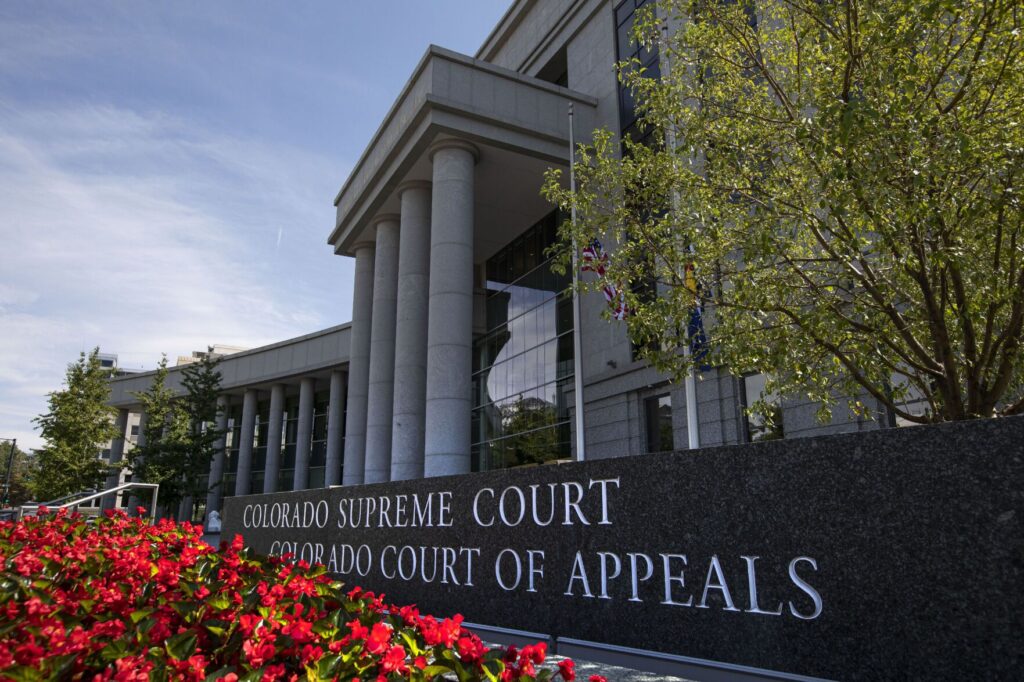
Appeals court decides violations of child custody orders may be prosecuted per child
Michael Karlik
michael.karlik@coloradopolitics.com
Updated 16 hours ago
Colorado’s second-highest court concluded for the first time on Wednesday that a defendant may be charged with violating a child custody order based on the number of children affected, not the number of orders violated. Mesa County jurors convicted Tiffany...

Douglas County judge violated defendant’s right to counsel at sentencing, appeals court finds
Michael Karlik
michael.karlik@coloradopolitics.com
Updated 16 hours ago
A Douglas County judge violated a defendant’s constitutional right to the counsel of her choice by refusing to postpone sentencing until her lawyer returned to the country, Colorado’s second-highest court concluded on Wednesday. In early 2023, Lyndie J. Felsher received...

‘Lawyers haven’t gotten the message’: Colorado justices hear debate about proposed AI rule
Michael Karlik
michael.karlik@coloradopolitics.com
Updated 2 days ago
The Colorado Supreme Court heard comments from members of the legal profession last week about a proposed rule change intended to remind attorneys that misuse of new artificial intelligence tools can violate longstanding professional obligations. Court of Appeals Judge Lino...

Marijuana companies spent millions on lobbying ahead of Trump rescheduling order
Robert Schmad, Washington Examiner
robert.schmad.washington.examiner@gazetteedit.wpenginepowered.com
Updated 2 days ago
Political committees, consultants, and lobbyists linked to President Donald Trump made out with millions of dollars in payments from the marijuana industry in the months leading up to his executive order demanding the substance’s reclassification, according to public records reviewed...

Inflation and affordability loom over midterm elections
Zach Halaschak, Washington Examiner
zach.halaschak.washington.examiner@gazetteedit.wpenginepowered.com
Updated 2 days ago
Inflation and affordability were the top considerations of voters in the 2024 elections and remain so at the end of 2025 — and they could determine the outcome of the 2026 midterm elections. The 2025 off-year elections offered a warning...

Are Republicans doomed to suffer an Obama-like personality crisis in a post-Trump world?
Lauren Green, Washington Examiner
lauren.green.washington.examiner@gazetteedit.wpenginepowered.com
Updated 2 days ago
President Donald Trump has dominated Republican Party politics for a decade, but, being term-limited, the big question in 2026 and beyond is who can step out of his huge shadow and assume leadership of the movement. The Democrats have suffered...

Judge rules California schools cannot hide student gender identity from parents
Jack Birle, Washington Examiner
jack.birle.washington.examiner@gazetteedit.wpenginepowered.com
Updated 2 days ago
A federal judge handed a group of parents and teachers a major victory late Monday by ruling the state of California ran afoul of the Constitution with a public school policy to hide students’ gender identity and preferred pronouns from...

Supreme Court denies Trump bid to deploy National Guard to Chicago
Jack Birle, Washington Examiner
jack.birle.washington.examiner@gazetteedit.wpenginepowered.com
Updated 2 days ago
The Supreme Court denied the Trump administration’s request to lift a lower court order blocking the federalization and deployment of National Guard troops to Chicago, marking a rare loss for President Donald Trump on the high court’s emergency docket. In...

Judge accepts new plea agreements for Return to Nature owners
Mackenzie Bodell
mackenzie-bodell@coloradopolitics.com
Updated 2 days ago
Jon and Carie Hallford will not see 2026 trials after all, as an El Paso County judge ruled to accept the most recent plea agreements for the pair Monday, despite heavy opposition from families who used their funeral services. The Hallfords came...

As Aurora police worry about court ruling’s impact on crime, council sees opening to revisit penalties
Kyla Pearce
kyla.pearce@gazette.com
Updated 2 days ago
Aurora’s top police official is worried about the impact of a Colorado Supreme Court decision about penalties on the city’s crime rate, while progressive councilmembers see an opening to reverse decisions made by previous city councils. The court ruled on...
PREV
PREVIOUS

Q&A with Brad Ross-Shannon | Trial lawyer discusses Colorado's first Jury Appreciation Day
This year, the General Assembly enacted a bill establishing “Jury Appreciation Day” in Colorado, which will be commemorated for the first time on Sept. 5. The date is tied to a jury’s 1670 verdict in the trial of William Penn and William Mead, who the British government prosecuted for preaching in public. The court retaliated […]

As sexual assaults rise, Air Force Academy needs to stop freshmen hazing, DOD report finds
Following a rise in reported sexual assaults across the military academies, Pentagon staff visited and evaluated all the schools, finding that the Air Force Academy needs to make changes to stop hazing among cadets and that freshman cadets feel the school has a prison-like environment. While military environments need to be stressful to build resilience, […]