

Vulnerable Coloradans at risk from assisted suicide | OPINION
There was little fanfare when the Colorado Department of Public Health and Environment (CDPHE) released the 2022 statistics pertaining to the 2016 Colorado End-of-Life Options Act. This six-year anniversary report deserves meaningful reflection.
Since its inception, there has been a 460% increase in lethal prescriptions. Though the absolute numbers are still small (316), the growth is exponential – consistent with the experience of every other state and country that have legalized physician-assisted suicide (PAS).
PAS has been euphemistically relabeled “medical aid in dying” (MAID) by its proponents. For centuries, physicians have provided curative care when possible and compassionate, palliative care to alleviate suffering when a cure is out of reach. This has been central to our oath as medical professionals dating to the earliest iteration of our ethics articulated by Hippocrates. Prior to the emergence of physician assisted suicide, “medical aid in dying” never encompassed the deliberate prescription of a medication(s) whose expressed purpose was to kill the patient.
Stay up to speed: Sign-up for daily opinion in your inbox Monday-Friday
Coloradans relish their freedom and idolize the notion of “rugged individualism.” It is not hard to see why 65% of the electorate chose to enshrine PAS into state law in 2016. There are few areas in life where people feel more out of control than during the relentless march toward their own death. PAS gives the illusion of control but robs us and our families of precious time together.
The 2022 report highlights the lax drafting and implementation of the law. The required forms are not always submitted. There are no audits of the cases to ensure that the patient wasn’t coerced or that their sickness genuinely reflected a terminal illness. And no reasons for PAS are solicited – which means that Colorado has no way to determine where our palliative care and end of life interventions are failing.
Although candidates for PAS are supposed to have a prognosis of six months or less, accurately predicting a person’s prognosis is extremely difficult – which means many people will end their life long before they would have naturally succumbed to their illness. In some jurisdictions with longstanding access to PAS, patients have lived nearly six years after being prescribed PAS medications for their “six month” terminal illness.
There are certain themes that seem to animate the practice of PAS in Colorado. PAS is commonly depicted as “courageous” and critical to maintaining one’s “dignity.” The underlying assumption is that when we lose cognitive or physical abilities, we also lose our human dignity. This is a very ableist perspective. It undermines the value and dignity of those who are sick or elderly and countless other men and women who live and thrive with their disability.
The reality is that being weak and vulnerable is a feature of our journey as humans and not a flaw. And we become more human when we address the needs of fellow humans facing sickness or disability. No one is totally independent, and rugged individualism is a dangerous myth. Solidarity with our family, friends and community is more integral to society’s flourishing than a radical vision of independence and autonomy.
When society equates independence with human value and dignity, the growing dependence that marks a terminal illness will naturally prompt more to choose PAS. And “choice” easily morphs into obligation. In Oregon and Washington, 85% to 86% of patients cite losing autonomy, 62% to 73% cite losing dignity, and 46% to 56% cite becoming a burden on family/caregivers as their end-of-life concern. When we don’t cherish the lives of all Coloradans and fail to provide effective end of life support, we perpetuate a cycle of marginalization of the most vulnerable and contribute to what has been aptly called a “throwaway culture.”
Besides the sick, elderly and disabled, the other group most susceptible to the negative influences of PAS ideology are adolescents and young adults. They are already experiencing unprecedented levels of suicide. It is well known that suicide can be contagious. There is evidence this applies to publicized cases of PAS and likely to those who only reveal their intentions to a close circle of family and friends. Preliminary research in the U.S. and Europe suggests states that legalize PAS have higher rates of suicide.
Can you imagine the message your child, or grandchild might internalize when they see you choose to pursue suicide because you equate human dignity and quality of life solely with physical attributes and eschew all “suffering?” Your suicide may have unintended ripple effects that can lead to tragic suicides in younger members of your family and community. Suddenly, the prospect of PAS seems less courageous and rather reckless.
Many assume people who choose PAS must have intolerable and disproportionate pain and suffering. The reality is PAS patients have no more pain or suffering than others who choose to die naturally from their disease. Depression and hopelessness are common factors that drives the PAS decision but only 1% of Colorado PAS patients in 2022 were referred to a mental health professional.
I hope Coloradans take this opportunity to soberly consider the implications of our decision to legalize PAS. At the very least, we should tighten the safeguards. And perhaps it is time to study the impact of PAS on our families and communities before we travel further down the proverbial slippery slope. Already more vulnerable Coloradans are at risk. As attitudes change and more qualifications are placed on human value and dignity, nobody will be safe.
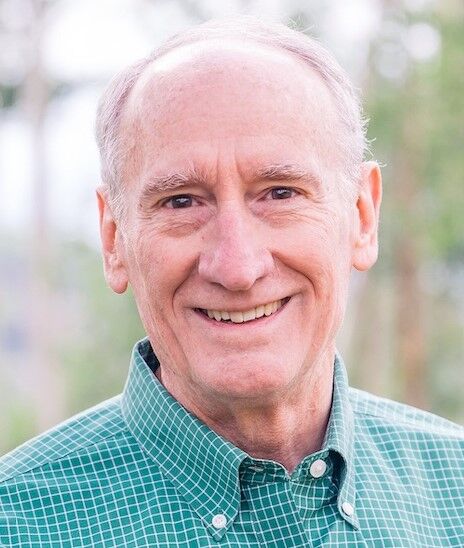
Thomas J. Perille, M.D., is president of Democrats for Life of Colorado. He is a fellow of the American College of Physicians and the Society of Hospital Medicine.


Who has the power to declare war?
Tom Cronin Bob Loevy
tom-cronin-bob-loevy@coloradopolitics.com
Updated 16 hours ago
Our constitutional framers boldly and ambitiously granted Congress the power to declare war yet granted the executive the responsibility, after war is declared, to supervise war as the commander-in-chief. That worked well until the Cold War began. The U.S. has been...

The delicate, ever-changing dance between politics and religion | SONDERMANN
Eric Sondermann for Colorado Politics
eric_sondermann_for_colorado_politics@coloradopolitics.com
Updated 2 days ago
The dance, really a marathon that brings to mind the classic movie “They Shoot Horses, Don’t They?”, has been going on as long as there have been governments and organized religion. That is to say that this delicate tango has...
Roasts, get yer roasts, here: Capitol M | Week of March 14, 2026
Marianne Goodland
marianne.goodland@coloradopolitics.com
Updated 3 days ago
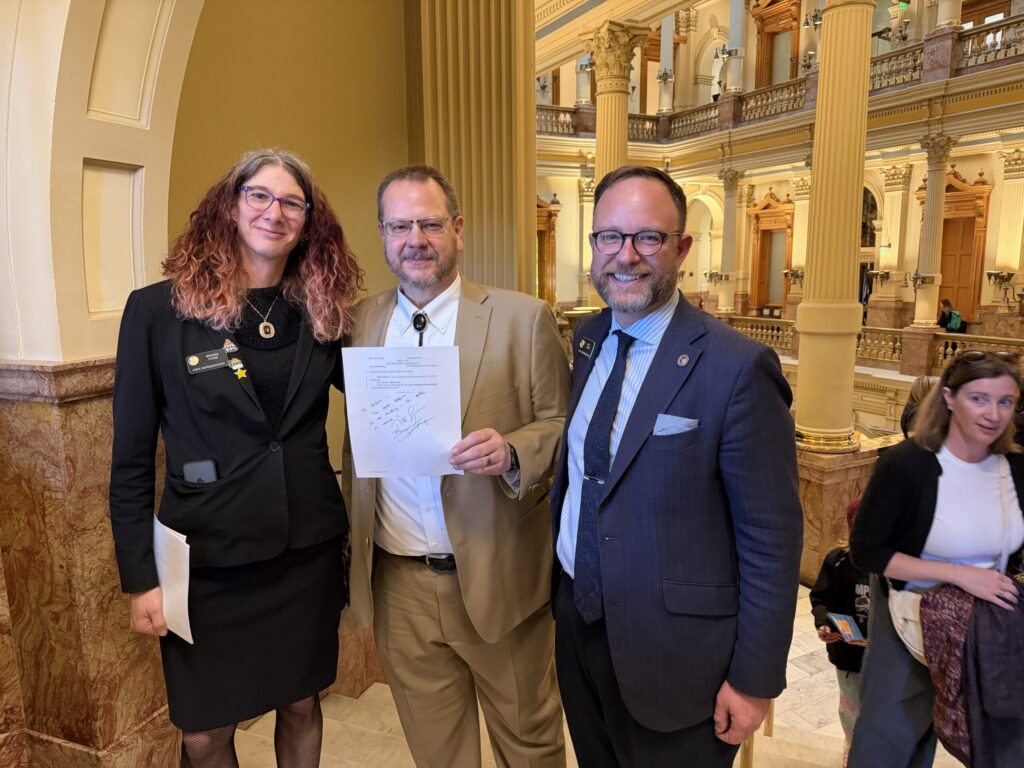
The lighter side of the Capitol, especially in the past week Apparently, the pending and eventual switch to daylight stupid time has put people in some pretty funny moods. And thank goodness! On March 4, the Senate approved the appointments...

Colorado’s election audits are built on math, not politics | IN RESPONSE
Colorado Politics
colorado-politics@coloradopolitics.com
Updated 2 days ago
By Amanda Gonzalez You don’t build a secure election system overnight. You build it over years — layer by layer — reinforcing it with stronger safeguards, better technology and more transparency. In Colorado, one of those safeguards is a little-known...
The backstory behind the school-funding TABOR ballot initiative | Paula Noonan
Paula Noonan
paula-noonan@coloradopolitics.com
Updated 3 days ago
Last session, the General Assembly took in a report on K-12 public school funding. The legislature ordered the report because an idea circulated Colorado was among the bottom five states in dollars allocated per student even though it is one...
Senate Bill 22 critical to keeping energy costs affordable, power reliable | PODIUM
Colorado Politics
colorado-politics@coloradopolitics.com
Updated 2 days ago
By Brian Wortinger I love Colorado’s outdoors. I’m an avid skier and hiker and my happiest days are spent deep in the mountains with no one around for miles. I want to protect that environment as much as anyone along...
Swipe-fee ban a giveaway to big boxes, mega-chains | IN RESPONSE
Colorado Politics
colorado-politics@coloradopolitics.com
Updated 4 days ago
By Jenifer Waller Four Colorado lawmakers recently published an op-ed in Colorado Politics calling for legislation to prohibit interchange fees on the sales tax portion of credit and debit card transactions (“Why Colorado should stop charging swipe fees on sales...

Leveling the playing field —why Colorado must fight fire with fire on redistricting | OPINION
Colorado Politics
colorado-politics@coloradopolitics.com
Updated 3 days ago
By Curtis Hubbard So Dick Wadhams suddenly cares about mid-decade redistricting — hyperventilating about efforts to “hijack Colorado’s congressional map” and calling those of us involved with the effort “amazingly naive.” Where was his outrage last year when President Donald...
You get what you pay for in your state reps | Hal Bidlack
Hal Bidlack
hal-bidlack@coloradopolitics.com
Updated 4 days ago
My regular readers will know of my affection for the Out West Roundup, a Colorado Politics feature that lets us keep up to date with the goings on out here in the western U.S., and draws attention to stories that...
A warrant should mean something — expedite carrying them out | OPINION
Colorado Politics
colorado-politics@coloradopolitics.com
Updated 4 days ago
By Aaron Ping My name is Aaron Ping. I am a father from Washington state, and I am writing because my 16-year-old son, Avery, cannot. Avery died on Dec. 19, 2024. The drugs that killed him were ordered through Snapchat....
PREV
PREVIOUS
Weiser deserves scrutiny in wake of SCOTUS session | BRAUCHLER
George Brauchler You could be forgiven if you thought Colorado Attorney General Phil Weiser played for our Rockies. Last week with the Supreme Court of the United States (SCOTUS) was a particular disaster, but the former law school dean’s performance throughout the entire SCOTUS session seems better suited to Coors Field than a courtroom – […]

A crackdown on Colorado’s traffic carnage | Colorado Springs Gazette
While deadly incidents of road rage understandably get banner headlines, a far greater number of traffic fatalities on Colorado roads each year are due to ordinary auto crashes. Of course, there’s nothing ordinary about the number of resulting deaths – averaging over two a day. In fact, the 754 lives lost in traffic crashes statewide […]