

Colorado Democrats pass proposal seeking to curb costs of utility bills
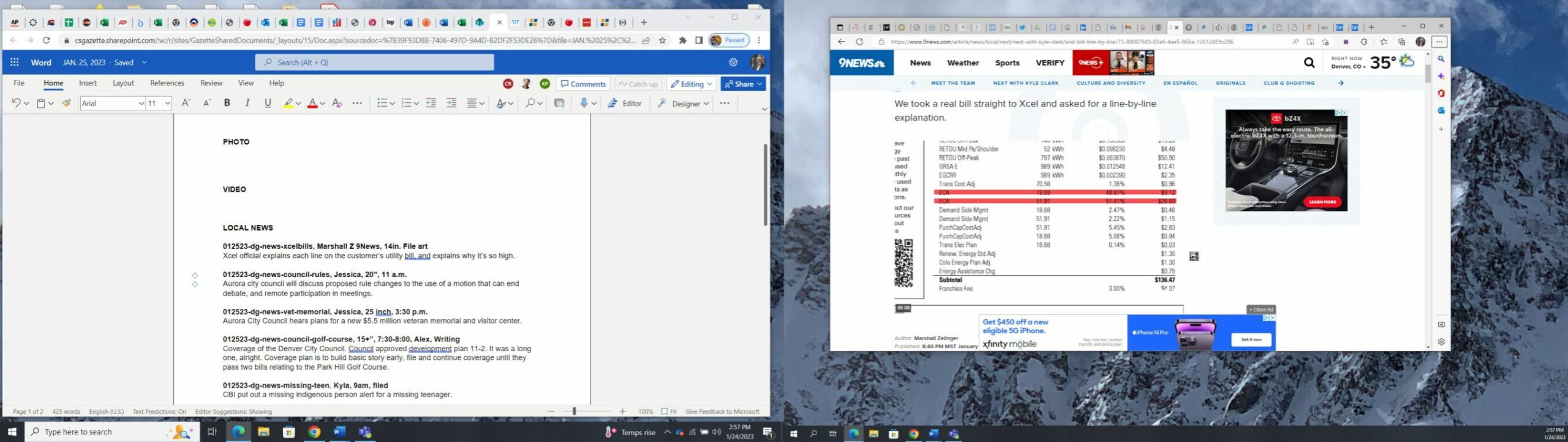
A proposal from Democratic lawmakers intended to address Colorado’s skyrocketing energy prices cleared its last major legislative hurdle on Saturday.
Senate Bill 291 seeks to lower costs of utility bills and reduce future volatility by making several changes to the regulation of Colorado’s investor-owned electricity and natural gas providers, such as Xcel Energy, including adjusting the expenses that are paid by utility providers versus customers.
The bill passed the House on Saturday, following the Senate’s passage last month. Now, it just needs amendments to be approved before it will be sent to the governor for final consideration.
“Coloradans are counting on us to address rising and erratic utility costs,” said bill sponsor Rep. Chris deGruy Kennedy, D-Lakewood. “This important legislation sets in motion both short and long-term, cost-saving solutions that increase transparency and accountability to protect Coloradans from rate spikes that leave them choosing between heating their home and putting food on the table.”
In a January presentation, the state Public Utilities Commission reported that a typical Xcel Energy customer saw a 25% increase in their electricity bill and a 75% increase in their gas bill compared to the same time last year.
The state legislature convened a special committee in February to investigate the spikes in utility prices. Bill sponsors said SB 291 is a result of the investigation.
Under the bill, utility providers would have to file a gas risk management plan, including a monthly cap on fuel charges. This is intended to stabilize bills by spreading out cost increases to a few cents per month over several years, instead of increasing bills by dozens of dollars in a single month, sponsors said.
Utility providers would also be prohibited from charging customers to pay for advertising, lobbying, political contributions and other activities. And, by 2025, the bill would require the PUC to establish rules to ensure that utility providers have financial incentives to keep fuel costs down.
“Since many of the costs associated with running a business and providing energy are recoverable, meaning they can be passed on to rate payers, what incentives do utilities have to better contain costs?” said bill sponsor Sen. Lisa Cutter, D-Jefferson County. “Our public utilities have been regulating the same way for more than 100 years … some things need to be reevaluated.”
The bill passed the House in a 46-19 vote on Saturday. Senators voted 21-13.
All Republicans voted against the bill and all but one Democrat voted in favor of it. Rep. Dylan Roberts, D-Avon, joined Republicans in voting “no.”
Critics of the bill said it would not result in significant savings on energy bills, calling the potential impact of the changes “a drop in the bucket” and arguing that rising energy costs are due to external factors outside of the state’s control.
“To me, the bill just doesn’t do very much about utility costs,” said Sen. Bob Gardner, R-Colorado Springs, who opposed the bill. “Truth in the matter, it can’t. It can’t because, for the most part, those prices are dictated by the market.”
In January, state officials attributed rising utility prices largely on the cost of natural gas, which increased by 40%, and the use of natural gas, which rose by 30%.
But they also cited two state actions that directly increased utility prices: rate hikes approved by Colorado energy regulators and the state allowing Xcel to charge customers $500 million for fuel costs incurred during a four-day winter freeze in 2021. SB 291’s required gas risk management plan is meant to prevent those kinds of impacts in the future.
Members of the utility industry similarly stood against SB 291. During a committee hearing, president of Xcel Energy’s Colorado Operating Company Robert Kenney said the bill wouldn’t bring down costs or reduce volatility. Kenney said lawmakers should instead focus on increasing natural gas storage capacity for utility providers or promoting longer-term gas contracts to provide more cost certainty.
Proponents argued that utility providers are concerned the bill will cut into their profits by limiting what costs they can push onto customers – pointing out that while Xcel customers experienced dramatic increases in their monthly bills last year, Xcel reported a record profit of $1.74 billion.
Bill sponsor Senate President Steve Fenberg, D-Boulder, also defended the state’s role in trying to legislate to lower costs in the first place.
“The market is not going to fix this problem. This is a regulated monopoly. It’s our job to regulate them,” Fenberg said. “The only part that is subject to the market are the fuel costs, however, that is a direct pass through dollar for dollar. So, there is no market.”
Other opponents of the bill raised issue with a portion that would require the Colorado Energy Office to study the value and risks of natural gas investments and bar utility providers from incentivizing new natural gas hookups or penalizing terminating gas service.
Critics said Democrats are using high utility costs as an excuse to “go after” natural gas.
“Instead of trying to address the real issue here, the bill attempts to punish utilities, the energy providers and their customers for something they don’t have control over,” said Sen. Barbara Kirkmeyer, R-Brighton, who opposed the bill. “The state is picking winners and losers on what type of energy people are connecting to their homes.”
In the House, lawmakers amended the bill to allow incentivizes for natural gas hookups for developments that are already in progress, pushing the deadline from Dec. 31, 2023 to Dec. 31, 2024 for applicants with approved or pending site development plans. That amendment will still need to be approved by the Senate.
The Senate must approve the House’s amendments or call a conference committee to debate the changes before the legislative session ends at 11:59 p.m. Monday. Afterwards, the bill will go to Gov. Jared Polis for final approval.


Colorado senators hold heated debate on latest immigration bill
Marianne Goodland
marianne.goodland@coloradopolitics.com
Updated 5 hours ago
A bill that would allow individuals who get injured during an immigration action to sue federal agents in state court won preliminary approval from the Colorado Senate on Monday. The bill would permit a “cause of action” by such individuals...

Trump pulls endorsement from Jeff Hurd over tariffs, backs Colorado Republican’s primary challenger
Ernest Luning
ernest.luning@coloradopolitics.com
Updated 4 hours ago
President Donald Trump on Saturday rescinded his endorsement of U.S. Rep. Jeff Hurd and threw his support behind the Colorado Republican’s primary challenger, Hope Scheppelman, citing the first-term incumbent’s “lack of support” for the administration’s tariff policy. The move comes...
Colorado Senate Democrats choose Sen. Cathy Kipp as president pro tempore
Marianne Goodland
marianne.goodland@coloradopolitics.com
Updated 6 hours ago
Senate Democrats on Monday elected Sen. Cathy Kipp, D-Fort Collins, as the next president pro tempore. Kipp replaced former Sen. Dafna Michaelson Jenet, D-Commerce City, who resigned her seat earlier this month. Kipp faced off against Sen. Tony Exum, D-Colorado...
Divided appeals court reverses murder convictions due to faulty self-defense instruction
Michael Karlik
michael.karlik@coloradopolitics.com
Updated 8 hours ago
Colorado’s second-highest court concluded last week that an incomplete self-defense instruction required the reversal of an El Paso County defendant’s murder convictions. Demetrius Montez Martin was among those present late at night at a club in Colorado Springs. An argument...
With deadline looming, Colorado House Ethics Committee narrows case against Rep. Ron Weinberg
Marianne Goodland
marianne.goodland@coloradopolitics.com
Updated 8 hours ago
With a Wednesday deadline to vote on seven ethics allegations against Rep. Ron Weinberg, R-Loveland, the Colorado House Ethics Committee signaled that it is poised to dismiss most of the claims, including campaign finance, conduct and firearm-related accusations, while focusing...

Democratic lawmakers propose changes to landlord-tenant laws in Colorado | Bills in Brief
Marissa Ventrelli
marissa.ventrelli@coloradopolitics.com
Updated 8 hours ago
Colorado lawmakers introduce hundreds of bills each year. Bills in brief cuts through the noise by explaining which proposals matter, what’s at stake, and how decisions at the Capitol could affect everyday life across the state. House Bill 1013, sponsored by Reps....
Colorado colleges must conduct wellness check if a student is reported missing under proposal
Marissa Ventrelli
marissa.ventrelli@coloradopolitics.com
Updated 6 hours ago
Spurred by the deaths of two young adults last year, a group of Colorado lawmakers is pushing legislation to require colleges to conduct wellness checks within six hours of a missing student report. The measure would also mandate statewide law...
Judge permanently blocks release of Trump classified documents report
Kaelan Deese, Washington Examiner
kaelan.deese.washington.examiner@gazetteedit.wpenginepowered.com
Updated 5 hours ago
A federal judge permanently barred the Justice Department on Monday from releasing the portion of former special counsel Jack Smith’s final report detailing his investigation into President Donald Trump’s handling of classified documents, delivering a sharp rebuke of the prosecutor’s...
Trump declares National Angel Family Day for illegal immigrants’ victims
Mabinty Quarshie, Washington Examiner
mabinty.quarshie.washington.examiner@gazetteedit.wpenginepowered.com
Updated 9 hours ago
President Donald Trump on Monday designated Feb. 22 as National Angel Family Day in honor of 62 people who were killed by illegal immigrants and two others who survived attacks. Trump signed a proclamation making the designation official at an...
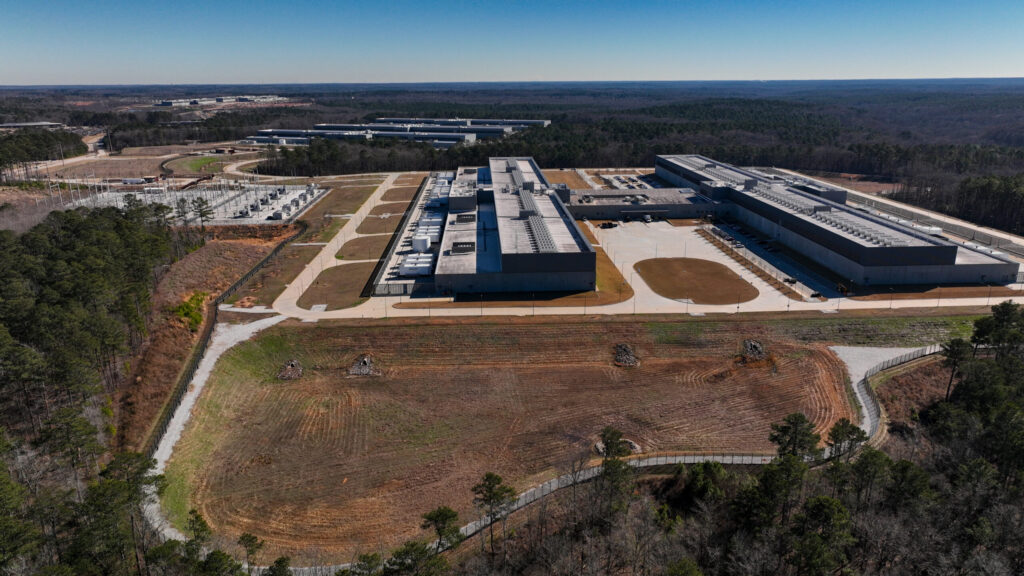
Colorado lawmakers mull competing bills on data centers
Scott Weiser
scott.weiser@gazette.com
Updated 3 hours ago
A Colorado coalition of data center developers and operators is urging lawmakers to pass a proposal that offers tax breaks to attract large facilities, while calling a competing bill a major obstacle to new investment. Meanwhile, proponents of the latter...
PREV
PREVIOUS

Think tank on car thefts: Longer view paints dire picture for Colorado
While not disputing the declining car theft figures Denver officials cited, a think tank argued that viewing the stats from a longer timeframe offers the public a more precise and comprehensive view of crime both in the city and the state and whether Colorado leaders’ public policy response is working. Denver officials last week said […]

Grant program to fund wildfire-resilient homes passes Colorado legislature
In the last three years, Colorado has endured the three largest wildfires and the single most destructive wildfire in the state’s history. On Saturday, lawmakers passed a bill they hope will help prevent future disasters. House Bill 1273 seeks to create a grant program to incentive homeowners to make their houses more resilient against wildfires. The grants would fund […]