

A pollution payment for the people | NOONAN
Four women legislators in the north metro area are taking air quality actions the Colorado Air Quality Control Commission (AQCC) and Air Pollution Control Division (APCD) have ducked since the passage of SB19-181 on protecting public health and safety and the environment in the oil and gas industry.
Two male legislators with districts facing hazardous materials transportation problems are addressing oil and gas distribution in heavily used transportation corridors.
The two bills, HB23-1294 on Pollution Protection Measures and SB23-280 on Hazardous Material Mitigation, join with SB23-285 on Energy and Carbon Management to reduce pollution health impacts and risks in the state where energy development, production and refining occur.
Stay up to speed: Sign-up for daily opinion in your inbox Monday-Friday
The Pollution Protection Measures legislation stretches beyond oil and gas to other industries that must apply for air pollution permits because, in case you don’t know it, the state issues permits for allowed pollution without requiring technical modeling. The deep-sixing of modeling procedures caused staffers in the APCD to blow the whistle on its management for inadequate pollution analysis.
Reps. Jennifer Bacon and Jenny Willford represent communities in the heart of the pollution world in Colorado. Bacon’s district is in northeast Denver toward the airport and Willford represents areas in Thornton and Northglenn. Both locations get pollution from Suncor Refinery and oil and gas development in the Denver-Julesburg play, depending on wind direction, as well as traffic from the I-25 and I-70 corridors. If HB23-1294 gets to the Senate, Faith Winter and Julie Gonzales will take over. Both senators from north metro voted for SB19-181 and have waited ever since for the full force of that legislation to occur.
It could be the Colorado Oil and Gas Conservation Commission (COGCC) and AQCC overplayed their hands when they slow-walked their pollution enforcement effort over the last four years. Now, despite the governor’s recent announcement about nitrogen oxide reductions, these four women have put their stake in the ground to clean up the air especially for their district residents.
Though lobbying on HB23-1294 comes in as expected with the oil and gas industry and its business colleagues against the bill and environmental groups supporting, the list of HB23-1294 lobbyists at 44 registrations falls far short of the barrage against SB19-181 at 547 lobby registrations. The 1294 hearing is scheduled for Thursday upon adjournment.
What’s interesting about SB23-280 is it sets a price on the risk of hazardous material pollution. The bill creates the fuels impact enterprise and sets a new fuels impact reduction fee on fuel manufacturers equal to $0.06125 per gallon of fuels delivered for sale or use in the previous calendar month. The fee will run until the fund collects $15 million or more. The money will go to grants and other supports for communities most affected by the risk of location in hazardous mitigation corridors and key commercial freight corridors. This bill has support from the Colorado Petroleum Marketers Association and Colorado Wyoming Marketers and is opposed by the Colorado Petroleum Association.
So a basic premise of SB23-280 is there is a financial hazard cost in developing and distributing fuels that amounts to $0.06125 per gallon that should be allocated to the hazard generators. That premise leads to an extension of the idea.
Since residents in the districts represented by the four women legislators and others suffer daily demonstrable pollution hazard from Suncor, the refinery that’s about to shut down one of its plants for a $100 million maintenance job after the entire plant was shut down for more than two months this past winter, shouldn’t these residents receive a per-gallon fee from Suncor for enduring their business model? Suncor, with headquarters in Calgary, earned $2.7 billion in the first quarter of 2023.
Let’s estimate 50,000 individuals live in a two-mile radius of the refinery. With 100,000 barrels of product produced daily at 42 gallons-per-barrel, that’s 1,533,000,000 annual production by gallon. Let’s assume a $0.10 per gallon pollution fee to offset the cost to residents enduring leaks, flares and various accidents. That calculation produces $3,066 per person annual pollution risk fee that can offset health hazards to individuals sucking in that measurably bad air. That amounts to $153,300,000 as an annual charge to Suncor out of its roughly $27 billion in gross annual profits in 2021 or .057 of the $27 billion.
Though no fee can offset the actual health impacts imposed by pollution from the refinery, the per-person payment could help defray past, current and future health care expenses and make living near the polluter less stressful for residents. As incentive, the fee can go down to the degree the refinery shows with continuous monitoring that its polluting has declined.
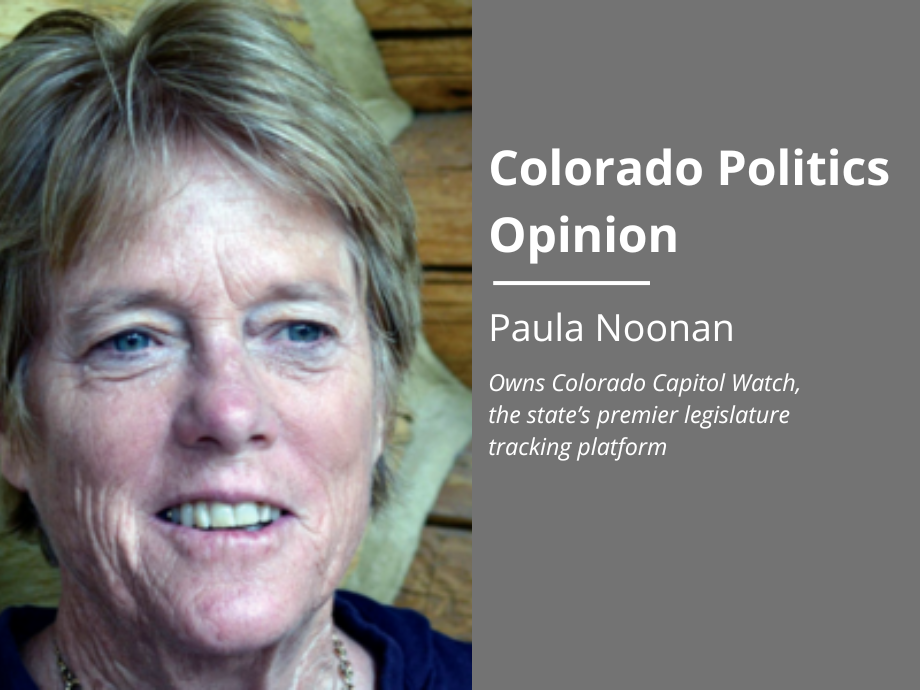
Paula Noonan owns Colorado Capitol Watch, the state’s premier legislature tracking platform.

Senate Bill 22 critical to keeping energy costs affordable, power reliable | PODIUM
Colorado Politics
colorado-politics@coloradopolitics.com
Updated 18 hours ago
By Brian Wortinger I love Colorado’s outdoors. I’m an avid skier and hiker and my happiest days are spent deep in the mountains with no one around for miles. I want to protect that environment as much as anyone along...

Swipe-fee ban a giveaway to big boxes, mega-chains | IN RESPONSE
Colorado Politics
colorado-politics@coloradopolitics.com
Updated 18 hours ago
By Jenifer Waller Four Colorado lawmakers recently published an op-ed in Colorado Politics calling for legislation to prohibit interchange fees on the sales tax portion of credit and debit card transactions (“Why Colorado should stop charging swipe fees on sales...

Leveling the playing field —why Colorado must fight fire with fire on redistricting | OPINION
Colorado Politics
colorado-politics@coloradopolitics.com
Updated 8 hours ago
By Curtis Hubbard So Dick Wadhams suddenly cares about mid-decade redistricting — hyperventilating about efforts to “hijack Colorado’s congressional map” and calling those of us involved with the effort “amazingly naive.” Where was his outrage last year when President Donald...
You get what you pay for in your state reps | Hal Bidlack
Hal Bidlack
hal-bidlack@coloradopolitics.com
Updated 2 days ago
My regular readers will know of my affection for the Out West Roundup, a Colorado Politics feature that lets us keep up to date with the goings on out here in the western U.S., and draws attention to stories that...
A warrant should mean something — expedite carrying them out | OPINION
Colorado Politics
colorado-politics@coloradopolitics.com
Updated 2 days ago
By Aaron Ping My name is Aaron Ping. I am a father from Washington state, and I am writing because my 16-year-old son, Avery, cannot. Avery died on Dec. 19, 2024. The drugs that killed him were ordered through Snapchat....
Lower Basin must adapt to Colorado River hydrology | OPINION
Colorado Politics
colorado-politics@coloradopolitics.com
Updated 2 days ago
By Nick Peters A February deadline for determining future operating guidelines for the West’s two largest reservoirs came and went with no agreement on the table and clear lines drawn in the sand. A seven-state resolution to how Lake Mead and Lake Powell will...

Keep kids safe without overregulating childcare | OPINION
Colorado Politics
colorado-politics@coloradopolitics.com
Updated 1 day ago
By Tamra Ryan As the Coors Economic Mobility Fellow for Common Sense Institute, I have written several reports in the past two years about the challenges related to affordability and availability of child care in our state. Though there are many factors affecting the dearth of...

Colorado’s GOP at its best — and worst | Dick Wadhams
Dick Wadhams
dick-wadhams@coloradopolitics.com
Updated 4 days ago
By Dick Wadhams Colorado Republicans are fighting to be relevant in the face of gross mismanagement by Democrats who totally control state government. While the Colorado Republican Party is mired in controversy, several Republican elected officials and candidates represent the...

Someone’s lying in latest activist embarrassment for Polis’ CPW Commission | Rachel Gabel
Rachel Gabel
rachel-gabel@coloradopolitics.com
Updated 4 days ago
Either Samantha Miller is lying, or Gov. Jared Polis is. If Miller is lying, she is so secure in the red carpet rolled out for animal activists by this administration she is willing to put words in the governor’s mouth....

Ask Secretary of State candidates if they’re in favor of independent election audits | Jon Caldara
Jon Caldara
jon-caldara@coloradopolitics.com
Updated 6 days ago
This part will disappoint angry people on Twitter: Relax. Put the pitchforks down. I am not relitigating the 2020 election or mail ballots or even Tina Peters. But I am saying people don’t trust elections like they used to. And...
PREV
PREVIOUS

Air pollution act helps fix Front Range failures | OPINION
JJ Trout Julia Marvin As local elected officials representing our constituents in two Front Range cities, one of our most important responsibilities is to protect the health and well-being of our residents. Despite our communities being on opposite sides of the Denver metro region, we share a deep concern that ozone pollution levels remain dangerously […]

Colorado cities don’t need campaign ‘reform’ | Colorado Springs Gazette
Ever since a scary clown made your first balloon animal at a birthday party, you’ve known squeezing it doesn’t pop it. It just bulges out someplace else. And yet, when the scary clown is government, and it attempts to put the squeeze on campaign contributions, we all tell ourselves it will “get the money out […]