

Polis outlines ambitious plan on housing shortage, property tax hike, car theft in state address
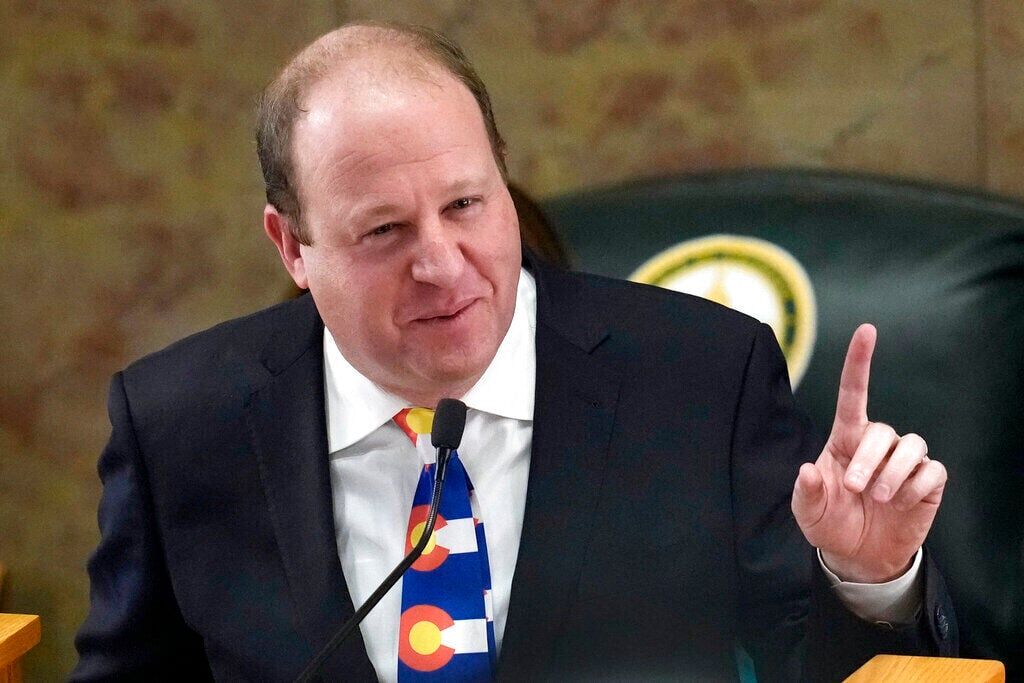
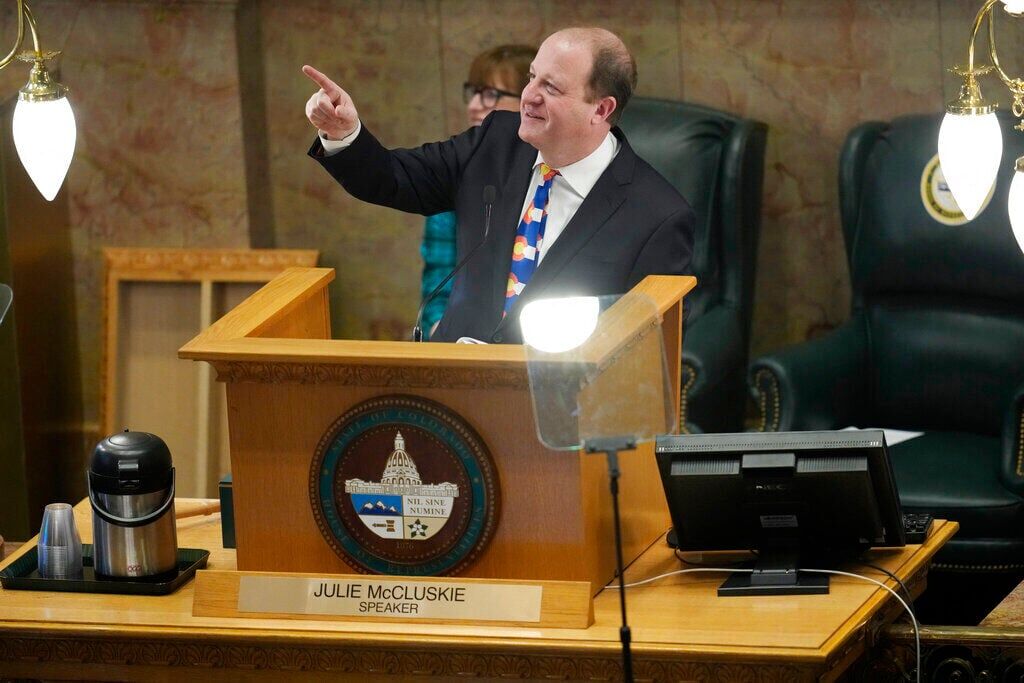
Fresh from a dominant performance in the November elections, Gov. Jared Polis on Tuesday outlined an ambitious agenda for his next four years in office, promising to tackle Coloradans’ most pressing issues, notably soaring crime and high cost of living, challenges that have increasingly burdened Coloradans in the past few years.
To these problems he offered solutions, as well as a plethora of programs he argues will best position Colorado to secure a vibrant future.
Indeed, Polis has a shorter-term future in mind – the 150th anniversary of Colorado’s founding in 2026, which also is the last year of his second term.
“Who do we want to be when our great state reaches our 150th birthday?” he said. “I want us to be a state where every person can find a home in their budget for rent or for purchase, where our water resources are protected and support the needs of our communities and economy.”
He added: “A state where we’ve secured 100% renewable energy by 2040, and every Coloradan can get the education and skills to succeed. I want us to be one of the 10 safest states in the nation. And I want health care, and everything in our state, to be more affordable for everyone.”
The governor focused on the basics of day-to-day living – inescapable issues that directly affect the pocketbooks of his constituents.
Housing
Sitting atop these challenges is Colorado’s acute housing shortage, a subject Polis spent the bulk of his address on.
Polis portrayed the housing shortage as a statewide problem, not a local one, and therefore needing a statewide response.
Noting Colorado has not made changes to its land-use policy since 1974, Polis called on lawmakers to “bring our land-use policy into the 21st century.”
“We need more flexible zoning to allow more housing, streamlined regulations that cut through red tape, expedited approval processes for projects like modular housing, sustainable development and more building in transit-oriented communities,” he said.
Colorado’s housing challenges – more acute in metro Denver, but just as dire elsewhere – are threatening to price out middle-class Coloradans and exacerbate the state’s homelessness crisis. The state received billions of dollars from the federal government for pandemic relief, with about $500 million directed by the General Assembly to addressing affordable housing and homelessness. That federal funding, however, will run dry, even as the housing challenge persists.
The state and local governments have poured significant resources into homelessness, and one study puts the figure at nearly $2 billion over a three-year period in some counties in the Denver metro area alone – explosive spending that reflects the gravity of the challenge that the public and private sectors face as they struggle to contain homelessness in Colorado’s biggest cities.
Polis’ policy prescription to amend zoning laws is expected to set up a major fight between local governments, which prize local control, and the state Capitol, which is gearing up to inject itself into zoning laws.
“We need an approach that creates more housing now, protects Colorado’s resources, and reduces sprawl,” Polis said. “It’s clear that the actions of one jurisdiction impact others, especially when it comes to housing, our environment, transportation systems, roads and transit, water and sewer infrastructure and, indeed, our economic prosperity and growth.”
Health care
Noting how expensive it is get proper medical care, Polis called on lawmakers to work on cutting costs and suggested that punitive actions against some actors might be in order.
“Some large hospital systems are making record profits, paying zero taxes, and sitting on enormous reserves while overcharging customers,” he said. “Meanwhile, they are consolidating providers, which drives up costs and leaves fewer options for Coloradans.”
“It’s time that we hold them accountable,” he said.
This means, he said, that health providers should stop overcharging patients and nonprofit hospitals must “work with their communities to live up to that promise, providing benefits like mental health, maternity care, health care, workforce growth and support for social determinants of health like housing and food.”
He called on the Legislature to do more to lower the cost of drugs.
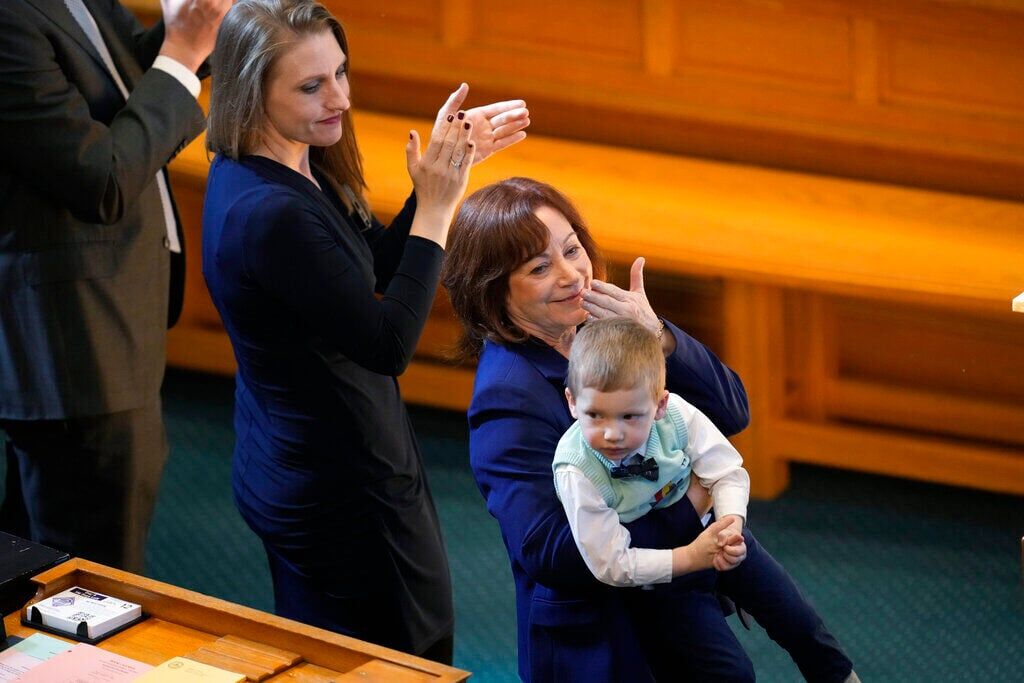
Framing the issue through the lens of Lt. Gov. Dianne Primavera, Polis said “too many Coloradans are forced to choose between the care they desperately need, paying their rent or mortgage, or putting food on the table.”
Polis talked about Primavera’s breast-cancer diagnosis, saying his second in command was forced to make many of those same choices that Coloradans face.
Primavera “didn’t just survive – she has thrived,” the governor said, noting her work heading up several agencies focused on reducing health care costs.
“But we have a lot more work to do. The United States spends far more on health care than our peers around the world, and our results are no better,” he said.
Public safety
The governor challenged legislators to tackle the challenge of public safety head-on, a crisis that appears to be spiraling out of control, notably in the past few years when Democrats have been in charge of the levers of power.
“Right now, Colorado falls in the middle of the pack on crime rates, but that’s not good enough. We can and we must do better,” Polis said.
In fact, in some statistics, Colorado is among the worst in the nation.
Car theft in Denver, for example, is second-highest in America, and three other Colorado cities rank in the top 10, according to a study by the Common Sense Institute. Car thefts are on track to exceed 48,000 this year, while arson, robbery and vandalism also continue to spike, said the study, which cited FBI statistics.
Law enforcement leaders, policymakers and criminologists remain divided on the causes of the auto-theft spike – and on the right prescription to it. Some argue that people steal cars over and over again because pretrial-release practices and state penalties for car thefts are too lenient. Others counter that penalties themselves don’t act as a deterrent and insist the COVID-19 pandemic created a perfect storm of circumstances that made a ripe incubator for car thefts.
Polis said he wants tougher penalties.
“Last fall, I called on the Commission on Criminal and Juvenile Justice to get tough on auto theft sentencing, and just last week the Commission’s Sentencing Task Force moved that recommendation forward overwhelmingly,” he said. “I look forward to seeing the General Assembly take up this important recommendation.”
He thanked law enforcement officers, local leaders and legislators who passed his public safety package last session and added he would be proposing an additional package to provide “even more resources” to law enforcement officers and community organizations, he said.
Water and energy
Noting that “water is life” in the West, Polis said the most important thing policymakers can do for water security is protect the state’s waterways and rights.
“Hotter, drier conditions have strained our resources in a time when demand continues to grow. Our rivers and streams aren’t just life sources for Colorado, but for the entire American West. We must continue to fight for our rights and lead the way to a sustainable future,” he said.
It remains to be seen how much money the Legislature and the governor ultimately allocate for water security. Colorado’s water plan calls for a $3 billion investment over 30 years – but that money has yet materialize.
Polis also emphasized his administration’s work to move Colorado away from fossil-fired energy and promised to ease some of the pain of that transition.
The governor unveiled a plan to set aside $120 million annually in new, clean energy tax credits. He didn’t elaborate, but he hinted that the money would go toward “clean” transportation, renewable energy and reduction in oil and gas emissions.
“We have already secured more than 80% renewable energy by 2030,” he said. “We look forward to having a clear path to 100% renewable energy by 2040.”
Critics have argued that Colorado’s transition plan is unrealistic and costly and it would hit the state’s low-income residents hard. They said that Colorado – and the U.S. – should instead focus on ensuring a diverse portfolio that offers reliable energy with predictable and low prices. That approach, they said, begins with enhancing local energy production.
Polis also called for more investment in fire prevention and mitigation.
“Getting this right is critical for the health of our communities and the future of our state.”
Taxes
In what probably will become a signature issue of this year’s legislative session, Polis called for a reduction in residential and commercial property taxes.
The governor said residential values grew more than 26% over the past two years – significantly more than the increases in people’s income.
Indeed, while lawmakers already pledged $700 million in property tax relief for 2023 and 2024 and Polis pledges to add another $200 million, that money is likely little more than a Band-Aid as, without a more aggressive intervention, property owners will get hammered with billions in higher tax bills.
New property assessments, which are conducted by counties, will hit in 2023.
“We must also work together to pass a long-term property tax relief package that reduces residential and commercial property taxes and creates a long-term mechanism to protect homeowners from being priced out of their homes, while protecting school funding,” Polis says.
The governor said it’s no secret that he “despises” the income tax, that he, in fact, supported two successful efforts at the ballot box to reduce it and that more should be done.
“I don’t expect that we can fully eliminate the income tax by our 150th anniversary, but let’s continue to make progress,” he said. “With healthy budget surpluses from our strong economy, we should further reduce the income tax rate for everybody while doubling down on relief for working families with policies like expanding the earned income tax credit. We have the tools to save people money. It’s what the voters sent us here to do.”
It remains to be seen to what extent the more progressive Legislature will work with the governor on lowering taxes. What’s clear is that a real tension exists between the desire for lower taxes and adequately spend on state priorities, such as health and education, as any reduction in taxes means lowering the state’s revenue base.
Immigration, ‘red-flag’ law and education
The crisis on the Southern border with Mexico has spilled into Colorado in the past several months, straining resources at both the local and state levels and compelling leaders to press the country’s federal leadership to solve the issue.
Polis reiterated that plea in his state address: “The time is now.”
He also praised Denver, Larimer County and a number of nonprofit agencies for “being great partners in ensuring every migrant coming to our state is treated in the most humane way possible.”
Polis took a moment to offer remembrance for the victims of the Nov. 19 Club Q shooting in Colorado Springs, before urging legislators to strengthen Colorado’s “red-flag” law.
“Right now, loved ones and local law enforcement have the ability to pursue an extreme risk protection order. But why not expand this to include additional petitioners, like district attorneys?” he said.
The governor also touted recently passed initiatives that created free preschool and full-day kindergarten, saying access to a quality education is a “fundamental right and critical for our economic prosperity.”
He asked for for more funding for education via the ballot box.
“I’m calling for the Legislature to refer a ballot measure that would allow Colorado to utilize excess Prop EE funds for preschool, just as the Legislature did on a bipartisan basis for excess marijuana funds in 2015,” he said. “This would give voters the choice to support more services for more children, and help lower-income families enroll their child in full-day preschool.”


Primary rival sues to prevent Democrat Eileen Laubacher from going through assembly in Colorado’s 4th CD
Ernest Luning
ernest.luning@coloradopolitics.com
Updated 5 hours ago
Democratic congressional candidate Trish Calvarese on Monday asked a judge to prevent one of her primary rivals, Eileen Laubacher, from participating in the caucus and assembly process to seek the nomination to challenge Republican U.S. Rep. Lauren Boebert in Colorado’s...
Colorado lawmakers tackle legislation on sexual assault
Jenny Deam
jenny-deam@coloradopolitics.com
Updated 5 hours ago
A panel of Colorado lawmakers on Monday unanimously approved a bill that supporters say will offer protections and support to victims of domestic violence, stalking, sex trafficking and sexual assault, including mandatory training for law enforcement on trauma. The measure,...
Colorado Supreme Court clarifies restraining order violations can always support burglary charge
Michael Karlik
michael.karlik@coloradopolitics.com
Updated 8 hours ago
The Colorado Supreme Court’s majority ruled on Monday that a violation of a restraining order can also serve as a basis for finding a defendant guilty of burglary. Under state law, a person commits second-degree burglary by unlawfully entering or...

Big week ahead for major legislation to address housing affordability woes
Zach Halaschak, Washington Examiner
zach.halaschak.washington.examiner@gazetteedit.wpenginepowered.com
Updated 10 hours ago
The Senate is pushing ahead with a bipartisan bill to improve housing affordability, teeing up a critical week for housing on Capitol Hill and raising major questions about what provisions will be included. Senate Majority Leader John Thune (R-SD) filed cloture on legislation from the...

Macron goes nuclear with increases to French warhead arsenal
Timothy Nerozzi, Washington Examiner
timothy.nerozzi.washington.examiner@gazetteedit.wpenginepowered.com
Updated 10 hours ago
French President Emmanuel Macron is channeling the atomic spirit of his predecessor Charles de Gaulle with orders for the French military to “increase the number of nuclear warheads” in the nation’s arsenal. Macron announced the seismic shift in France’s defensive...

Who has been killed so far during US-Israel mission in Iran?
David Zimmermann and Keely Bastow, Washington Examiner
david.zimmermann.and.keely.bastow.washington.examiner@gazetteedit.wpenginepowered.com
Updated 10 hours ago
There have been numerous casualties on all sides since the joint U.S.-Israel strikes against Iran commenced over the weekend, with more lives expected to be lost as the campaign continues. The Islamic regime’s leadership is currently bearing the brunt of...
Colorado Senate swears in Adrienne Benavidez after district vacancy win
Marianne Goodland
marianne.goodland@coloradopolitics.com
Updated 10 hours ago
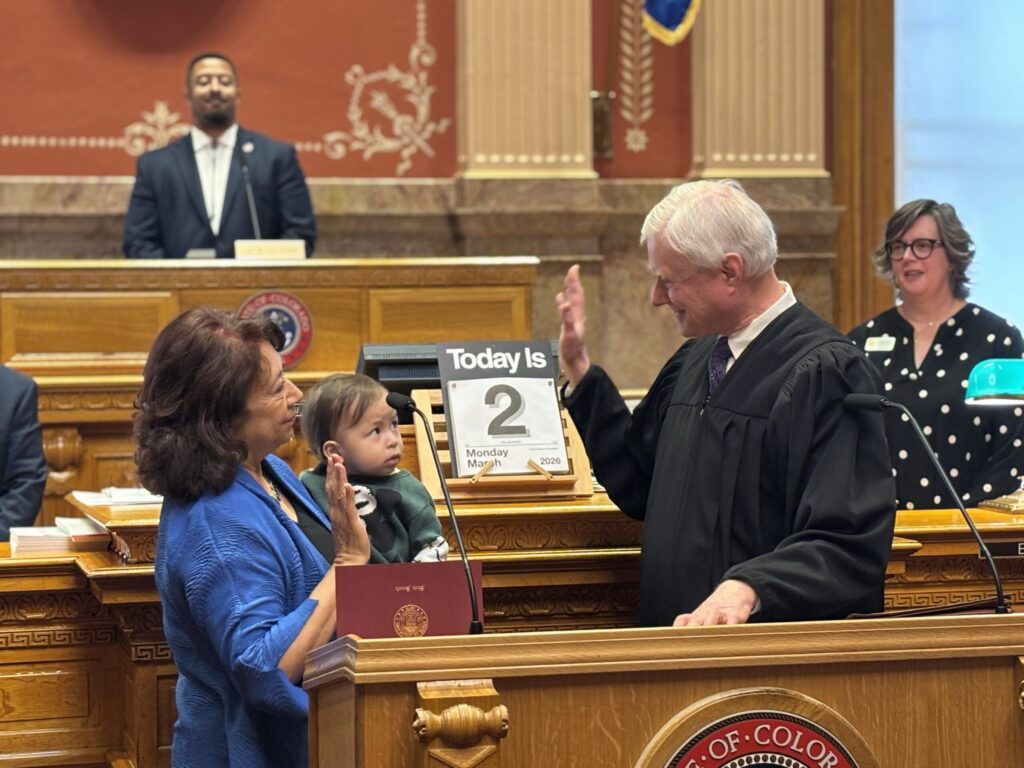
Sen. Adrienne Benavidez, a Democrat from Adams County, was sworn in Monday to the Colorado Senate, just four days after winning a vacancy election in District 21. She was sworn in by Colorado Court of Appeals Justice Lino S. Lipinsky...

10th Circuit judge creates vacancy, district court gets new chief judge | COURT CRAWL
Michael Karlik
michael.karlik@coloradopolitics.com
Updated 12 hours ago
Welcome to Court Crawl, Colorado Politics’ roundup of news from the third branch of government. A longtime member of the Denver-based federal appeals court will give the president a vacancy to fill, plus Colorado’s federal trial court will see a...

Denver mayor says his commute time tripled following ‘road diet’ change
Mark Samuelson Special to The Denver Gazette
mark.samuelson@denvergazette.com
Updated 10 hours ago
Mayor Mike Johnston is pushing back sharply against the claim by Denver councilmembers and bike activists that the city succumbed to lobbying pressure in revising a “road diet” plan for East Alameda Avenue, while noting that his own commute time...

Rural legislators, Colorado farmers defeat pollinator bill backed by Gov. Polis
Marianne Goodland
marianne.goodland@coloradopolitics.com
Updated 11 hours ago
A proposal to limit the use of neonicotinoid-coated crop seeds collapsed in the Senate Agriculture and Natural Resources Committee last week, as rural lawmakers, including two Democrats, joined Republicans to reject what they called an expensive, impractical mandate on farmers....
PREV
PREVIOUS

El Paso County commissioners approve plans for 77 homes in Black Forest
El Paso County commissioners Tuesday approved a rezoning request and preliminary plans to build more than 70 homes in the south side of Black Forest as part of the Homestead North at Sterling Ranch development project, after neighbors shared concerns about density and increased traffic in the area. The newly approved land designation and preliminary […]

Security company tied to fatal 2020 rally shooting reapplies for Denver license
Pinkerton Consulting and Investigations, a company involved with providing an unlicensed security guard to 9News who fatally shot a man at a 2020 rally, has reapplied for a license in Denver to employ private guards. The company’s application in December comes after a district court judge overturned the revocation of the company’s license in June […]