

$10,000 contribution to county commissioner did not require recusal, appeals court says
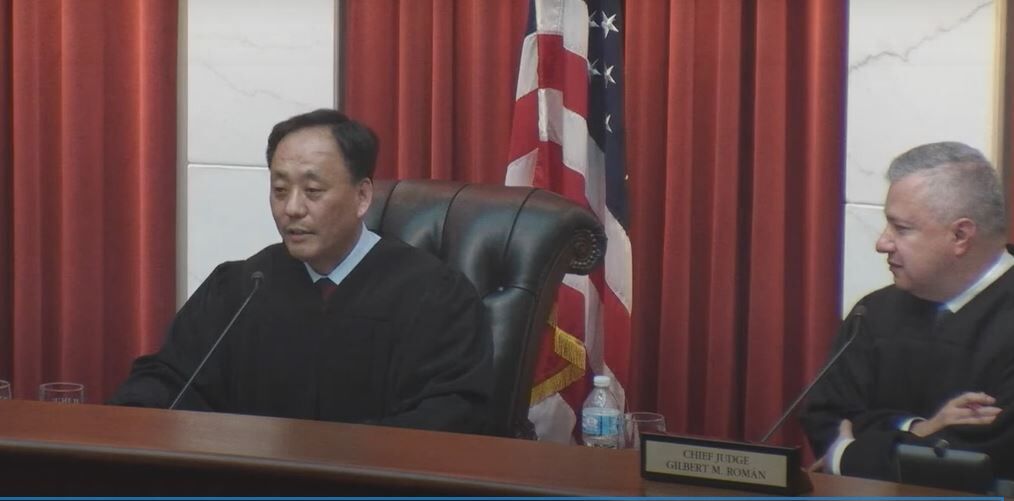
A Larimer County judge was wrong to conclude a county commissioner needed to recuse himself from a land-use vote in which one of the parties was responsible for nearly 20% of his campaign contributions, the state’s Court of Appeals has ruled.
District Court Judge Juan G. Villaseñor believed Coulson Excavating Company, Inc. had effectively chosen its own judge when its owners contributed $10,000 to then-Commissioner Tom Donnelly, only to have Donnelly vote in favor of the company’s mining permit 18 months later.
Applying U.S. Supreme Court precedent, Villaseñor considered the contributions so outsized as to suggest Donnelly would not be a neutral decision-maker, which is a key component of due process. Therefore, he should have recused himself under the board’s rule for conflicts of interest.
But earlier this month, a three-judge panel of the Court of Appeals disagreed that the contributions to Donnelly ahead of the vote amounted to a constitutional violation.
“Because this is not the kind of ‘rare,’ ‘exceptional,’ and ‘extreme’ circumstance that requires resort to the Constitution,” wrote Judge David H. Yun in the Dec. 1 opinion, “the district court erred by concluding that the undisputed material evidence established beyond a reasonable doubt that the county’s conflict-of-interest rule, as applied to Commissioner Donnelly’s actions, violated due process.”
The benchmark for constitutionality in Coulson Excavating’s case was the Supreme Court’s 2009 decision of Caperton v. A. T. Massey Coal Co. The chairman of a coal company spent $3 million in support of a candidate for West Virginia’s highest court, knowing it would hear his appeal of a $50 million jury verdict against his company. His preferred candidate won the election and, without recusing, cast the deciding vote to reverse the jury’s award.
By 5-4, the Supreme Court deemed the candidate’s failure to recuse violated due process, given his enormous financial support. Emphasizing the circumstances were “extraordinary” and that only “comparable” cases would pose a constitutional problem, the court explained that the size of political contributions, the total amount spent in the election, and the likely effect of the money on the electoral outcome were key considerations when evaluating an alleged due process violation.
In Larimer County, Coulson Excavating filed a permit in 2002 to operate a sand and gravel pit mine in Johnstown on land zoned for farming. The application sat unapproved until 2009, when Coulson Excavating submitted a new one. The company completed a noise study but, otherwise, almost nothing happened with the project through 2015.
Then in September 2016, Coulson Excavating requested to move forward in earnest with the proposal, which resulted in the application coming before the planning commission and the board of county commissioners.
In November 2016, voters reelected Donnelly to his third term as a commissioner over his Democratic opponent, by a margin of 55%-45%. The owners of Coulson Excavating, Dick and Ken Coulson, had contributed a combined $10,000 toward Donnelly’s reelection. The amount represented 18.6% of Donnelly’s total funds raised, and more than half of what Donnelly’s opponent received from her donors.
Eighteen months later, by 2-1, the board voted to approve Coulson Excavating’s permit. Donnelly voted in the affirmative. Before final approval, a neighborhood group formed in opposition to the quarry formally requested Donnelly recuse himself given the Coulsons’ donations, but he did not.
The group, Thompson Area Against Stroh Quarry, Inc., filed a lawsuit claiming, among other things, Donnelly’s failure to recuse was a violation of due process and an abuse of the board’s discretion.
Villaseñor sided against the neighborhood group on some of its allegations. Specifically, he found the land use code was not unconstitutionally vague. The judge also did not believe the rule requiring county commissioners to recuse violated the U.S. Constitution, although he was “troubled” that the rule permitted county commissioners on their own to be the ones interpreting its broad language.
Looking at the donations to Donnelly, Villaseñor concluded that, under Caperton, there was an appearance of bias that Donnelly would not be a neutral decision-maker while deciding on the mining permit in his quasi-judicial role.
While it was true that Donnelly had received other sizable contributions, none of those other donors had business heading toward the county board, Villaseñor explained. Donnelly’s reelection was reportedly competitive, meaning a large donation could make a difference. Finally, the Coulsons’ contribution in 2016 – at the time they decided to push forward with their mining permit – was 10 times larger than what they contributed to Donnelly in his prior election in 2012.
“A serious risk of actual bias occurs, based on objective and reasonable perceptions, when a person with a personal stake in the case has a significant and disproportionate influence in placing the judge on the case by raising funds when the case is pending or imminent,” Villaseñor wrote, ordering the board to hold a new hearing now that Donnelly is no longer a commissioner.
The county and Coulson Excavating appealed the decision, accusing Villaseñor of using the Caperton decision to engage in his “own brand of campaign finance reform.”
“Caperton requires a separate electoral influence so substantial and disproportionate that it virtually guarantees actual judicial bias,” wrote attorneys for Coulson Excavating, noting that a $10,000 contribution in Larimer County did not come close to a $3 million investment for a judicial candidate.
The Colorado Municipal League, which represents 270 of the state’s 272 cities and towns, also weighed in, asking the Court of Appeals panel to hold that campaign contributions by themselves “should never require recusal of a local elected official.”
The court rejected that position – which it labeled “extreme” – earlier this year in a different case out of Larimer County. Under very similar circumstances, a citizens’ group challenged the board’s approval of gavel-and-concrete operation near Laporte, also by a 2-1 vote and also with campaign contributions to Donnelly from the company involved. Villaseñor, who happened to be the judge on that case, decided the $4,100 in challenged contributions (out of $53,580 total) did not rise to the extreme level prohibited by Caperton.
“The $4,100 at issue here are, in raw and proportionate terms, a far cry from the contributions in Caperton,” wrote Judge Terry Fox in January for the appellate court. “We therefore agree with the district court that the amounts Donnelly received here do not create a risk of actual bias.”
The appellate panel in Coulson Excavating’s case disagreed with Villaseñor that a $10,000 contribution, in contrast, compromised the right to due process in judicial decision-making. The panel did not believe the Coulsons’ donations had a “significant and disproportionate influence” on Donnelly’s reelection, and did not occur in close proximity to the board’s evaluation of the mining permit.
Therefore, as in the Laporte case, Donnelly was not required to recuse himself on Coulson Excavating’s application. The panel reversed Villaseñor’s decision, but returned the case to him to resolve other claims made in the lawsuit.
Since the lawsuit was filed, the General Assembly enacted campaign contribution limits for county commissioners. Individual donors may only contribute $1,250 to a candidate.
The case is Thompson Area Against Stroh Quarry, Inc. et al. v. The Board of County Commissioners et al.

Federal judge declines to dismiss claims against prison officials for seizure-related death
Michael Karlik
michael.karlik@coloradopolitics.com
Updated 12 hours ago
A federal judge declined last month to dismiss the claims against numerous prison employees for a man’s in-custody death following several seizures and his repeated ingestion of liquified pain-numbing medication. The mother and minor children of Victor Esquivel sued the...
Appeals judge believes children’s representatives may challenge certain parental rights decisions
Michael Karlik
michael.karlik@coloradopolitics.com
Updated 12 hours ago
A member of Colorado’s second-highest court argued on Wednesday that, despite a recent state Supreme Court ruling prohibiting anyone other than the government from pursuing child-welfare cases, a child’s legal representative may still appeal certain decisions. By 2-1, a three-judge...
Will Colorado Springs get a federal courthouse? Colorado senator, local officials make push for a new facility
Michael Karlik
michael.karlik@coloradopolitics.com
Updated 13 hours ago
Local officials and one of Colorado’s U.S. senators urged the judiciary earlier this year to explore placing a new federal courthouse and judge’s chambers in Colorado Springs, while the district court is cautioning that Congress must establish new judgeships before...
Appeals court shuts down path to challenge convictions if lawyer tells jury that defendant is guilty
Michael Karlik
michael.karlik@coloradopolitics.com
Updated 2 days ago
Colorado’s second-highest court concluded on Wednesday that defendants cannot challenge whether the evidence was sufficient to sustain their convictions if their lawyer argues to the jury that it should find the defendant guilty. The U.S. Supreme Court has provided guidance...
Colorado senator, local officials push for new Colorado Springs federal courthouse
Michael Karlik
michael.karlik@coloradopolitics.com
Updated 8 hours ago
Local officials and one of Colorado’s U.S. senators urged the judiciary earlier this year to explore placing a new federal courthouse and judge’s chambers in Colorado Springs, while the district court is cautioning that Congress must establish new judgeships before...
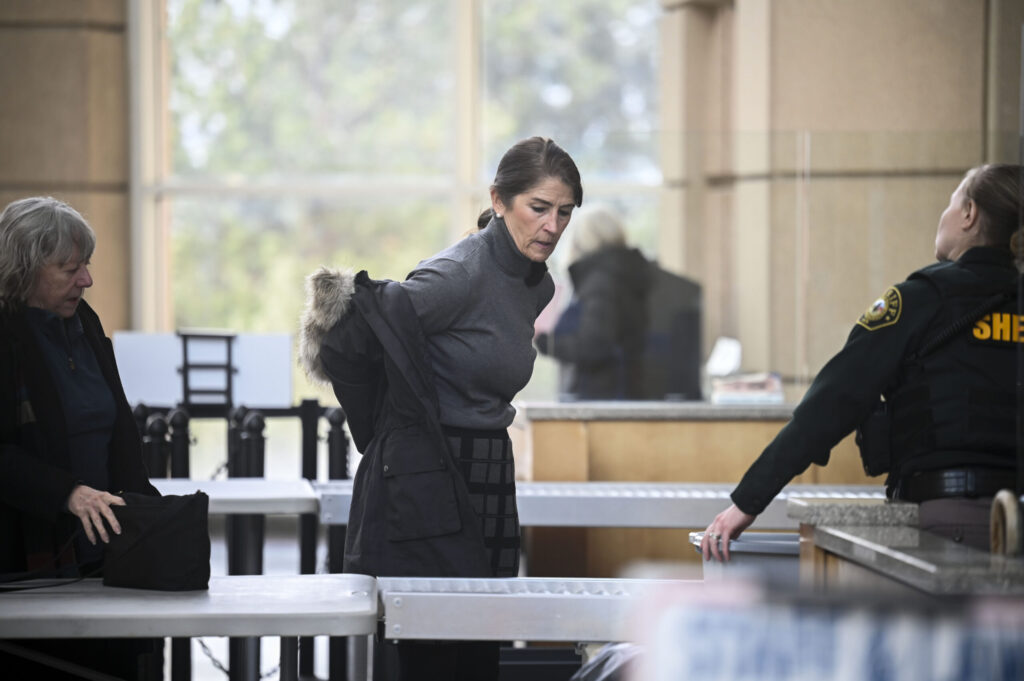
A year of developments in the CBI forensic lab scandal
Jenny Deam
jenny-deam@coloradopolitics.com
Updated 3 days ago
As the scandal at the Colorado Bureau of Investigation forensic lab moved through its second year, a series of startling developments and revelations emerged with no clear end in sight and the full toll still unknown. At the heart of a scandal unlike any before in state history,...
Federal judge sides with Douglas County School District in ex-admin’s discrimination lawsuit
Michael Karlik
michael.karlik@coloradopolitics.com
Updated 2 days ago
A federal judge concluded last week that a former high school administrator had not proven his claims of religious discrimination against the Douglas County School District. Corey McNellis had worked at Ponderosa High School since 2002 and served as the athletic...
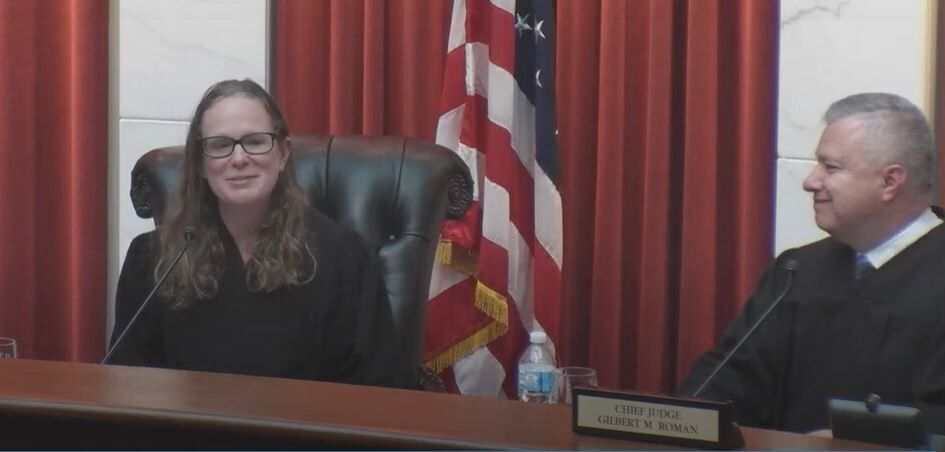
Appeals court orders new menacing trial after faulty self-defense instruction
Michael Karlik
michael.karlik@coloradopolitics.com
Updated 2 days ago
Colorado’s second-highest court ordered a new trial last week for an El Paso County defendant convicted of felony menacing, concluding an erroneous self-defense instruction may have influenced the verdict. Under Colorado law, self-defense is an affirmative defense, meaning the prosecution...
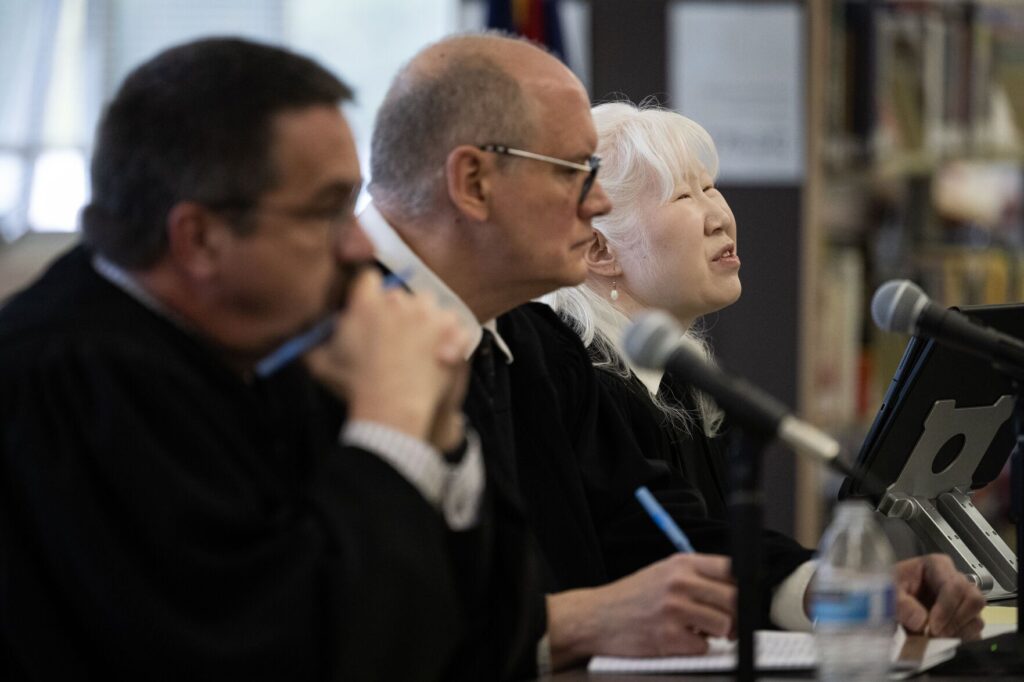
Appeals court clarifies framework for parents’ First Amendment rights in child-naming disputes
Michael Karlik
michael.karlik@coloradopolitics.com
Updated 5 hours ago
Colorado’s second-highest court overturned a Jefferson County judge’s order last week in a long-running dispute about whether two ex-spouses must call their child by his first name or middle name outside the home. In doing so, a three-judge Court of...
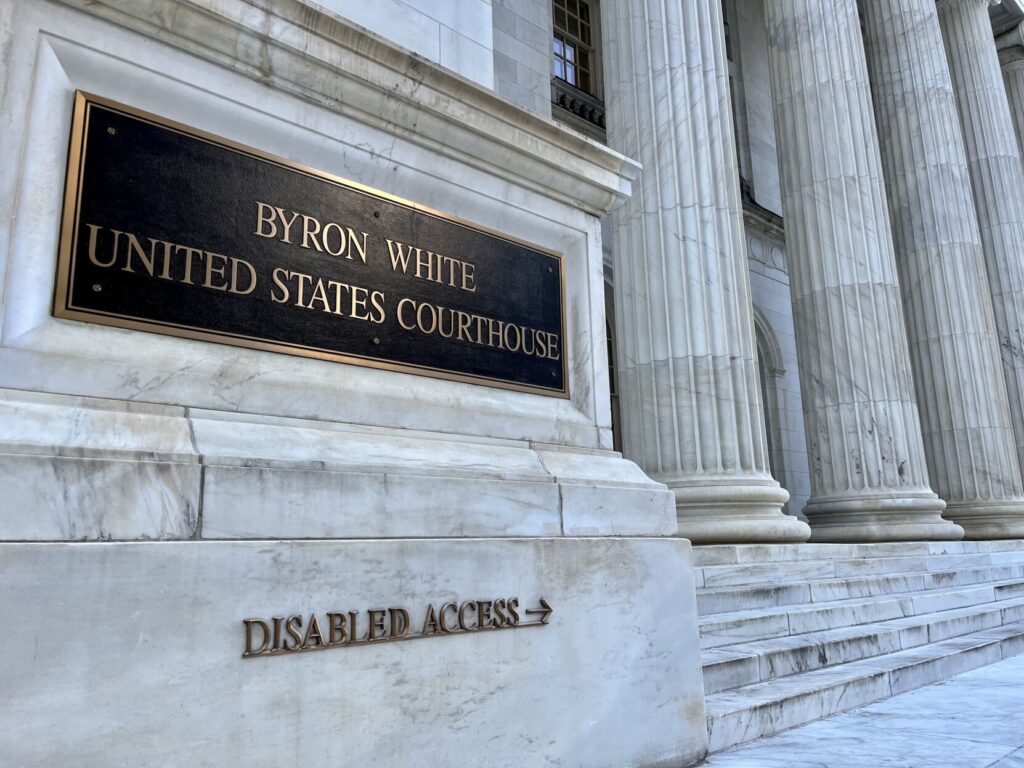
10th Circuit judges recap do’s and don’ts for lawyers
Michael Karlik
michael.karlik@coloradopolitics.com
Updated 4 days ago
Two members of the Denver-based federal appeals court spoke to attorneys on Monday about how to present cases effectively, and when it is helpful for outside entities to weigh in on pending appeals. Judges Robert E. Bacharach of Oklahoma and...
PREV
PREVIOUS

U.S. Senate passes record $858 billion defense act, sending bill to Biden
By Patricia Zengerle WASHINGTON (Reuters) -The U.S. Senate passed legislation on Thursday authorizing a record $858 billion in annual defense spending, $45 billion more than proposed by President Joe Biden, and rescinding the military’s COVID vaccine mandate. Senators supported the National Defense Authorization Act, or NDAA, an annual must-pass bill setting policy for the Pentagon, […]

State case against alleged Colorado Springs Planned Parenthood shooter remains in limbo
Attorneys in the state case of the man who allegedly killed three people at a Colorado Springs Planned Parenthood in 2015 reported during a status conference Friday they had no new updates, and requested another review date in three months. Robert Lewis Dear Jr.’s state case has been in limbo for years after being found incompetent […]