

How we manage wolves is key | Grand Junction Daily Sentinel
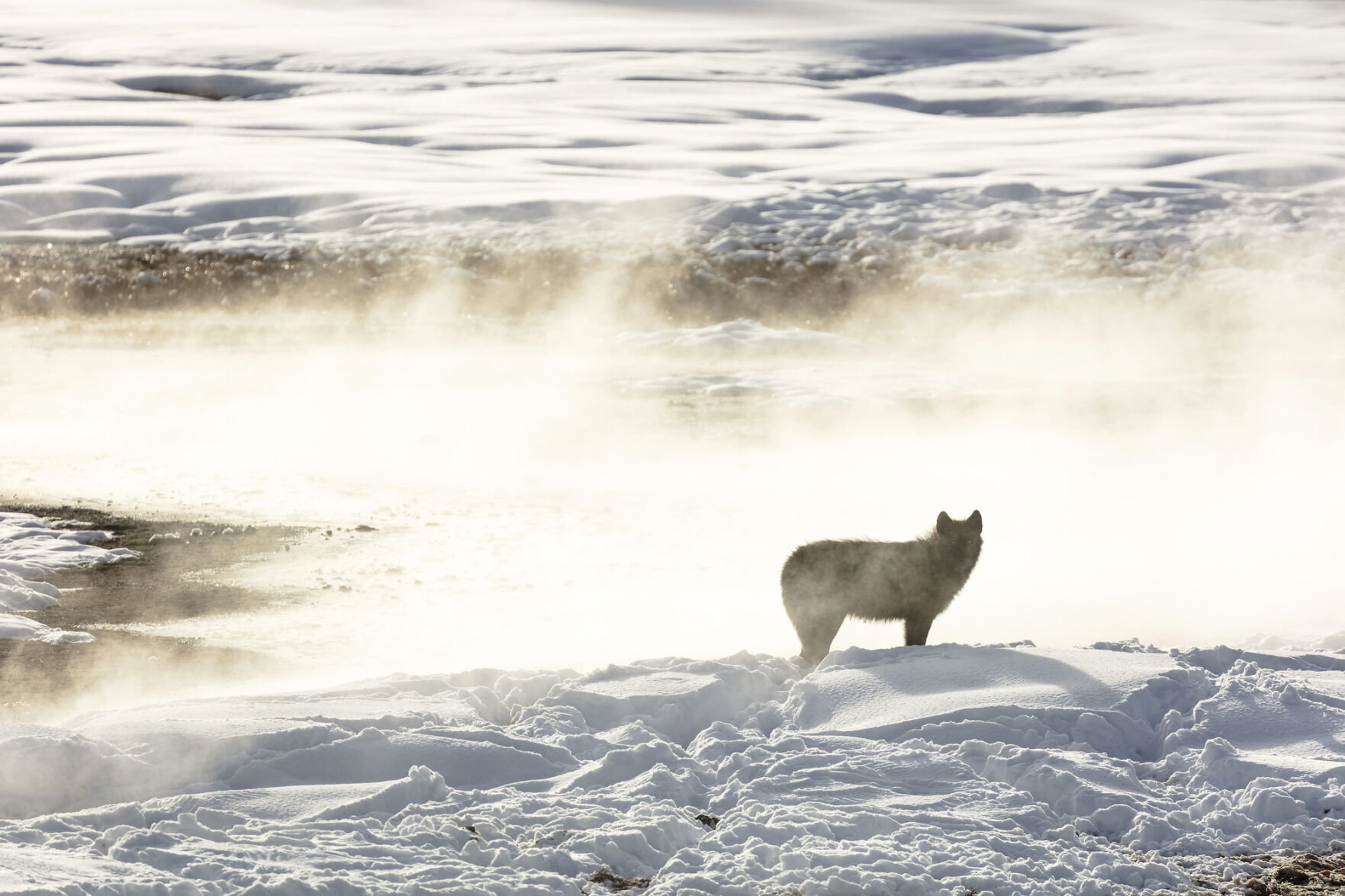
We’re finally getting details about the plan to reintroduce wolves to Colorado. While there are some areas of concern, for the most part what Colorado Parks and Wildlife is proposing is cautious, and therefore reasonable.
The draft state plan proposes releasing about 30 to 50 wolves in Colorado over three to five years, with the releases in the first year occurring somewhere in the Glenwood Springs/Aspen/Vail area, according to reporting by The Daily Sentinel’s Dennis Webb.
This plan is not set in stone, yet. Parks and Wildlife still wants to hear from the public.
The plan will be considered at several public meetings, including in Gunnison on Jan. 25 and Rifle on Feb. 7. Written public comments also will be accepted through Feb. 22 at wolfengagementco.org. The commission is scheduled to vote on the plan in May.
Considering the proposed release location, we would like to see a meeting in Mesa County. While we don’t know their exact location, wolves will sometimes travel hundreds of miles. The borders of Mesa County are well within the range of these wolves. Considering our population and the number of ranchers in this area, we think some more attention should be paid here.
We’d also suggest Parks and Wildlife reconsider the proposed $8,000 maximum, per-animal, fair-market-value compensation for confirmed wolf kills of livestock. That number sounds fair in most instances, but it would be good for the agency to leave itself some room to go higher in rare cases.
We’d also like to see the state put an emphasis on methods to prevent wolf predation in the first place. We agree with the agency that in some cases lethal control will be necessary, but we’d certainly prefer for wolves to not take cattle in the first place.
Michelle Lute, with the group Project Coyote, said in the conservation groups’ release, “Compensation, while helpful to operators’ bottom line, cannot be the sole solution to conflict. To protect rural economies, sustainable livelihoods and Colorado’s future, nonlethal human-wildlife coexistence is key.”
Preventing conflicts is going to be easier and less disruptive to everyone involved.
Eric Odell, species conservation program manager for the agency, said, “The greatest challenges associated with wolf restoration and wolf management in Colorado are primarily going to come from social and political issues rather than the biological issues.”
Odell is right. Where wolves have been reintroduced in the past they have behaved like wolves. This isn’t a problem from a biology or ecology perspective. They’re predators that have to kill to survive. In order for that to work on a landscape with a lot of people is a political and management problem. So far, from what we’ve seen, Parks and Wildlife seems to understand that.
We opposed the reintroduction of wolves and continue to believe they will be disruptive and damaging to people on the Western Slope. That being said, Parks and Wildlife has developed a plan that confirms the will of the people with a moderate, pragmatic approach.
Grand Junction Daily Sentinel Editorial Board
Read the original article here.


When a species is managed atop a pedestal, it isn’t management — it’s emotion | Rachel Gabel
Rachel Gabel
rachel-gabel@coloradopolitics.com
Updated 3 days ago
With petitions being tossed around like glitter at prom, it’s time for reasonable voters to sharpen their pencils and speak up. The first, of course, is in response to the Colorado Parks and Wildlife Commission’s blatant disregard for their director,...

Let the state’s narrative-laundering season begin | Jon Caldara
Jon Caldara
jon-caldara@coloradopolitics.com
Updated 4 days ago
Politics is a game of narrative. Whoever controls the narrative wins. Sure, the truth is interesting. But truth doesn’t sell. It takes time to uncover, assuming people care enough to go digging for it. Narratives are easier. They’re simple, comforting...

Home rule has protected Colorado cities for more than 125 years | Cronin & Loevy
Tom Cronin Bob Loevy
tom-cronin-bob-loevy@coloradopolitics.com
Updated 3 days ago
Colorado is currently gripped by a political struggle. It’s one between the governor and state legislature in Denver on one side and populous “home rule” city governments, mainly on the Front Range — such as Colorado Springs. The state legislature...

Home rule has protected Colorado cities for over 125 years | Cronin and Loevy
Tom Cronin Bob Loevy
tom-cronin-bob-loevy@coloradopolitics.com
Updated 2 days ago
Colorado is currently gripped by a political struggle between the governor plus the legislature in Denver and populous home-rule city governments, mainly on the Front Range, such as Colorado Springs. In the past few years, the legislature has been passing bills that applied to city government policies, which...
An “-“ends tribute in a week full of “odds” | Capitol M | Week of April 11, 2026
Marianne Goodland
marianne.goodland@coloradopolitics.com
Updated 4 days ago
The lighter side of the Capitol, usually… The decision to read the budget bill — the long bill, which spans 661 pages this year — put a damper on the House’s already less‑than‑festive mood. So Capitol M decided to catch...
A longshot, upset bid and a few quick takes | SONDERMANN
By Eric Sondermann
by-eric-sondermann@coloradopolitics.com
Updated 4 days ago
It is hard to keep up these days. The flow of news often seems overwhelming. Let’s focus today on an unusual congressional race before moving on to a few quick, supplementary observations. Since its creation 54 years ago, Congressional District...
Colorado Medicaid director’s resignation long-overdue inflection point for our families, kids | OPINION
Colorado Politics
colorado-politics@coloradopolitics.com
Updated 3 days ago
By Heidi Baskfield For years, the consequences of a strained and fragmented Medicaid system have fallen on those least able to navigate it — the children with complex needs and the families fighting to care for them. Though policy debates...

Note to Colorado lawmakers — parents protecting kids isn’t abuse, it’s their job | OPINION
Colorado Politics
colorado-politics@coloradopolitics.com
Updated 3 days ago
By Matt Sharp and Sharon Supp During the last few years, the U.S. Supreme Court has made at least one thing clear: Colorado is consistently overreaching to apply its laws in unconstitutional ways. Colorado treated a cake artist with hostility...

H.R. 1 underscores unfairness in Colorado tax code | OPINION
Colorado Politics
colorado-politics@coloradopolitics.com
Updated 3 days ago
By Caroline Nutter On July 4, 2025, Colorado’s budget was overturned with the stroke of a pen. When President Donald Trump signed into law H.R. 1, or the One Big Beautiful Bill Act, he didn’t only cut federal funding by...
The danger of when government goes rogue | Paula Noonan
Paula Noonan
paula-noonan@coloradopolitics.com
Updated 3 days ago
It’s dangerous, even fatal, when government goes rogue whether in a democracy or autocracy. Government officials who ignore or taunt laws that constrain bad acts should be given the heave ho. We’re witnessing these egregious scenarios now at the federal...
PREV
PREVIOUS

January's new egg mandate will burden the poor | Colorado Springs Gazette
Pity the poor when comfortable moralists discover a new virtue. Consider chickens. For most people, eggs are a great and affordable source of nutrition. The Mayo Clinic Health System summarizes the egg as follows: “One egg contains roughly 75 calories, 5 grams of fat, 6 grams of protein, 0 carbohydrates, 67 milligrams of potassium, 70 […]

Housing affordability the key to quality workforce | OPINION
Amy Sherman A thriving economy depends on recruiting and retaining a quality workforce. Recruiting and retaining a quality workforce depends on building a community that is the best place to live, work and raise a family. That brings us to one of the biggest issues facing Douglas County: affordable and attainable housing. We know the […]