

Judge tosses ex-Garfield County candidate’s discrimination lawsuit
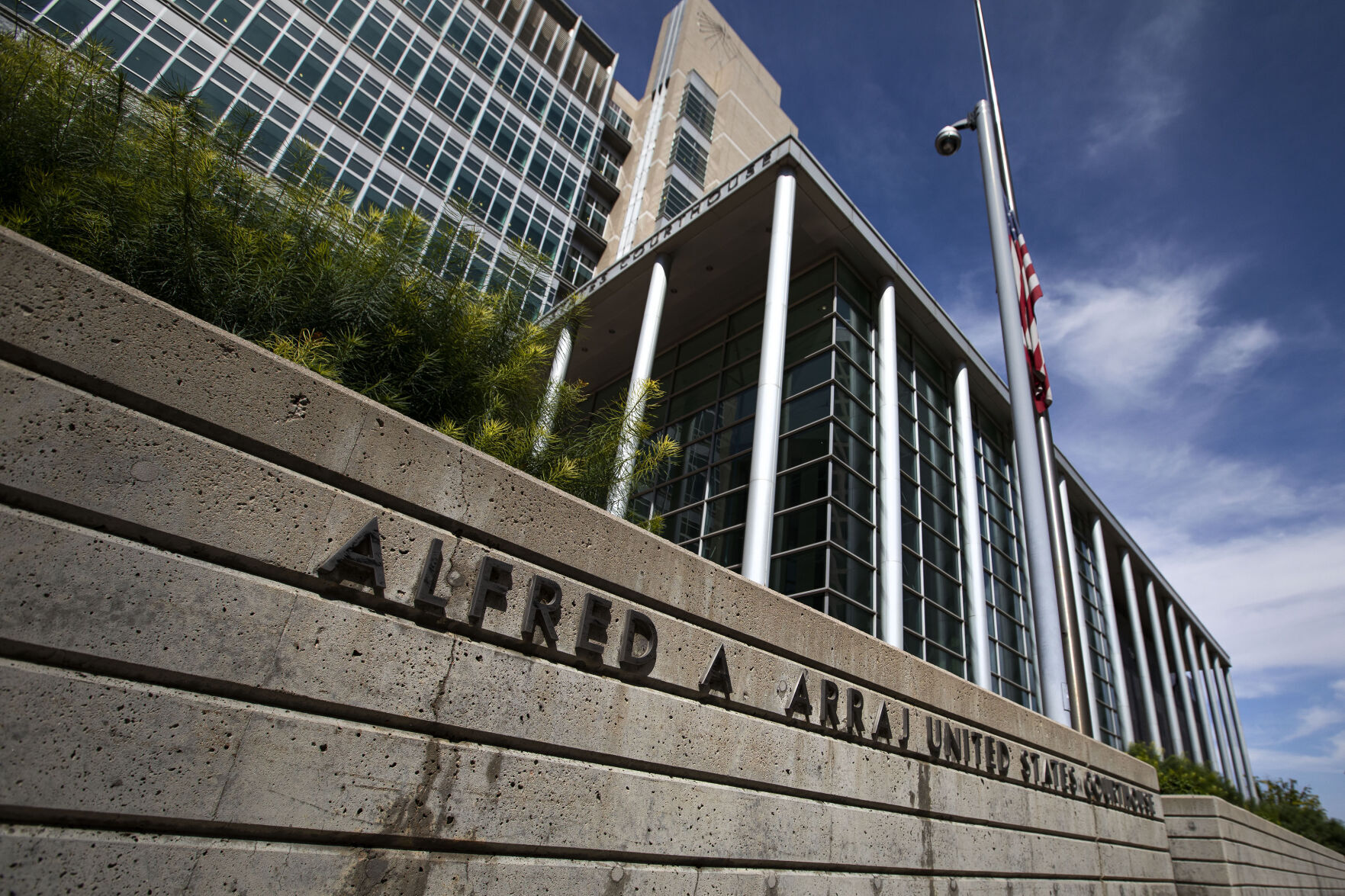
A federal judge has rejected a former Garfield County sheriff candidate’s claims of discrimination against Colorado Mountain College, where he was reportedly trying to begin a new career in law enforcement.
Paramroop Khalsa filed suit this summer and alleged a violation of Title VI, the civil rights law prohibiting discrimination on the basis of race, color or national origin in federally-funded programs. He sought $480,000 in damages from the community college and individual employee defendants.
On Nov. 17, U.S. Magistrate Judge Michael E. Hegarty agreed to dismiss the lawsuit, finding that, even if Khalsa had put forward a plausible Title VI claim, he filed his lawsuit beyond the legal window for doing so.
Khalsa was a write-in candidate for Garfield County sheriff in 2018, receiving 792 votes – 4.7% of the total – against longtime incumbent Lou Vallario. Khalsa told The Post Independent at the time that his own “brutal” arrest by sheriff’s personnel prompted his candidacy. (The paper later noted credibility issues with a witness precluded any felony charge for Khalsa.)
Representing himself in federal court, Khalsa, who is a yoga instructor, described wanting to pursue a career in policing after losing the 2018 election. He enrolled at Colorado Mountain College the following year with the goal of passing the officer training program.
Khalsa, who is Sikh and wears a turban with an uncut beard, alleged his firearms instructor initially told him, “We don’t get your kind here.” The instructor also said, “Khalsa, you scare me.”
According to Khalsa’s lawsuit, he was “escorted off the gun range” and removed from the firearms class in September 2019. The school offered him a refund if he quit the course, but Khalsa declined.
Khalsa complained to an administrator about discrimination, but on Oct. 21, 2019, Associate Dean Lisa Runck reportedly notified him that there was no wrongdoing in the training program. Khalsa continued to write to the college in 2020 asking to participate in the firearms class again, but received no answer.
Around August 2021, the school reportedly issued Khalsa an associate degree in criminal justice, even though he had not completed the firearms class requirements.
“This experience has caused enormous stress and personal depression over wanting nothing more than to become a policeman,” Khalsa wrote. “I really wanted to move into consulting and teaching meditation to police personal (sic). Without this certification I have no chance of doing anything related to police.”
Estimating that he would have worked for 10 years in law enforcement, Khalsa asked for $480,000 for his discrimination claim.
Colorado Mountain College and four employee defendants moved to dismiss the lawsuit for multiple reasons. First, Khalsa had sued “Colorado Mountain College, Police Academy,” which, as the defendants noted, is not an actual entity. Second, Title VI does not enable a person to sue individual defendants.
Further, Khalsa had brought a discrimination claim without any mention of how he was discriminated against.
“Plaintiff does not identify his race, color, or national origin, let alone tie his unknown race to discrimination by any of the defendants,” the Colorado Attorney General’s Office wrote. “Plaintiff also fails to outline a connection between his race, color, or national origin and any alleged discriminatory conduct on the part of the Defendants.”
Although Khalsa clarified that his complaint was based on “religious freedom” discrimination, Hegarty agreed with the college that the lawsuit was a non-starter. Khalsa had two years to file suit after being discriminated against. With the alleged discrimination occurring in the fall of 2019, Runck’s October 2019 message that found no wrongdoing would have started the clock on Khalsa’s window to initiate legal action.
“Yet, the complaint was filed eight months after the end of the limitations period on June 29, 2022,” the magistrate judge wrote.
Hegarty added that Khalsa could have potentially pursued a viable claim: by assuming the instructor’s comments amounted to discrimination; the behavior was related to Khalsa’s race, color or national origin; Colorado Mountain College received federal funding; and Khalsa’s inability to complete the firearms course was a form of injury.
With those assumptions, “the court finds that plaintiff’s claim is plausible,” Hegarty wrote, but “the statute of limitations bars it.”
The case is Khalsa v. Colorado Mountain College, Police Academy et al.


Cause of death revealed for self-proclaimed Planned Parenthood gunman
Mackenzie Bodell
mackenzie-bodell@coloradopolitics.com
Updated 2 hours ago
The self-proclaimed gunman in the Planned Parenthood shooting in Colorado Springs in November 2015 died from congestive heart failure and other related medical conditions, the Federal Bureau of Prisons said in a recent court filing. The Federal Bureau of Prisons...
Federal judge lets ex-Castle Rock employee’s discrimination lawsuit proceed
Michael Karlik
michael.karlik@coloradopolitics.com
Updated 20 hours ago
A federal judge rejected the town of Castle Rock’s effort to dismiss an ex-employee’s age and gender discrimination lawsuit on Wednesday, while deeming the case a close call. Carl E. Filler, who was in his mid-60s when the town hired...

Federal judge dismisses claim against Colorado health department leaders over gas stove law
Michael Karlik
michael.karlik@coloradopolitics.com
Updated 3 hours ago
A federal judge last week dismissed the constitutional claim against leaders of the Colorado Department of Public Health and Environment over a 2025 law requiring health disclosures on new gas-fueled stoves. In June, Gov. Jared Polis signed House Bill 1161...
Appeals court wipes away defendant’s $66,000 restitution obligation after trial judge did not follow law
Michael Karlik
michael.karlik@coloradopolitics.com
Updated 3 hours ago
Colorado’s second-highest court voided a defendant’s obligation to pay more than $66,000 in crime victim restitution last week, finding a Mesa County judge neglected to follow the process laid out in state law. In Colorado, as part of sentencing, judges...
Federal judge lifts public access restriction on Children’s Hospital Colorado’s challenge to DOJ subpoena
Michael Karlik
michael.karlik@coloradopolitics.com
Updated 1 day ago
A federal judge ordered last month that the public be able to access the filings in Children’s Hospital Colorado’s legal challenge to a U.S. Department of Justice subpoena seeking a broad range of documents about patients, employees and communications. Children’s...

10th Circuit rules 20-year-old DUI convictions may be factor in deportation proceedings
Michael Karlik
michael.karlik@coloradopolitics.com
Updated 20 hours ago
The Denver-based federal appeals court concluded last month that it was appropriate for immigration authorities to consider a man’s 20-year-old impaired driving convictions when determining if he recently exhibited “good moral character.” Under federal law, an immigrant seeking to remain...
Mesa County judge wrong to conclude hatchet not a ‘knife,’ says appeals court
Michael Karlik
michael.karlik@coloradopolitics.com
Updated 20 hours ago
Colorado’s second-highest court determined last week that a Mesa County judge incorrectly reduced a defendant’s menacing charge from a felony to a misdemeanor after finding his hatchet did not meet the definition of “knife.” A person commits menacing as a...
10th Circuit rules Greeley officer unconstitutionally detained man standing outside home
Michael Karlik
michael.karlik@coloradopolitics.com
Updated 3 days ago
The Denver-based federal appeals court concluded last week that a Greeley police officer lacked reasonable suspicion to detain a man who was standing outside the door of a residence and not engaging in any indicators of criminal activity. A three-judge...

‘Utterly no precedent’: Federal judge expresses concerns about Jeffco’s early appeal in jail death case
Michael Karlik
michael.karlik@coloradopolitics.com
Updated 3 days ago
A federal judge shared his concerns on Monday about Jefferson County’s appeal of a routine procedural order in a constitutional rights case, which the plaintiffs argued could spawn appeal-related delays in countless lawsuits against the government. During a hearing, U.S....

Justice Hart’s absence continues, state Supreme Court hears oral arguments | COURT CRAWL
Michael Karlik
michael.karlik@coloradopolitics.com
Updated 3 days ago
Welcome to Court Crawl, Colorado Politics’ roundup of news from the third branch of government. One member of the Colorado Supreme Court remains on an unusual leave of absence, plus the court heard oral arguments in eight more cases last...
PREV
PREVIOUS

Two Denver council members opposed to Park Hill Golf Course Development
Though united in opposition, two Denver City Council members Monday night were set against publishing the Park Hill Golf Course small area plan for differing reasons. District 9 Councilwoman Candi CdeBaca and District 6 Councilman Paul Kashmann voted against the bill, which appeared before council for the first time. The proposed redevelopment of the Park […]

State Rep. Alex Valdez throws hat into Denver mayor race
Another state lawmaker is entering the race for Denver mayor, with state Rep. Alex Valdez telling Colorado Politics he is submitting his candidacy paperwork on Tuesday. Valdez, D-Denver, is joining a crowded field of candidates hoping to succeed term-limited Mayor Michael Hancock next year. Twenty other people have filed paperwork to run for mayor, according […]