

OUT WEST ROUNDUP | Utah sues Biden over restoration of 2 national monuments
UTAH
Biden sued over move to restore 2 national monuments
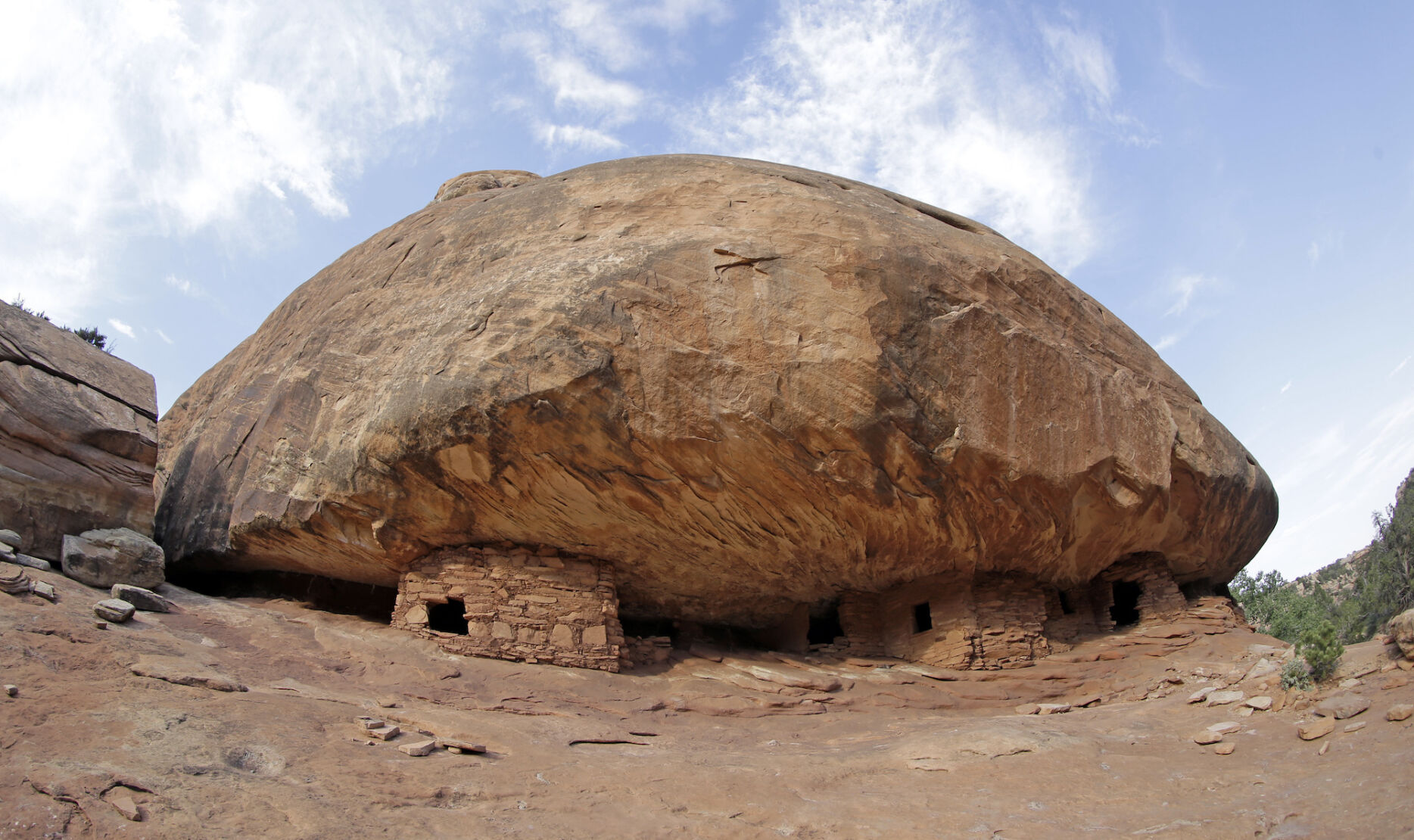
SALT LAKE CITY – The state of Utah and two Republican-leaning rural counties sued the Biden administration on Aug. 24 over the president’s decision last year to restore two sprawling national monuments on rugged lands sacred to Native Americans that former President Donald Trump had downsized.
The lawsuit over Bears Ears and Grand Staircase-Escalante, the two southeastern Utah monuments, alleges that President Joe Biden’s action violates a century-old law that allows presidents to protect sites considered historically, geographically or culturally important and outlines the rules governing when they can do so.
The new lawsuit is the latest twist in a yearslong debate spanning three presidential administrations. Its arguments revisit familiar legal and political debates and touch on points Republicans have for years repeated in court and in campaign speeches about federal land grabs and advantages of local land management.
The challenge from Utah and two right-leaning rural jurisdictions, Kane and Garfield counties, had been expected since Biden restored the lands in October 2021.
The monuments, which together are nearly the size of Connecticut, contain canyons surrounded by pink ribbons of limestone, dramatic red rock mesas and buttes, juniper forests and Native American artifacts including ancient cliff dwellings and petroglyphs.
In a joint statement in support of the lawsuit, Gov. Spencer Cox and Utah’s entire congressional delegation accused the federal government of not properly managing the land and blamed the expanded monuments for “unmanageable visitation levels.”
The lawsuit brings the battle over these lands back to the courtroom, similar to what happened in 2017 after Trump made his move to shrink the monuments. At that time, lawsuits were filed by outdoor company Patagonia and a coalition of tribes including the Hopi, Ute Indian, Ute Mountain Ute, Zuni tribes and Navajo Nation to restore the monuments.
Utah’s lawsuit argues the Biden administration interpreted the 1906 Antiquities Act in an overly broad manner and disregarded its original intent: protecting particular historical or archaeological sites. It cites provisions of the act that say designations should encompass “the smallest area compatible” with preservation goals.
NEW MEXICO
Record-setting wildfire declared contained
ALBUQUERQUE – More than four grueling months and $300 million later, the federal government has declared the largest wildfire in New Mexico’s recorded history 100% contained, a notable milestone but just another step in what local residents and officials say will be a long journey toward recovery.
The blaze was sparked in the spring by two errant prescribed fires conducted by the U.S. Forest Service. More than 530 square miles of the Rocky Mountain foothills burned, hundreds of homes were destroyed, livelihoods were lost and drinking water supplies were contaminated.
Local officials say there are years of work ahead of them to restore the landscape and protect against post-fire flooding.
In addition to costs related to fighting the fire, federal emergency managers have paid out more than $4.5 million in aid to affected individuals and households and $6.7 million in low-interest loans for smalls businesses.
While more than 1,200 applications for individual assistance have been vetted, the Federal Emergency Management Agency would not say how many total applications have been received or denied.
New Mexico’s major disaster declaration has been expanded to include flooding, mudflows and debris flows directly related to the wildfires.
No hot spots have been reported for more than a month, but given the history of how the blaze started officials wanted to be confident when declaring containment, said Stefan La-Sky, a fire information officer with the U.S. Forest Service.
Oil, gas revenues drive state’s next budget windfall
CHAMA – Projected revenues for the next budget year are expected to deliver another windfall to New Mexico’s coffers.
New estimates released on Aug. 17 by legislative and executive economists during a meeting of the Legislative Finance Committee in Chama show lawmakers will have a projected $2.5 billion in new money. That’s the difference between current spending levels and expected revenues in the next fiscal year.
Some lawmakers say the budget windfall represents an opportunity for New Mexico to change is trajectory and avert the big swings between spending growth followed by cuts that have been common over the past decade. However, other lawmakers and top budget officials cautioned that the recent revenue growth will likely not be sustainable in the long term.
State spending already has increased by about 30% over the past three-plus years. Democratic Gov. Michelle Lujan Grisham, who is running for reelection, signed off this year on a $8.5 billion spending plan that included raises for teachers and state police officers and tax rebates for state residents.
The state is expected to see a budget surplus of nearly $3.8 billion for the current fiscal year and about $2.6 billion is set to flow into a state early childhood trust fund.
Roughly two-thirds of the projected revenue growth for the coming budget year is expected to come directly from oil and natural gas receipts.
ARIZONA
Desert flooding damages LA to Phoenix highway
DESERT CENTER, Calif. – The main highway from Los Angeles to Phoenix was damaged by a flash flood that washed out part of the road through the Southern California desert in the latest bout of punishing monsoonal thunderstorms that have hit the region this summer.
The newest round of flooding started late on Aug. 24, damaging a roadway that was part of a detour past a repair project along eastbound Interstate 10 near the small community of Desert Center, about 165 miles east of Los Angeles.
Traffic in both directions was halted initially, but westbound lanes for motorists heading from Arizona to California reopened later.
A flash flood in the same area in July 2015 washed out a bridge on the eastbound side of I-10 and eroded the ground under the westbound bridge.
Officials called an Aug. 5 deluge in Death Valley historic. Hundreds of visitors were initially stranded by floodwaters and debris-covered roads. It took about two weeks for the park to reopen its most popular areas.
IDAHO
US protections for salmon, steelhead here to stay
BOISE – A five-year review by U.S. officials has determined that Endangered Species Act protections for ocean-going salmon and steelhead that reproduce in the Snake River and its Idaho tributaries must stay in effect.
The National Oceanic and Atmospheric Administration’s fisheries division review made public on Aug. 18 found that steelhead, spring and summer chinook, sockeye and fall chinook that return to Idaho in rivers from the Pacific Ocean still need their federal protections.
The protections include limits on fishing, restrictions on how much water can be used for irrigation, pollution controls for industries and dam operations on the Columbia and Snake rivers.
The review said that threats from climate change increase the urgency of completing recommended fish recovery actions – including improving fish passage at hydropower dams, restoring their habitats, controlling predators and changing hatchery practices.
The population of the sockeye salmon has not improved much since it was listed as endangered in 1991, the review said. The species remains “at high risk of extinction” amid challenges from climate change, a lack of food in oceans blamed on water warming and because of sea lion predation.
Snake River spring and summer chinook, classified as threatened in 1992, include fish populations in part of the Snake River and in Washington state in the Tucannon, Grande Ronde and Imnaha rivers.
Historically, the fish spawned in Idaho areas that they can no longer reach, including above the Hells Canyon Dam and parts of the Clearwater River basin, the federal review said.


Colorado Springs mother Deborah Nicholls’ murder conviction overturned
Nick Smith
nick-smith@coloradopolitics.com
Updated 13 hours ago
A Colorado Springs mother convicted in 2008 of murdering her three children in a house fire might get a new trial after a judge ruled that prosecutors withheld key evidence that could have impacted the jury’s verdict. Deborah Nicholls, whose...
Colorado court overturns illegal $7,000 restitution order
Michael Karlik
michael.karlik@coloradopolitics.com
Updated 13 hours ago
Colorado’s second-highest court overturned a Weld County defendant’s obligation to pay more than $7,000 in crime victim restitution on Thursday because a trial judge failed to issue a legally compliant restitution order at the time of sentencing. In Colorado, as...
Appeals court orders second look at Denver Water’s immunity for cyclist’s injury
Michael Karlik
michael.karlik@coloradopolitics.com
Updated 13 hours ago
Colorado’s second-highest court ordered another look at a bicyclist’s negligence lawsuit against Denver Water on Thursday, concluding that a trial judge needed to evaluate the utility’s potential immunity using the state Supreme Court’s new guidance. Joseph A. “Joey” Scott alleged...

Right-to-natural-gas proposal in Colorado qualifies for ballot
Marissa Ventrelli
marissa.ventrelli@coloradopolitics.com
Updated 14 hours ago
A citizen initiative that seeks to enshrine the right to natural gas has qualified for the November ballot, Colorado’s election office confirmed on Thursday. Petitions containing signatures for Initiative No. 177 were turned in to the Secretary of State’s Office for review...
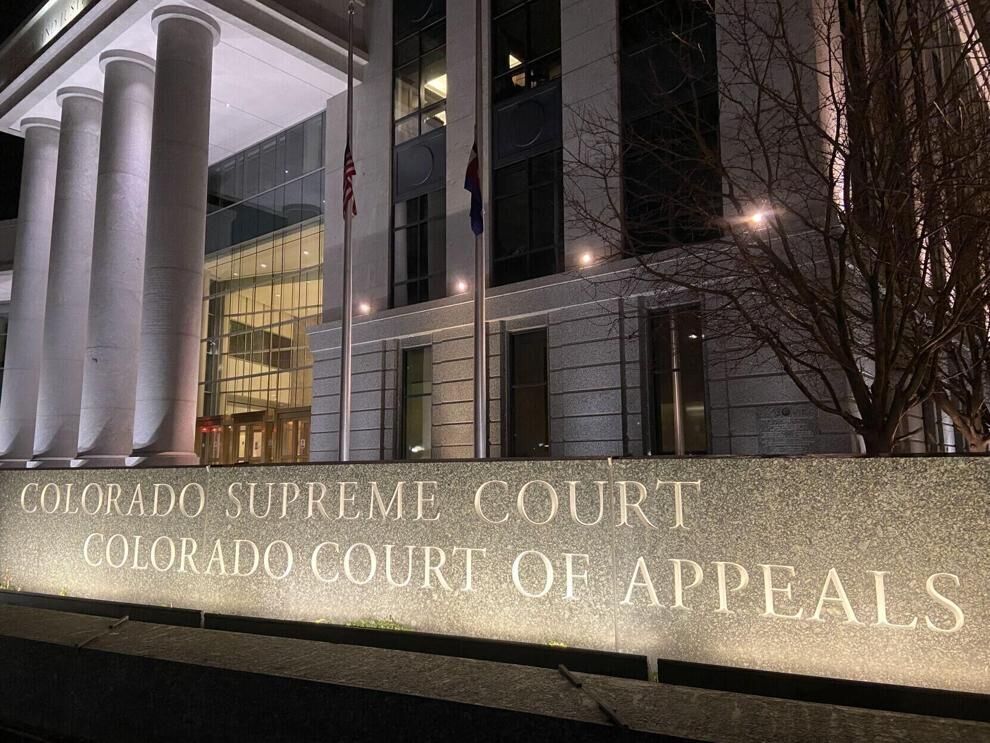
Labels, duration not definitive proof of ‘intimate relationship,’ Colorado court rules in domestic violence case
Michael Karlik
michael.karlik@coloradopolitics.com
Updated 13 hours ago
Colorado’s second-highest court clarified on Thursday that the length of a couple’s relationship and the labels they attach to it are not conclusive evidence of whether it is an “intimate relationship” that can give rise to a domestic violence prosecution....
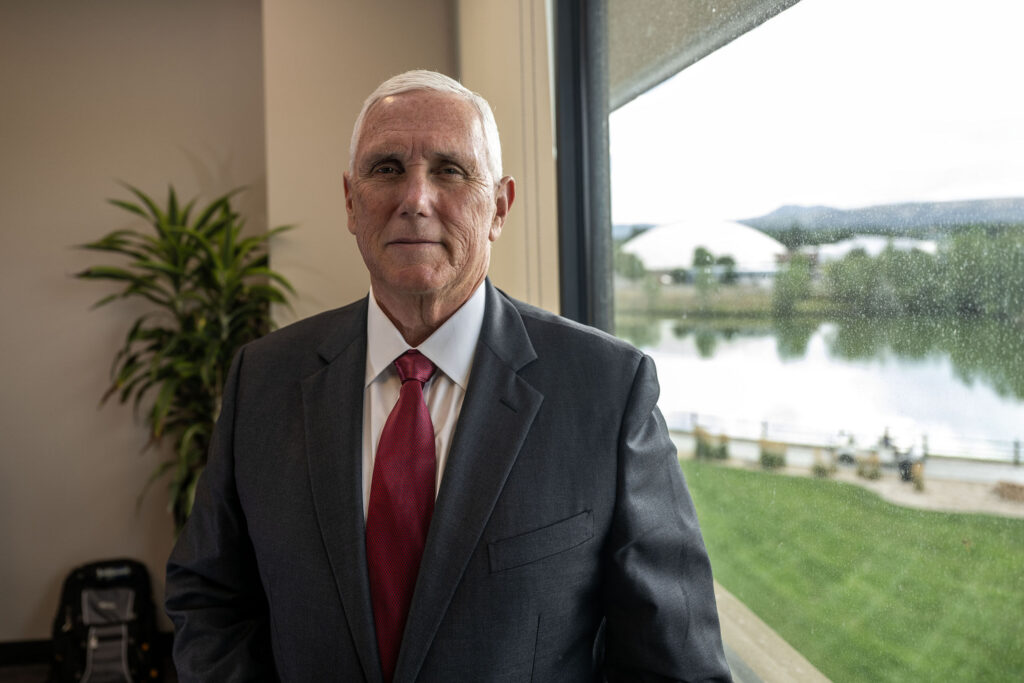
Former VP Mike Pence joining Colorado Christian University faculty
Marissa Ventrelli
marissa.ventrelli@coloradopolitics.com
Updated 15 hours ago
Former Vice President Mike Pence has been hired as a visiting faculty member at Colorado Christian University, the Lakewood-based private evangelical university announced Tuesday. Pence will be on campus about once a month during the 2026-2027 school year to give...

White House launches Fraud.gov to track fraud cases
Adisa Hargett-Robinson
adisa.hargett-robinson@washingtonexaminer.com
Updated 22 hours ago
The White House launched Fraud.gov on Thursday, a website tracking the administration’s crackdown on fraud across federal agencies. According to the White House, the website serves as a public dashboard that highlights investigations, criminal charges, funding suspensions, recoveries, and enforcement...

Democrats from opposite sides of the party all rally behind a ‘big tent’
Rena Rowe
rena.rowe@washingtonexaminer.com
Updated 22 hours ago
Since their losses in the 2024 election, Democrats have struggled to settle on a clear message ahead of the 2026 midterm elections. As the party fights to reclaim control of Congress, primaries in New York, Michigan, and Colorado have exposed...
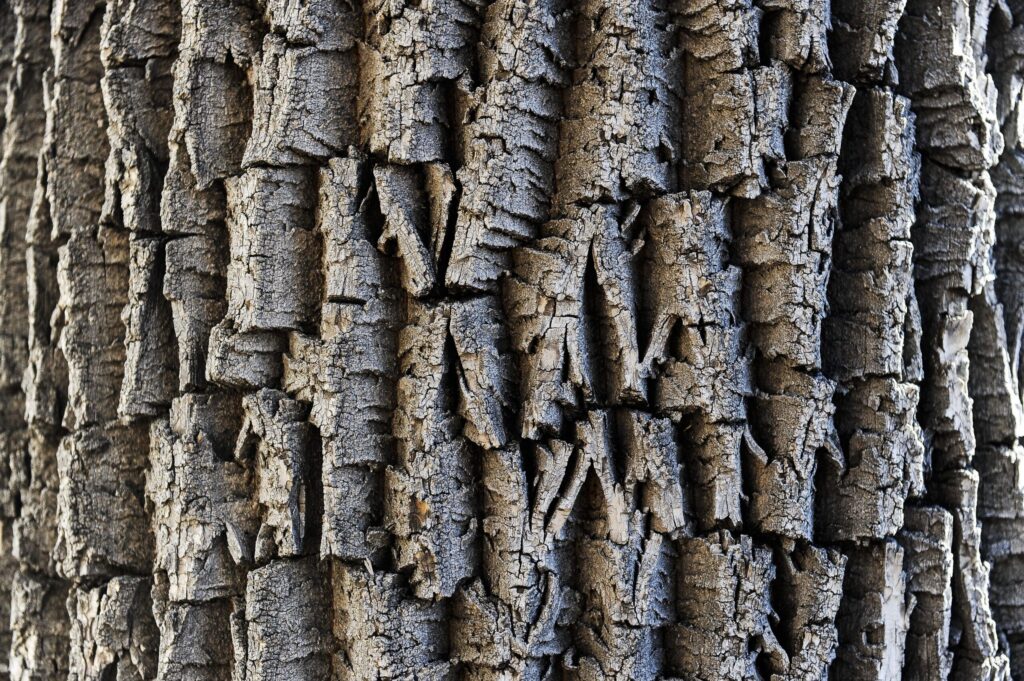
Emerald ash borer confirmed in Colorado Springs, ‘pest is here to stay’
Brennen Kauffman
brennen-kauffman@coloradopolitics.com
Updated 24 hours ago
Colorado Springs is asking residents to be on the lookout for an invasive beetle species that has jumped down the Front Range and into local ash trees. City officials said Wednesday that a confirmed emerald ash borer infestation had been...
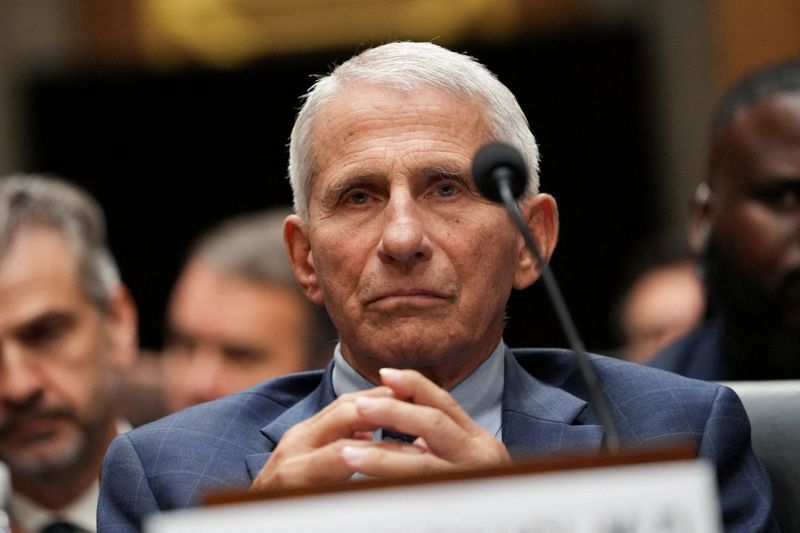
US Senate panel votes to hold Fauci in contempt of Congress
Reuters
reuters@gazette.com
Updated 18 hours ago
By Ahmed Aboulenein WASHINGTON, Aug 6 (Reuters) – A U.S. Senate committee voted on Thursday to hold Dr. Anthony Fauci in contempt of Congress after the former top U.S. infectious disease official refused to answer questions about his handling of...
PREV
PREVIOUS
The struggle to save the Colorado River stalls, but potential solutions emerge
One hundred years of the Colorado River Compact – the agreement that divides 15 million acre feet of water each year among the seven states of the Colorado River basin and Mexico – has wrecked on the shoals of climate change and 22 years of drought. It doesn’t work anymore. What happens when the law […]

SONDERMANN | A Labor Day look at a changing political landscape
Eric Sondermann An old adage says that Labor Day represents the kickoff of the fall campaign. We only wish it were so. That has become one more dated bit of political wisdom. Campaigns are now almost perpetual. This one started long before the Memorial Day onset of summer, much less the Labor Day seasonal capstone. […]