

Senate OKs bill to protect Colorado educators from doxxing

The Colorado Senate passed legislation Thursday to protect educators from doxxing, sending the bill to the House of Representatives for consideration.
If enacted, Senate Bill 171 would add educators to the list of people who can request to have their personal information removed from government websites after they or their family receive threats to their safety. Personal information includes home addresses, phone numbers and email addresses.
“We shouldn’t have to pass this bill. Unfortunately, today, we do,” said bill sponsor Sen. Jeff Bridges, D-Greenwood Village. “We have a coarsening of the political dialogue in this country and somehow teachers have ended up in the crosshairs. They should never feel threatened for doing their job for our kids.”
Bridges said the bill was inspired by recent events in Douglas County, during which the identities of hundreds of teachers faced potential exposure after participating in a protest.
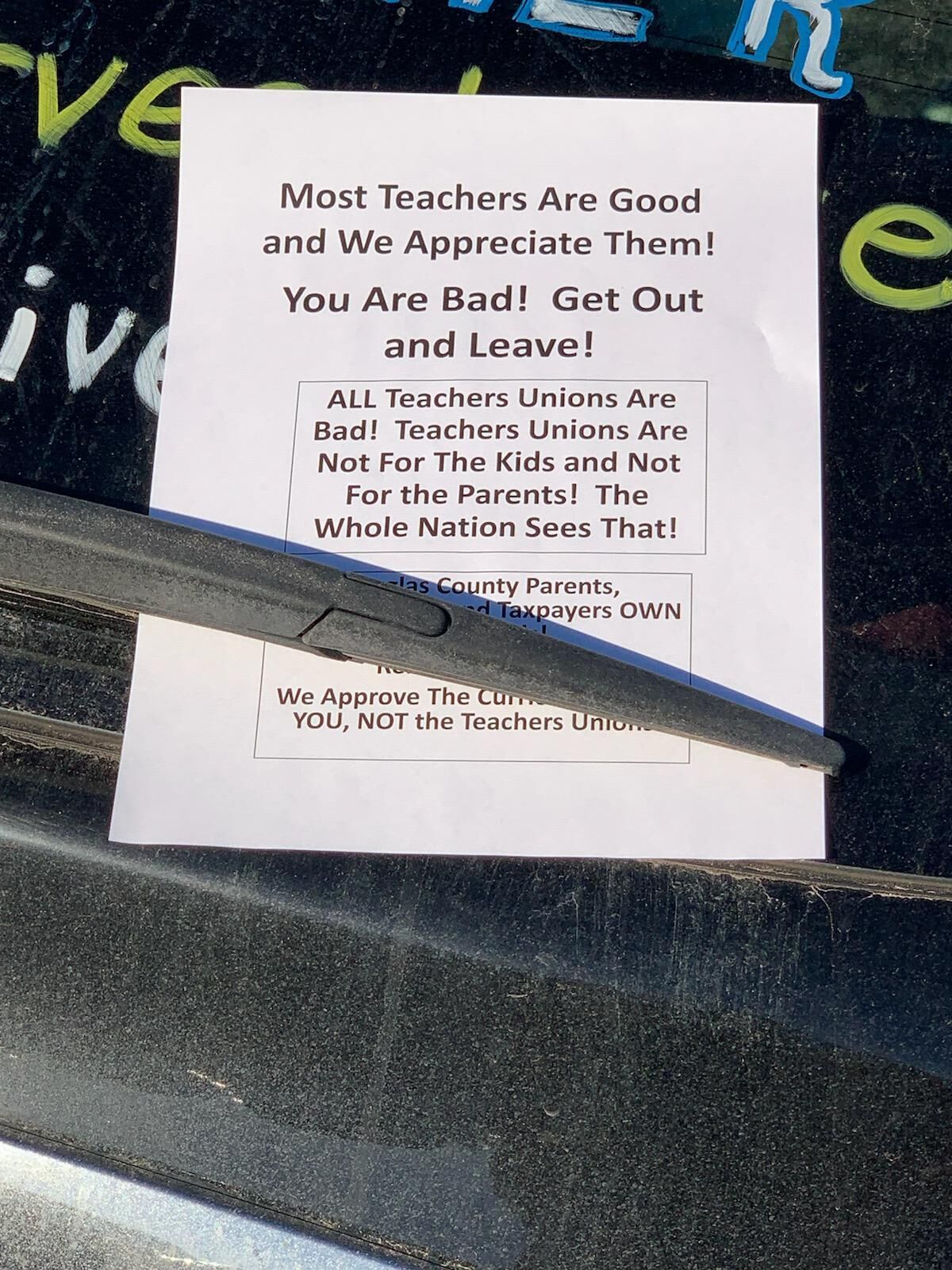
In February, as many as 1,500 teachers from the Douglas County School District took part in a sick out in support of former Superintendent Corey Wise, after he was fired in a controversial move by the new school board. Afterwards, some teachers who participated in the protest found fliers on their cars telling them to “get out and leave.” An unknown person also made a records request for the names of the teachers absent on the day of the protest.
During a committee meeting on the bill, several teachers from the district testified in support, saying they live in fear of their personal information being released online and of being followed home from school.
The state Senate approved the bill in a 25-9 vote on Thursday. All nine opponents are Republicans, some of whom raised issue with a portion of the bill that would update Colorado’s open records law to prohibit the public from accessing the specific dates an educator is absent from work. Under the bill, the total number of days absent would still be open to the public, but not the dates.
“Because they work for the people, they should be visible and accountable to the people,” said Sen. Paul Lundeen, R-Monument, who voted against the bill. “This idea of obfuscating, hiding political communication by a class of individuals who work for the public, I’ve got a problem with that.”
This part of the bill was added in direct response to the records request that asked for the names of the Douglas County teachers absent on the day of the sick out, Bridges said. The district initially agreed to release the names of the teachers who took off work, though it later decided against doing so and said the request had been withdrawn.
Lundeen introduced a failed amendment to remove this section of the bill on Wednesday, arguing that the teachers’ “political speech” in support of the superintendent needs to be open to the public.
The newly conservative majority school board questioned the superintendent’s role in creating masking policies and in the district’s decision in October to sue other county authorities to keep those mask rules in place. The board’s minority members countered that the decision to fire Wise is disastrous, warning it would lead to educators leaving the district and to “the Dark Ages.”
“What we saw happen in Douglas County was an attempt to use the date the teachers had taken their sick leave as a way to create what this bill is designed to protect: an imminent and serious threat,” Bridges said. “I can’t conceive of a use for the exact date that a teacher was out that is not to the purpose of creating a serious and imminent threat.”
Bridges added that not all teachers who were absent on the day of the protest were participating in it, with some missing school for other reasons like being sick with COVID-19.
During testimony on the bill, several teachers described a dire state of public education in Colorado, saying many are leaving due to the kind of harassment that occurred in Douglas County. Teachers said they receive threats not only for political protests, but also for enforcing face mask mandates or teaching about evolution and equity.
A survey of the 39,000 members of the Colorado Education Association found that nearly 67% of the educators are considering retiring or resigning at the end of this school year. This comes as Colorado and the nation have been experiencing a teacher shortage exacerbated by the COVID-19 pandemic.
The bill’s other sponsor Sen. Kevin Priola, R-Henderson, said his brother-in-law is retiring from teaching in Jefferson County just two years short of his 30-year goal because of the stress the pandemic has put on the profession.
“I think we need to also be cognizant of how this bill … will hopefully help teachers when they’re making those decisions,” Priola said. “Give them just a little peace of mind.”
Other professions, including peace officers and public defenders, already enjoy privacy protections in Colorado. Last month, House Bill 1041 was signed into law to also add health care workers, code enforcement officers, child representatives and animal control officers to the list.

Colorado legislators consider $500 million in general fund cuts amid $1.5 billion deficit
Marianne Goodland
marianne.goodland@coloradopolitics.com
Updated 14 hours ago
The legislature’s Joint Budget Committee is working through a list Wednesday of about 150 suggestions to cut as much as $1.5 billion in general fund dollars out of next year’s budget. The largest on the list prepared by JBC staff...
Colorado’s push for affordable housing continues as Gov. Polis signs HOME Act, workforce housing bill
Marissa Ventrelli
marissa.ventrelli@coloradopolitics.com
Updated 13 hours ago
Gov. Jared Polis held the first public bill signing of the 2026 legislative session on Wednesday, signing a pair of housing measures into law. The bills — House Bill 1001 and Senate Bill 001 — are part of Democrats’ affordable...

Colorado farmers begin spring planting season with soaring fertilizer costs and price-gouging fears
Marianne Goodland
marianne.goodland@coloradopolitics.com
Updated 15 hours ago
As Colorado farmers prepare their fields for spring planting, many are sounding the alarm over fertilizer prices that have surged far beyond what they say global supply disruptions can explain. With nitrogen costs up 30% in a matter of days,...
Federal judge refuses to authorize immediate appeal in World Cup trafficking lawsuit
Michael Karlik
michael.karlik@coloradopolitics.com
Updated 14 hours ago
A federal judge declined to authorize an immediate appeal last week of a prior decision allowing companies operating out of Colorado to be sued for allegedly participating in a human trafficking venture involving Filipino laborers who constructed facilities for the...

Colorado lawmakers approve $150,000 ibogaine study bill targeting PTSD and addiction
Marissa Ventrelli
marissa.ventrelli@coloradopolitics.com
Updated 14 hours ago
The Colorado House Health and Human Services Committee advanced a bill that would create a $150,000 research pilot program to study the safety and effectiveness of ibogaine, a psychoactive compound that claims to treat post-traumatic stress disorder, opioid addiction, and...
Federal judge considers second round of sanctions against ex-Colorado judicial discipline director
Michael Karlik
michael.karlik@coloradopolitics.com
Updated 17 hours ago
A federal judge ordered Colorado’s former judicial discipline director on Tuesday to explain why she should not sanction him a second time for filing documents for improper purposes, such as harassment or delay. U.S. District Court Senior Judge Kathryn H....
Colorado Democrats want large corporations to pay fee if employees are on Medicaid
Marianne Goodland
marianne.goodland@coloradopolitics.com
Updated 14 hours ago
Democrats are seeking to require Colorado’s largest corporations to pay thousands of dollars for each employee that relies on the Medicaid program for health insurance. They don’t have to pay the fee if they can demonstrate offering an “affordable health...

Colorado justices agree to review insurance question that has divided federal judges
Michael Karlik
michael.karlik@coloradopolitics.com
Updated 22 hours ago
The Colorado Supreme Court granted a federal judge’s request on Friday to address an issue that has produced conflicting answers in policyholders’ lawsuits against insurance companies over unpaid benefits. “Parties (and judges) regularly spend undue time and money fighting in...

Farmworker overtime bill advances after lengthy debate in Colorado Senate
Marianne Goodland
marianne.goodland@coloradopolitics.com
Updated 2 days ago
The Colorado Senate on Tuesday narrowly advanced a bill to raise the overtime threshold for agricultural workers, defeating more than a dozen amendments from its leading opponent aimed at rewriting the measure. As introduced, Senate Bill 121 would raise the threshold for...

Colorado Agriculture Day: A feast for the ears, eyes and stomachs
Marianne Goodland
marianne.goodland@coloradopolitics.com
Updated 2 days ago
Gov. Jared Polis, legislators and friends of agriculture gathered at the state Capitol on Tuesday to celebrate Colorado Agriculture Day. The annual recognition of the contributions of Colorado farmers, ranchers and agribusiness drew hundreds to the Capitol’s west foyer, where...
PREV
PREVIOUS

Advocates for kids with disabilities say bill regulating rideshare companies lacks safety provisions
Update: the House State, Civic, Military & Veterans Affairs Committee on Thursday voted 7-2 to approve SB 144, with amendments. The bill now goes to the full House. Should rideshare companies be able to transport schoolchildren? Two such entities already provide the service in Colorado, but a 2021 decision by a regulatory agency threw a monkey wrench […]

Colorado offers $12M in incentives to Colorado Springs chip manufacturer
Colorado’s Economic Development Commission on Thursday approved more than $12 million in economic development incentives to a “prime semiconductor manufacturing company” in Colorado Springs. The commission, under the Office of Economic Development and International Trade, decided the company’s proposed expansion – which would add more than 640 jobs with an average salary of $88,024 – […]