

Appeals court offers competing interpretations of juror’s admission he ‘didn’t want diversity’

A fractured Court of Appeals has upheld the kidnapping and sexual assault convictions of a man in Gilpin County, with sharp disagreement among the judges about the role racial bias played in his jury selection.
Reginald Keith Clark, who is Black, is serving a 30-year sentence for bringing a white woman against her will from Denver to the mountains near Black Hawk and assaulting her. One man in the jury pool, identified as Juror K, volunteered that he moved to Gilpin County, which is 94% white, because he “didn’t want diversity” and “I can’t change that.”
In an unusual move, the three members of the appellate court who heard Clark’s appeal each issued their own opinion. Judge Terry Fox believed the trial judge was wrong to not dismiss Juror K for cause, but she agreed to uphold Clark’s convictions. Judge John Daniel Dailey felt neither the trial judge was wrong nor that Clark deserved a new trial.
Only Judge Timothy J. Schutz wrote that the trial judge should have dismissed Juror K and that the failure to do required reversal of Clark’s convictions.
The presence of racial bias in jury selection has garnered attention in recent weeks, as the Colorado Supreme Court last month issued a rare decision finding purposeful race discrimination in a Denver prosecutor’s dismissal of a Hispanic man from a Hispanic defendant’s jury. State lawmakers are also asking the Supreme Court to adopt a rule to address implicit racial bias, after a bill intended to curb the exclusion of jurors of color faltered in the face of opposition by prosecutors.
Amid that focus on non-white people being dismissed from juries because of their race, Clark encountered the flip scenario: an apparently white juror remaining in the jury pool despite his admission of racial bias.
“The trial court refused to dismiss a prospective juror who volunteered that he harbored racial bias against Mr. Clark and that, in effect, he’d moved to Gilpin County to get away from nonwhites,” public defender Casey Mark Klekas argued to the Court of Appeals panel.
At the beginning of Clark’s 2018 trial, his defense attorney noted that Clark was the only Black person in the courtroom. After one juror voiced comments about diversity, Juror K spoke on the subject.
“Yes, it’s obvious there’s a Black gentleman over there,” he said. “This is Gilpin County. I moved to Gilpin County. I didn’t want diversity.”
Juror K continued: “I hear the things, that diversity makes us stronger and things like that. I don’t quite believe it in life from what my personal experiences are. And I can’t change that. I can look and judge what is being said by your side (defense) and their side (prosecution) and be fair, but I can’t change that – when I walked in here seeing a Black gentleman.”
Then-Judge Dennis J. Hall took Juror K aside and asked if he would be capable of finding Clark not guilty if the prosecution had failed to prove its case. Juror K said he would, and likewise would convict Clark if prosecutors had proven him guilty.
Hall then denied the defense’s request to dismiss Juror K for cause. About Juror K’s comments on diversity, Hall said, “that’s a political view, I think. That doesn’t really answer the question of whether he can be a fair juror. … I didn’t see any bias.”
The defense ultimately used a peremptory challenge, which does not require a reason, to excuse Juror K from serving on the jury.
Klekas argued to the panel on appeal that Juror K was not making comments about diversity in the context of a “political view,” but to communicate simply that he had sought out a white community to live in.
“I think that was as polite of a way as a juror could volunteer that he harbored racial bias and might not be right for this case,” Klekas said.
Dailey asked Assistant Attorney General Patrick A. Withers, arguing for the government, whether he agreed Juror K’s comments were a clear expression of racism.
“Well, Your Honor,” Withers began.
“No, no, no. Not ‘well’,” interrupted Dailey. “Yes or no?”
“Yes, I believe that there is a racial bias there,” Withers conceded. “What he said, to me, is basically, ‘I’m tired of hearing about diversity training. I’m tired of hearing about diversity. I don’t wanna live next to Black people.’ … The state does not endorse that, but simply not wanting to live next to someone does not necessarily mean they can be biased against them.”
The Court of Appeals panel took away divergent impressions of what happened. Fox believed that Hall should have dismissed Juror K for cause, given that Juror K never said he would put aside his racial bias.
Juror K “volunteered that he moved to Gilpin County because he ‘didn’t want diversity’ – the obvious inference being that he moved to Gilpin County to distance himself from nonwhite people,” she wrote. “Although his opinion can theoretically be framed as a political view, the glaring implication persists: his acknowledged bias against nonwhite people like defendant.”
Further, Juror K said he “can’t change” his bias, a clear implication of Clark’s right to a fair trial with an impartial jury.
However, Fox did not believe the trial judge’s mistake merited a new trial, given that Clark had ultimately excused Juror K. Under the state Supreme Court’s precedent, she added, there was no violation of Clark’s constitutional rights if, as alleged, the defense was “forced” to use one its peremptory strikes to eliminate a biased juror.
Dailey agreed Clark did not deserve a new trial, but disagreed that Hall needed to excuse Juror K for his comments on diversity. Dailey criticized the view that trial judges must excuse prospective jurors if they show any racial bias.
He quoted from a 2021 decision of the U.S. Court of Appeals for the Fifth Circuit, a conservative federal court centered around Texas. A panel of Fifth Circuit judges found no issue with allowing three people – on an all-white jury – to serve despite their acknowledgement that they were opposed to interracial marriage. The defendant, a Black man, was convicted of murdering his white wife and is now on death row.
“I do not share the view that a person’s opposition to diversity necessarily reflects ‘intractable racism,’ automatically disqualifying him or her from serving as a juror in cases like the present one,” Dailey wrote, adding that he would not “second guess” the trial court judge’s handling of Juror K.
Finally, Schutz agreed that Juror K’s statements about diversity constituted racial bias and, therefore, Hall should have excused him from the jury. But Schutz also went further and said the failure to dismiss Juror K affected the structural fairness of Clark’s trial and required a reversal of his convictions.
“I resist the suggestion that trial courts should be burdened with trying to assess the ‘degree of racism’ articulated by a prospective juror,” Schutz wrote, in an apparent retort to Dailey’s comments. Schutz believed there was a constitutional violation when the trial judge, by refusing to dismiss Juror K, telegraphed to Clark that the defendant could not expect an unbiased jury.
“It undermined the public’s confidence that the entire trial process would be conducted in a manner to ensure that racial bias would not be tolerated in the courtroom. The decision to permit a racially biased prospective juror to continue on the panel spoke not only to Clark, but also to the greater community,” Schutz wrote.
The message, he elaborated, “was that a prospective juror could sit in judgment of a person against whom he had an acknowledged racial bias.”
Ann Roan, a criminal defense attorney who has testified to the legislature on the subject of racial bias in jury selection, also found it hard to understand how Hall could have interpreted Juror K’s statements about the burden of proof as an indication the man could set aside his racial bias.
“That there were three opinions from the panel reflects the need for, at a minimum, further clarification from the Supreme Court,” she said.
The First Judicial District Attorney’s Office, which prosecutes cases in Gilpin and Jefferson counties, did not immediately respond to a request for comment.
The panel agreed to reject Clark’s other two grounds for appeal. They did not believe it improper that a Gilpin County Court judge substituted for Hall in accepting the jury’s verdict, due to Hall’s commitment in a different courtroom. The panel also saw no need to hold a hearing about one juror’s statements, after trial, alleging members of the jury may have felt pressured to convict Clark as the deliberations continued into a third day.
The case is People v. Clark.


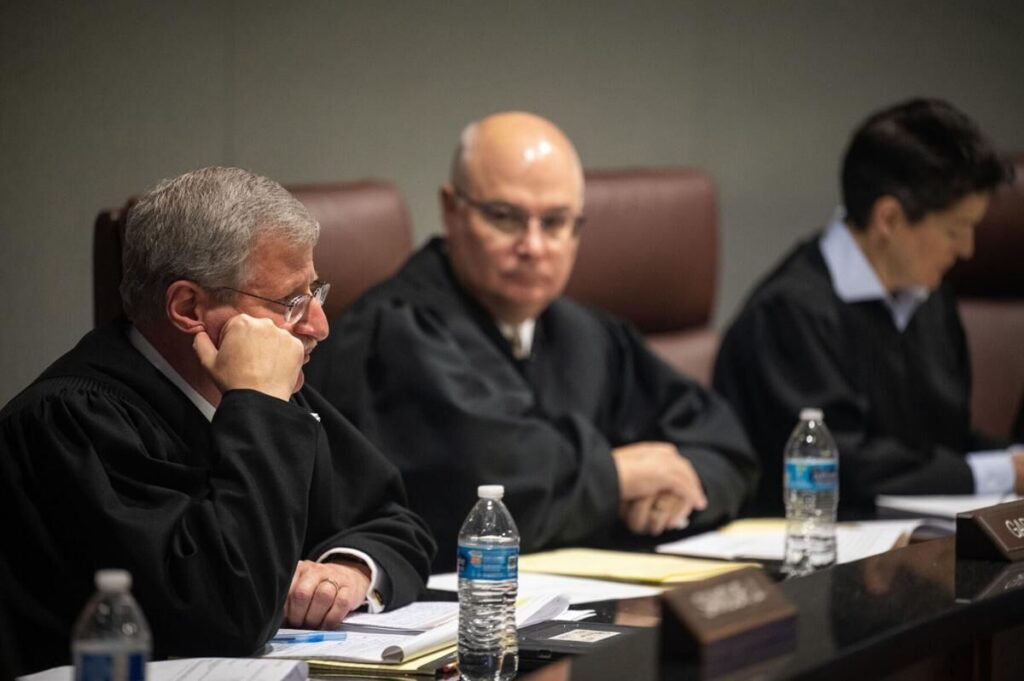
Colorado Supreme Court concerned about police overreach in interrogations
Michael Karlik
michael.karlik@coloradopolitics.com
Updated 14 hours ago
Some members of the Colorado Supreme Court appeared hesitant on Tuesday to endorse the ability of police to interrogate a suspect after they have obtained a court order authorizing only the collection of physical evidence. Under Colorado’s criminal rules, law...
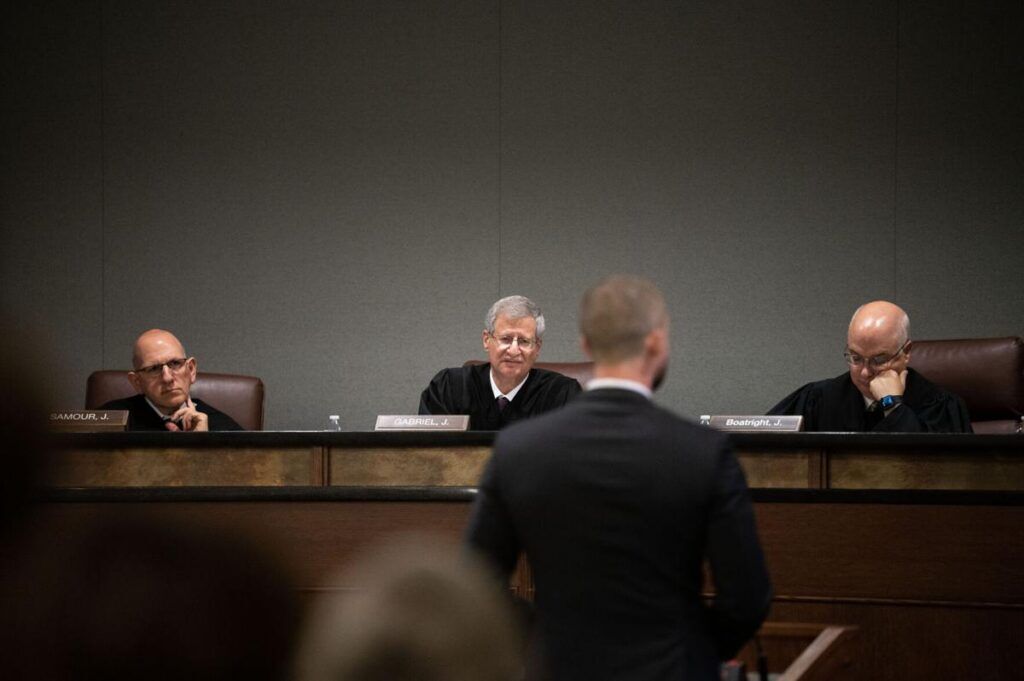
Colorado Supreme Court considers new requirement for leaving-the-scene convictions
Michael Karlik
michael.karlik@coloradopolitics.com
Updated 15 hours ago
In 2006, the Colorado Supreme Court ruled that leaving the scene of an accident resulting in serious injury is a “strict liability” offense, meaning a person is guilty solely through their conduct, without the need for prosecutors to prove the...
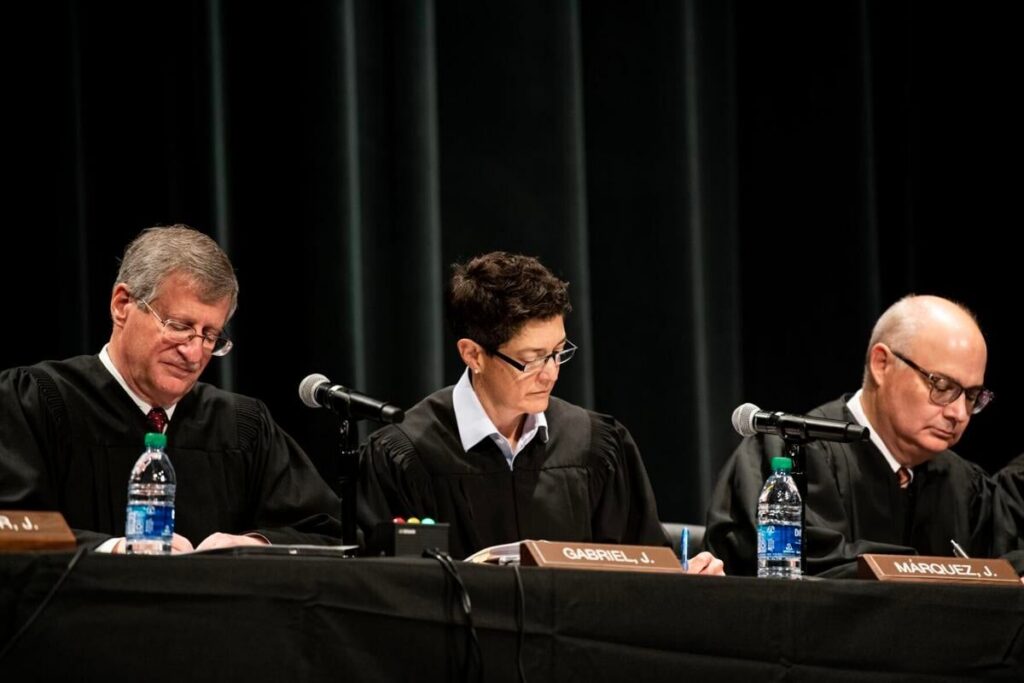
Colorado Supreme Court weighs trans rights case involving Children’s Hospital and federal threats
Michael Karlik
michael.karlik@coloradopolitics.com
Updated 1 day ago
Some members of the Colorado Supreme Court expressed discomfort on Tuesday with having to decide whether to order Children’s Hospital Colorado to resume providing certain services to transgender children, which could trigger a “death sentence” if the federal government imposes...
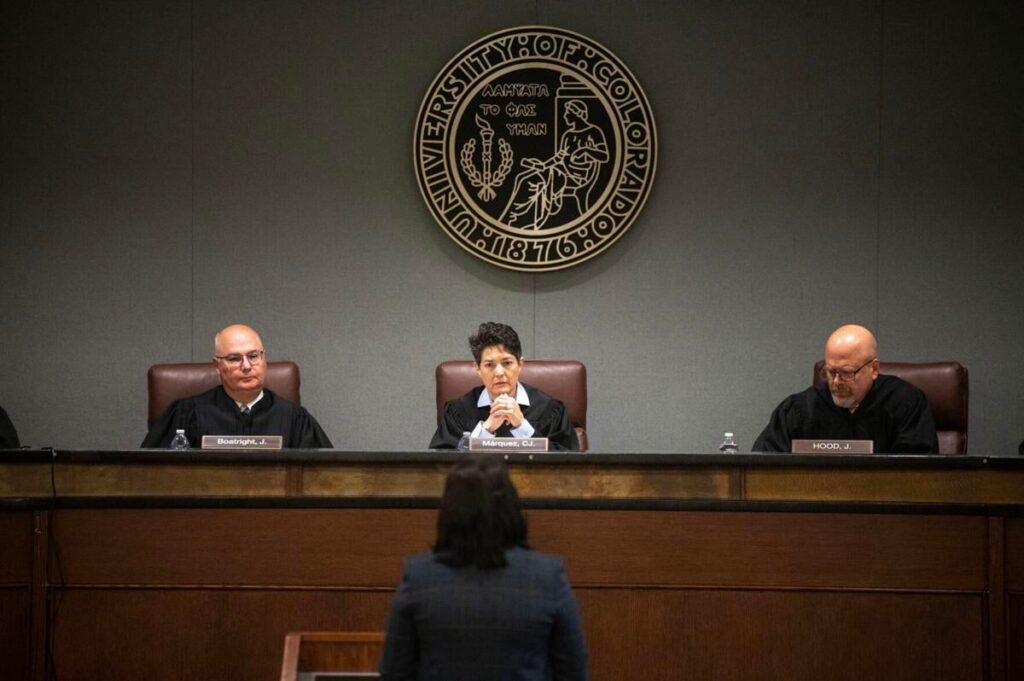
Colorado justices weigh constitutionality of unique disclosure requirement for ballot measures
Michael Karlik
michael.karlik@coloradopolitics.com
Updated 2 days ago
Members of the Colorado Supreme Court considered on Tuesday whether a unique feature of the state’s campaign finance system categorically violates the First Amendment by requiring the disclosure of a ballot measure committee’s legal representative on advertisements. No on EE...

Colorado justices block injured plaintiff from suing, despite alleged concealment by Manitou Springs
Michael Karlik
michael.karlik@coloradopolitics.com
Updated 2 days ago
The Colorado Supreme Court ruled on Monday that a woman injured on a Manitou Springs sidewalk could not sue the allegedly responsible entity, the city of Colorado Springs, even though she did not learn until too late of an agreement...
Divided Colorado Supreme Court opens door to experts’ views on children’s truthfulness
Michael Karlik
michael.karlik@coloradopolitics.com
Updated 1 day ago
The Colorado Supreme Court ruled on Monday that experts may, in certain situations, tell jurors whether child witnesses exhibited signs of being coached by adults, without running afoul of the general prohibition on witnesses testifying about the truthfulness of other...

State Supreme Court to hold oral arguments, federal judges find fault with bond hearings | COURT CRAWL
Michael Karlik
michael.karlik@coloradopolitics.com
Updated 2 days ago
Welcome to Court Crawl, Colorado Politics’ roundup of news from the third branch of government. The state Supreme Court will resume hearing oral arguments tomorrow, plus some federal judges are raising the alarm about immigration judges’ handling of bond hearings....
Douglas County seeks state Supreme Court review in open meeting case
Nicholas Fogleman
nicholas.fogleman@denvergazette.com
Updated 3 days ago
The Douglas County Board of Commissioners intends to petition the Colorado Supreme Court to review a recent court decision that found the board had violated the Colorado Open Meeting Law. The case stems from 11 “closed, unnoticed” meetings held by...
10th Circuit provides guidance on police searches of cloud-based data
Michael Karlik
michael.karlik@coloradopolitics.com
Updated 6 days ago
The Denver-based federal appeals court provided guidance to law enforcement agencies on Monday for ensuring that searches of cloud-based accounts comply with the Fourth Amendment’s requirements. A three-judge panel of the U.S. Court of Appeals for the 10th Circuit noted...
Federal judge releases man after 2 immigration judges disobey order
Michael Karlik
michael.karlik@coloradopolitics.com
Updated 6 days ago
A federal judge released a man from immigration detention on Thursday after two different immigration judges disobeyed his order in the same case. “At this point, the Court has granted Respondents two bites at the apple to prove detention of...
PREV
PREVIOUS

Republican Tim Reichert qualifies for 7th Congressional District primary ballot by petition
Republican congressional candidate Tim Reichert has qualified for the primary ballot in Colorado’s 5th Congressional District, the secretary of state’s office said Thursday after determining the Jefferson County economist and business owner submitted a sufficient number of valid signatures on his nominating petitions. Reichert, one of four Republicans running for the seat held by retiring eight-term […]

Families of fentanyl victims tell stories of love, heartbreak and death as policymakers propose solutions to deadly agent
Matt Riviere is the father of two sons, 19-year-old Steven and 21-year-old Andrew. They were just 20 months apart, Riviere said during a March 24 press conference at the state Capitol. They died the same day. Both had mental health issues – Andrew was bipolar, Steven struggled with anxiety and depression, he said. “They were the […]