

Pressure mounts on BLM to stop wild horse roundup near Maybell

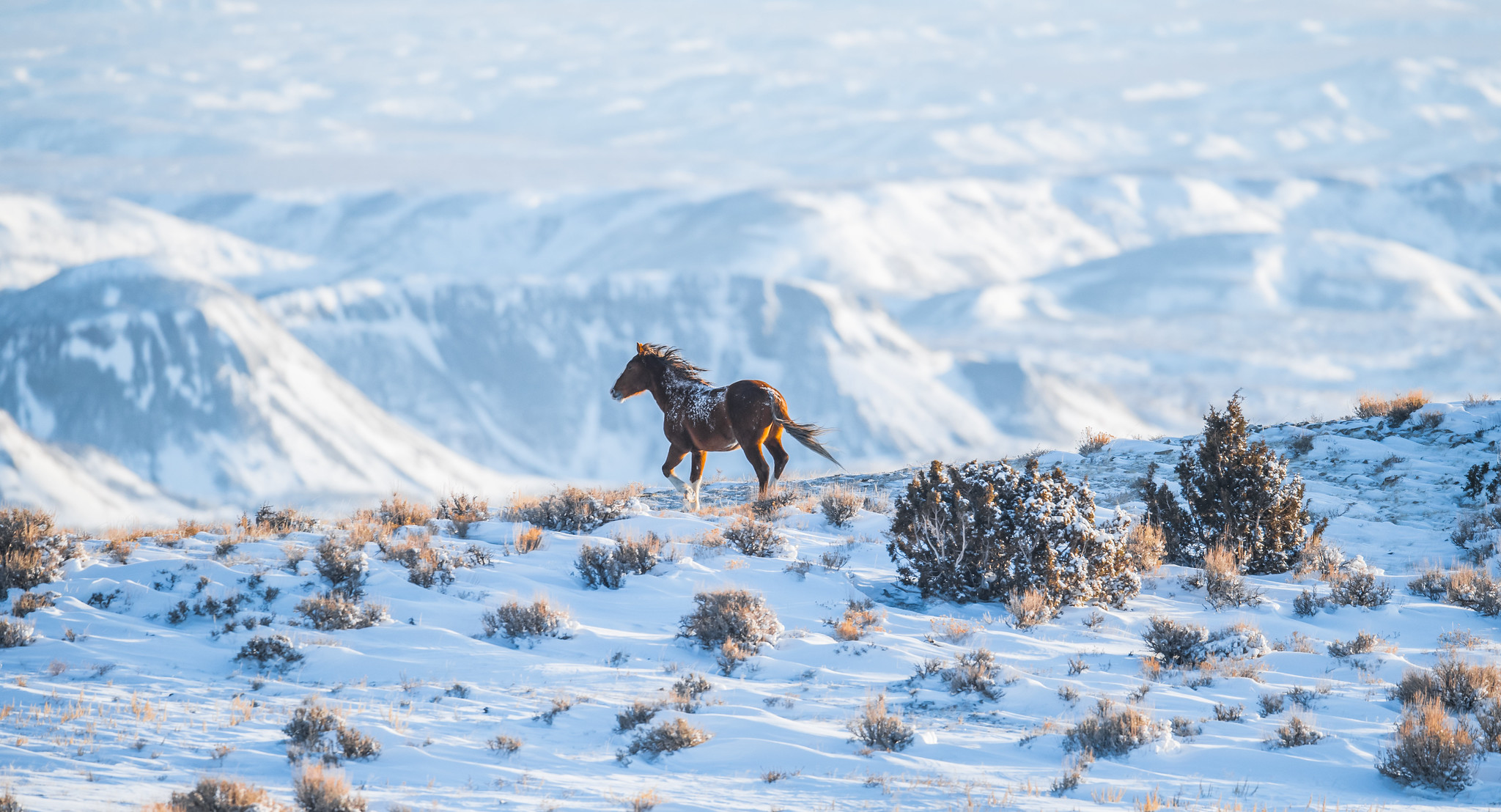
The Bureau of Land Management’s plan to round up nearly 800 wild mustangs on Wednesday continues to draw pressure from animal lovers, including Gov. Jared Polis and his partner, Marlon Reis.
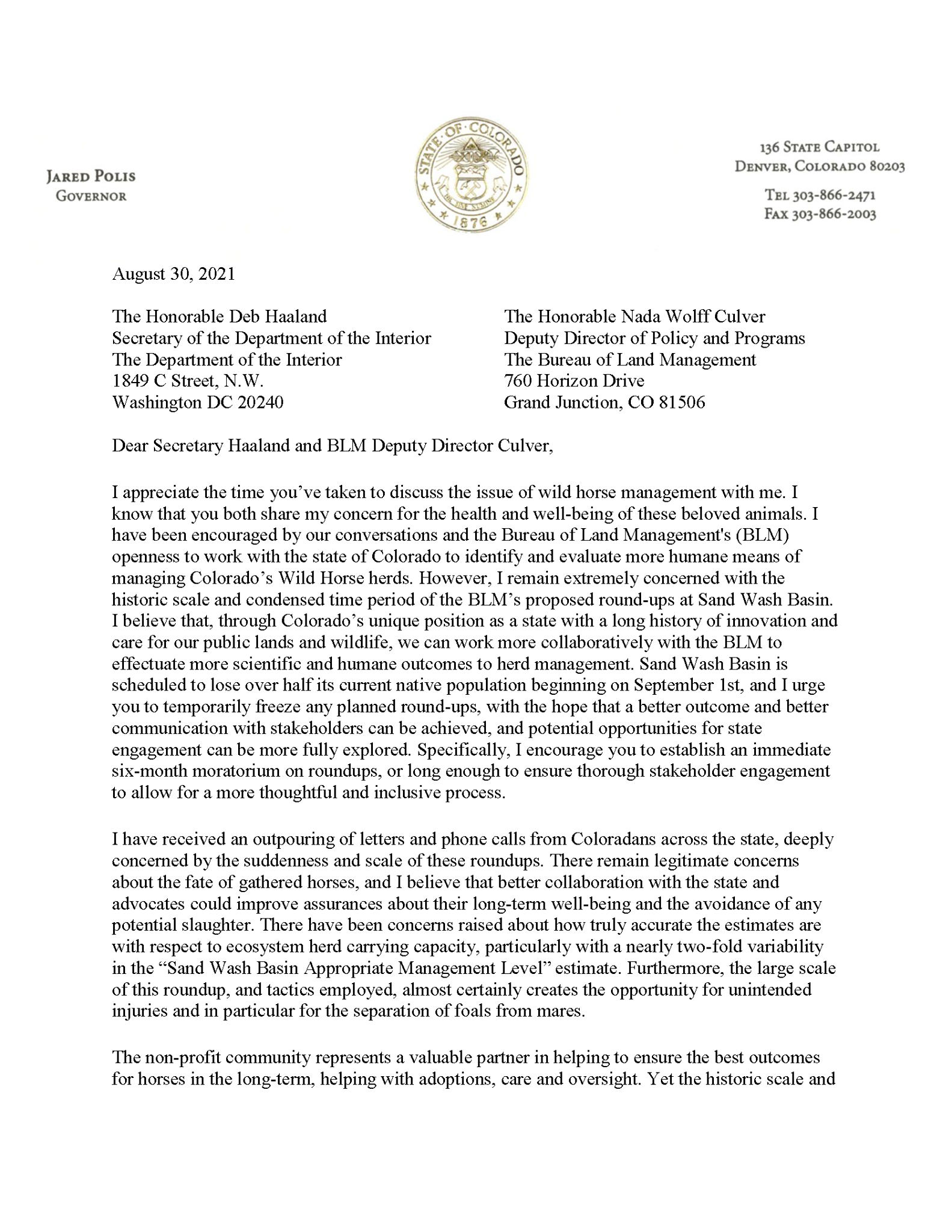
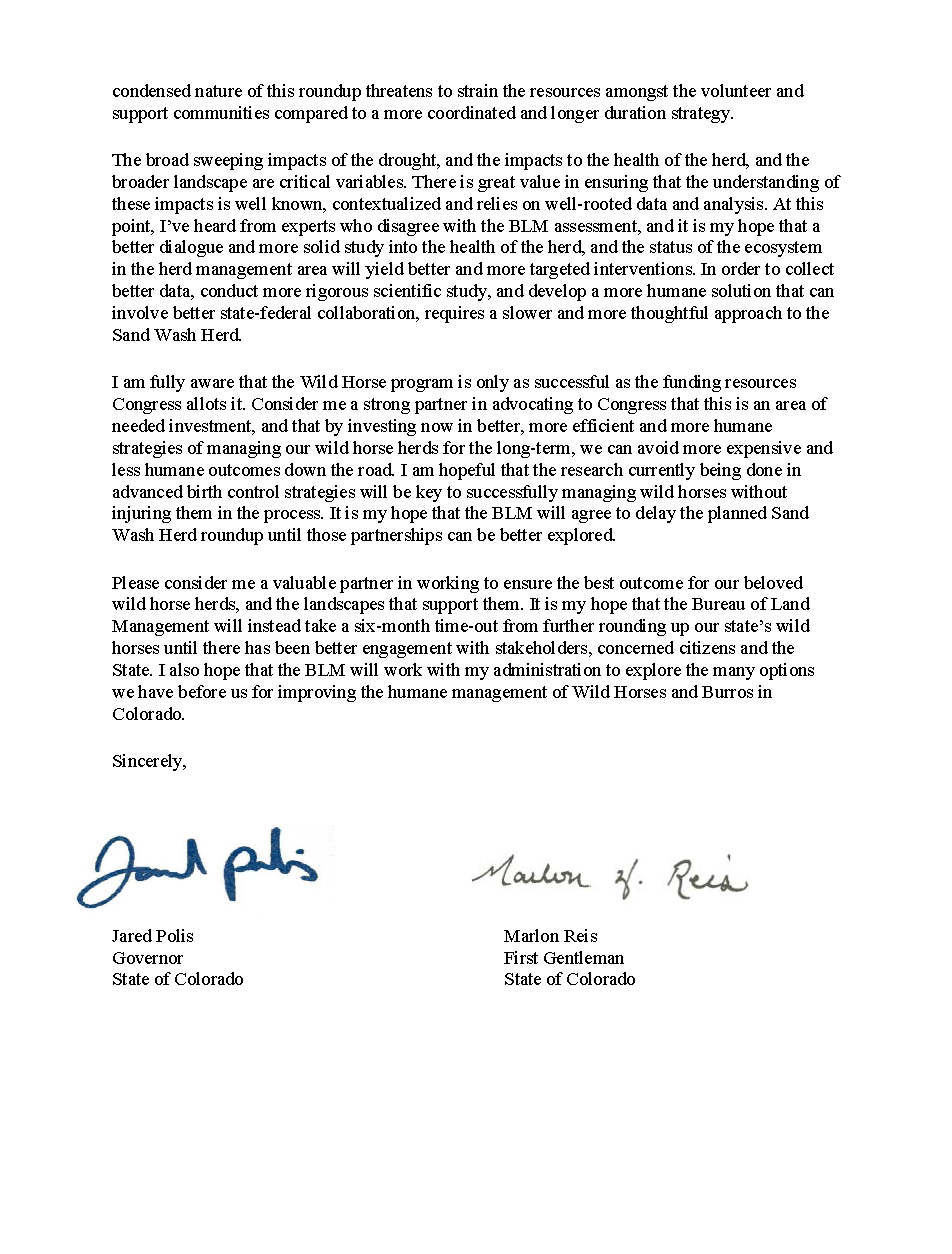
In the past 24 hours, Polis and Reis sent a two-page letter to Secretary of the Interior Deb Haaland and Nada Wolff Culver, deputy director of policy and programs at the BLM, asking them to freeze the planned roundup at Sand Wash Basin in Moffat County.
The BLM intends to round up as many as 783 horses out of the herd of 828, although they would return 25 mares and 25 stallions later on. The basin can support up to 362 horses, according to BLM estimates, although BLM wants to cap the herd at 163.
The Polis/Reis letter calls for a six-month moratorium on roundups.
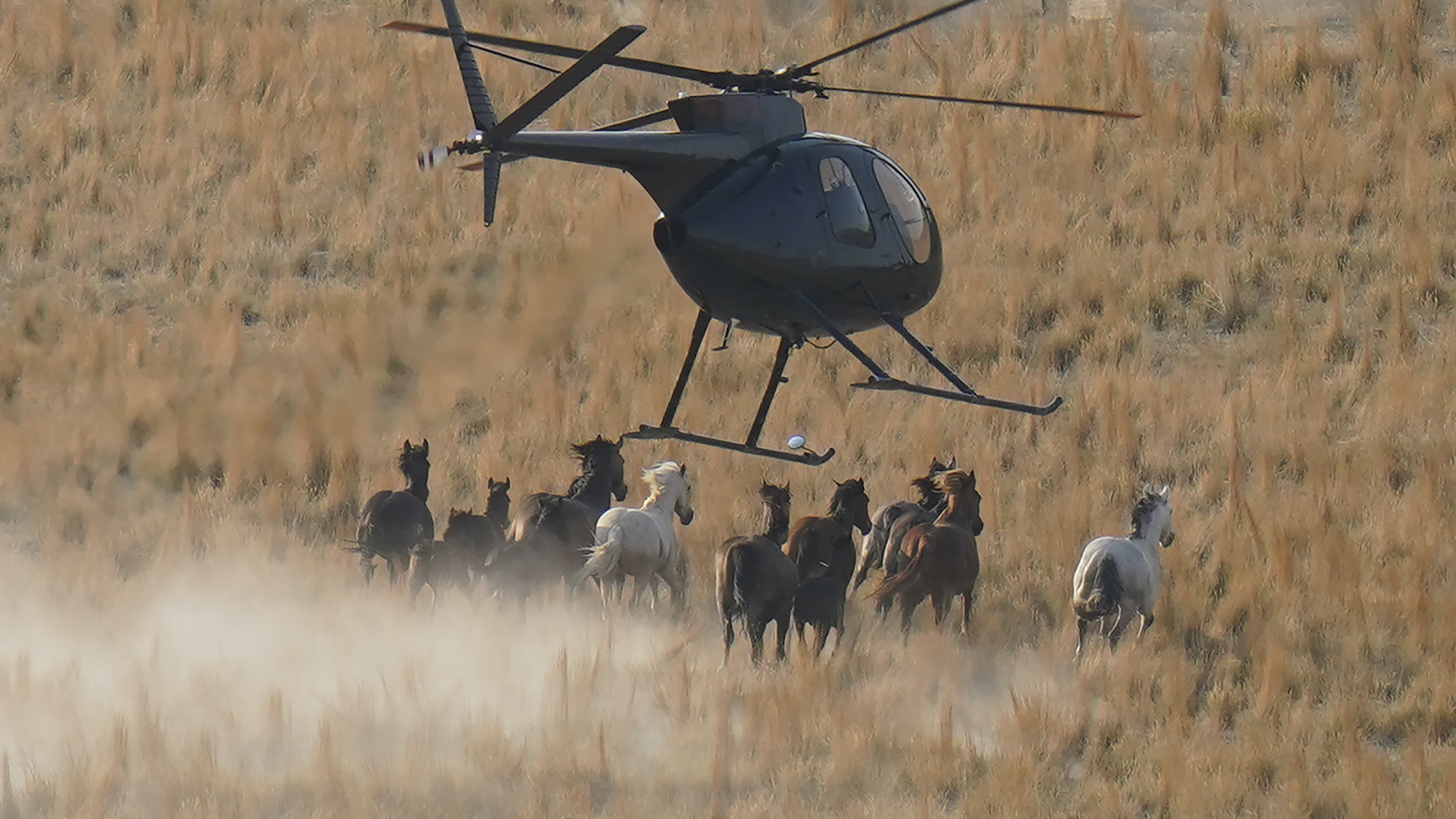
“There remains legitimate concerns about the fate of gathered horses, and I believe better collaboration with the state and advocates could improve assurances about their long-term well-being and the avoidance of any potential slaughter. There have been concerns raised about how truly accurate the estimates are with respect to ecosystem herd carrying capacity,” the litter said. Finally, the tactics being used for the round up – helicopters – almost certainly creates the opportunity for unintended injuries and particular for the separate of foals from mares.” One observer said 10 foals have been born in the past month in the herd, and based on BLM information, the roundup would not return those foals to their mares.
The BLM cites drought, scorched habitat from wildfires and overpopulation as justification for the roundup, which is scheduled to be done by helicopter. However, advocates for the herd claim recent monsoons have restored the watering holes, and that the land can support far more than 163 horses. They also claim BLM is clearing out the herd to make more room for sheep and cattle grazing, and that using helicopters is inhumane and could result in injuries and even deaths in the herd.
The Sierra Club on Monday added its voice, claiming that damage to the habitat from livestock is far worse than from horses.
“As documented by BLM’s own data, livestock grazing, not wild horses, has resulted in damage to the range that is both widespread and severe. Livestock, not wild horses, have resulted in BLM’s own Land Health Standards not being met across much of the Sand Wash Basin Herd Management Area – an area legally designated for Wild Horses by the Wild and Free-roaming Horse and Burro Act of 1971,” wrote Delia G. Malone, wildlife chair for the Colorado chapter of the Sierra Club.
On his Facebook page, Reis has advocated for people to contact members of Congress, including those who serve on the U.S. House Subcommittee on National Parks, Forests and Public Lands, which has oversight of the BLM, and which is chaired by U.s. Rep. Joe Neguse, D-Lafayette, who Reis said “has already expressed a desire to see the BLM conduct herd management differently.”
Last week, Reis said he and Polis met with BLM officials “to discuss ways in which Colorado could become a co-manager of our State’s Wild Horse and Burro herds. There’s a precedent for it currently working through the system in Wyoming. To be clear, the Governor and I both made it known that we do not want Colorado’s Wild Horses to be rounded up, and we want to be a partner in finding and executing more humane management. Unfortunately, as the BLM has Federal level oversight of these animals, the ultimate decision defaults to Washington. We have spoken with Secretary Haaland about stopping the round-ups (and re-listing the Gray Wolf for ESA protections!) twice, in-person. We’ve also written numerous letters to the Department of the Interior and the BLM. We will keep the pressure on, but it’s important for constituents to call and write their Members of Congress (both in the U.S. House of Representatives and in the U.S. Senate).”
The BLM conducted a helicopter roundup of 457 wild mustangs on August 13, according to the Vail Daily, from the West Douglas herd near Rangely, the largest such roundup in history. Ten horses had to be euthanized during the roundup; BLM documents estimate the roundup near Maybell could also result in the deaths of at least eight horses.


Denver Council narrowly approves deal with Axon
Deborah Grigsby
deborah.smith@denvergazette.com
Updated 26 minutes ago
After weeks of delay, the Denver City Council narrowly approved a one-year $150,000 contract with Axon for 50 automated license plate-reading cameras and the necessary system hardware, replacing the city’s former vendor, Flock. The 7-6 vote came during Tuesday’s regular...

Colorado leaders weigh next steps after Supreme Court rejects state ban on ‘conversion therapy’
Marissa Ventrelli
marissa.ventrelli@coloradopolitics.com
Updated 14 hours ago
Colorado leaders said they are weighing next steps after the U.S. Supreme Court on Tuesday rejected the state’s ban on “conversion therapy” for children, as critics and supporters cheered or lambasted the ruling. The court’s near-unanimous decision called the Colorado...

Aurora homeless shelter opened too early, CEO says, as mold and plumbing issues emerge
Kyla Pearce
kyla.pearce@gazette.com
Updated 21 minutes ago
Aurora’s largest homeless services project launched “way too early,” its CEO told city leaders Tuesday, saying the rushed opening left residents living amid mold, plumbing failures, and other issues inside the former hotel. During Tuesday’s Housing, Neighborhood Services and Redevelopment...
Federal judge dismisses U.S. government lawsuit against Colorado, Denver’s ‘sanctuary’ laws
Michael Karlik
michael.karlik@coloradopolitics.com
Updated 13 hours ago
A federal judge dismissed the U.S. government’s lawsuit against Colorado and Denver on Tuesday, which alleged that various local policies impermissibly infringed on federal immigration enforcement. U.S. District Court Judge Gordon P. Gallagher followed the lead of judges in Illinois...
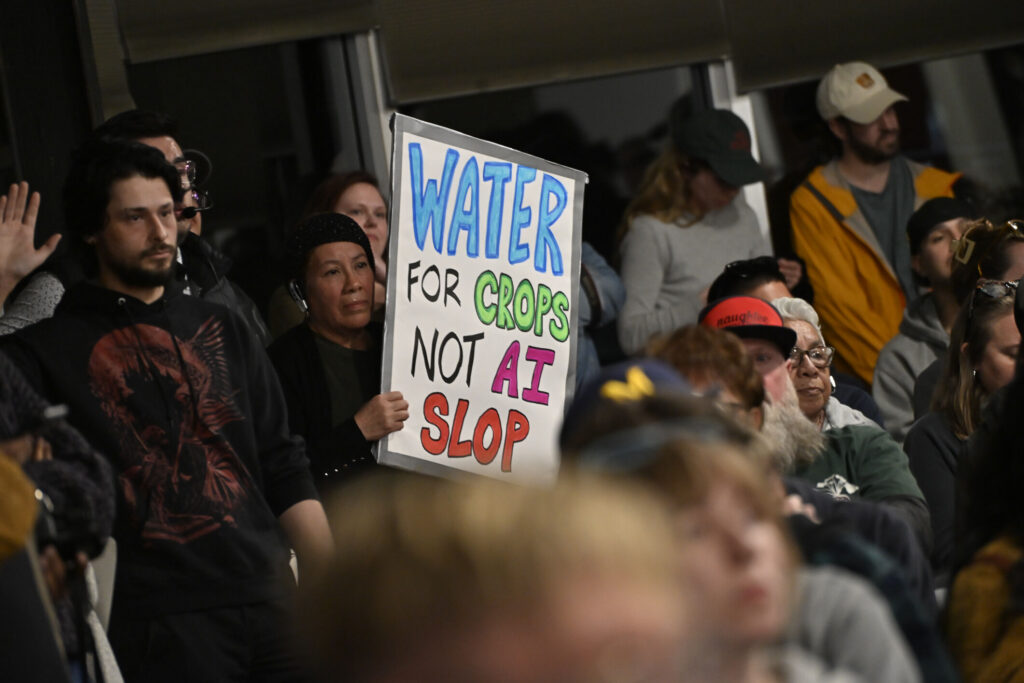
Denver proposes yearlong moratorium on new data centers
Deborah Grigsby
deborah.smith@denvergazette.com
Updated 16 hours ago
As Denver Water calls for a 20% reduction in water use during Stage 1 drought conditions, City Council members advanced a bill to rein in one of the largest water users — data centers — by proposing a yearlong moratorium...

Federal judge finds DOJ adequately searched for, disclosed records related to Bidens
Michael Karlik
michael.karlik@coloradopolitics.com
Updated 18 hours ago
A federal judge determined on Friday that the U.S. Department of Justice adequately searched for and disclosed records to a Colorado attorney in response to his request for documents related to former President Joe Biden’s son and brother. In November...

Colorado lawmakers push legislation to shrink RTD board, increase pay as ridership struggles continue
Marissa Ventrelli
marissa.ventrelli@coloradopolitics.com
Updated 18 hours ago
Colorado lawmakers are advancing a new push to overhaul the Regional Transportation District, proposing to shrink the board, raise member pay, and boost ridership back to pre-pandemic levels. While some stakeholders see the effort as a step forward, others warn...

Appellate court slap downs in Trump cases highlight mounting tension in the judiciary
Jack Birle, Washington Examiner
jack.birle.washington.examiner@gazetteedit.wpenginepowered.com
Updated 20 hours ago
The Trump administration has won key reversals of lower court rulings against it in appeals courts — many of which have sharply rebuked the district court’s earlier rulings, highlighting growing tensions within the judiciary. Since January 2026, federal appeals courts...

10th Circuit warns lawyers after finding fake case in filing
Michael Karlik
michael.karlik@coloradopolitics.com
Updated 11 hours ago
The Denver-based federal appeals court warned attorneys to be more careful last month after discovering one lawyer cited a fake case in his arguments. In recent months, federal and state judges in Colorado have begun cautioning lawyers explicitly about the...

Colorado legislators drove up cost of Medicaid program
Marissa Ventrelli
marissa.ventrelli@coloradopolitics.com
Updated 20 hours ago
Some of Colorado’s spending woes in Medicaid can be traced to lawmakers who had approved new or expanded programs in the last few years, driving up state costs to the tune of tens of millions of dollars. Just three measures...
PREV
PREVIOUS

3 state IT initiatives named as finalists in multistate awards
Three digital Colorado initiatives are finalists for the National Association of Chief Information Officers’ 2021 awards, which will be handed out in October during the group’s annual conference. In the first category of emerging and innovative technologies, Colorado’s digital ID through the myColorado app was recognized for being a convenient means of showing identification, along […]

Denver expands contracts for emergency rental assistance program
The Denver Department of Housing Stability is expanding its capacity to provide federal rent assistance, extending and adding contracts to administer the emergency rental assistance program. Denver’s emergency rental assistance program began in June, using nearly $50 million in federal funds to help pay rent and utilities for residents unable to make payments because of […]