

Gov. Jared Polis, education officials: kids should be in school; get them enrolled now
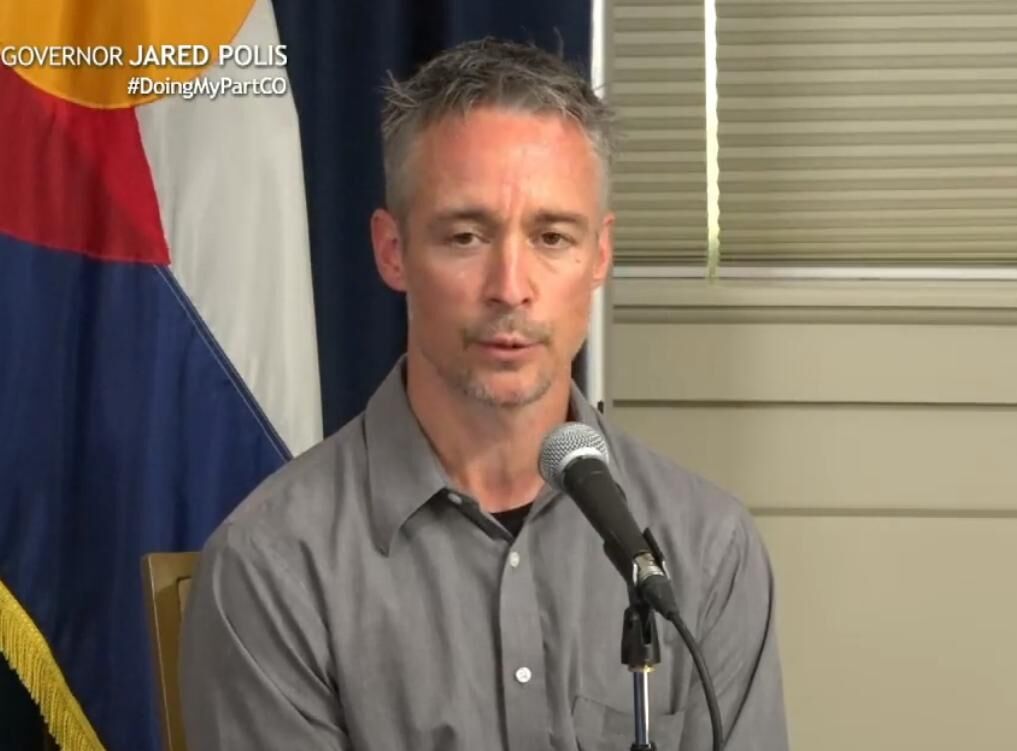
Colorado’s school count day is Thursday, and on Tuesday, Gov. Jared Polis and education officials sounded alarm bells for students who haven’t enrolled in school yet this year.
It’s particularly alarming for children in the Pre-K through third grade levels, according to Polis and Education Commissioner Katy Anthes. While they didn’t have hard numbers — Anthes said they were waiting on trends — the urgency isn’t only about School Count Day. It’s also about making sure Colorado’s kids get the academic, social and emotional supports that being in school provides.
COVID-19 has been a real challenge for parents, kids, teachers and school districts, Polis said during a Tuesday news conference. Converting all learning to online “took everyone by surprise” and left families trying to figure out what to do.
The biggest concern for those who aren’t in school is the learning loss, especially for those who are high-risk, including English Language Learners and special needs students, the governor added. “I want parents to take another look at enrolling kids in school. It doesn’t have to be in person, if you don’t like one online program, look at another,” given that the state allows for open enrollment.
“We worry about those lost kids,” and the governor encouraged everyone: parents, business and religious leaders and community members, to help. “We all need to be partners in this effort.”
It isn’t only the learning that kids miss by not being in school, according to Anthes. It’s also school meals and health services. “We cannot let our children’s education become a casualty of this pandemic,” Anthes said.
Rico Munn, superintendent of Aurora Public Schools said his district — which opened to in-person learning Monday — is one that has seen a sharp decline in enrollment in the younger grades. “We’ve seen significant learning loss in younger ages,” Munn said. Nationwide, students are losing from three months to two years in their academic progress, Munn explained.
The Aurora Public Schools have been planning for the fall since April, investing in new technology, such as laptops for students, and social supports. They’re also relying on mental health professionals in every school, the results of a 2018 mill levy. “Kids are social creatures” who need to connect with other adults and their peers. “You can’t do that if you’re not enrolled.”
Aurora’s pre-school and kindergartners began coming back Monday, and Munn said, “even through the masks, you could feel the sheer joy they had reconnecting with classmates and teachers.”
Dr. Chris Rogers, a child psychiatrist, said that being part of a school and class provides a sense of identity for kids. “School provides structure,” something desperately needed in these times of unpredictable schedules. He said that research points out that children do best when they know what to expect every day, and school provides that stability, as well as community and identity, every bit as important as the content. “It’s how kids make friendship” and find support from their peers, Rogers said.
Services provided by schools can be a lifeline in this time of stress, Rogers added, particularly in an era where teen suicide is at epidemic levels, even before the pandemic.
But Rogers also asked parents to be flexible and adjust expectations for their children in school. “Every day I see young people struggle to keep up even in classes that were previously manageable,” which Rogers attributes to the stress and trauma of the pandemic.
That trauma impacts focus, concentration and makes learning more difficult, he said.
Rogers said parents are doing their best to be breadwinners, counselors and teachers, but said that parents who aren’t enrolling their children in school may have given up.
“Things will get better,” Rogers said.
For Thursday, Anthes said the Colorado Department of Education has made adjustments, as have school districts, around how districts can tabulate attendance, including counting students who are doing remote learning. Munn added that they adjusted attendance politics to account for the percentage of time a student is engaged as well as how they perform.
The other problem schools face in the 2020-21 school year: a teacher shortage, made worse by fears over COVID-19.
Munn said they have told their teachers they are doing everything possible to apply the best science, and relying on advice from Tri-County Health on how to set up classrooms. They’re participating in COVIDcheck Colorado, which allows teachers to receive rapid testing twice a month. “We’re not seeing a spread of the virus within the school environment,” even as case counts are ticking upward statewide, Munn said.
Anthes added that they’re trying to encourage teachers to come into the pipeline but said it is a challenge.


Colorado’s chief federal judge orders return of wrongfully deported man, second judge to explore ‘series’ of violations
Michael Karlik
michael.karlik@coloradopolitics.com
Updated 18 minutes ago
Colorado’s chief federal judge took the extraordinary step of directing the government on Tuesday to do everything it can to return a man it deported in violation of his order. At the same time, Colorado’s chief magistrate judge has set...

Counties warn CPW that new comment limits sideline local governments
Marianne Goodland
marianne.goodland@coloradopolitics.com
Updated 29 minutes ago
The September meeting of the Colorado Parks and Wildlife Commission will feature newly revised public‑comment rules — changes introduced by chair Jay Tutchton of Bent County, who announced them without first discussing the revisions publicly with the rest of the...

Controversial two-bag furbearer limit heads to CPW meeting under legal threat
Marianne Goodland
marianne.goodland@coloradopolitics.com
Updated 9 minutes ago
Next week’s Colorado Parks and Wildlife Commission meeting in La Junta is likely to open under the cloud of threatened legal action. Safari Club International and the Sportsmen’s Alliance Foundation warned the commission this month that its July vote imposing...

Golden to pay $155,000 to fired city manager
Matt Kyle
matt.kyle@denvergazette.com
Updated 39 seconds ago
The Golden City Council on Tuesday approved a roughly $155,000 severance payout to former city manager Scott Vargo, who was fired earlier this month following a “racist incident” at a city fire station. The payout is part of a separation...

Trump says the US doesn’t need Canada. America’s economy says otherwise.
The Associated Press
the-associated-press@coloradopolitics.com
Updated 1 hour ago
TORONTO (AP) — U.S. President Donald Trump says his country does not need Canada. But every day, roughly 4 million barrels of Canadian crude oil flow south, helping fuel American cars, trucks and airplanes and supply U.S. industry. And oil...

USPS ballot rule faces lawsuit from Colorado, other states
Thelma Grimes
thelma.grimes@coloradopolitics.com
Updated 3 hours ago
Colorado, along with 25 other states, filed a lawsuit against the U.S. Postal Service to challenge a new rule that seeks to restrict the mailing of ballots to American citizens in an eligible voters list. Colorado relies heavily on the...

FDA approves landmark pancreatic cancer drug that’s shown to improve survival
The Associated Press
the-associated-press@coloradopolitics.com
Updated 1 hour ago
WASHINGTON (AP) — The Food and Drug Administration on Wednesday approved a groundbreaking new drug for advanced pancreatic cancer, offering U.S. patients a more effective treatment against one of the deadliest types of cancer. FDA officials gave expedited approval to...

Trump defends pause on beef tariffs: Prices are ‘coming down very rapidly’
Naomi Lim
naomi-lim@coloradopolitics.com
Updated 4 hours ago
President Donald Trump defended his decision to pause tariffs on some beef imports, even as Republicans criticize the decision. “Prices are coming down very rapidly, and now beef is starting to come down,” Trump told The Glenn Beck Program on...
Denver murder, assault convictions reversed due to faulty jury instructions
Michael Karlik
michael.karlik@coloradopolitics.com
Updated 4 hours ago
Colorado’s second-highest court reversed a defendant’s convictions for murder and assault last week after concluding a Denver judge incorrectly omitted key jury instructions that could have affected the verdict and sentencing. Stephen C. Swainson fatally stabbed Israel Casillas in downtown...

This is how much Colorado will receive from massive Meta child safety settlement
Thelma Grimes
thelma.grimes@coloradopolitics.com
Updated 10 minutes ago
As part of a sweeping multistate agreement, Meta Platforms, Inc. — the parent company of Facebook and Instagram — has agreed to pay more than $17 billion and adopt extensive child-safety changes to its operations. Colorado Attorney General Phil Weiser...
PREV
PREVIOUS

State Supreme Court to decide whether counties are 'people' under solid waste law
Is a county a “person?” That is the question the Colorado Supreme Court will decide, after it announced on Monday it will hear a case that hinges on whether the language of the Solid Wastes Disposal Sites and Facilities Act permits enforcement against counties. The issue stems from a dispute between La Plata County and […]
Street art, speakers honor Ginsburg at History Colorado event
A group of predominantly women gathered outside History Colorado on Tuesday morning to commemorate the late U.S. Supreme Court Justice Ruth Bader Ginsburg. But multiple speakers sent the message that the progressive jurist’s work touched more lives than just women’s. “Yes, she was a strong, proud and indomitable feminist who was known and celebrated for […]