

Q&A with Jeff Dolan — internet connector
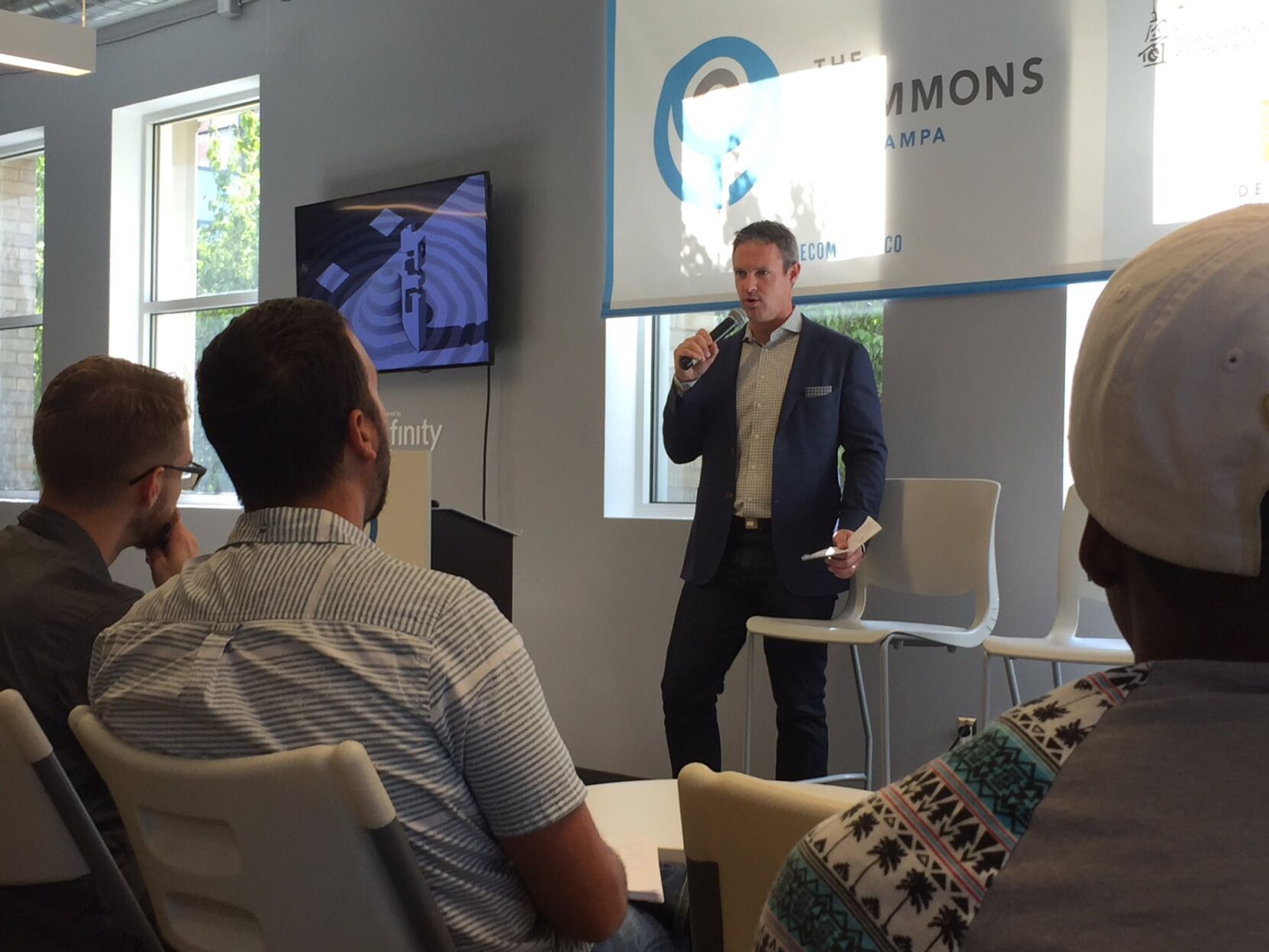
Bio:
-
Vice president of external affairs for Comcast in the company’s Mountain West Region (Colorado, New Mexico, Arizona, Utah, and Idaho).
-
Was an attorney at Hogan Lovells US LLP in the firm’s public policy group, with a legal practice focused on political, legislative, and government regulatory matters.
-
Previously served in Washington D.C., in several key staff roles for then-U.S. Senate Majority Leader Tom Daschle, including assistant to the chief of Senate floor operations.
Colorado Politics: As broadband access for all became even more critical amid local and state stay-at-home orders – from online learning to remote working – what steps did Comcast have to take to meet the leap in demand? What in general has changed about the way a quasi-public utility like Comcast does business in the shadow of COVID?
Jeff Dolan: It’s a huge responsibility, and I’m proud of how Comcast stepped up, particularly with our Internet Essentials program that is helping so many low-income residents who are so sadly being disproportionately impacted by the Covid-19 crisis.
We’ve also seen unprecedented shifts in network usage and traffic since the crisis began, but our network is handling it. For example, there’s been a 210-285% increase in video conferencing as people continue to work and learn from home. While the increase in usage is within our capacity, our thousands of engineers nationally and locally are continuously working to add capacity when/where it’s needed. Our customers are really benefitting from the significant network investments we make every year. Since 2011, Comcast has invested $3.3 billion in technology and infrastructure just in Colorado. That has put us in a good position to manage the constantly evolving technology demands and the increases we are experiencing today.
And we are taking the long view forward too, anticipating what people and businesses will need in the future, and continuously building and enhancing our network to meet those future needs.
CP: Because a lot of us are almost entirely dependent on our local cable provider in the way we are on any other utility, in this case, to connect us to the rest of the world, what is the responsibility of the private sector in addressing the challenge of COVID? Especially when it comes to those who are hurting financially or don’t have much experience with technology?
Dolan: We recognize our company plays an important role in helping all of the communities we serve stay connected. We’ve worked closely with dozens of nonprofit partners in Colorado who are experts in supporting their constituencies. They confirm this crisis accelerated by many years how increasingly reliant vulnerable populations are on technology. Whether that’s low-income or refugee families who suddenly have to adapt to online learning; people who have to figure out how to work from home or search for work or access government services virtually, and seniors who need to stay connected now more than ever, especially when they have to shelter in home for long periods away from their friends and loved ones.
To help keep people connected to what matters most, Comcast made the following commitments back in March, and then extended them to June 30.
- We opened Xfinity WiFi hotspots for free in business and outdoor locations to anyone who needs them.
- We gave all Xfinity Internet customers unlimited data for no additional charge.
- We will not disconnect internet or mobile service or charge late fees for customers.
- We made Internet Essentials, the nation’s largest internet adoption program for low-income households, free for two months for new customers who apply by June 30. (The regular rate of $9.95/month applies after the promotion ends). And we increased Internet Essentials speeds to 25 Mbps downstream and 3 Mbps upstream. Internet Essentials also offers $150 computers.
- Comcast has repeatedly expanded eligibility criteria for Internet Essentials in order to help the largest number of people; you may qualify if you are eligible for public assistance programs such as the National School Lunch Program, Housing Assistance, Medicaid, SNAP, SSI, and others. People can learn more at InternetEssentials.com.
We’re very grateful to the hundreds of partner organizations in Colorado including local governments, non-profit partners and school districts who have helped us promote Internet Essentials to eligible families. Together, we have made tremendous progress in closing the digital divide in the state by connecting low-income families to all the power and benefits of a home internet connection, many of them for the very first time in their lives. Since it launched the program in 2011, Comcast has connected nationally more than 8 million low-income Americans to Internet Essentials.
CP: Local governments along the Front Range have been spawning their own municipally owned and operated broadband services with mixed results, the aim being to offer residents an alternative to a behemoth like Comcast. Some residents have welcomed the competition while some critics have cautioned the cities not to get in over their heads in what is a complicated service. What are some of the challenges that development poses for your company as well as for the cities and their residents?
Dolan: Comcast operates in a very competitive environment, and people already have numerous choices when it comes to internet providers. As just one example, I talked to a local housing authority official recently, and residents in his developments can choose today from at least four different high-speed internet offers from private companies priced at $15 or less per month.
Local governments have so many critical priorities to deal with, a job made much harder after the financial impact of the coronavirus pandemic, which some reports estimate will cost Colorado cities $4.5 billion in tax revenues over the next three years.
We are grateful for the productive partnerships we have with so many local governments and the state during the COVID crisis. We relied on them to exempt from stay-at-home orders our essential employees who worked around the clock to keep our network optimized, and to expedite construction permit requests for projects keeping our critical infrastructure running so our customers can work and learn from home. That’s the kind of public/private collaboration helping us drive technology advancement and investment, to reduce barriers to connectivity, and connect more people with the network, products, and services to meet the needs of the future – today.
CP: Let’s talk about Colorado’s evolving political climate. There’s a truism that as a state goes blue, as Colorado has at least for now, it can be problematic for big business. Yet, you worked for the Democrats during your tenure on Capitol Hill in D.C., so you probably have more nuanced insights on that score. How if at all does the shift to the left affect the way you do business when you work with government on an array of cable-related issues?
Dolan: I was very fortunate to learn some of my most valuable political and life lessons working with an incredible team of people when I worked on Capitol Hill for former United States Senate Majority Leader Tom Daschle. Senator Daschle represented South Dakota, a very red state where I grew up, during four different decades, and he was an expert at connecting with others from different political stripes with skills that are increasingly rare. He – along with his Chief of Staff Pete Rouse (who would later serve as chief of staff for Barack Obama in both the Senate and White House) – instilled those skills in their team, and they fostered an incredible mission-driven culture built on some non-negotiable principles, including: always be willing to engage with someone, especially if they don’t share your views; be humble and show respect; demonstrate empathy; focus on getting the job done instead of worrying about getting the credit; don’t pretend to have all the answers, and listen – really listen – to others.
I suppose those principles could sound Pollyannaish in our current environment. But at the time I worked in the U.S. Senate (the 1990s and early 2000s), it was a moment in our country’s political history when bipartisan compromise and accomplishment was both still possible, and valued. It makes me feel like a bit of a dinosaur saying that, but I learned a lot in that experience.
Sen. Daschle was inspiring and made an enormous impact on me, because he role-modeled the skills and principles I mention above, and he did it with incredible discipline, a calm demeanor, and unparalleled work ethic that was contagious for our team. He used to remind us that politics shouldn’t be about “Rs vs. Ds” (Republicans vs. Democrats), rather it should be about “Cs vs. Ds” (Constructives vs. Destructives). He was willing to work with anyone – no matter their political party or agenda – if they had constructive ideas that could make a meaningful impact. Those principles that Sen. Daschle and Pete instilled in their staff are still the principles I try to live by in both my professional and political life, and I think they have served me well, no matter whether it’s a blue or red government official I need to conduct business with in my day job.
CP: Colorado parents are being told to prepare for a very different learning environment for their kids when they return to school in the fall. While it’s unlikely to be as radical a shift as what we’ve experienced with kids learning entirely online during the lockdown, the online component will play a much larger role, we’re told, from what kids faced when starting school last year. Are there specific adjustments Comcast is making in that regard, and do you think it’ll be a case of “the kids are all right” and that learning will proceed productively? Might an upside be that more schoolchildren will be accelerated into an online world they are going to someday encounter on the job anyway?
Dolan: The COVID crisis and related stay-at-home orders put a glaring spotlight on how critical it is to have access to technology and a home Internet connection. Sadly, the crisis also exposed even further the cruel irony of the digital divide, where those with home internet connections benefit from all the opportunities of a digital world, but those without – especially low-income students who would most benefit from the internet’s equalizing potential – fall even further behind.
The work we have done to expand Internet Essentials eligibility criteria more broadly will help us reach even more families. The speed increases we made this March will help Internet Essentials customers do more online. And we will continue building on the many great partnerships we have with school districts and support their outreach efforts to get as many students connected as possible.
Increasing digital literacy must remain a top priority for all partners engaged in trying to close the digital divide. That’s why a major component of Comcast’s Internet Essentials program includes access to free programs, classes, and trainings to help strengthen digital literacy. And in partnership with Common Sense Media, we’ve curated thousands of hours of free educational programming into an education destination for Xfinity video customers to support remote learning for kids.
CP: You grew up in South Dakota and were more or less a small-town kid – are there any big towns in South Dakota? 🙂 – so what propelled you toward a life in politics and public policy involving a significant stint in the nation’s capital?
Dolan: I grew up in the “mega-opolis” of Sioux Falls, S.D., a city that gained recent notoriety because its home to the Smithfield pork plant that for a time in April was the country’s single-biggest coronavirus hot spot. Coincidentally, my father, Thad Dolan, actually worked at that same plant to provide for our family until he passed away from cancer when I was six years old. My mom, Angie, worked as a middle school teacher, and she raised me and my three siblings on her own.
I learned some hard lessons about how uncertain life can be in those early years, and I also remember very clearly how impactful it was for my family when we received support from friends and family members as we tried to adjust to life without my dad, who was a larger-than-life figure in many ways. I guess those experiences created an early understanding for me of the importance of social justice, which I define as giving a hand up to those who need a little help, so they can be empowered to chart their own course in life.
That’s what propelled me to work in Washington, D.C., first as an (unpaid!) intern with Sen. Daschle during my junior year in college. I immediately went back to work for him after graduation (for a little bit of pay). In that experience with the senator’s team, I got to engage in work every day – sometimes on micro-constituent-support issues, sometimes on macro policy initiatives that would impact the country – that made a difference for people who needed just a little bit of a hand up.
CP: What keeps you in Colorado?
Dolan: Where else would you want to live? I’m blessed with three incredible daughters (Finley, 11 years old; Selby, 10, and Olive, who is almost 7), who are sixth-generation Coloradans. We love the people here and also the wild spaces; it’s a combination that would be really hard to beat.

Colorado legislators consider $500 million in general fund cuts amid $1.5 billion deficit
Marianne Goodland
marianne.goodland@coloradopolitics.com
Updated 15 hours ago
The legislature’s Joint Budget Committee is working through a list Wednesday of about 150 suggestions to cut as much as $1.5 billion in general fund dollars out of next year’s budget. The largest on the list prepared by JBC staff...
Colorado’s push for affordable housing continues as Gov. Polis signs HOME Act, workforce housing bill
Marissa Ventrelli
marissa.ventrelli@coloradopolitics.com
Updated 14 hours ago
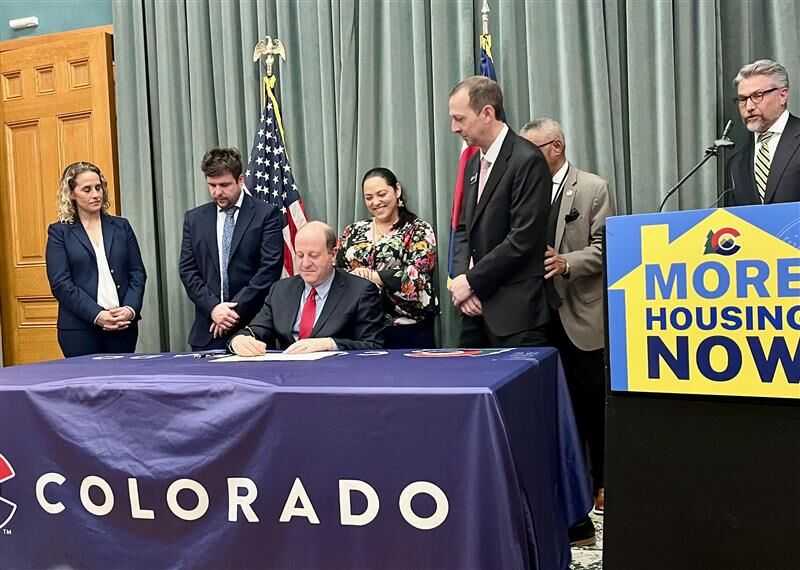
Gov. Jared Polis held the first public bill signing of the 2026 legislative session on Wednesday, signing a pair of housing measures into law. The bills — House Bill 1001 and Senate Bill 001 — are part of Democrats’ affordable...
Colorado farmers begin spring planting season with soaring fertilizer costs and price-gouging fears
Marianne Goodland
marianne.goodland@coloradopolitics.com
Updated 16 hours ago
As Colorado farmers prepare their fields for spring planting, many are sounding the alarm over fertilizer prices that have surged far beyond what they say global supply disruptions can explain. With nitrogen costs up 30% in a matter of days,...
Federal judge refuses to authorize immediate appeal in World Cup trafficking lawsuit
Michael Karlik
michael.karlik@coloradopolitics.com
Updated 15 hours ago
A federal judge declined to authorize an immediate appeal last week of a prior decision allowing companies operating out of Colorado to be sued for allegedly participating in a human trafficking venture involving Filipino laborers who constructed facilities for the...

Colorado lawmakers approve $150,000 ibogaine study bill targeting PTSD and addiction
Marissa Ventrelli
marissa.ventrelli@coloradopolitics.com
Updated 15 hours ago
The Colorado House Health and Human Services Committee advanced a bill that would create a $150,000 research pilot program to study the safety and effectiveness of ibogaine, a psychoactive compound that claims to treat post-traumatic stress disorder, opioid addiction, and...
Federal judge considers second round of sanctions against ex-Colorado judicial discipline director
Michael Karlik
michael.karlik@coloradopolitics.com
Updated 18 hours ago
A federal judge ordered Colorado’s former judicial discipline director on Tuesday to explain why she should not sanction him a second time for filing documents for improper purposes, such as harassment or delay. U.S. District Court Senior Judge Kathryn H....

Colorado Democrats want large corporations to pay fee if employees are on Medicaid
Marianne Goodland
marianne.goodland@coloradopolitics.com
Updated 15 hours ago
Democrats are seeking to require Colorado’s largest corporations to pay thousands of dollars for each employee that relies on the Medicaid program for health insurance. They don’t have to pay the fee if they can demonstrate offering an “affordable health...

Colorado justices agree to review insurance question that has divided federal judges
Michael Karlik
michael.karlik@coloradopolitics.com
Updated 24 hours ago
The Colorado Supreme Court granted a federal judge’s request on Friday to address an issue that has produced conflicting answers in policyholders’ lawsuits against insurance companies over unpaid benefits. “Parties (and judges) regularly spend undue time and money fighting in...

Farmworker overtime bill advances after lengthy debate in Colorado Senate
Marianne Goodland
marianne.goodland@coloradopolitics.com
Updated 2 days ago
The Colorado Senate on Tuesday narrowly advanced a bill to raise the overtime threshold for agricultural workers, defeating more than a dozen amendments from its leading opponent aimed at rewriting the measure. As introduced, Senate Bill 121 would raise the threshold for...

Colorado Agriculture Day: A feast for the ears, eyes and stomachs
Marianne Goodland
marianne.goodland@coloradopolitics.com
Updated 2 days ago
Gov. Jared Polis, legislators and friends of agriculture gathered at the state Capitol on Tuesday to celebrate Colorado Agriculture Day. The annual recognition of the contributions of Colorado farmers, ranchers and agribusiness drew hundreds to the Capitol’s west foyer, where...
PREV
PREVIOUS

Genocide, Holocaust education bill passes House
The Colorado House of Representatives unanimously passed a bill on Friday to require that high schoolers study genocide and the Holocaust in order to graduate. “Ignoring the darkest, most harrowing chapters of our history for the sake of temporary comfort will only lead to history tragically repeating itself,” said Rep. Dafna Michaelson Jenet, D-Commerce City, […]

Senate debates November measure to repeal property tax amendment
The Colorado Senate passed a measure that would allow voters to decide in November whether to get rid of a budget control on property taxes that shortchanges local governments, special districts and schools. The bill passed on a voice vote Monday and will face a roll call vote in the Senate before advancing to the […]