

CU researchers find link between low birth weights, physician decisions

A new study from two University of Colorado researchers found that birth weights among U.S. infants have declined in recent years as Cesarean sections and labor inductions have become more common.
“Our data indicate that there has been a dramatic shift in birth timing in this country,” said Ryan Masters, one of the authors. “It is resulting in birth weight decline, and it is almost entirely due to changes in obstetric practices.”
The journal Demography published the findings on Jan. 29. Masters and co-author Andrea Tilstra were hoping to find why average birth weights began plummeting in 1990. The Centers for Disease Control and Prevention reports that low birth weights can cause infection or illness soon after birth, or lead to longer-term delays to development of motor and social skills.
The researchers analyzed 23 million births between 1990 and 2013 and discovered an association between low birth weights and medical decisions to end a pregnancy early.
“We found that the decline in birth weight would not have happened if it were not for the rapid increase in these obstetric interventions,” said Tilstra. “In fact, birth weights would have gone up.”
A range of factors, including financial incentives, could influence a physician into inducing labor sooner than 40 weeks. The average length of a pregnancy is now approximately 39 weeks, which matters because a fetus can put on weight in the last weeks of pregnancy.
“I hope it prompts physicians to take a step back and realize there can be broader public health impacts from these individual decisions,” said Tilstra. “And I hope it reminds mothers that they have more autonomy in the birth process.”


Colorado legislators consider $500 million in general fund cuts amid $1.5 billion deficit
Marianne Goodland
marianne.goodland@coloradopolitics.com
Updated 13 hours ago
The legislature’s Joint Budget Committee is working through a list Wednesday of about 150 suggestions to cut as much as $1.5 billion in general fund dollars out of next year’s budget. The largest on the list prepared by JBC staff...
Colorado’s push for affordable housing continues as Gov. Polis signs HOME Act, workforce housing bill
Marissa Ventrelli
marissa.ventrelli@coloradopolitics.com
Updated 13 hours ago
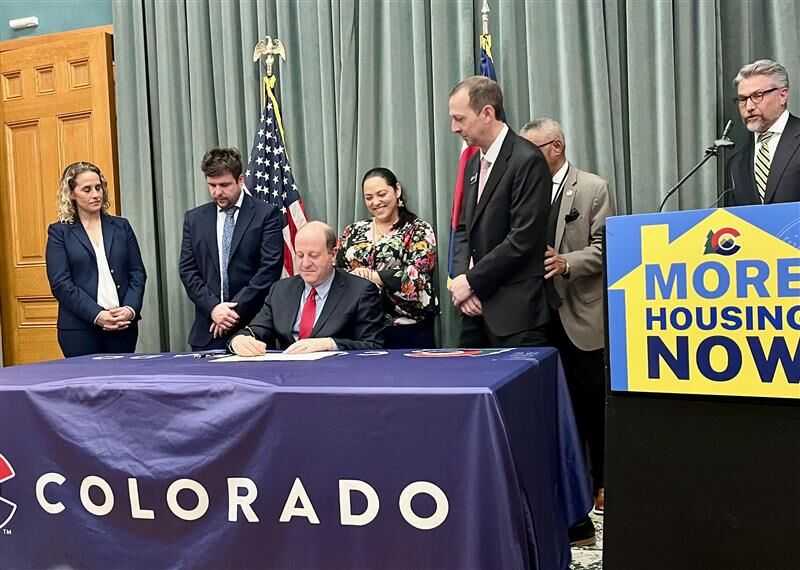
Gov. Jared Polis held the first public bill signing of the 2026 legislative session on Wednesday, signing a pair of housing measures into law. The bills — House Bill 1001 and Senate Bill 001 — are part of Democrats’ affordable...

Colorado farmers begin spring planting season with soaring fertilizer costs and price-gouging fears
Marianne Goodland
marianne.goodland@coloradopolitics.com
Updated 15 hours ago
As Colorado farmers prepare their fields for spring planting, many are sounding the alarm over fertilizer prices that have surged far beyond what they say global supply disruptions can explain. With nitrogen costs up 30% in a matter of days,...
Federal judge refuses to authorize immediate appeal in World Cup trafficking lawsuit
Michael Karlik
michael.karlik@coloradopolitics.com
Updated 14 hours ago
A federal judge declined to authorize an immediate appeal last week of a prior decision allowing companies operating out of Colorado to be sued for allegedly participating in a human trafficking venture involving Filipino laborers who constructed facilities for the...

Colorado lawmakers approve $150,000 ibogaine study bill targeting PTSD and addiction
Marissa Ventrelli
marissa.ventrelli@coloradopolitics.com
Updated 14 hours ago
The Colorado House Health and Human Services Committee advanced a bill that would create a $150,000 research pilot program to study the safety and effectiveness of ibogaine, a psychoactive compound that claims to treat post-traumatic stress disorder, opioid addiction, and...

Federal judge considers second round of sanctions against ex-Colorado judicial discipline director
Michael Karlik
michael.karlik@coloradopolitics.com
Updated 17 hours ago
A federal judge ordered Colorado’s former judicial discipline director on Tuesday to explain why she should not sanction him a second time for filing documents for improper purposes, such as harassment or delay. U.S. District Court Senior Judge Kathryn H....
Colorado Democrats want large corporations to pay fee if employees are on Medicaid
Marianne Goodland
marianne.goodland@coloradopolitics.com
Updated 13 hours ago
Democrats are seeking to require Colorado’s largest corporations to pay thousands of dollars for each employee that relies on the Medicaid program for health insurance. They don’t have to pay the fee if they can demonstrate offering an “affordable health...

Colorado justices agree to review insurance question that has divided federal judges
Michael Karlik
michael.karlik@coloradopolitics.com
Updated 22 hours ago
The Colorado Supreme Court granted a federal judge’s request on Friday to address an issue that has produced conflicting answers in policyholders’ lawsuits against insurance companies over unpaid benefits. “Parties (and judges) regularly spend undue time and money fighting in...

Farmworker overtime bill advances after lengthy debate in Colorado Senate
Marianne Goodland
marianne.goodland@coloradopolitics.com
Updated 2 days ago
The Colorado Senate on Tuesday narrowly advanced a bill to raise the overtime threshold for agricultural workers, defeating more than a dozen amendments from its leading opponent aimed at rewriting the measure. As introduced, Senate Bill 121 would raise the threshold for...

Colorado Agriculture Day: A feast for the ears, eyes and stomachs
Marianne Goodland
marianne.goodland@coloradopolitics.com
Updated 2 days ago
Gov. Jared Polis, legislators and friends of agriculture gathered at the state Capitol on Tuesday to celebrate Colorado Agriculture Day. The annual recognition of the contributions of Colorado farmers, ranchers and agribusiness drew hundreds to the Capitol’s west foyer, where...
PREV
PREVIOUS

State letter to USDA warns of "losses" under proposed hemp rule
The Polis administration and Attorney General Phil Weiser criticized the U.S. Department of Agriculture’s proposed new rules on hemp cultivation, warning that stringent requirements and steep penalties would jeopardize the investments in the state’s 87,000-acre industry. “The USDA’s interim final rule for hemp production claims to respect principles of federalism and to allow the ‘laboratories […]

Task force holds first meeting on missing and murdered American Indians
On Wednesday, the Trump Administration’s task force on missing and murdered American Indians and Alaska Natives met in Washington, D.C. to begin discussing the development of protocols to solve more than 5,700 cold cases and address new ones. President Donald Trump created the seven-member task force and charged it with presenting a final report by […]