

Colorado’s film subsidy program gets $1.25 million infusion

Colorado’s seven-year-old film subsidy initiative received $1.25 million from the state’s Economic Development Commission, supplementing the program’s $750,000 budget which ran out within two months.
Beginning in 2012, the program offered a 20% rebate to film companies for production costs in the state. That has amounted to $16 million in state expenditures, as reported in The Denver Post.
Proponents argue that the incentives generate corporate spending, create jobs, and have the potential to catalyze tourist hot spots, such as how the Stanley Hotel in Estes Park has taken advantage of Stephen King’s book, The Shining.”
The Stanley served as the book’s inspiration, and was the filming location for the 1997 TV miniseries of the same name.
The $1.25 million comes from the Commission’s Strategic Fund, which the EDC diverted after another project went unfinished. A University of Colorado cost-benefit analysis showed a $40 return for each dollar of investment.
“A majority of this impact has historically been in and targeted toward rural Colorado–a strategic area of economic development for Governor Polis,” said CEDC’s Jill McGranahan.
This infusion, however, is small compared to neighboring states’ film spending. New Mexico has a budget of $110 million for incentives and Montana provides $10 million.
Film Production Capital, a consulting company specializing in state tax incentives for filming, rates states by the quality of their offerings. Colorado received one star, while Georgia, Massachusetts, and Louisiana each received five stars.
Rep. Jovan Melton (D-Aurora), a proponent of the subsidies, believes that Colorado’s incentive program must have at least $1 million for the state to be a viable filming location.
“When Top Chef was here, it was for an entire season and they constantly showed parts of the city and the state throughout the series,” he said. “I went to one of the tapings and saw the dozens of crew members employed from here in Colorado and well as the rental equipment and various investment into our economy. The benefit to our state was far more than the incentive they received.”



Colorado leaders weigh next steps after Supreme Court rejects state ban on ‘conversion therapy’
Marissa Ventrelli
marissa.ventrelli@coloradopolitics.com
Updated 5 hours ago
Colorado leaders said they are weighing next steps after the U.S. Supreme Court on Tuesday rejected the state’s ban on “conversion therapy” for children, as critics and supporters cheered or lambasted the ruling. The court’s near-unanimous decision called the Colorado...
Federal judge dismisses U.S. government lawsuit against Colorado, Denver’s ‘sanctuary’ laws
Michael Karlik
michael.karlik@coloradopolitics.com
Updated 4 hours ago
A federal judge dismissed the U.S. government’s lawsuit against Colorado and Denver on Tuesday, which alleged that various local policies impermissibly infringed on federal immigration enforcement. U.S. District Court Judge Gordon P. Gallagher followed the lead of judges in Illinois...
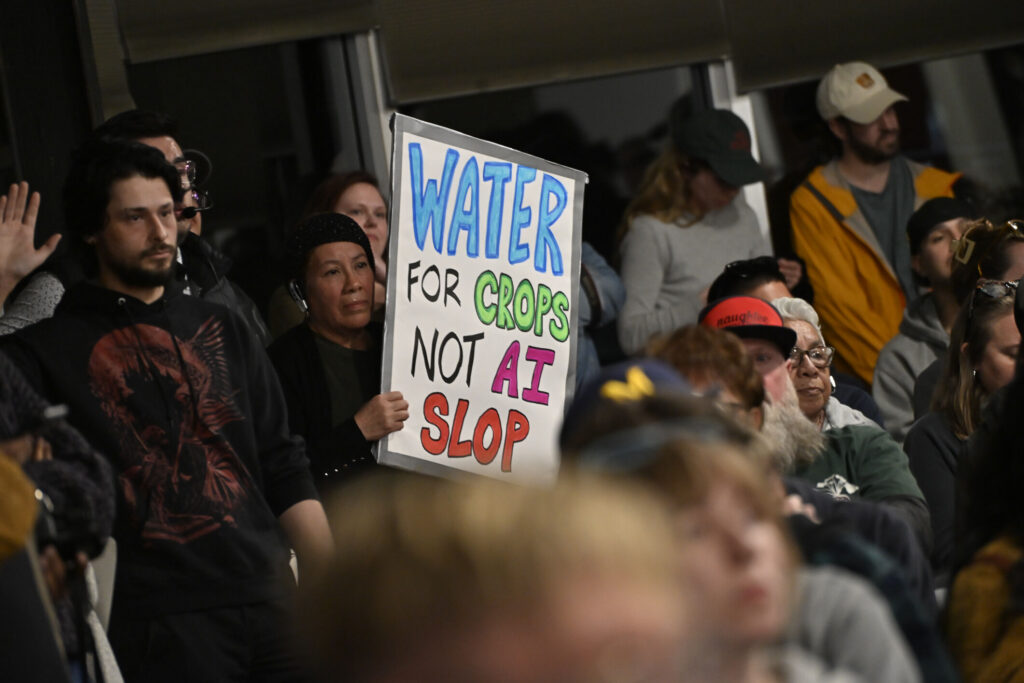
Denver proposes yearlong moratorium on new data centers
Deborah Grigsby
deborah.smith@denvergazette.com
Updated 7 hours ago
As Denver Water calls for a 20% reduction in water use during Stage 1 drought conditions, City Council members advanced a bill to rein in one of the largest water users — data centers — by proposing a yearlong moratorium...

Federal judge finds DOJ adequately searched for, disclosed records related to Bidens
Michael Karlik
michael.karlik@coloradopolitics.com
Updated 9 hours ago
A federal judge determined on Friday that the U.S. Department of Justice adequately searched for and disclosed records to a Colorado attorney in response to his request for documents related to former President Joe Biden’s son and brother. In November...

Colorado lawmakers push legislation to shrink RTD board, increase pay as ridership struggles continue
Marissa Ventrelli
marissa.ventrelli@coloradopolitics.com
Updated 9 hours ago
Colorado lawmakers are advancing a new push to overhaul the Regional Transportation District, proposing to shrink the board, raise member pay, and boost ridership back to pre-pandemic levels. While some stakeholders see the effort as a step forward, others warn...

Appellate court slap downs in Trump cases highlight mounting tension in the judiciary
Jack Birle, Washington Examiner
jack.birle.washington.examiner@gazetteedit.wpenginepowered.com
Updated 11 hours ago
The Trump administration has won key reversals of lower court rulings against it in appeals courts — many of which have sharply rebuked the district court’s earlier rulings, highlighting growing tensions within the judiciary. Since January 2026, federal appeals courts...

10th Circuit warns lawyers after finding fake case in filing
Michael Karlik
michael.karlik@coloradopolitics.com
Updated 2 hours ago
The Denver-based federal appeals court warned attorneys to be more careful last month after discovering one lawyer cited a fake case in his arguments. In recent months, federal and state judges in Colorado have begun cautioning lawyers explicitly about the...

Colorado legislators drove up cost of Medicaid program
Marissa Ventrelli
marissa.ventrelli@coloradopolitics.com
Updated 11 hours ago
Some of Colorado’s spending woes in Medicaid can be traced to lawmakers who had approved new or expanded programs in the last few years, driving up state costs to the tune of tens of millions of dollars. Just three measures...
Supreme Court rules against Colorado ban on ‘conversion therapy’ for LGBTQ kids
Lindsay Whitehurst
lindsay.whitehurst@associatedpress.com
Updated 15 hours ago
WASHINGTON (AP) — The Supreme Court on Tuesday ruled against a law banning “conversion therapy” for LGBTQ+ kids in Colorado, one of about two dozen states that ban the discredited practice. An 8-1 high court majority sided with a Christian...

A perfect storm: Pine beetles thriving following warm, dry winter in Colorado
O'Dell Isaac
odell.isaac@gazette.com
Updated 12 hours ago
The warmest winter in Colorado history could lead to record-breaking proliferation of a tiny insect, about the size of a grain of rice, that has killed millions of acres of trees across the Centennial State and contributed to the rapid...
PREV
PREVIOUS

MARK HARDEN | A fond salute to Team CoPo as I set sail
As I sat down to write this farewell column on my last week as managing editor of Colorado Politics, my initial thought was to offer some sage observations about the state of … well, Colorado politics. Mark HardenJerilee Bennett, The Gazette Then it dawned on me that the sagest observations on Colorado politics would best […]
Park County school board president resigns as teacher strike continues
Kim Bundgaard, the embattled president of the Park County RE-2 Board of Education, announced she would resign effective Nov. 21, the date of the next school board meeting. Park County RE-2 teachers are on the fifth day of a walkout over teacher salaries in the district, which includes Fairplay. Bundgaard announced her resignation during Thursday […]