

Trump administration drops Obama-era water protection rule
The Trump administration on Thursday revoked an Obama-era regulation that shielded many U.S. wetlands and streams from pollution but was opposed by developers and farmers who said it hurt economic development and infringed on property rights.
Environmental groups criticized the administration’s action, the latest in a series of moves to roll back environmental protections put into place under President Barack Obama.
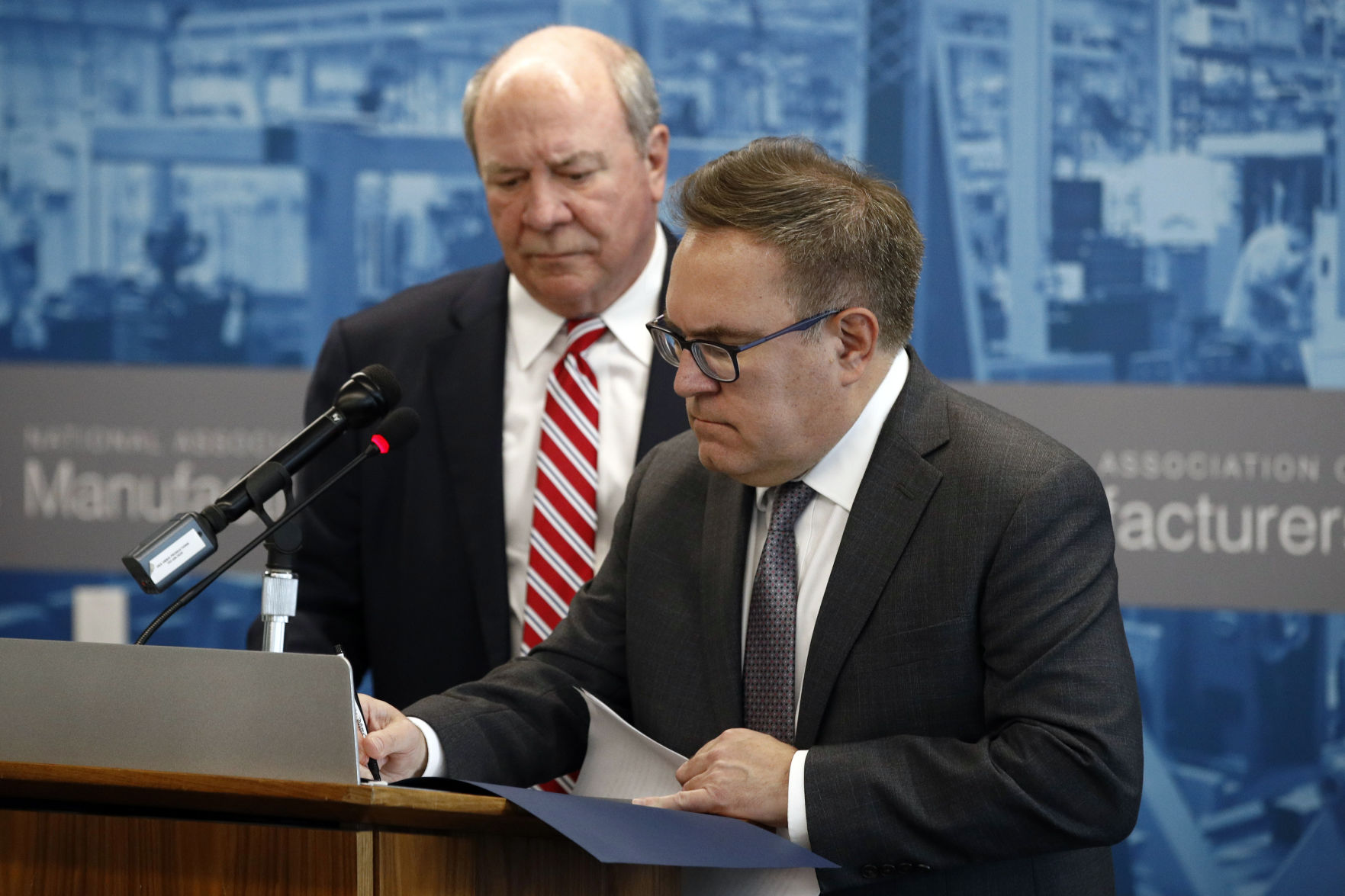
The 2015 Waters of the United States rule defined the waterways subject to federal regulation. Scrapping it “puts an end to an egregious power grab, eliminates an ongoing patchwork of clean water regulations and restores a longstanding and familiar regulatory framework,” Environmental Protection Agency chief Andrew Wheeler said at a news conference.
Wheeler and R.D. James, assistant secretary of the Army for civil works, signed the repeal document.
Since enactment of the Clean Water Act in 1972, the federal government has gone beyond protection of navigable waterways and their major tributaries to assert jurisdiction over “isolated ponds and channels that only flow after it rains,” Wheeler said.
“As the scope expands, so too has Washington’s power over private property and the states’ traditional authority to regulate their land and water resources,” he said.
President Donald Trump had ordered the agencies to develop a replacement policy that has a more restrictive definition of protected wetlands and streams, leaving fewer subject to federal protection.
U.S. Sen. Cory Gardner, Republican of Colorado, hailed the move in a statement.
“Today is a victory for Colorado’s farmers, cattlemen, ranchers, and small business owners,” he said. “This burdensome regulation from the Obama administration would have been harmful to Colorado’s economy and especially our agriculture community. Today’s announcement is welcome news and finally prevents an unconstitutional takeover of Colorado’s rivers, streams, and local waterways.”
U.S. Rep. Scott Tipton, R-Cortez, also tweeted his support of the WOTUS revocation, saying: “I applaud @EPA’s efforts today to restore regulatory clarity for farmers, ranchers, and landowners.”
Environmentalists say the move would leave millions of Americans with less safe drinking water and allow damage of wetlands that prevent flooding, filter pollutants and provide habitat for a multitude of fish, waterfowl and other wildlife.
The Natural Resources Defense Council said the administration’s action would be challenged in court.
“The Clean Water Rule represented solid science and smart public policy,” the group said in a statement. “Where it has been enforced, it has protected important waterways and wetlands, providing certainty to all stakeholders.”
But Don Parrish, congressional relations director for the American Farm Bureau Federation, said the 2015 regulation that extended federal protection to many U.S. wetlands and waterways created uncertainty about where farmers could cultivate land.
“It would be great if farmers didn’t have to hire an army of consultants and lawyers just to be able to farm,” he said.
“The final repeal of the 2015 Waters of the U.S. rule is an important landmark to the farm families of Colorado, as it paves the way for new clearer, concise rules to be put in place,” said Don Shawcroft, president of the Colorado Farm Bureau, in a statement. “Water is one of our most valuable resources and this decision shows it is possible to have both clean water and sensible rules.”
Republican Sen. Kevin Cramer of North Dakota said the Obama rule was “an unconstitutional power grab that did nothing to advance good water management.”
The question of which waters are covered under the Clean Water Act has inspired decades of lawsuits and congressional debate.
A sharply divided Supreme Court in 2006 produced three differing opinions, leading the Obama administration to craft its rule. It provided federal oversight to upstream tributaries and headwaters, including wetlands, ponds, lakes and streams that can affect the quality of navigable waters.
The regulation drew quick legal challenges. Courts prevented it from taking effect in parts of the U.S.
Betsy Southerland, who was director of science and technology in EPA’s Office of Water during the Obama administration, said repealing its regulation would create further regulatory confusion.
“This repeal is a victory for land developers, oil and gas drillers and miners who will exploit that ambiguity to dredge and fill small streams and wetlands that were protected from destruction by the 2015 rule because of their critical impact on national water quality,” Southerland said.

House Republicans split over SAVE America Act pressure campaign
David Sivak, Washington Examiner
david.sivak.washington.examiner@gazetteedit.wpenginepowered.com
Updated 54 minutes ago
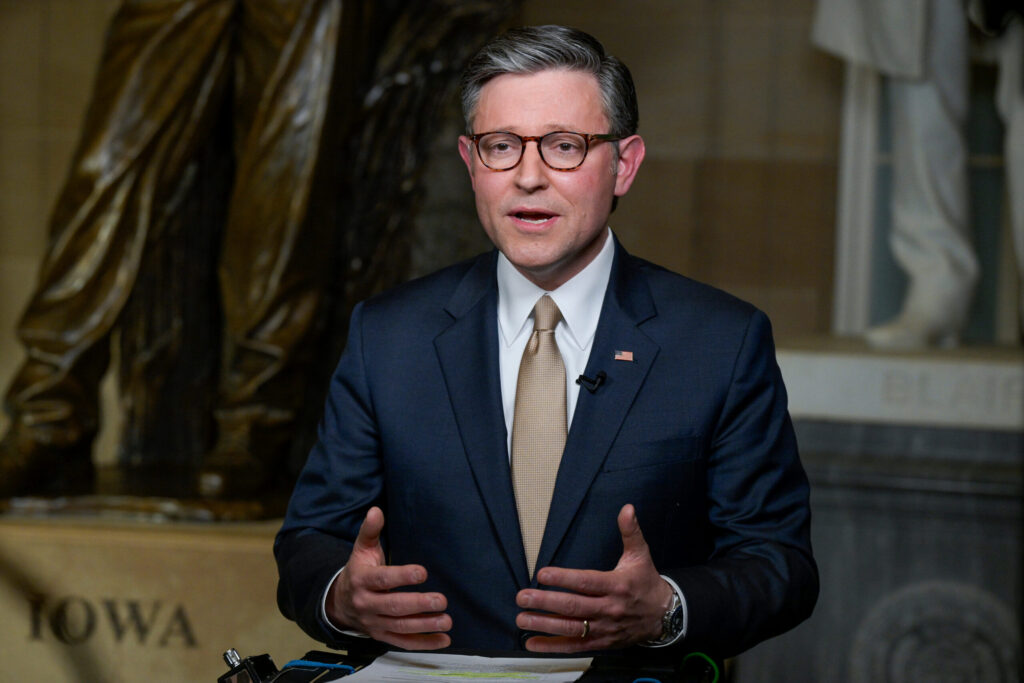
House Republicans are torn over how difficult to make life for the Senate as a band of rebels pressures Majority Leader John Thune (R-SD) to pass a national voter ID bill. Speaker Mike Johnson (R-LA) has cautioned House conservatives that...

Republican Jeff Crank, Democrat Jessica Killin qualify by petition for Colorado’s 5th CD primary
Ernest Luning
ernest.luning@coloradopolitics.com
Updated 1 hour ago
Republican U.S. Rep. Jeff Crank and Jessica Killin, one of the Democrats challenging the first-term incumbent, have both qualified for the primary ballot in Colorado’s 5th Congressional District after turning in a sufficient number of petition signatures, state election officials...
Colorado auditor finds serious issues with labor agency’s unemployment insurance accounting
Marianne Goodland
marianne.goodland@coloradopolitics.com
Updated 1 hour ago
Colorado’s state auditors found serious issues with the accounting practices of the unemployment insurance division of the Department of Labor and Employment, concluding the agency underestimated and overestimated figures to the tune of billions of dollars. The auditors labeled the...
Colorado’s newest federal judge speaks about techniques for advancing cases
Michael Karlik
michael.karlik@coloradopolitics.com
Updated 17 hours ago
U.S. Magistrate Judge Cyrus Y. Chung described on Wednesday the various tactics he employs to resolve court cases, summing up his role with a laxative-based metaphor. “Someone told a group of us federal magistrate judges that magistrate judges are the...

Three cargo ships damaged by ‘projectiles’ in Strait of Hormuz
Brady Knox, Washington Examiner
brady.knox.washington.examiner@gazetteedit.wpenginepowered.com
Updated 20 hours ago
Three cargo ships were damaged by unspecified “projectiles” while navigating the Strait of Hormuz, jeopardizing President Donald Trump’s goal of preserving the shipping lane’s safety. The strait was de facto closed the morning hostilities began on Feb. 28, with announcements...

Trump calls on Thune to be a ‘leader’ and get the votes for the SAVE America Act
NAOMI LIM Washington Examiner
naomi-lim-washington-examiner@coloradopolitics.com
Updated 21 hours ago
President Donald Trump increased pressure on Senate Majority Leader John Thune (R-SD) to pass the SAVE America Act, imploring him to be a “leader” after he expressed concerns that there is not enough support for the measure in his chamber....
The ‘talking filibuster,’ explained
Molly Parks, Washington Examiner
molly.parks.washington.examiner@gazetteedit.wpenginepowered.com
Updated 21 hours ago
Senate Republicans have for weeks been debating the use of the “talking filibuster” to guarantee the passage of the SAVE America Act in the upper chamber, after President Donald Trump called the legislation his “No. 1” priority. The bill, which...
Colorado’s Polis joins coalition of governors urging Congress to reject Trump tariffs
Marissa Ventrelli
marissa.ventrelli@coloradopolitics.com
Updated 16 hours ago
Colorado Gov. Jared Polis has joined 18 other governors in writing a letter to members of Congress, urging them to reject President Donald Trump’s efforts to codify tariffs that the U.S. Supreme Court recently invalidated. “Governors across the country are...

Department of Agriculture warns of packages holding potentially invasive seeds
Michael Braithwaite
michael.braithwaite@gazette.com
Updated 15 hours ago
Spring planting is around the corner, and the Colorado Department of Agriculture wants residents to know where their seeds are coming from. Officials with the department warned Tuesday that they received reports of unsolicited packages containing plant seeds mailed internationally...

Federal judge hears ICE agents’ confusion about law, injunction on warrantless arrests
Michael Karlik
michael.karlik@coloradopolitics.com
Updated 1 day ago
A federal judge heard testimony on Tuesday from U.S. Customs and Immigration Enforcement agents in Colorado, who had trouble describing the requirements of his recent injunction and the training they received on making warrantless arrests pursuant to the law. On...
PREV
PREVIOUS

Outdoor industry to Congress: if Trump administration doesn't resolve trade war, you should
Could you handle a hike in costs on your hiking boots or socks of 50%? That possibility strikes fear into the hearts of the manufacturers of outdoor products, and they’re calling on Congress to assert its authority on trade policy and for the Trump administration to put an end to what they call punitive and […]

Denver to get its first female sheriff (at least for a little while)
A former deputy chief of the Commerce City Police Department will act as Denver’s sheriff on an interim basis when the agency’s top official steps down next month. Fran Gomez, now the sheriff’s department director of professional standards, is slated to temporarily replace Sheriff Patrick Firman on Oct. 14, Denver Public Safety Department Executive Director […]