

OPINION | Colorado’s cattle ranchers have a beef with the governor

Agriculture is a significant contributor to Colorado’s economy, generating more than $40 billion in economic activity annually and supporting more than 170,000 jobs. Jobs in transportation, retail sales, food sales and restaurants and tourism are just a few supported by agriculture.
As well as contributing to the state’s economy, agriculture holds a tremendous duty to protect the environment, through stewardship of the land, water and air. Land in farms and ranches provides habitat for wildlife and open space, and, above all, producing food.
Beef, frozen and fresh, is by far and away Colorado’s top export with over $1 billion in exports in 2018 ahead of electronics, medical equipment and aerospace products.
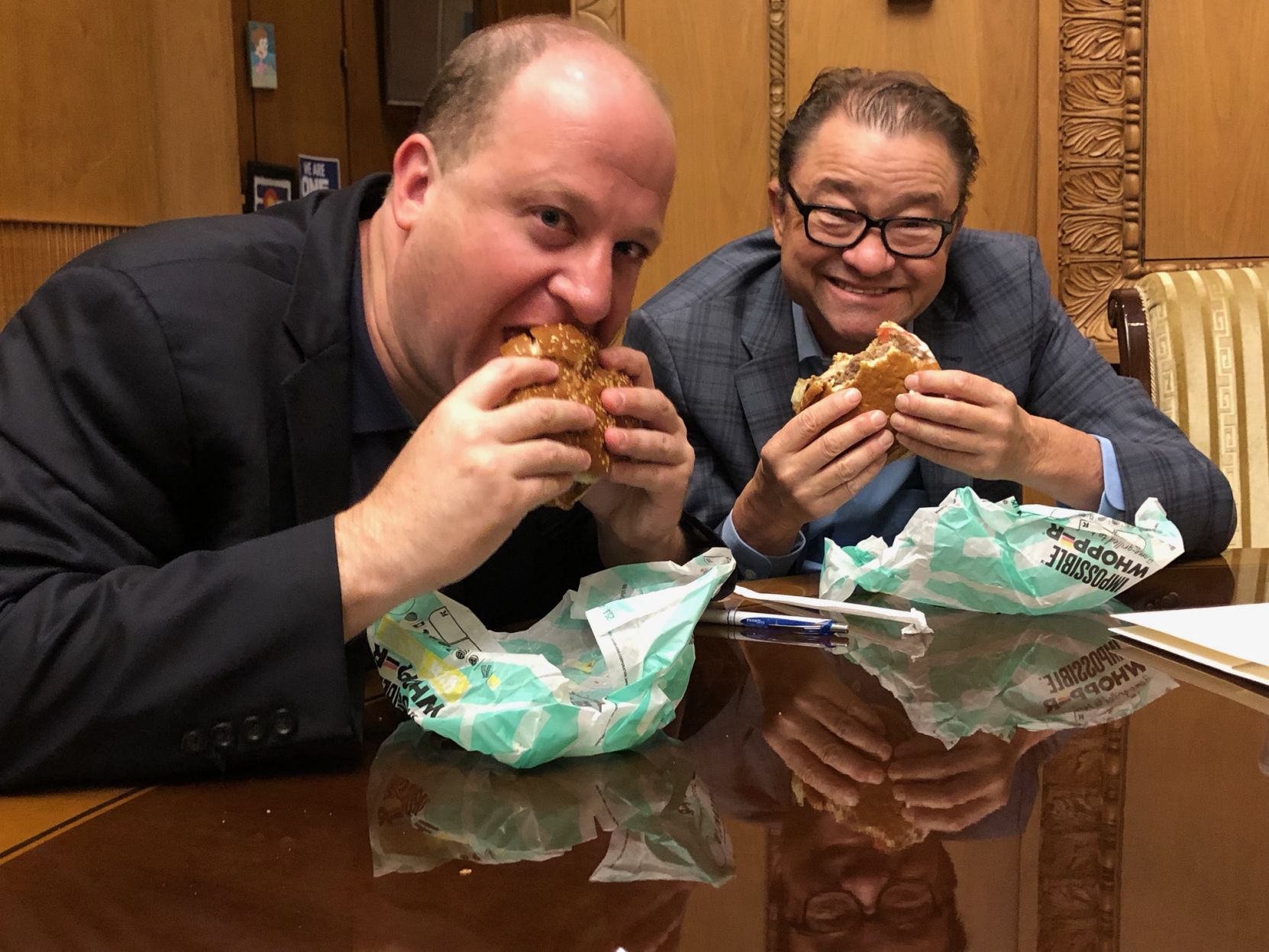
Last week, Colorado Gov. Jared Polis started a food fight with farmers and ranchers when the beef industry learned he made a pitch to the Department of Agriculture leadership that they should research plant-based proteins. In addition to delivering 250 Impossible Whoppers to the department staff. To say the beef industry was astonished is an understatement.
For the governor to suggest that Colorado agriculture begin focusing on growing vegetables for plant-based proteins is confusing to the farmers and ranchers who have worked the land in rural Colorado for decades. Not only because Colorado’s arid climate doesn’t allow for growing the extensive list of ingredients in plant-based burgers and alternative proteins, but also because Colorado’s beef industry contributes so significantly to the state’s economy.
What our governor should be aware of, is that livestock producers utilize grazing land that is too mountainous, dry or nutrient-poor to be farmed and would otherwise go unused. Livestock convert solar energy in plants that’s inaccessible to humans into high-quality protein and other products such as leather and pharmaceuticals.
Farmers and ranchers share the same motivation behind the governor’s call for innovation. Those who are still farming and ranching today understand all too well the risks of stagnation. The cutting-edge technology used in agriculture provides for our industry’s continued success and allows for the transition of the family business to the next generation.
The technology used to produce beef is the most efficient and sustainable in history. Compared to 1975, today’s beef farmers and ranchers produce the same amount of beef with 36% fewer cattle. This dramatic improvement in efficiency has been driven by improvements in beef cattle genetics, nutrition, biotechnologies, and husbandry practices that result in improved animal well-being. Despite these impressive numbers, cattle producers are still looking for ways to improve.
Don’t get us wrong, as food producers we believe in the consumer’s right to choose and that more food options are better than none. What concerns the beef industry about the governor’s support of meat-alternative companies is the false marketing surrounding sustainability and nutrition in order to promote their products. It is misleading and, in many cases, is unsubstantiated by peer-reviewed science and research.
U.S. beef has one of the lowest carbon footprints in the world, 10 to 50 times lower than some nations. According to the U.S. Environmental Protection Agency’s greenhouse gas emissions inventory, beef cattle only account for 2% of U.S. greenhouse gas emissions compared to 28% emissions from transportation. U.S. farmers and ranchers produce 18% of the world’s beef with only 8% of the world’s cattle.
We can assure you, Gov. Polis, Colorado’s beef industry will not go the way of the retail dinosaur, Sears.
Next time the Department of Agriculture staff is looking for a free lunch, we’d be more than glad to set up a grill in Broomfield and barbecue some cheeseburgers for the crew – the beef kind.
Bill Hammerich is the chief executive officer of the Colorado Livestock Association, a membership organization that represents cattle and sheep feeders, cow/calf producers, dairy farmers, swine operation, and agribusiness partners.

The backstory behind the school-funding TABOR ballot initiative | Paula Noonan
Paula Noonan
paula-noonan@coloradopolitics.com
Updated 9 hours ago
Last session, the General Assembly took in a report on K-12 public school funding. The legislature ordered the report because an idea circulated Colorado was among the bottom five states in dollars allocated per student even though it is one...

Colorado’s election audits are built on math, not politics | IN RESPONSE
Colorado Politics
colorado-politics@coloradopolitics.com
Updated 9 hours ago
By Amanda Gonzalez You don’t build a secure election system overnight. You build it over years — layer by layer — reinforcing it with stronger safeguards, better technology and more transparency. In Colorado, one of those safeguards is a little-known...

Senate Bill 22 critical to keeping energy costs affordable, power reliable | PODIUM
Colorado Politics
colorado-politics@coloradopolitics.com
Updated 9 hours ago
By Brian Wortinger I love Colorado’s outdoors. I’m an avid skier and hiker and my happiest days are spent deep in the mountains with no one around for miles. I want to protect that environment as much as anyone along...

Swipe-fee ban a giveaway to big boxes, mega-chains | IN RESPONSE
Colorado Politics
colorado-politics@coloradopolitics.com
Updated 1 day ago
By Jenifer Waller Four Colorado lawmakers recently published an op-ed in Colorado Politics calling for legislation to prohibit interchange fees on the sales tax portion of credit and debit card transactions (“Why Colorado should stop charging swipe fees on sales...

Leveling the playing field —why Colorado must fight fire with fire on redistricting | OPINION
Colorado Politics
colorado-politics@coloradopolitics.com
Updated 22 hours ago
By Curtis Hubbard So Dick Wadhams suddenly cares about mid-decade redistricting — hyperventilating about efforts to “hijack Colorado’s congressional map” and calling those of us involved with the effort “amazingly naive.” Where was his outrage last year when President Donald...
You get what you pay for in your state reps | Hal Bidlack
Hal Bidlack
hal-bidlack@coloradopolitics.com
Updated 2 days ago
My regular readers will know of my affection for the Out West Roundup, a Colorado Politics feature that lets us keep up to date with the goings on out here in the western U.S., and draws attention to stories that...
A warrant should mean something — expedite carrying them out | OPINION
Colorado Politics
colorado-politics@coloradopolitics.com
Updated 2 days ago
By Aaron Ping My name is Aaron Ping. I am a father from Washington state, and I am writing because my 16-year-old son, Avery, cannot. Avery died on Dec. 19, 2024. The drugs that killed him were ordered through Snapchat....

Lower Basin must adapt to Colorado River hydrology | OPINION
Colorado Politics
colorado-politics@coloradopolitics.com
Updated 2 days ago
By Nick Peters A February deadline for determining future operating guidelines for the West’s two largest reservoirs came and went with no agreement on the table and clear lines drawn in the sand. A seven-state resolution to how Lake Mead and Lake Powell will...

Keep kids safe without overregulating childcare | OPINION
Colorado Politics
colorado-politics@coloradopolitics.com
Updated 2 days ago
By Tamra Ryan As the Coors Economic Mobility Fellow for Common Sense Institute, I have written several reports in the past two years about the challenges related to affordability and availability of child care in our state. Though there are many factors affecting the dearth of...

Colorado’s GOP at its best — and worst | Dick Wadhams
Dick Wadhams
dick-wadhams@coloradopolitics.com
Updated 9 hours ago
By Dick Wadhams Colorado Republicans are fighting to be relevant in the face of gross mismanagement by Democrats who totally control state government. While the Colorado Republican Party is mired in controversy, several Republican elected officials and candidates represent the...
PREV
PREVIOUS

SLOAN | Colorado's pending 'public option' will run into health-care realities
Kelly Sloan You will perhaps have noticed that the liberals’ perpetual quest for government-provided health care has regained considerable steam over the last year or so, to the point where most of the Democratic presidential contenders are espousing some form of “Medicare-for-all” as a substitute for a workable health care plan. Other options floated about […]

BIDLACK | Colorado school kids are being priced off the playing field
Hal Bidlack If there is one thing my long-suffering editor really likes (Ed: uh oh…) it’s when I offer thoughts on a subject that lots and lots of other people have already written about (Ed: um, no!). And so today, I thought I’d write yet one more opinion piece on John Hickenlooper ending his run for the presidency, […]