

Colorado higher ed officials tout return on investment for post-secondary degree

Gov. Jared Polis and Colorado Department of Higher Education officials announced on Monday the release of a report they say shows the value of a college degree or post-secondary certificate.
But whether it will lift Colorado out of its near-bottom-of-the-nation (47th) standing in state support for public higher education is another matter.
In 2000, the state covered two-thirds of the cost of college tuition. But with several recessions between then and now, that support has steadily declined and is now at about one-third, with students bearing the rest of the cost.
At the University of Colorado-Boulder, for example, tuition and fees in 1998 amounted to $2,969 per year. In 2018-19, according to the Chronicle of Higher Education, it’s $12,522 per year, not including room and board or books.
It’s cheaper for a Colorado resident to go to public colleges in neighboring states like Kansas and New Mexico and pay out-of-state tuition rates, than to pay resident tuition rates at six of the state’s four-year public colleges and universities.
The new Department of Higher Education report notes that tuition and fees in Colorado, on average, are $11,140 for four-year institutions – 10% higher than the national average. Tuition for two-year colleges, at $4,510, is 20% above the national average.
Those high tuition rates have also led to more student debt.
According to a 2018 report by the Institute for College Access and Success, Colorado ranks 36th for the amount of average student debt per person, at $26,530, with 52% of students carrying that debt load. That’s an increase of about $700 over the previous three years, although the percentage of students carrying that much debt has declined over the same period by 4%.
The new report, titled “Maximizing Value,” highlights four key factors, according to Angie Paccione, executive director of the Department of Higher Education: price and cost, debt, choice, and value.
Paccione pointed out that few students pay the full sticker price of a college education, relying at least in part on federal, state or institutional financial aid. The report states that nearly 90% of students at two-year colleges, and 72% at four-year, receive a mix of financial aid that reduces the overall cost of attendance.
“Thanks to this support, students from low- and middle-income families often attend for very low cost or even tuition free,” the report states.
As to debt, the report claims that just 10% of undergraduates carry more than $40,000 in debt, although the report from the Institute for College Access and Success points out in its listing that no state shows an average debt load that high. The highest is Connecticut, with an average debt of $38,510.
The report shows that that middle-income families (defined as incomes of $48,000 to $75,000) still pay, on average, as much as $19,300 per year for tuition and fees and “other costs” at a four-year college, even with financial aid. The state report also claims a lower per-student debt load than the Institute reports, at $25,500 in 2018, but with about 69% of those earning a bachelor’s degree with that level of debt.
Overall, including graduate education, more than 700,000 Coloradans carry some level of student debt, totaling $26.4 billion, according to the state report.
“While these are troubling numbers, it is important to understand that not all debt is problematic,” the report states. And those who don’t graduate are more likely to default on student loans than those who earn a certificate or degree, the report points out.
Still, attending college is a good investment, the report claims.
The median wages for someone who completes a certificate program is $32,100 one year after graduation and as much as $50,100 in 10 years. For those with associate degrees, median wages are $39,200 one year after graduation and up to $54,600 after 10 years. For a bachelor’s degree holder, the median wage is estimated at $37,400 one year after graduation and up to $60,400 in 10 years. Those differences widen depending on the chosen field, particularly for those who go into STEM (science, technology, math and engineering) programs.
Paccione noted that there are other benefits to a degree, not just financial: higher life expectancy, better health outcomes, less likely to be involved in the criminal justice system or to rely on public assistance, and more likely to be engaged in civic life.
According to a 2018 report from CNBC, Colorado ranks fifth in the nation for degree attainment, with 70.7% of residents possessing a post-secondary education. However – in what is historically known as the Colorado paradox – the state does a better job of importing those with college degrees from other states than ensuring that Colorado kids get a college education.
That’s a concern for the state’s workforce, with one estimate claiming that 74% of jobs by 2020 will require some kind of post-secondary education, but that only 43% of high school graduates will enroll in a two-year or four-year program.
In addition, Paccione noted that 600,000 Coloradans have started but failed to complete their college education. Colorado is in its eighth year as part of a national alliance, known as Complete College America, that attempts to raise the state’s completion rate to 66%. The department’s five-year master plan from 2017 notes that currently, completion rates for Hispanic and Native American students is 29% and 39% for African-Americans.
Does all of this translate into better state support for higher education? Polis pointed out that the 2019-20 state budget increased general fund support for higher education by $121 million, and that most colleges and universities are holding tuition rates flat this fall (Metro State is the only one to increase tuition).
He did not divulge what he has in mind for the 2020-21 higher education budget and whether current levels of support will continue.
Clarification: Polis did not divulge what he has in mind for the 2020-21 higher education budget on Monday.



Susan Blanco signals views on role of appellate courts in first opinion as Colorado justice
Michael Karlik
michael.karlik@coloradopolitics.com
Updated 4 minutes ago
Justice Susan Blanco’s first solo opinion as a new member of the Colorado Supreme Court made clear her view of the guardrails that keep the state’s highest court tethered to the issues it is asked to decide. On Monday, the...

Hegseth features Fort Carson soldiers after returning from Middle East, gives warning on Iran war
Reuters
reuters@gazette.com
Updated 18 minutes ago
Defense Secretary Pete Hegseth said on Tuesday the next few days in the war against Iran would be decisive and warned Tehran that the conflict would intensify if it did not make a deal. Hegseth also highlighted his trip to the Middle...

Denver Council narrowly approves deal with Axon
Deborah Grigsby
deborah.smith@denvergazette.com
Updated 4 hours ago
After weeks of delay, the Denver City Council narrowly approved a one-year $150,000 contract with Axon for 50 automated license plate-reading cameras and the necessary system hardware, replacing the city’s former vendor, Flock. The 7-6 vote came during Tuesday’s regular...

Colorado leaders weigh next steps after Supreme Court rejects state ban on ‘conversion therapy’
Marissa Ventrelli
marissa.ventrelli@coloradopolitics.com
Updated 18 hours ago
Colorado leaders said they are weighing next steps after the U.S. Supreme Court on Tuesday rejected the state’s ban on “conversion therapy” for children, as critics and supporters cheered or lambasted the ruling. The court’s near-unanimous decision called the Colorado...
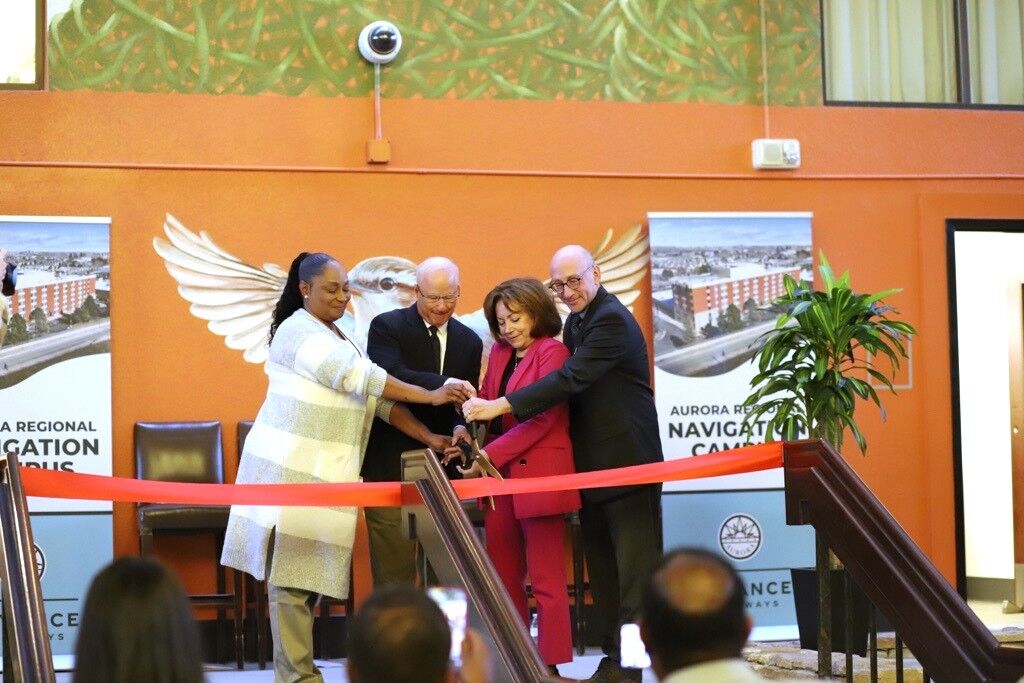
Aurora homeless shelter opened too early, CEO says, as mold and plumbing issues emerge
Kyla Pearce
kyla.pearce@gazette.com
Updated 4 hours ago
Aurora’s largest homeless services project launched “way too early,” its CEO told city leaders Tuesday, saying the rushed opening left residents living amid mold, plumbing failures, and other issues inside the former hotel. During Tuesday’s Housing, Neighborhood Services and Redevelopment...

Gov. Polis declares April ‘dig safely month’ to mark 40th anniversary of Colorado 811
Scott Weiser
scott.weiser@gazette.com
Updated 4 hours ago
Gov. Jared Polis declared April 2026 as “Dig Safely Month” in Colorado, an annual observance that this year highlights the 40th anniversary of Colorado 811, the state’s One-Call Notification System. “Before everyone starts their warm weather projects around the house,...
Federal judge dismisses U.S. government lawsuit against Colorado, Denver’s ‘sanctuary’ laws
Michael Karlik
michael.karlik@coloradopolitics.com
Updated 17 hours ago
A federal judge dismissed the U.S. government’s lawsuit against Colorado and Denver on Tuesday, which alleged that various local policies impermissibly infringed on federal immigration enforcement. U.S. District Court Judge Gordon P. Gallagher followed the lead of judges in Illinois...
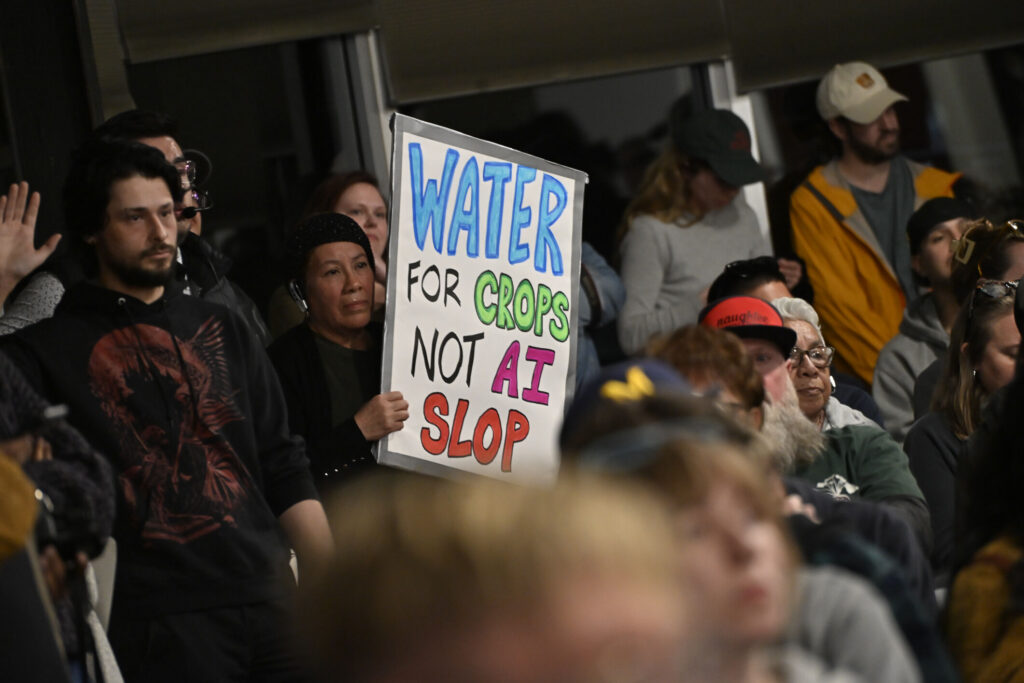
Denver proposes yearlong moratorium on new data centers
Deborah Grigsby
deborah.smith@denvergazette.com
Updated 20 hours ago
As Denver Water calls for a 20% reduction in water use during Stage 1 drought conditions, City Council members advanced a bill to rein in one of the largest water users — data centers — by proposing a yearlong moratorium...

Lakewood zoning canvasser accused of stealing opposition material
Sage Kelley
sage.kelley@denvergazette.com
Updated 4 hours ago
Controversies surrounding the Lakewood special election continue, with the latest including allegations of sign-stealing. The city’s special election regarding already approved zoning changes is occurring on April 7 and — along with more than a year of contention between opponents...

Federal judge finds DOJ adequately searched for, disclosed records related to Bidens
Michael Karlik
michael.karlik@coloradopolitics.com
Updated 21 hours ago
A federal judge determined on Friday that the U.S. Department of Justice adequately searched for and disclosed records to a Colorado attorney in response to his request for documents related to former President Joe Biden’s son and brother. In November...
PREV
PREVIOUS

Donor to pay overtime costs linked to Pence's Colorado visit
ASPEN – An anonymous donor has pledged to pay overtime costs of Colorado public safety personnel connected to Vice President Mike Pence’s visit to Aspen earlier this month. Pitkin County Sheriff Joe DiSalvo tells The Aspen Times that the county Republican Party had found a person who agreed to pay the overtime costs of law enforcement, public […]

Denver Mayor Michael Hancock to business leaders: It's time to raise workers' wages
Denver Mayor Michael Hancock told a group of business leaders Tuesday that the city needs to have “a tough conversation” about increasing wages for workers. “A good day’s work, no matter the job, should be compensated with a livable wage,” Hancock told about 600 people gathered for the Denver Metro Chamber of Commerce’s annual State […]