

Supreme Court: Constitutional ban on high fines applies to states
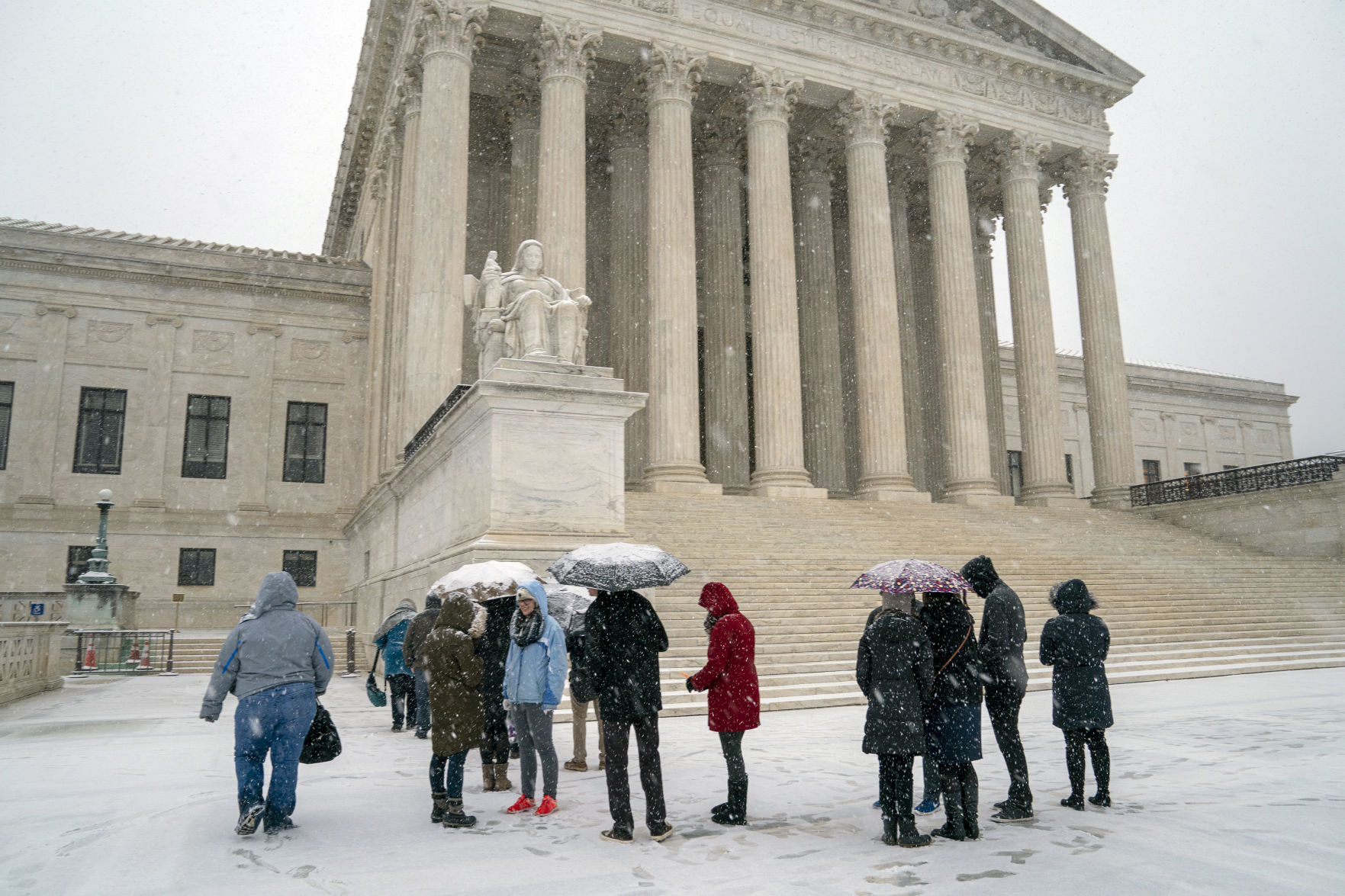
WASHINGTON – The U.S. Supreme Court ruled unanimously Wednesday that the Constitution’s ban on excessive fines applies to the states, an outcome that could help efforts to rein in police seizure of property from criminal suspects.
Justice Ruth Bader Ginsburg wrote the court’s opinion in favor of Tyson Timbs, of Marion, Indiana. Police seized Timbs’ $40,000 Land Rover when they arrested him for selling about $400 worth of heroin.
Reading a summary of her opinion in the courtroom, Ginsburg noted that governments employ fines “out of accord with the penal goals of retribution and deterrence” because fines are a source of revenue.
The 85-year-old justice missed arguments last month following lung cancer surgery, but returned to the bench on Tuesday.
Timbs pleaded guilty, but faced no prison time. The biggest loss was the Land Rover he bought with some of the life insurance money he received after his father died.
Timbs still has to win one more round in court before he gets his vehicle back, but that seems to be a formality.
A judge ruled that taking the car was disproportionate to the severity of the crime, which carries a maximum fine of $10,000. But Indiana’s top court said the justices had never ruled that the Eighth Amendment’s ban on excessive fines – like much of the rest of the Bill of Rights – applies to states as well as the federal government.
The case drew interest from liberal groups concerned about police abuses and conservative organizations opposed to excessive regulation. Timbs was represented by the libertarian public interest law firm Institute for Justice.
“The decision is an important first step for curtailing the potential for abuse that we see in civil forfeiture nationwide,” said Sam Gedge, a lawyer with the Institute for Justice.
Law enforcement authorities have dramatically increased their use of civil forfeiture in recent decades. When law enforcement seizes the property of people accused of crimes, the proceeds from its sale often go directly to the agency that took it, the law firm said in written arguments in support of Timbs.
As it did in earlier cases applying parts of the Bill of Rights to the states, the court based its decision on the part of the 14th Amendment that says “no state shall deprive any person of life, liberty or property without due process of law.”
That same provision, the due process clause, also was used in cases that established a woman’s right to an abortion and knocked down state laws against interracial marriage and gay sex.
The 14th Amendment was passed after the Civil War to ensure the rights of newly freed slaves.
Justice Clarence Thomas wrote separately to say he would have used a different part of the 14th amendment to achieve the same result.
Thomas has long been a critic of the court’s application of the due process clause, which also is found in the Fifth Amendment. He wrote that cases that employ the provision “are some of the court’s most notoriously incorrect decisions,” including the abortion rights landmark case Roe v. Wade and the 1857 Dred Scott case that held that African-Americans were not citizens.
Thomas said he would have relied on the Constitution’s language forbidding states from making or enforcing “any law which shall abridge the privileges or immunities of citizens of the United States.”
Justice Neil Gorsuch, a Coloradan who was President Trump’s first nominee to the high court, also expressed his preference for the privileges or immunities clause.
The ruling is not likely to change much in Colorado, said Christopher Jackson, an attorney with Sherman & Howard who also has worked as an assistant attorney general in Colorado.
According to the Washington Post, courts is just a handful of states — including Indiana — believed states did not have to follow the amendment. Colorado is already behaving as if the Eighth Amendment applies, Jackson said.
Jackson said the ruling is the latest in a series of decisions by the nation’s highest court to apply amendments under the Bill of Rights to the states. With the latest decision, only a handful of amendments are still considered federal only, he explained.
The court’s ruling that the Eighth Amendment prohibition against excessive fines applies to the states doesn’t say what kind of civil forfeiture law a state must have. But it’s important for the legislature and courts to realize these issues will now come up in individual cases, Jackson said.
The case is Timbs v. Indiana, 17-1091.
Editor’s note: This article was updated at 12:48 p.m. Feb. 20 to reflect that Jackson was an assistant attorney general.

Senate, House leaders propose bill to cut outdated Colorado regulations and expand agency oversight
Marissa Ventrelli
marissa.ventrelli@coloradopolitics.com
Updated 5 minutes ago
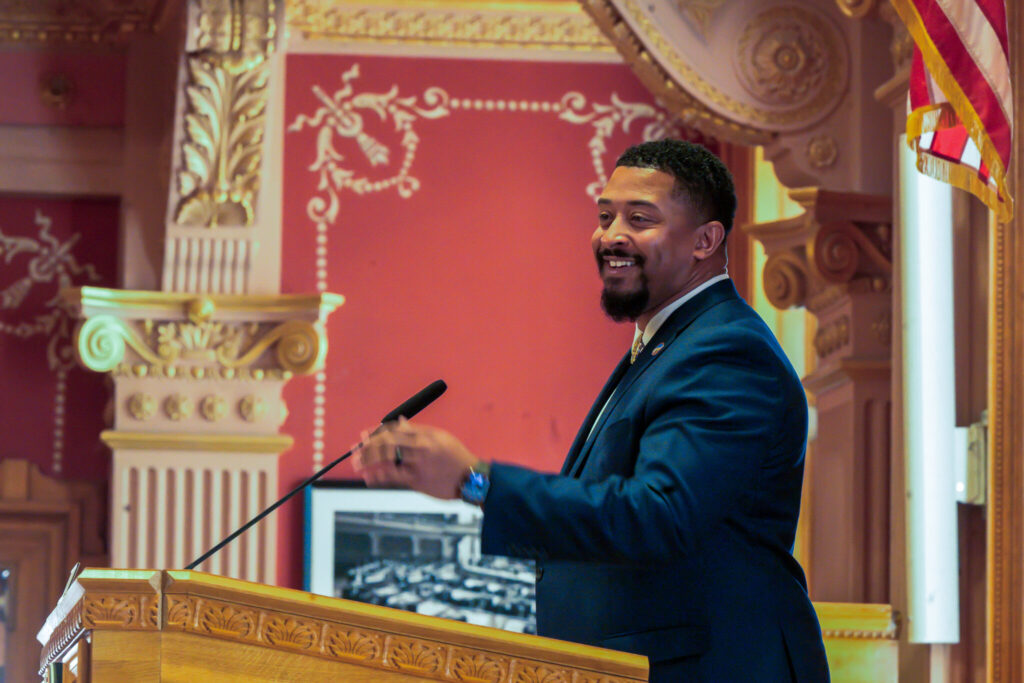
A bipartisan group of Colorado’s top legislative leaders is pushing a bill that would require periodic reviews of state regulations and expand lawmakers’ ability to scrutinize agency programs during oversight hearings. Senate Bill 137, sponsored by Senate President James Coleman,...
House Republicans split over SAVE America Act pressure campaign
David Sivak, Washington Examiner
david.sivak.washington.examiner@gazetteedit.wpenginepowered.com
Updated 3 hours ago
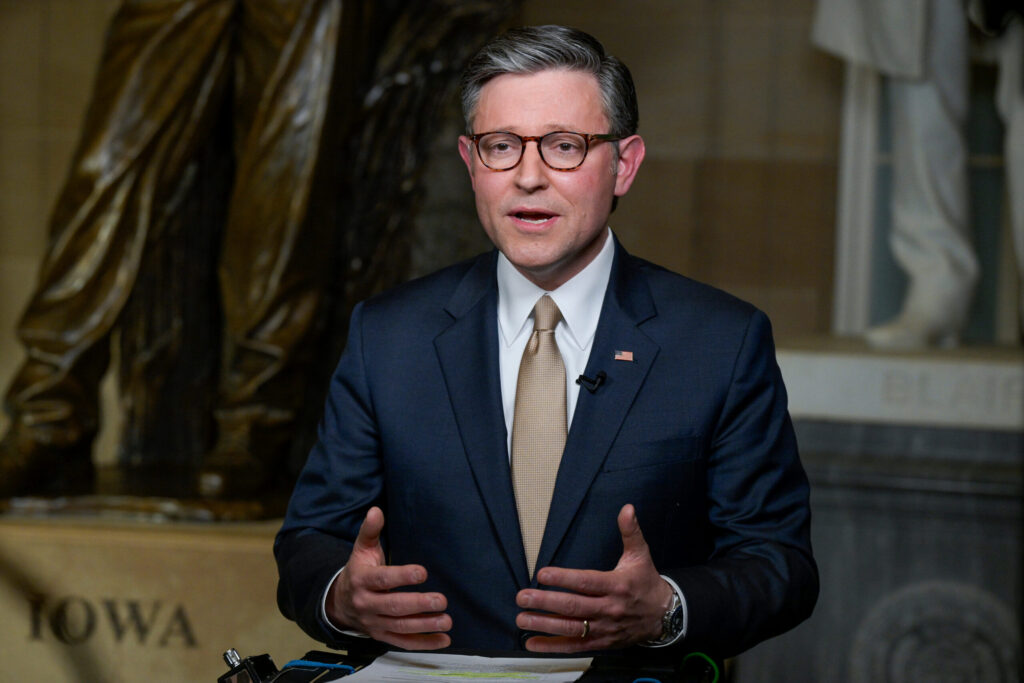
House Republicans are torn over how difficult to make life for the Senate as a band of rebels pressures Majority Leader John Thune (R-SD) to pass a national voter ID bill. Speaker Mike Johnson (R-LA) has cautioned House conservatives that...

Republican Jeff Crank, Democrat Jessica Killin qualify by petition for Colorado’s 5th CD primary
Ernest Luning
ernest.luning@coloradopolitics.com
Updated 3 hours ago
Republican U.S. Rep. Jeff Crank and Jessica Killin, one of the Democrats challenging the first-term incumbent, have both qualified for the primary ballot in Colorado’s 5th Congressional District after turning in a sufficient number of petition signatures, state election officials...

High winds force closures of I-25 and I-70, overturned semi-trucks, flight delays, power outages
Dan Boniface
dan.boniface@denvergazette.com
Updated 33 minutes ago
High winds, warm temperatures and dry conditions have meteorologists sounding the alarm across much of Colorado on Thursday. Here’s what you need to know. Red Flag Warning issued The National Weather Service in Boulder has issued a Red Flag Warning...

This winter was Colorado’s warmest on record
Matt Kyle
matt.kyle@denvergazette.com
Updated 2 hours ago
Colorado just had its warmest winter on record, while the Denver metro area had its second-warmest, according to meteorologists and National Weather Service data. Data show the average temperature between December and February was 33.6 degrees, nearly 2 degrees warmer...
Colorado auditor finds serious issues with labor agency’s unemployment insurance accounting
Marianne Goodland
marianne.goodland@coloradopolitics.com
Updated 3 hours ago
Colorado’s state auditors found serious issues with the accounting practices of the unemployment insurance division of the Department of Labor and Employment, concluding the agency underestimated and overestimated figures to the tune of billions of dollars. The auditors labeled the...
Colorado’s newest federal judge speaks about techniques for advancing cases
Michael Karlik
michael.karlik@coloradopolitics.com
Updated 19 hours ago
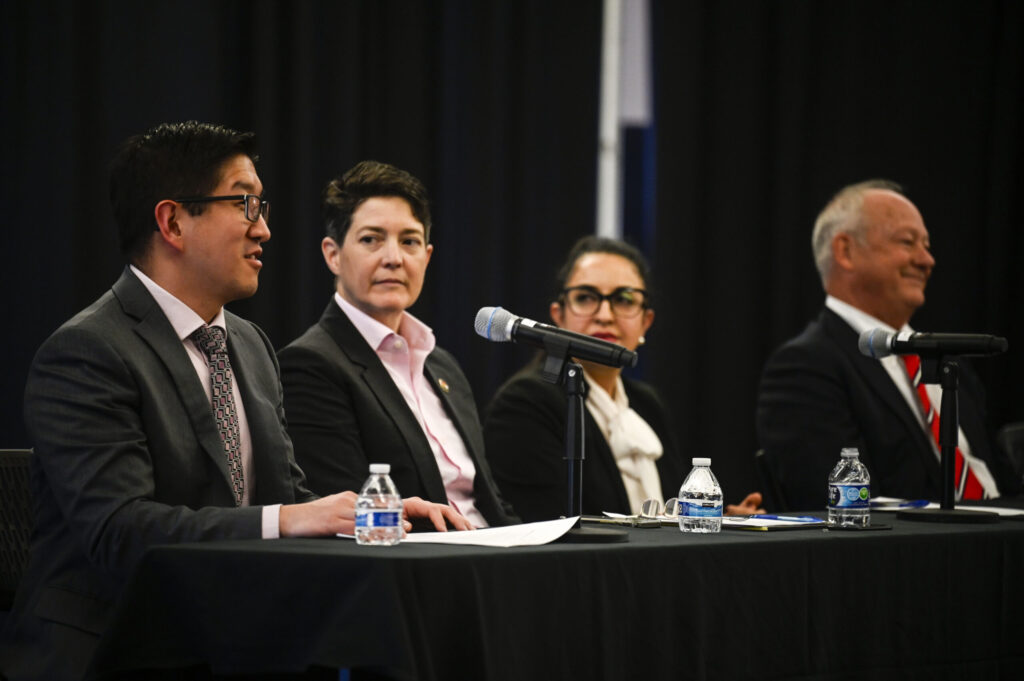
U.S. Magistrate Judge Cyrus Y. Chung described on Wednesday the various tactics he employs to resolve court cases, summing up his role with a laxative-based metaphor. “Someone told a group of us federal magistrate judges that magistrate judges are the...

Three cargo ships damaged by ‘projectiles’ in Strait of Hormuz
Brady Knox, Washington Examiner
brady.knox.washington.examiner@gazetteedit.wpenginepowered.com
Updated 23 hours ago
Three cargo ships were damaged by unspecified “projectiles” while navigating the Strait of Hormuz, jeopardizing President Donald Trump’s goal of preserving the shipping lane’s safety. The strait was de facto closed the morning hostilities began on Feb. 28, with announcements...

Trump calls on Thune to be a ‘leader’ and get the votes for the SAVE America Act
NAOMI LIM Washington Examiner
naomi-lim-washington-examiner@coloradopolitics.com
Updated 23 hours ago
President Donald Trump increased pressure on Senate Majority Leader John Thune (R-SD) to pass the SAVE America Act, imploring him to be a “leader” after he expressed concerns that there is not enough support for the measure in his chamber....
The ‘talking filibuster,’ explained
Molly Parks, Washington Examiner
molly.parks.washington.examiner@gazetteedit.wpenginepowered.com
Updated 23 hours ago
Senate Republicans have for weeks been debating the use of the “talking filibuster” to guarantee the passage of the SAVE America Act in the upper chamber, after President Donald Trump called the legislation his “No. 1” priority. The bill, which...
PREV
PREVIOUS

Denver airport renovation project faces possible delay
A new report says the ongoing renovation project at Denver International Airport could be delayed up to 10 months after tests show weaker-than-expected concrete in the main floor of the airport’s terminal. The Denver Post reports that airport spokeswoman Stacey Stegman says the extent of the delay – and the severity of the problems – […]

COLORADO ROUNDUP | Ballots for Aspen election sent to dozens of underage voters
ASPEN Ballots for city election sent to dozens of underage voters Dozens of teenagers too young to vote were sent ballots by mistake for a municipal election in March. The Pitkin County Clerk and Recorder’s Office sent a list of registered voters to Aspen officials, which they used to mail out ballots recently. Officials say […]