

Brown urges state to consider reviving Narrows water project
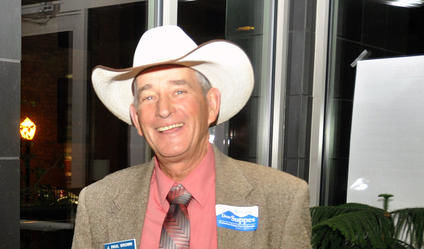
The state water plan is just a week away from being finalized, but last-minute suggestions are still coming in, including a letter from the interim Water Resources Review Committee. One of those is from state Rep. J. Paul Brown, R-Ignacio, suggesting a storage solution for the South Platte River that could provide about a half-million acre-feet of water, at least in wet years.
His proposal is to resuscitate the Narrows project, a dam that was planned along the South Platte in Morgan County.
“This should be the No. 1 priority in the state water plan,” Brown recently told The Colorado Statesman.
The South Platte is the only river that doesn’t have a storage project on its main stream, Brown said. “It’s important to put storage right on the river. That way, we can store every gallon of water that we aren’t legally obligated” to send out of state. In the last six years, more than 4 million acre-feet of water has gone up the South Platte to Nebraska, over and above the amount required by law.
“We need to dust off those plans and do this first,” Brown said.
Brown believes the benefit of the Narrows reservoir is that it could help refill the Denver aquifer and free up water for Aurora, Denver and other metro communities.
The reservoir could resolve flooding problems in LaSalle and Sterling that have led to flooded fields and basements. Most importantly, he maintained, it would offset the demand for Western Slope water. “We just don’t have water to send over,” Brown said.
Most experts acknowledge that the Colorado River, one of the main sources for diverting water over the Continental Divide to the east, is already over-appropriated — that is, it’s required to send more water to the Eastern Slope and to downstream states than it generates.
“We need to figure out another source of water” for the Front Range, Brown said. “That’s the South Platte.”
Finally, Brown said, the Narrows reservoir would satisfy a demand for urban water that would protect agriculture along the South Platte and diminish the need for “buy and dry,” the practice of buying agricultural land for its water rights.
The Narrows project came within a veto-pen stroke of being built in the 1970s. It was part of a larger system of 300 water projects, devised by the U.S. Bureau of Reclamation in the late 1920s. Congress authorized the Narrows, and hundreds of other water projects in the Missouri River Basin, in 1944.
According to a Bureau of Reclamation history of the project, Congress first authorized the Narrows in the late 1940s, although a precise location for the project had not yet been determined. The Bureau liked the area for a reservoir largely because it was less expensive and would provide flood control, a need that continues to this day.
The Narrows started as a station on the Union Pacific Railroad, about eight miles northeast of Fort Morgan. The Bureau began looking at a site in that area, but local opposition from farmers and ranchers forced them to look at other sites. Opposition also came from upstream users closer to Sterling and Julesburg who feared they would lose some of their water.
The Narrows project did have the support of the Colorado Water Conservation Board and other state and local officials. It also got some help from Mother Nature: the 1965 flood that devastated Denver and everything else along the South Platte. According to the Bureau history, the flood reversed a lot of the opposition to the Narrows.
In 1966, after feasibility studies were re-done, the project’s cost was estimated at $61.8 million, and it would provide irrigation to 166,000 acres of land, along with flood control, recreation, and fish and wildlife enhancement. After hammering out various other objections, and with the full support of the governor, senators and Republican Colorado Rep. Wayne Aspinall, who had been its strongest supporter in Congress, a second bill authorizing its construction was signed in 1970.
Aspinall predicted it would be at least another decade before the project was built. A final environmental statement was completed in 1976, which estimated the reservoir would hold 636,000 acre-feet of water. (An acre foot of water is the amount of water it takes to cover one acre of land, about 325,000 gallons of water.)
The Narrows still had opposition from local landowners; the final site chosen would wipe out 95 farms, 28 businesses, two churches, a school and “some of the most productive farmland in the state.” In 1976, landowners banded together and sued the Bureau to prevent its construction. The problem wasn’t helped by what locals called the callous attitude of Bureau employees in their efforts to relocate residents out of the Narrows site.
Despite two Congressional authorizations, a third wasn’t in the cards. Within a month of taking office, President Jimmy Carter started cutting the federal budget, and the Narrows was put on hold.
Another round of studies, ordered by Carter, showed the project still had possibilities. But in 1983, the U.S. Fish and Wildlife Service dealt the final blow, stating the project would harm a 53-mile stretch of the river in central Nebraska and could dry up wetlands downstream. The Environmental Protection Agency also warned of contaminates flowing into the reservoir from sewage, livestock waste, pesticides and insecticides from nearby farmland, and said the reservoir would become “a stagnant cesspool unfit for recreation or use as a potable water supply.”
However, according to the Bureau history, the project was never de-authorized. The Bureau still owns some of the land, leasing it to farmers and ranchers in the area.
Despite Brown’s enthusiasm for the project, it hasn’t found its way into the statewide water plan. The joint implementation plan devised by the South Platte and Metro Denver Basin Roundtables, groups that have provided input into the state water plan, does call for more storage along the South Platte, including a location that is close to one of the Narrows sites. The plan also acknowledges that storage along this part of the South Platte would be based on intermittent dry-and-wet periods.
The Narrows project has the support of local officials including state Sen. Jerry Sonnenberg, R-Sterling, and former Commissioner of Agriculture Don Ament.
Ament discussed the Narrows project with the Water Review Committee last month. He has a long history with the project — he used to travel to Washington, D.C., with then-Gov. Dick Lamm to lobby for it in the 1970s.
But he’s not optimistic that an “on-channel” — on the river — reservoir like the Narrows could be built, in part due to permitting problems. But storage on the South Platte, he said, is the answer.

Federal judge considers second round of sanctions against ex-Colorado judicial discipline director
Michael Karlik
michael.karlik@coloradopolitics.com
Updated 1 hour ago
A federal judge ordered Colorado’s former judicial discipline director on Tuesday to explain why she should not sanction him a second time for filing documents for improper purposes, such as harassment or delay. U.S. District Court Senior Judge Kathryn H....
Colorado Democrats want large corporations to pay fee if employees are on Medicaid
Marianne Goodland
marianne.goodland@coloradopolitics.com
Updated 2 hours ago
Democrats are seeking to require Colorado’s largest corporations to pay thousands of dollars for each employee that relies on the Medicaid program for health insurance. They don’t have to pay the fee if they can demonstrate offering an “affordable health...

Colorado justices agree to review insurance question that has divided federal judges
Michael Karlik
michael.karlik@coloradopolitics.com
Updated 6 hours ago
The Colorado Supreme Court granted a federal judge’s request on Friday to address an issue that has produced conflicting answers in policyholders’ lawsuits against insurance companies over unpaid benefits. “Parties (and judges) regularly spend undue time and money fighting in...
Farmworker overtime bill advances after lengthy debate in Colorado Senate
Marianne Goodland
marianne.goodland@coloradopolitics.com
Updated 23 hours ago
The Colorado Senate on Tuesday narrowly advanced a bill to raise the overtime threshold for agricultural workers, defeating more than a dozen amendments from its leading opponent aimed at rewriting the measure. As introduced, Senate Bill 121 would raise the threshold for...

Colorado Agriculture Day: A feast for the ears, eyes and stomachs
Marianne Goodland
marianne.goodland@coloradopolitics.com
Updated 22 hours ago
Gov. Jared Polis, legislators and friends of agriculture gathered at the state Capitol on Tuesday to celebrate Colorado Agriculture Day. The annual recognition of the contributions of Colorado farmers, ranchers and agribusiness drew hundreds to the Capitol’s west foyer, where...

Pueblo man held in Afghanistan for more than a year released, Taliban says
The Associated Press
the-associated-press@coloradopolitics.com
Updated 21 hours ago
KABUL, Afghanistan — Afghanistan’s Taliban authorities on Tuesday released American academic Dennis Coyle after holding him for over a year, with the foreign ministry saying the release came on the occasion of Eid al-Fitr, the Muslim holiday that marks the end of the...
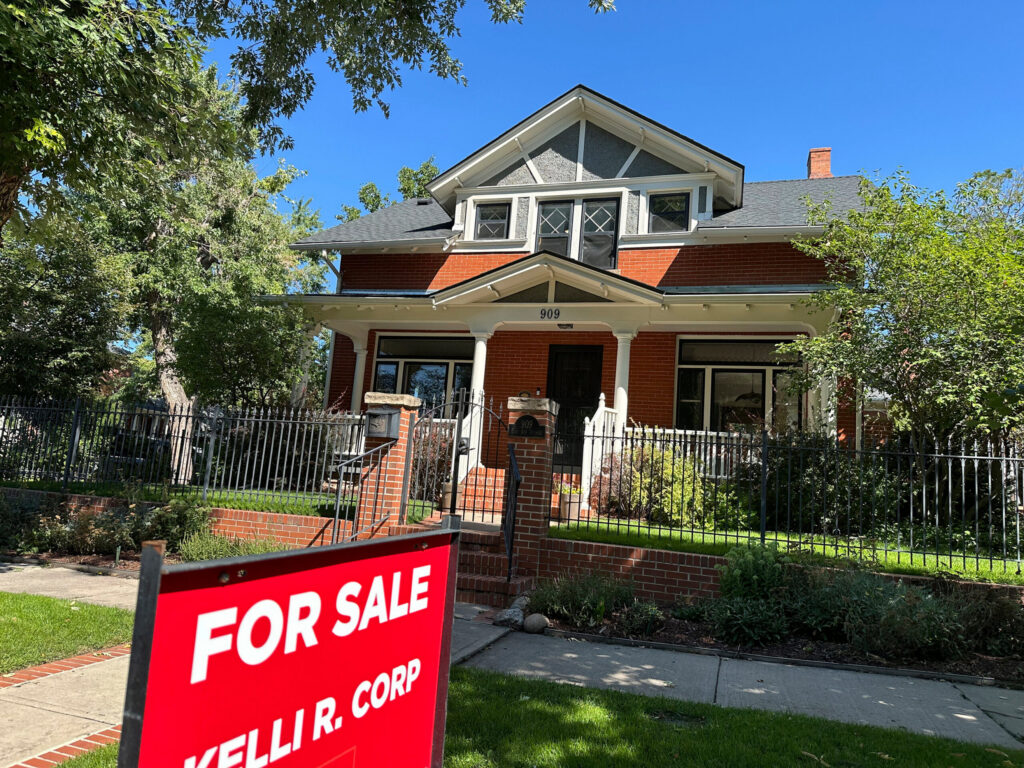
Mortgage rates rise in defiance of Trump’s $200 billion push, hurting GOP on affordability
Zach Halaschak, Washington Examiner
zach.halaschak.washington.examiner@gazetteedit.wpenginepowered.com
Updated 1 day ago
After months of a gradual decline, mortgage rates are trending back up because of the war with Iran, defying President Donald Trump’s efforts to lower them and undercutting Republicans on the key issue of affordability. As of Monday, the average rate on a 30-year...

Guilt by association: Former Jeffco teacher claims district wrongfully terminated her
Sage Kelley
sage.kelley@denvergazette.com
Updated 3 hours ago
Courtney Capek claims her career was completely altered by the actions of another. The Lakewood native returned to the school she graduated from, Green Mountain High School, in 2023 to begin her career teaching and establishing a new era for...
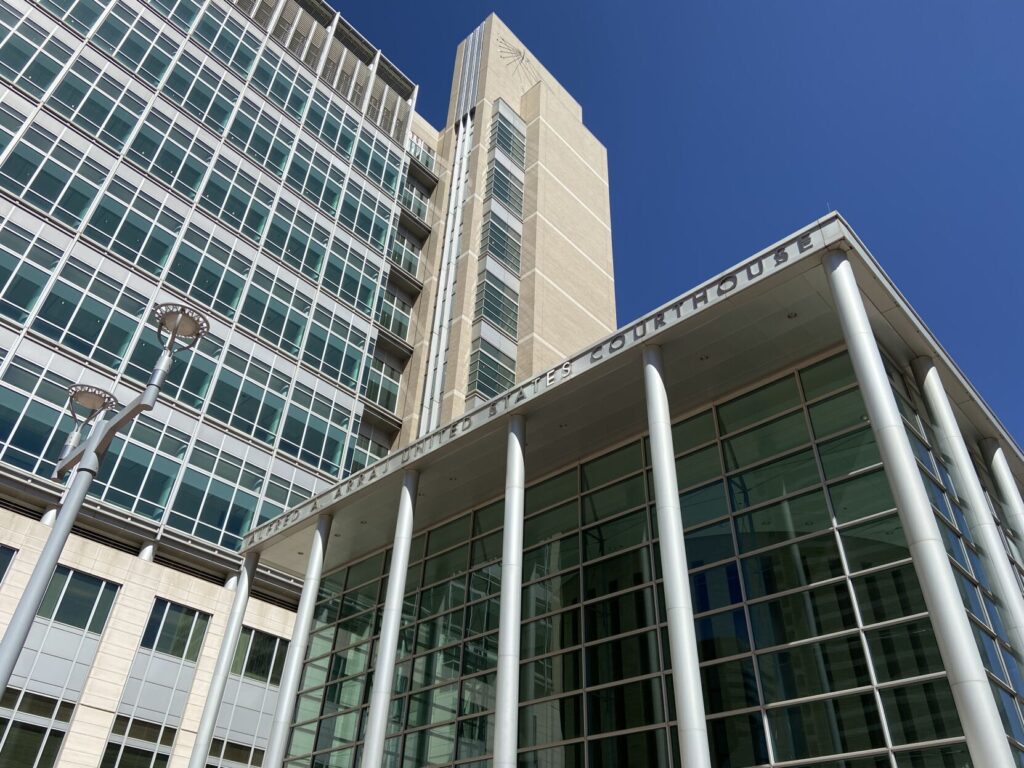
Federal judge dismisses background screeners’ challenge to Colorado law
Michael Karlik
michael.karlik@coloradopolitics.com
Updated 1 day ago
A federal judge dismissed a challenge on Friday to a portion of Colorado law that prohibits certain information from being included in consumer reports, in what seemed to be a conflict with federal law. Congress originally enacted the Fair Credit...
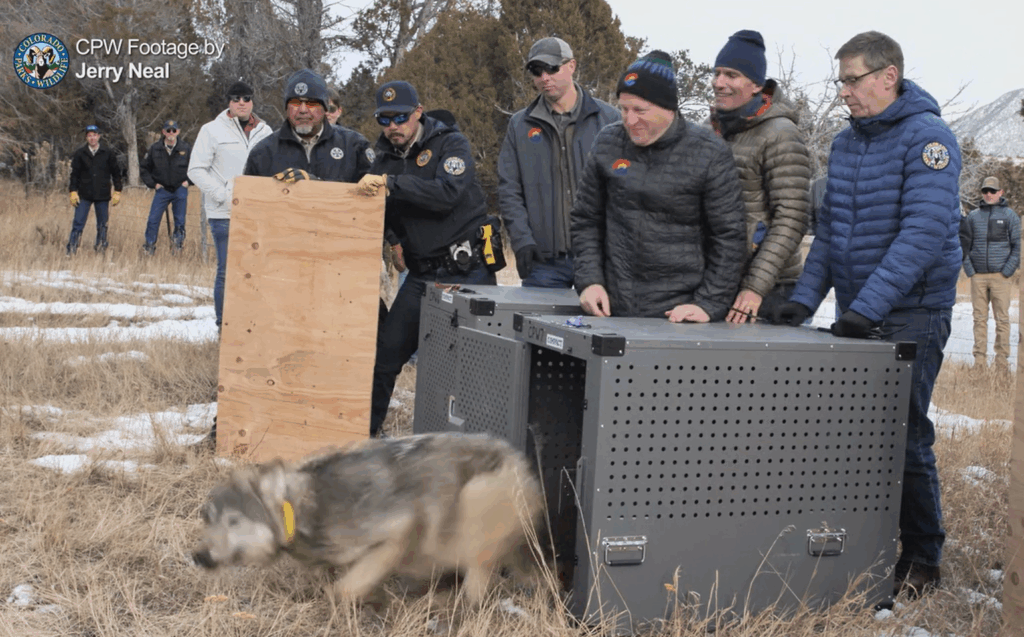
Wildlife agency asks for $450,000 to bring more wolves to Colorado
Marianne Goodland
marianne.goodland@coloradopolitics.com
Updated 19 hours ago
The panel of legislators charged with crafting the budget on Monday rejected a proposal that proponents said would increase transparency around how much Colorado Parks and Wildlife spends to bring additional wolves into the state. At the same time, the...