

Rubio shines in CNBC’s ’cage match’ Republican presidential debate

BOULDER — Hardly anyone inside the Coors Event Center seemed impressed by the CNBC Republican presidential primary debate on Wednesday night. Those in attendance seemed unanimous seeing the moderators as oddly angry and also uninterested in the “Your Money, Your Vote” middle-class, pocketbook theme that was supposed to guide discussion.
“There was nothing said here tonight that will sway voters looking for information about the economy. Nothing,” said Michael Steele, former head of the Republican National Committee, in the post-debate “spin” room. “I’m still waiting for a discussion on the economy, aren’t you? I think the candidates tried to move the conversation that way and to talk about their plans, but the space was all occupied by noise.”
Colorado Republican Party Chairman Steve House felt the same way.
“Was this even about the economy?” he asked. “What does asking Trump what he thinks about employees carrying guns to work at his businesses have to do with the economy? What do questions about Trump’s ‘moral authenticity’ have to do with the economy?”
House thought the questions elicited responses that were too abstract. He said it was the job of the moderators — John Harwood, Becky Quick and Carl Quintanilla — to drill down and get the candidates talking to the public and with each other about specifics.
“They’ll all say that you need to cut taxes and spending and get government out of the way. But what else? How, in particular, will they support entrepreneurial thinking? They all have ideas on that.
“The moderators didn’t seem to be listening,” said House. “I think people here were hugely disappointed in the debate. We’re at a university. Students want to know what kind of job market they’re going to enter, how they’ll pay off their loans. They didn’t hear about that.”
Before even the first half of the two-plus-hour main event concluded, consensus in one corner of the Twittersphere was coalescing around the phrase “dumpster fire” — evoking a shabby, toxic breakdown of the normal order. Some blamed the candidates and the Republican Party organizers, but most blamed CNBC.
“Wow #CNBC really is a dumpster fire tonight. I think we all know your agenda,” wrote Brad Hendren
“[Moderator] John Harwood was a complete jackass but blame for the #CNBCGOPDebate dumpster fire is at feet of @Reince and #RNC #GOPDebate,” wrote Stefano Von Nostrand, referring to national GOP chairmen Reince Priebus.
That the made-for-TV event seemed to suffer from mission confusion surely came as little surprise to Coloradans. For weeks, students on the CU-Boulder campus have complained that organizers decided to allow a mere 150 students to attend the event and had similarly shut out faculty, that they were prioritizing theater and ratings over public engagement.
At the beginning of the month, RNC spokesman Sean Spicer told The Boulder Daily Camera that the event was being designed primarily with broadcast viewers in mind and that a live audience would only distract.
“The political process has turned into more of an entertainment and media spectacle than anything else,” said CU senior Eliot Kersgaard.
The moderators talked over the candidates and drilled them in rapid-fire bursts meant to move them beyond talking points. But instead the candidates pushed back and ran down the news media in general. There were few instances where candidates compared and contrasted policies. At one point, Texas Sen. Ted Cruz accused the moderators of trying to provoke a “cage match” on the stage.
Sen. Rubio and Sallie Mae
There was something about the scrum, however, that played to Florida Sen. Marco Rubio’s strengths.
He shined when moderator Becky Quick pointed out that his personal finances were a mess, that he had mixed campaign money and personal money, that he faced foreclosure on a second home.
“Do you have the maturity and the wisdom to run a $17 trillion economy?” she asked.
“I’ll tell you the truth,” he said. “I didn’t inherit any money. My dad was a bartender and my mom was a maid. They worked hard to provide us a chance at a better life. They didn’t save enough money to send us to school. I had to work my way through school. I had to borrow money to go to school — tried early in my marriage to explain to my wife why someone named [student loan corporation] Sallie Mae was taking a thousand dollars out of our bank account every month. I know what it’s like to owe money… But I’ve been able to save for our four children to go to college so they don’t ever have the loans that I did.
“But I’m not worried about my finances,” he said. “I’m worried about the finances of everyday Americans who are struggling in an economy that is not producing good-paying jobs while everything is costing more.”
In a debate that featured mainly fleeting talk of a simplified tax code, taking on the federal reserve bank, opposing or supporting the Export-Import Bank and little specific, much less personal, about how to boost incomes and improve the lives of the working class, the “Sallie Mae” answer won the day.
“Rubio had to deliver to keep donors interested, and he really did,” said Alfonso Aguilar, executive director of American Principles in Action’s Latino Partnership and the former Chief of the U.S. Office of Citizenship in the George W. Bush administration. “Rubio was the only one that connected on the economy with everyday people. Everyone has heard of Sallie Mae. Everyone has had trouble with personal finances.
Paulo Sibaja, a candidate for the Arapahoe County Commission, said he thought Rubio was the clear debate winner.
“Even as a U.S. senator, he manages to represent the average American. He has had to deal with hardships, his parents are immigrants, his family isn’t rich — and he manages to entwine his personal story with his policy positions very effectively.
“Just to see him on that stage — he messes with Democratic narratives about our party. He’s Latino. He is fresh.”
Colorado and the ‘art of environmentalism’
The debate may be remembered most for all the topics left unaddressed or barely mentioned, especially in the town where it was held.
The University of Colorado Boulder is home to a slew of environmental research institutes, and Boulder is home to the nation’s top climate-related scientific labs, including the National Center for Atmospheric Research and the National Oceanic and Atmospheric Administration. To say that the “question of climate change” is settled in Boulder is a vast understatement.
In the pre-debate debate featuring low-polling candidates Louisiana Gov. Bobby Jindal, former Pennsylvania Sen. Rick Santorum, former New York Gov. George Pataki, and South Carolina Sen. Lindsey Graham, two of the men broke with the unofficial GOP line by recognizing both the science of climate change and the need to do something on the national level to limit carbon emissions.
Graham said he wants to prepare the economy to thrive as the planet warms.
“Climate change is real and I’m trying to solve these problems,” he said. He suggested that Republicans are making a mistake by leaving the issue for Democrats alone to take up.
“I mean look who we’re running against… The No. 2 guy on the Democratic side went to the Soviet Union on his honeymoon, and I don’t think he ever came back.”
Pataki agreed.
“Too often, Republicans reject science that is widely accepted as valid. Vaccines work. Carbon dioxide warms the planet,” he said.
“Republicans have to present their own kinds of solutions. The government’s role is to incentivize innovation… through [research and development] credits. Let the private sector do it — and we can export those technologies.”
Colorado Democratic Party Chairman Rick Palacio welcomed the discussion. He said it was, unfortunately, long overdue.
“Look, two of the three candidates who accept the reality of climate change tonight were at the kids’ table. I think that says a lot about where the party is at.”
“If these candidates do believe in climate science,” he said, “then they have to show it and demonstrate that they can embrace the art of environmentalism the way we practice it in Colorado.”
State Rep. Crisanta Duran, D-Denver, said the time for words was past.
“If these candidates embrace the science they have to show it. In Colorado, Republicans are lined up against the Environmental Protection Agency’s Clean Power Plan. They have to change their rhetoric to match the reality of the science.”
“The party has to stop demonizing lawmakers who are willing to work across the aisle,” said Duran. “I think the views of the majority of Republican voters are not the views Republican leaders are espousing.”
Outside in Boulder
The Republican Party was attracted to Boulder because Colorado is a key swing state and Boulder is home the state’s flagship public university campus. But the campus in Boulder is a long way from the Reagan Library in Orange County, California, where the last debate was held.
Small protests have cropped up in the city for weeks. On Wednesday, students still frustrated at being shut out of the event chalked “No GOP!” signs on campus walkways.
Non-student activists commiserated. They marched across campus by the hundreds. They griped about being restricted to a “free speech zone” fenced off away from the action and adorned with police tape. They carried aloft a large inflated Republican Party Elephant stamped with the word “racist.” They said the economic policy positions taken by the candidates would be skewed by ideology and money.
A protester with a group called Hedge Clippers, which works to spotlight the way hedge-fund managers on Wall Street influence Washington, said that addressing the corrupting power of money in politics has got to become the first order of business.
“Nothing else will be solved,” he said. “Who will have more say on the minimum wage, a hundred million low-wage earners or one casino magnate, who also happens to be a top election campaign donor?”
“Look at what they’re doing on immigration,” said Alan Franklin, political director at activist organization ProgressNow Colorado. Volunteers with the group paraded large papier-mâché likenesses of the candidates around town fitted with signs that said “Koch Puppets.”
“It’s so dysfunctional. The Republicans have got people wooing Latino voters in the communities, while the presidential candidates disparage these same communities and run down immigration reform policy proposals on the national stage.”
The Hedge Clippers led protesters on Tuesday night into the St. Julian Hotel in the middle of town, where members of CNBC team were meeting. The protesters “made it rain” in the lobby, flinging into the air handfuls of fake hundred dollar bills adorned with the faces of candidates alongside faces of hedge-fund managers. This campaign cash is legal tender to buy presidential candidates was the phrase that appeared under a fake Federal Reserve stamp. They chanted slogans like, “They only hear the billionaires” and “The banks got bailed out, we got sold out,” before being escorted out of the hotel by three police officers.
All morning and afternoon on Wednesday propeller planes circled over the campus trailing protest banners. “The GOP Has a Koch Problem” and “Hedge Funds Bought the GOP.”
Photo by RJ Sangosti/The Denver Post

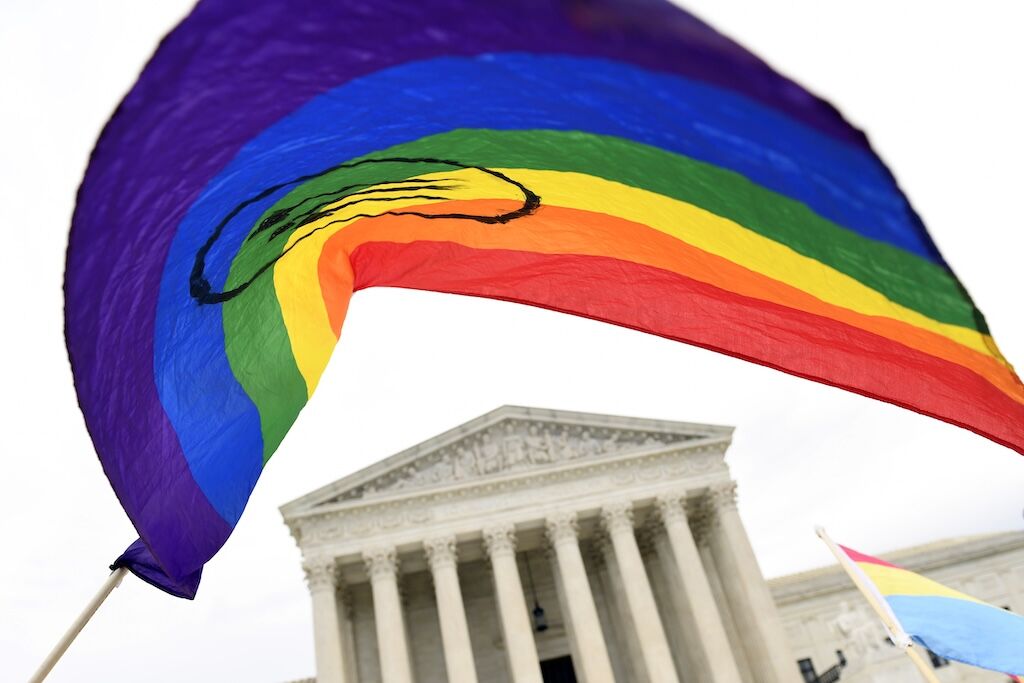
Colorado leaders weigh next steps after Supreme Court rejects state ban on ‘conversion therapy’
Marissa Ventrelli
marissa.ventrelli@coloradopolitics.com
Updated 9 hours ago
Colorado leaders said they are weighing next steps after the U.S. Supreme Court on Tuesday rejected the state’s ban on “conversion therapy” for children, as critics and supporters cheered or lambasted the ruling. The court’s near-unanimous decision called the Colorado...
Federal judge dismisses U.S. government lawsuit against Colorado, Denver’s ‘sanctuary’ laws
Michael Karlik
michael.karlik@coloradopolitics.com
Updated 8 hours ago
A federal judge dismissed the U.S. government’s lawsuit against Colorado and Denver on Tuesday, which alleged that various local policies impermissibly infringed on federal immigration enforcement. U.S. District Court Judge Gordon P. Gallagher followed the lead of judges in Illinois...
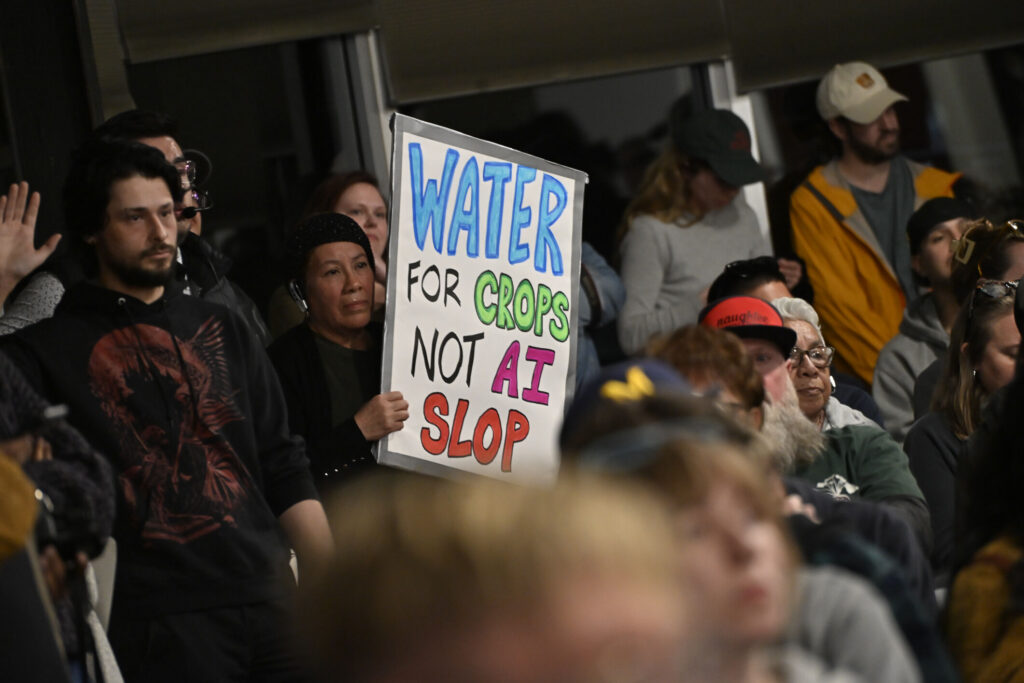
Denver proposes yearlong moratorium on new data centers
Deborah Grigsby
deborah.smith@denvergazette.com
Updated 12 hours ago
As Denver Water calls for a 20% reduction in water use during Stage 1 drought conditions, City Council members advanced a bill to rein in one of the largest water users — data centers — by proposing a yearlong moratorium...
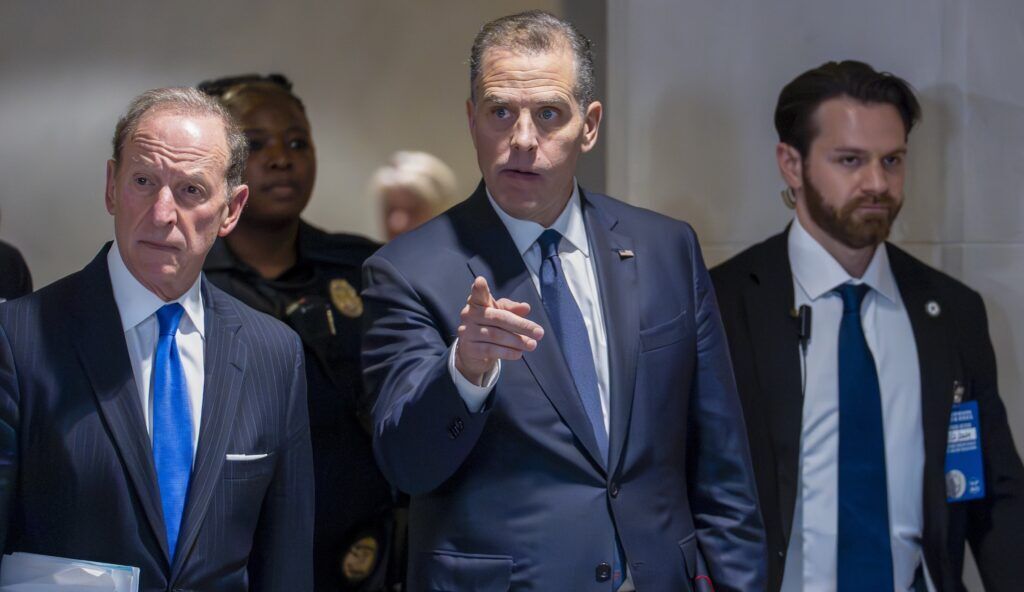
Federal judge finds DOJ adequately searched for, disclosed records related to Bidens
Michael Karlik
michael.karlik@coloradopolitics.com
Updated 13 hours ago
A federal judge determined on Friday that the U.S. Department of Justice adequately searched for and disclosed records to a Colorado attorney in response to his request for documents related to former President Joe Biden’s son and brother. In November...

Colorado lawmakers push legislation to shrink RTD board, increase pay as ridership struggles continue
Marissa Ventrelli
marissa.ventrelli@coloradopolitics.com
Updated 13 hours ago
Colorado lawmakers are advancing a new push to overhaul the Regional Transportation District, proposing to shrink the board, raise member pay, and boost ridership back to pre-pandemic levels. While some stakeholders see the effort as a step forward, others warn...
Appellate court slap downs in Trump cases highlight mounting tension in the judiciary
Jack Birle, Washington Examiner
jack.birle.washington.examiner@gazetteedit.wpenginepowered.com
Updated 15 hours ago
The Trump administration has won key reversals of lower court rulings against it in appeals courts — many of which have sharply rebuked the district court’s earlier rulings, highlighting growing tensions within the judiciary. Since January 2026, federal appeals courts...

10th Circuit warns lawyers after finding fake case in filing
Michael Karlik
michael.karlik@coloradopolitics.com
Updated 7 hours ago
The Denver-based federal appeals court warned attorneys to be more careful last month after discovering one lawyer cited a fake case in his arguments. In recent months, federal and state judges in Colorado have begun cautioning lawyers explicitly about the...
Colorado legislators drove up cost of Medicaid program
Marissa Ventrelli
marissa.ventrelli@coloradopolitics.com
Updated 15 hours ago
Some of Colorado’s spending woes in Medicaid can be traced to lawmakers who had approved new or expanded programs in the last few years, driving up state costs to the tune of tens of millions of dollars. Just three measures...
Supreme Court rules against Colorado ban on ‘conversion therapy’ for LGBTQ kids
Lindsay Whitehurst
lindsay.whitehurst@associatedpress.com
Updated 19 hours ago
WASHINGTON (AP) — The Supreme Court on Tuesday ruled against a law banning “conversion therapy” for LGBTQ+ kids in Colorado, one of about two dozen states that ban the discredited practice. An 8-1 high court majority sided with a Christian...

A perfect storm: Pine beetles thriving following warm, dry winter in Colorado
O'Dell Isaac
odell.isaac@gazette.com
Updated 16 hours ago
The warmest winter in Colorado history could lead to record-breaking proliferation of a tiny insect, about the size of a grain of rice, that has killed millions of acres of trees across the Centennial State and contributed to the rapid...
PREV
PREVIOUS

Questions answered on Jeffco school board recall elections
Why is this Jefferson County school board election such a thing? School boards positions have long been relatively high-profile local elected spots. Board members control a lot of local and state tax money. They are subject to the scrutiny of all of the voters related to anyone who has ever been a district student. Small-bore […]
Latino activists across spectrum worry about GOP primary debate
Latinos on the left and right in Colorado rallied in advance of the CNBC Republican presidential primary debate this week. The groups separately shared concern about the rhetoric that has marked the race so far and fears that it will ring up long-term negative social and political costs. “It is ugly and it’s hurtful,” said […]