

Passion for justice still drives Martinez
It’s a fine and righteous thing to honor past heroes of conscience such as former Gov. Ralph L. Carr, whose name will adorn Colorado’s new state judicial complex. But Denver Manager of Safety Alex Martinez believes it’s even more important to look into the future and ask what our grandchildren will think about the stands we are now taking on today’s burning issues of conscience – at a time when their moral dimensions may not be quite as clear.
Martinez spoke to an appreciative audience of attorneys and lay citizens at the Colorado Bar Association’s Law Week program at the Association’s 1900 Grant Street headquarters in Denver on May 2. In an emotional and often passionate address, he tracked his own personal journey from his boyhood in Denver’s Elyria-Swansea neighborhood through a career as a public defender, county judge, district judge, and a 15-year stint on the Colorado Supreme Court before taking his current job as Denver’s Manager of Safety.
The force that drove Martinez all those years – a strong and personal passion for justice – was still on display during his talk. The longtime jurist said his family’s struggles in his youth inspired him to seek a career in the law.
“My dad was schizophrenic. He had psychotic breaks with police intervention. I watched my mom struggle with the Veterans Administration and Social Security to get the family assistance. My dad had been a meat-packer at Cudahy and I remember all the things she went through to try and get a $40-a-month pension for him.
“I asked ‘Why does it have to be this way? How can it be made to work better?'”
Martinez noted that his school years saw the transition of Denver from a racially segregated school systemto one integrated by cross-town busing.
“Then, Colorado passed the Poundstone Amendment [restricting Denver annexations] which led to the current situation where Denver is surrounded by large suburban municipalities. It was a kind of social engineering to support white flight, which could not happen if we were all in one school district,” he said.
At that point, the longtime jurist paused and smiled, adding: “If you think I enjoy being able to say things like that that I would not have said from the bench – you’re right!”
As a young lawyer, Martinez gloried in working with the Public Defender’s office.
“I remember this case I tried while I was still a law student. I had this big bruiser of a client. His living as a bouncer was at stake in the assault case where I defended him. He was acquitted, he gave me a big bear hug, literally lifting me in the air so I was dangling – and he cried.”
Turning to Carr, Martinez praised the late Republican governor opposing the mass round-up of Japanese-Americans on the West Coast during World War II, some of whom were relocated to a camp at Amache near Granada, Colorado. Carr defied the anti-Japanese sentiment whipped up by The Denver Post and other xenophobic media by urging Coloradans to welcome the evacuees. His courageous support for the basic rights of the Japanese-Americans is generally thought to have cost him his political career.
“When you think about Carr, you would like to think you’d have the same courage. Yet even Earl Warren, later Chief Justice of the U.S. Supreme Court, went along with the roundup of Japanese Americans as California Attorney General at the time,” Martinez noted.
“I think what we have to do is not to just ask about this injustice in the past, where you can pick a side. Look thirty, forty, fifty years into the future, when your great grandchildren will look back and question things in this era – and ask what you were doing about them.
“There are two easy targets right before our eyes today that we haven’t stepped up to challenge, that we haven’t had the courage to take on. That is, they are easy in terms of identifying them. They are incredibly hard in terms of figuring out how to address them,” Martinez said.
“One is the problem of immigration. Our immigration policy is destroying families. We are separating families and causing children to be raised without the support and the love they need.
“The other area is the over-incarceration of African-American males. Similarly, you are hurting families and their children.
“Ow, those problems are hard. What you do about them, how you address them, are difficult. But these outcomes are tragic – and those are the situations that call for courage,” Martinez said.
Proceeds from Martinez’s speech went to support the Legal Aid Foundation Society of Colorado.
Bob Ewegen retired from The Denver Post in 2008 after more than 36 years with the newspaper. He is now a certified paralegal and director of research and communications at the Law Office of Ellis Wright and Ewegen, LLP. This column and others can also be found on the Blackacre Journal blog published by that law office at ewellp.com.

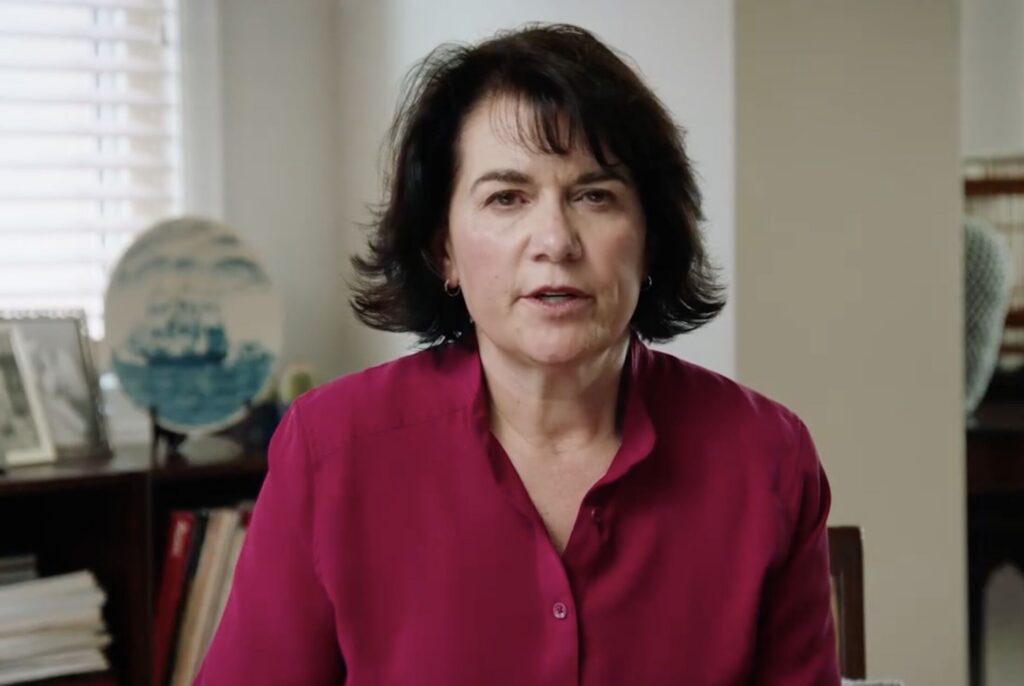
Primary rival sues to prevent Democrat Eileen Laubacher from going through assembly in Colorado’s 4th CD
Ernest Luning
ernest.luning@coloradopolitics.com
Updated 3 hours ago
Democratic congressional candidate Trish Calvarese on Monday asked a judge to prevent one of her primary rivals, Eileen Laubacher, from participating in the caucus and assembly process to seek the nomination to challenge Republican U.S. Rep. Lauren Boebert in Colorado’s...
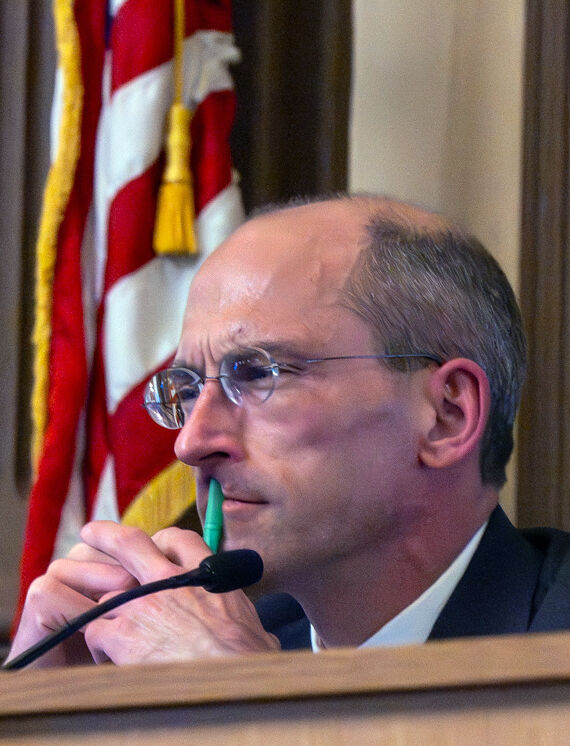
Colorado lawmakers tackle legislation on sexual assault
Jenny Deam
jenny-deam@coloradopolitics.com
Updated 3 hours ago
A panel of Colorado lawmakers on Monday unanimously approved a bill that supporters say will offer protections and support to victims of domestic violence, stalking, sex trafficking and sexual assault, including mandatory training for law enforcement on trauma. The measure,...
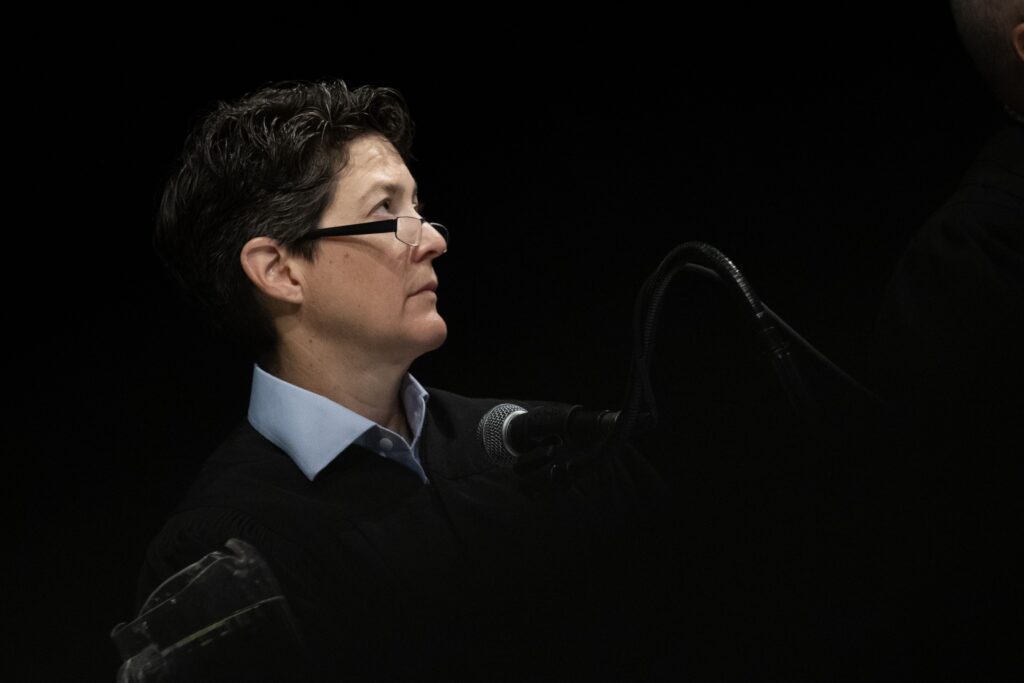
Colorado Supreme Court clarifies restraining order violations can always support burglary charge
Michael Karlik
michael.karlik@coloradopolitics.com
Updated 6 hours ago
The Colorado Supreme Court’s majority ruled on Monday that a violation of a restraining order can also serve as a basis for finding a defendant guilty of burglary. Under state law, a person commits second-degree burglary by unlawfully entering or...

Big week ahead for major legislation to address housing affordability woes
Zach Halaschak, Washington Examiner
zach.halaschak.washington.examiner@gazetteedit.wpenginepowered.com
Updated 8 hours ago
The Senate is pushing ahead with a bipartisan bill to improve housing affordability, teeing up a critical week for housing on Capitol Hill and raising major questions about what provisions will be included. Senate Majority Leader John Thune (R-SD) filed cloture on legislation from the...

Macron goes nuclear with increases to French warhead arsenal
Timothy Nerozzi, Washington Examiner
timothy.nerozzi.washington.examiner@gazetteedit.wpenginepowered.com
Updated 8 hours ago
French President Emmanuel Macron is channeling the atomic spirit of his predecessor Charles de Gaulle with orders for the French military to “increase the number of nuclear warheads” in the nation’s arsenal. Macron announced the seismic shift in France’s defensive...

Who has been killed so far during US-Israel mission in Iran?
David Zimmermann and Keely Bastow, Washington Examiner
david.zimmermann.and.keely.bastow.washington.examiner@gazetteedit.wpenginepowered.com
Updated 8 hours ago
There have been numerous casualties on all sides since the joint U.S.-Israel strikes against Iran commenced over the weekend, with more lives expected to be lost as the campaign continues. The Islamic regime’s leadership is currently bearing the brunt of...
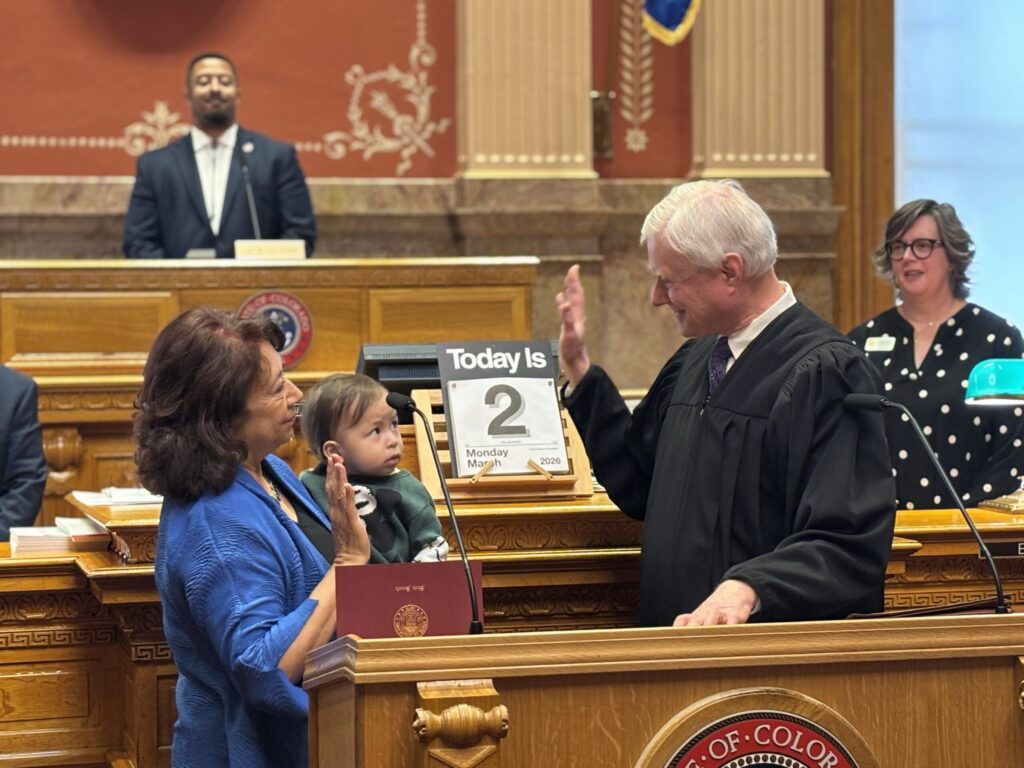
Colorado Senate swears in Adrienne Benavidez after district vacancy win
Marianne Goodland
marianne.goodland@coloradopolitics.com
Updated 8 hours ago
Sen. Adrienne Benavidez, a Democrat from Adams County, was sworn in Monday to the Colorado Senate, just four days after winning a vacancy election in District 21. She was sworn in by Colorado Court of Appeals Justice Lino S. Lipinsky...

10th Circuit judge creates vacancy, district court gets new chief judge | COURT CRAWL
Michael Karlik
michael.karlik@coloradopolitics.com
Updated 10 hours ago
Welcome to Court Crawl, Colorado Politics’ roundup of news from the third branch of government. A longtime member of the Denver-based federal appeals court will give the president a vacancy to fill, plus Colorado’s federal trial court will see a...

Denver mayor says his commute time tripled following ‘road diet’ change
Mark Samuelson Special to The Denver Gazette
mark.samuelson@denvergazette.com
Updated 8 hours ago
Mayor Mike Johnston is pushing back sharply against the claim by Denver councilmembers and bike activists that the city succumbed to lobbying pressure in revising a “road diet” plan for East Alameda Avenue, while noting that his own commute time...

Rural legislators, Colorado farmers defeat pollinator bill backed by Gov. Polis
Marianne Goodland
marianne.goodland@coloradopolitics.com
Updated 9 hours ago
A proposal to limit the use of neonicotinoid-coated crop seeds collapsed in the Senate Agriculture and Natural Resources Committee last week, as rural lawmakers, including two Democrats, joined Republicans to reject what they called an expensive, impractical mandate on farmers....