

Colorado Supreme Court blocks ballot initiative defining ‘fees’
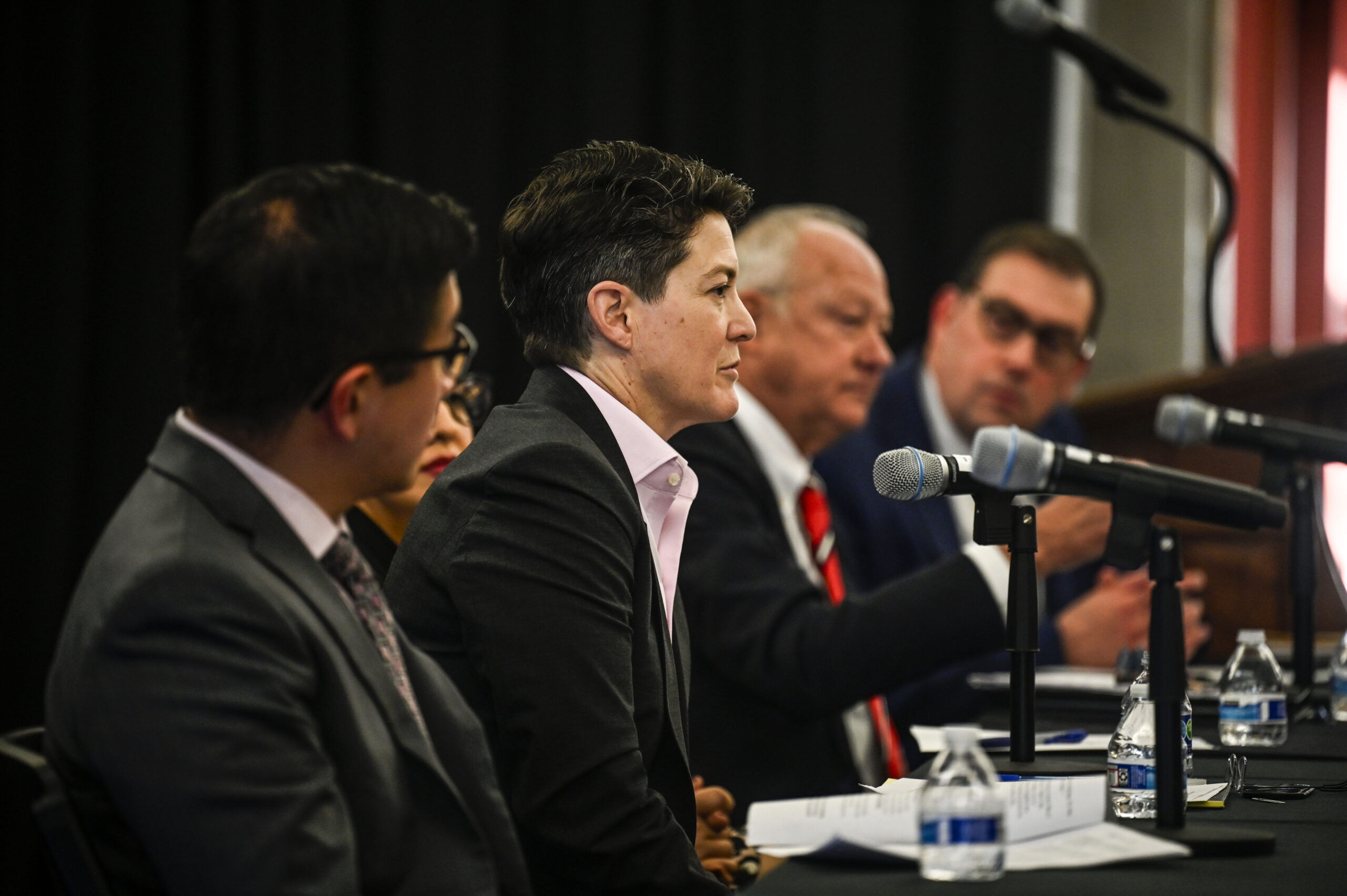
The Colorado Supreme Court blocked a proposed ballot initiative on Monday that would have required voter approval for new fees above a certain threshold, while also enshrining a definition of “fee” into the state constitution for the first time.
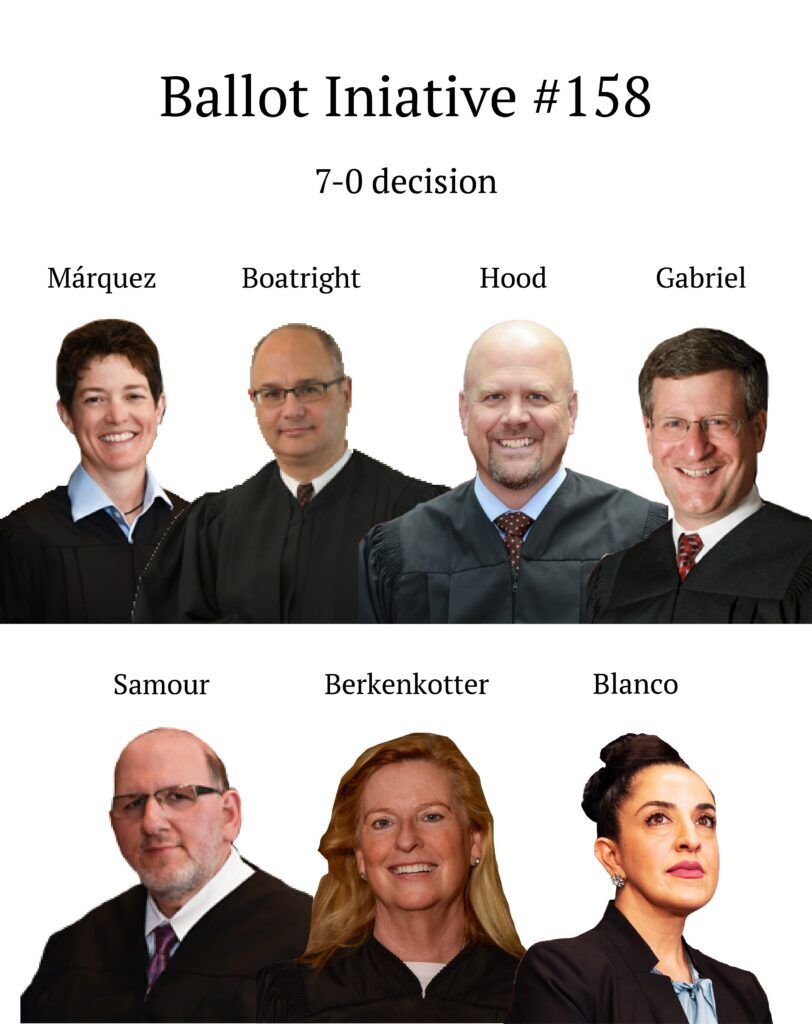
Chief Justice Monica M. Márquez wrote in the March 9 opinion that a ballot measure could properly accomplish one of those goals or the other, but combining them ran afoul of the constitutional requirement that initiatives contain a single subject.
“Initiative #158 presents a danger of log rolling because it may attract a ‘yes’ vote from voters who support statewide voter approval of fees, but who would not support narrowing the definition of existing and new fees under Colorado law,” she wrote. “Conversely, it could attract support from voters who support changing the existing definition of ‘fee’ throughout Colorado law, but who would not support a new statewide voter approval requirement for certain fees.”
The Taxpayer’s Bill of Rights is a 1992 state constitutional amendment generally requiring voter approval for new taxes or tax rate increases. That mandate does not apply to fees. Neither “taxes” nor “fees” is defined in the Constitution, but court decisions over time have established that fees are primarily intended to defray the costs of providing a service pursuant to a “comprehensive regulatory scheme.”
Initiative #158 was one of nearly two dozen tax-and-fee-related ballot measures proposed in recent months by former Arapahoe County GOP chair Suzanne Taheri and Michael Fields of the conservative Advance Colorado Institute. Although the proposals varied, Initiative #158 contained two primary components: requiring voter approval for most fees that would raise over $100 million in their first five years, and creating a constitutional definition of “fee” for future and existing fees.
The state’s Title Board green-lit Initiative #158 in October, after determining it satisfied the single-subject requirement. The following month, the board adjusted the wording of the summary that would appear to voters if proponents collected enough signatures to place it on the statewide ballot.
Joshua Mantell, director of government affairs for the progressive Bell Policy Center, petitioned for Supreme Court review of the Title Board’s actions. He argued the measure improperly contained two subjects. Taheri countered that Initiative #158 was aimed holistically at closing the “loophole” in TABOR that exempts fees from voter approval.
“To effectuate the purpose of Initiative #158, it is necessary to define ‘fee,'” she wrote for herself and Fields. “No voter surprise will result from the definition of ‘fee’ or the voter approval requirement for new fees enacted by the General Assembly.”
But the Supreme Court agreed with Mantell that the measure’s new constitutional definition of “fee” departed from the judicially created status quo and amounted to a second subject.
“Despite Proponents’ contentions, changing the current definition of ‘fee’ is not necessary to effectuate the purpose of this Initiative,” wrote Márquez. “We see no reason, and Proponents do not explain, why the voter approval requirement would be unenforceable and meaningless without the proposed new definition of ‘fee.'”
“We are grateful the Colorado Supreme Court so thoughtfully considered the issues and agreed that the initiative contained more than one subject and therefore was ineligible to move forward. The process worked as intended and Colorado voters are well-served by this decision,” said Mantell in a statement.
Taheri did not respond to an email seeking comment. Several other revenue-related measures from Taheri and Fields have received Title Board approval, although none have qualified for the ballot yet.

Colorado’s newest federal judge speaks about techniques for advancing cases
Michael Karlik
michael.karlik@coloradopolitics.com
Updated 14 hours ago
U.S. Magistrate Judge Cyrus Y. Chung described on Wednesday the various tactics he employs to resolve court cases, summing up his role with a laxative-based metaphor. “Someone told a group of us federal magistrate judges that magistrate judges are the...

Federal judge hears ICE agents’ confusion about law, injunction on warrantless arrests
Michael Karlik
michael.karlik@coloradopolitics.com
Updated 1 day ago
A federal judge heard testimony on Tuesday from U.S. Customs and Immigration Enforcement agents in Colorado, who had trouble describing the requirements of his recent injunction and the training they received on making warrantless arrests pursuant to the law. On...

10th Circuit dismisses challenge to Colorado legislature’s decorum rules
Michael Karlik
michael.karlik@coloradopolitics.com
Updated 21 hours ago
The Denver-based federal appeals court concluded on Tuesday that Colorado lawmakers cannot be sued for creating and enforcing rules of decorum that circumscribe the public commentary allowed at legislative committee hearings. A three-judge panel of the U.S. Court of Appeals...
Colorado justices, by 5-2, say Longmont detective did not violate suspect’s Miranda rights
Michael Karlik
michael.karlik@coloradopolitics.com
Updated 3 days ago
The Colorado Supreme Court’s majority ruled on Monday that a Longmont detective did not coerce a suspect into talking by making references to how a judge would look at his character, and by suggesting he may get out of prison...
Colorado justices find Fort Collins police lacked probable cause to arrest suspect in park
Michael Karlik
michael.karlik@coloradopolitics.com
Updated 3 days ago
The Colorado Supreme Court agreed on Monday that Fort Collins police lacked probable cause to arrest a man for a child sex offense based on his presence in a public park around the time they intended to meet with their...

Supreme Court to hold oral arguments, discipline commission releases report | COURT CRAWL
Michael Karlik
michael.karlik@coloradopolitics.com
Updated 3 days ago
Welcome to Court Crawl, Colorado Politics’ roundup of news from the third branch of government. The state Supreme Court is holding oral arguments this week, plus Colorado’s judicial discipline commission released its annual report. Colorado Supreme Court news • The Supreme...
Federal judge dismisses developer’s challenge to Denver affordable housing ordinances
Michael Karlik
michael.karlik@coloradopolitics.com
Updated 5 days ago
A federal judge dismissed a homebuilder’s constitutional challenge on Tuesday to a pair of Denver ordinances that impose obligations on developers related to the affordable housing demands created by new construction. Two related companies, redT Homes and redT Capital Partners,...

10th Circuit distances itself from prior decision making it easier to toss prisoner lawsuits
Michael Karlik
michael.karlik@coloradopolitics.com
Updated 6 days ago
The Denver-based federal appeals court distanced itself on Wednesday from its own recent decision that made it easier for prison officials to end civil lawsuits by transferring incarcerated plaintiffs between facilities. A three-judge panel of the U.S. Court of Appeals...

Appeals court overturns Douglas County vehicular homicide conviction due to faulty jury instructions
Michael Karlik
michael.karlik@coloradopolitics.com
Updated 4 days ago
Colorado’s second-highest court overturned a defendant’s vehicular homicide conviction and 12-year prison sentence on Thursday after determining a Douglas County judge omitted key language from the jury instructions that could have resulted in a different outcome. James Paul McDonald was...
Federal judge dismisses malicious prosecution claim against former Denver prosecutor
Michael Karlik
michael.karlik@coloradopolitics.com
Updated 6 days ago
A federal judge concluded on Monday that a former Denver prosecutor could not be sued for allegedly causing the arrests of two plaintiffs after they failed to appear for trial on the scheduled date, even though the trial had been...
PREV
PREVIOUS

Colorado joins multi-state call to keep ICE away from polling locations
Colorado Secretary of State Jena Griswold announced Monday that the state has formally requested written confirmation from the Department of Homeland Security that ICE agents will not be stationed at polling locations during the 2026 election cycle, according to a news release. The letter comes a week after Kristi Noem, the former Secretary of Homeland […]
Colorado open records bill dies in Senate committee
Efforts to overhaul Colorado’s open records law stalled anew. A proposal that would have extended response times for public records requests and added accountability measures for late responses failed to advance out of its first committee and will not move forward this year. The Senate State, Veterans and Military Affairs Committee rejected Senate Bill 107, […]