Real leadership requires long-term thinking | BIDLACK
I make no secret of my fidelity to the University of Michigan. I grew up in Ann Arbor, the son of a UM school dean, and all three of my degrees, BA, MA, and Ph.D., are from that lovely campus. I choose to mostly ignore the recently past football season, and instead will brag on UM’s basketball teams, wherein the men’s team is ranked No. 1 in some polls, and the women are a top-10 team as well. I’m proud to be a Wolverine. And yes, I’m OK with beating Ohio State 4 out of 5 years.
And yet, you know what I never saw during my many years growing up in Michigan?
A wolverine.
Turns out, they do not now, and never have, lived in Michigan. The story of my university adopting the wolverine as our mascot goes back a way, but it does not involve any Michigander running into a wolverine anywhere in the Great Lakes State.
I mention that because of a recent Colorado Politics story mentioning wolverines that appeared in my favorite section, the Out West Roundup. It seems some in the current administration are, not at all surprisingly, wanting to roll back certain environmental protections, including those that, in places like Montana, where wolverines are actually found, well, protect wolverines.
These folks would claim current regulations make it too difficult to extract resources from states like Montana, especially because of the so-called blanket rule automatically protects critters and plants listed as threatened. Instead, the Trumpers would require each individual species be specifically adjudicated as protected, one at a time, a process that will certainly make the protecting of an endangered plant or animal more difficult and time-consuming.
My regular readers will likely recall I’ve oft leapt atop my rickety soapbox of idealism to make the case this type of thinking is far too shortsighted. Not surprisingly, these anti-environmental folks think more in election cycles than in decades or even centuries, the later time scales making more sense for environmental concerns.
Short-sightedness is both rampant and dangerous when it comes to the environment. Recall, please, my earlier mentions of the California Coastal Yew tree. This species, for many years, was seen as a garbage species that tended to get in the way of efficient clear cutting of forests in California. Uncounted millions of these Yew trees were stacked in piles and burned to the point the tree became scarce. It isn’t technically endangered at this point but given it takes 100 years or so for this species to become mature, the ongoing threats to its existence are concerning.
Why?
Well, in 1966 and again in 1971, scientists learned the bark of the tree contained chemicals that form the basis of some of the most powerful anti-cancer medications discovered to date. Taxol in particular is very powerful in the fight against breast, ovarian and lung cancers. And we threw most of those trees away.
The California Coastal Yet tree is but one example of the dangers of short-sighted environmental policies. It is not impossible the illness that will ultimately take your life could have been cured by a derivative of a plant or perhaps even animal that, due to rollbacks in protections such as are happening in Montana, goes extinct before its benefits are discovered.
If you like looking at, say, monarch butterflies, look quickly, as they too are threatened by the proposed changes in Montana and the west. Also put on the chopping block are the Florida manatee, the spotted owl, and the aforementioned wolverine. The current Secretary of the Interior, Doug Burgum, a “drill baby drill” kind of guy, said the rollback was intended to show respect for “the livelihoods of Americans who depend on our land and resources.” For the next few years, he should have added.
In addition, the new Trump rules would require officials, when considering whether or not a habitat is critical for a species’ survival, to consider the economic effects of such a listing. How in the world do you put a dollar value on our natural wonders? This proposed policy change (which, let’s not kid ourselves, will be implemented for at least the duration of Trump’s second term) will fundamentally shift the thinking on endangers species and the Endangers Species Act, which currently protects more than 1,600 species. It was critical in saving things like, oh, I dunno, the bald eagle and others like the California Condor since Richard Nixon signed it into law. Yes, Richard Nixon. Environmental protection is not a partisan issue, unless we make it one.
I am unlikely to see a wolverine in the wild. That’s probably a good thing, as they have a reputation for being both grouchy and aggressive. The old joke is a wolverine won’t attack unless you make it mad, and it gets mad if you look at it. But I know our world is a richer place for having such animals and plants. Heck, 40% of the medications we see in pharmacies today come from plants, with 70% of new medications coming from plants.
That alone should discourage us from reducing environmental protections and potentially wiping out species after species, their medical implications lost for all time.
It is difficult to get many politicians to think beyond the election cycle, but we need to encourage more long-term thinking. Imagine you are on your death bed (it will happen, sorry) and a cure for your fatal illness was lost to economic development. Will you be comforted by knowing a condo complex was erected after the healing plant was dug up?
I doubt it.
Hal Bidlack is a retired professor of political science and a retired Air Force lieutenant colonel who taught more than 17 years at the U.S. Air Force Academy in Colorado Springs.


Psychedelics are a safe, novel approach to Colorado’s mental health crisis | OPINION
Colorado Politics
colorado-politics@coloradopolitics.com
Updated 3 hours ago
By Sarah Markey and Dafna Michaelson-Jenet We all have moments in which we experience feelings of anxiety and depression. This is part of what it means to be human in today’s world — there is no shortage of suffering. The...

State Sen. Dylan Roberts runs for reelection
Marissa Ventrelli
marissa.ventrelli@coloradopolitics.com
Updated 9 hours ago
State Sen. Dylan Roberts, D-Frisco, is seeking a second term in the Senate and his fourth term in the state legislature. Roberts is committed to “making life more affordable for Coloradans and advocating for the unique needs of the mountain...
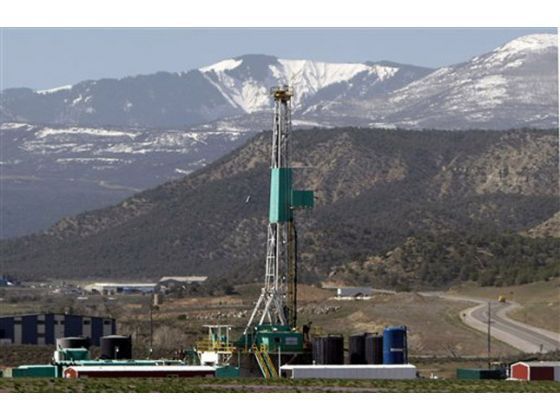
Audit finds major gaps in Colorado’s oil and gas reporting, enforcement
Marissa Ventrelli
marissa.ventrelli@coloradopolitics.com
Updated 12 hours ago
The agencies responsible for regulating Colorado’s oil and gas industry are underperforming when it comes to reporting and enforcement and they also failed to collect payments amounting to hundreds of thousands of dollars in lost revenue, according to a state...

Colorado Democrat Julie Gonzales launches U.S. Senate primary challenge to incumbent John Hickenlooper
Ernest Luning
ernest.luning@coloradopolitics.com
Updated 9 hours ago
Declaring that Colorado “needs a fighter, not a bystander,” state Sen. Julie Gonzales, a Denver Democrat, on Monday launched her long-anticipated primary challenge to U.S. Sen. John Hickenlooper. Pitching her campaign as a departure from “old-playbook politics,” Gonzales said she’s...

Trump admin’s maiming of renewables agencies an energy affront | HUDSON
Miller Hudson
miller-hudson@coloradopolitics.com
Updated 1 day ago
NREL has a rhythmic resonance that won’t be matched by NLR, Colorado’s newly christened National Laboratory of the Rockies. Nearly lost to memory is how the National Renewable Energy Laboratory authorized by President George H. W. Bush in 1991 was...

Ranchers are not an endangered species, nor an invasive one | GABEL
Rachel Gabel
rachel-gabel@coloradopolitics.com
Updated 18 hours ago
Animal agriculture, ranching, hunting and farming are not dying ways of life. The cowboy is not about to ride off into the sunset and certain extinction. Beef is not going to be replaced by cultured meat, any variety of bugs,...

Democrat Shannon Bird to step down from Colorado legislature to campaign full-time for Congress
Ernest Luning
ernest.luning@coloradopolitics.com
Updated 17 hours ago
State Rep. Shannon Bird, a Westminster Democrat, said Sunday that she plans to resign from the Colorado legislature next month in order to focus on running for the 8th Congressional District seat held by Republican U.S. Rep. Gabe Evans. Bird...

Colorado’s Public Utilities Commission votes to suspend reality | CALDARA
Jon Caldara
jon-caldara@coloradopolitics.com
Updated 17 hours ago
Colorado’s Public Utilities Commission has done it again — proving when regulators get together, they can create a fantasyland so detached from reality it makes Disneyland look like a documentary. Colorado’s Public Utilities Commission just adopted a new rule ordering...

Calendar Dec. 8-14
Rachael Wright
rachael.wright@coloradopolitics.com
Updated 6 days ago
CoPo’s weekly political calendar will help you find political and public-policy events throughout Colorado. It includes candidate and issue campaign events, public policy meetings, court hearings, state and local party conventions, assemblies, debates, rallies, parades, speaking engagements, traveling dignitary appearances,...
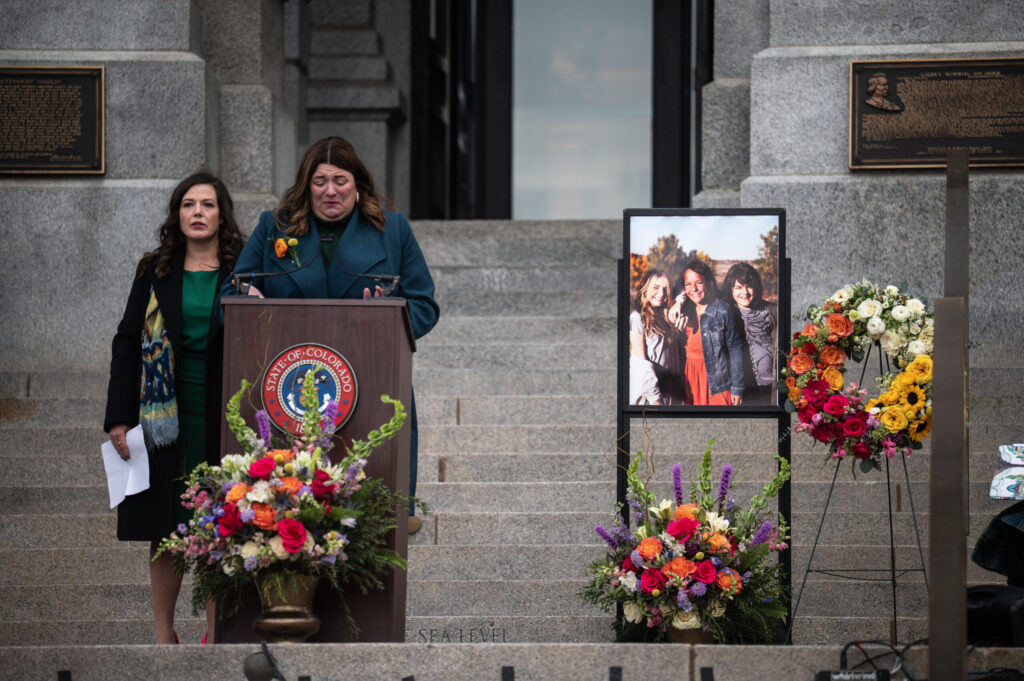
Flags lowered, colors raised: Colorado leaders and friends celebrate Sen. Faith Winter’s life
Marianne Goodland
marianne.goodland@coloradopolitics.com
Updated 3 days ago
It was the colors that stood out as hundreds braved the cold on Friday to celebrate the life of Sen. Faith Winter, who died in a two-car crash on Nov. 26. Flags at the state Capitol flew at half-staff at...