

As Colorado explores transgender policies, some parents argue they infringe on their rights
Amid the staccato of legislation that Democrats at the Colorado Capitol adopted to expand what sponsors described as transgender “rights,” a growing number of parents are pushing back, arguing that the state government has overreached, impeding their ability to raise their children the way they see fit.
In the last few years, parents — and their allies in the Colorado General Assembly — have become more vocal in their opposition to proposals championed by progressive groups.
“I think everyone is concerned,” said Colleen Enos, director of government relations for Christian Home Educators of Colorado. “It doesn’t matter if you’re a Democrat, Republican or independent, everyone is concerned about what’s happening and how the state is trying to get in between parents and their kids.”
From the other end of that spectrum, advocates have rejected the view that parental rights in Colorado have been eroded. They said that one question boils down to where parental rights end and a child’s rights begin — and argued that more legislation is needed to provide the courts with greater clarity.
Clash occurs amid cultural shift in America
The clash is happening as America is experiencing what both sides have agreed is a cultural shift.
And that shift is often more pronounced in Colorado, where lawmakers this year advanced a proposal — though they watered down the final version of the legislation — that would have mandated the courts to consider “deadnaming” and “misgendering” in child custody cases.
J.P. De Gance, president and CEO of Communio, a faith-based organization focused on “the renewal of healthy relationships, marriages, and the family,” said changing worldviews are part of that larger shift.
De Gance pointed to declining marriage and fertility rates, which he blamed as the reason why many aren’t as focused on parental issues.
“You look back to 1970, 40% of households were married with kids,” he said. “Today, 17.8% of households are married with kids. I don’t think it’s accidental or incidental that these big sweeping changes or proposed changes to the responsibilities and rights of parents are occurring at a time when there are a lot fewer married parents.”
He added: “I think we can see it in legislative battles, because there are numerically fewer constituents who are deeply motivated by the issue.”
Like Enos, De Gance said the issue of parental rights spans the political spectrum.
“I think there’s a lot of folks who might be interested in the attack on the protections of children by their parents — people on the political left, as well as the political right, who are gonna be concerned about those attacks,” he said.
Animating that view is the idea that some in society seek less parental rights, with the state serving as a substitute for parents.
De Gance attributed that to “radical political movements,” saying the latter have sought to separate children from their parents so they can be “formed by the state.”
“The idea that in the United States parents need to be on guard in such a way that they are now is really a new thing, I would argue,” he said. “It’s a sign of growing concern that many people in our political dialectic believe that children are a common resource and that parents should not hold the kind of normative rights and responsibilities that they’ve always held.”
De Gance and Enos agreed that are exceptions. Neither is opposed to the state taking over in cases of child abuse or neglect.
Transgender debate preoccupies Colorado Capitol
In recent years, the transgender debate has occupied policymakers at the Colorado state Capitol.
The main focus of the debate deals with students’ “preferred” pronouns in schools and whether to allow transgender women — biological males who identify as women — to participate in girl sports.
Lately, it has morphed into what conservatives view as a struggle for control over how to raise children between parents and the state. Progressives, on other hand, view it as the right step in expanding the “rights” of LGBTQ youth, arguing they are marginalized and government’s active intervention is necessary to protect them.
The debate is not theoretical.
The U.S. Department of Education is investigating the Jefferson County School District for potential Title XI violations after four families filed a federal lawsuit in September. The parents of an 11-year-old girl had discovered that their daughter would have had to share a bed with a male student on an overnight athletic trip.
At the state Capitol, House Bill 1312 drew the attention of parental rights advocates and LGBTQ groups alike.
Among other provisions, the bill originally required courts to consider “deadnaming” or “misgendering as a form of “coercive control” in child custody cases. It also prohibited courts from applying other states’ laws that allow for the removal of a child from a parent or guardian’s custody if they allowed that child to receive “gender-affirming health-care services.”
Lawmakers struck the provisions dealing with custody battles from the bill’s final form before sending it to the governor.
Courts grapple with transgender issues
Had those provisions been in place, they could have applied to Jason Zook, a resident of Adams County.
Zook said that when he and his wife started divorce proceedings, she claimed he was not supportive of one of his children being “nonbinary” and the other changing genders from a boy to a girl. At the time, both of his children were under the age of 10.
“This is absolutely becoming weaponized,” he told Colorado Politics. “In divorce, if a parent is accused of physical abuse, there is a system in place to investigate it. If you are accused of molestation, you can defend yourself. In this case, you are labeled as not being gender friendly, which means in a blue state like Colorado, you are out as a parent.”
Zook, who regularly speaks publicly about his experience, said he tried to fight the system, which led to bankruptcy. He has never been against his child’s choice to change genders — he said he just asked questions and worked to find the right support system.
“In states like Colorado, I am only seen as a nuisance instead of a caring father,” Zook said, adding he has barely seen his two children since 2018.
While the family court sections were ultimately amended out of HB 1312, some parental rights advocates argued it still poses a significant risk.
Recently, four organizations sued the state, arguing the bill, which was signed into law in June, violates their constitutional rights.
Enos argued that HB 1312 violates the First Amendment because it requires some people to speak in a manner that contradicts their religious beliefs.
“If you believe there are two sexes, male and female, you’re being compelled to say things that aren’t true,” she said. “In addition to that, it’s threatening parental rights because parents are being required to do this with their children in places of public accommodation.”
Anaya Robinson, of the American Civil Liberties Union, disagrees with the narrative that parental rights are being “eroded” in Colorado and around the country. HB 1312 was a “very easy target” for parental rights advocates, but in its final form, the bill doesn’t do much besides clarify what is already state law, Robinson said.
“I think the reality is that it has to be a measured balance when it comes to these things,” Robinson argued. “Erring on the side of parental rights across the board can create significant harm for youth, and erring on the side of letting any kid, regardless of age, decide 100% about what they want from their life can cause harm.”
House Rep. Brandi Bradley, a Republican representing the district that covers Douglas County and a critic of the transgender proposals, said whenever an argument is made against one of the progressive bills, she and others who are opposed to “overreaching” laws are labeled as “homophobic and transphobic.”
“You can’t say in one sentence that kids can’t own guns because their frontal lobe is not developed enough. They can’t vote. They can’t drink alcohol. They can’t even get a tattoo,” Bradley said. “Then, in the same sentence, say they can go get treatment without their parents and make a decision that could have lifelong complications.”
Bradley said transgender procedures are “mutilating” young bodies. She pushed a bill to ban puberty blockers for children under 18. The measure failed.
Children, she said, are not getting the “advice or knowledge they should be given before making such a difficult decision.”
Lawmaker: Policies pit school against parents
In 2024, Bradley said the Democratic-led state legislature passed a law that pitted schools against parents in House Bill 1039, which deems it discriminatory for public school employees to knowingly address students by a name other than their “chosen” name, which reflects their gender identity.
A Brighton couple filed a lawsuit, saying the law violates parents’ constitutional rights. They said their daughter, with the encouragement of a school district counselor, transitioned to a boy in secret.
A federal judge later ruled against the Brighton couple, citing the fact that the law was enacted more than a year after their daughter asked the school to use a different pronoun.
During the 2024 elections, members of the Colorado State Board of Education raised concerns about the law, stating that it would likely create trust issues between parents and school officials.
Not all districts want to face potential conflict between a child and a parent at their doorstep.
In March, the D-11 School District in Colorado Springs adopted a policy that requires both students and parents to request a name change together.

ACLU: What about the constitutional rights of children?
Robinson, the ACLU staffer, argued that, while it’s entirely reasonable for parents to make certain decisions for their children, the latter also have constitutional rights.
“I think one of the things when it comes to parental rights is where do the parental rights end and the child’s rights begin? Where is that division?” Robinson said. “Oftentimes, it comes down to the constitutional rights of the youth and where they get to exercise those constitutional rights, regardless of the parents’ agreement.”
Robinson added: “I think that the more legislation that arises that seeks to draw those lines statutorily, the more clarity we will likely get in the future from the courts.”
Robinson pointed to Supreme Court cases, such as Yoder vs Wisconsin, in which the court ruled that a state law mandating school attendance until the age of 16 violated the First Amendment’s Free Exercise Clause, and Troxel vs. Granville, which struck down a Washington state law allowing a third party to petition for child visitation rights even if the parents objected.
In contrast to states like Florida, Colorado strikes a more balanced approach to parental rights, Robinson insisted.
Edwin Carracedo, a senior at Widefield School District 3, said he believes parents need to “back off.” In his view, children aren’t included in the parental rights discussion nearly as much as they should be and that he has seen his peers suffer as a result.
“Parents don’t notice how it affects kids in the future,” he said. “From what I’ve seen, they look back and say, ‘Wow, I shouldn’t have done that to my kid, because look at my kid now. He lacks emotional support, he lacks socialization skills, he doesn’t do anything.’ He or she is lacking in multiple parts of their life, and their parents are not accountable for a kid’s emotional status. I feel like what’s left out (of the conversation) is kids’ emotional status when it comes to growing and their character.”
He also argued that children lack sufficient privacy protections, saying some issues should be kept confidential between a student and school staff, rather than being shared with parents.
“Step back and let us grow,” he said. “Let us experience those key moments that we need to learn in our lives, those emotional connections, being able to open up when we are ready, being able to look at others in an unbiased way and have an unbiased opinion.”
Colorado Politics Must-Reads:


Clash of the titans: Democratic race for governor pits two candidates similar in focus, but very different in style | Vince Bzdek
Vince Bzdek
vince.bzdek@gazette.com
Updated 6 hours ago
By Vince Bzdek The race for governor is shaping up to be a clash of Democratic titans, U.S. Sen. Michael Bennet and Attorney General Phil Weiser. They are two of Colorado’s highest profile politicians with deep track records who...

Colorado High School Activities Association reaches settlement with D-49, other school districts in trans athletics lawsuit
Eric Young
eric.young@gazette.com
Updated 1 day ago
Months after adopting new policies restricting students to athletic participation based on their biological sex and filing a federal lawsuit, School District 49 and other Colorado school districts have reached a settlement with the Colorado High School Activities Association (CHSAA)...
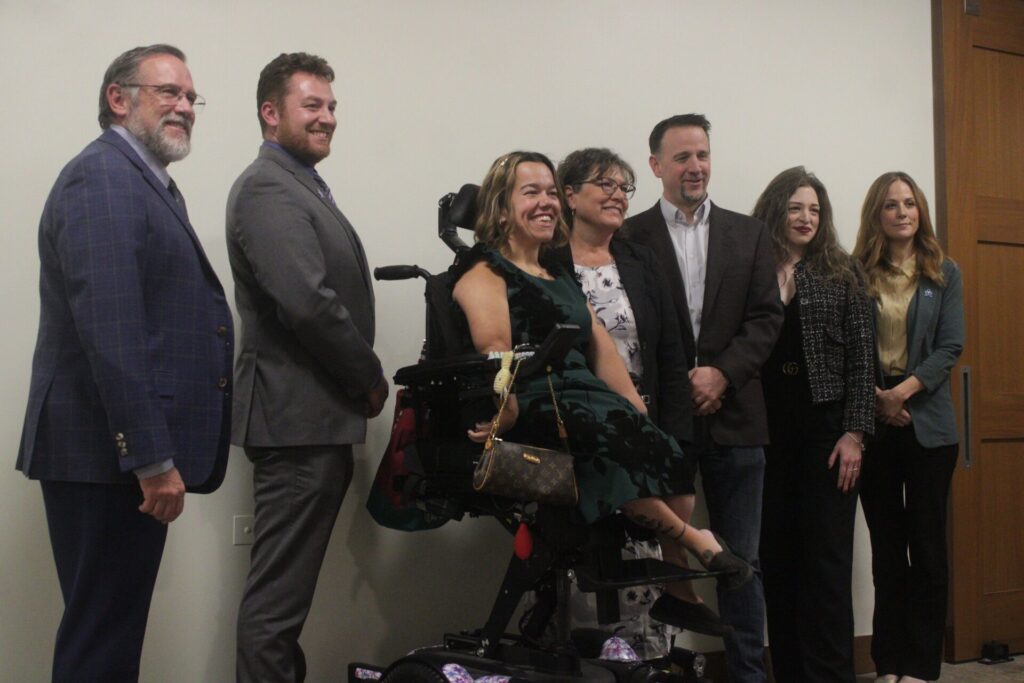
New-look Douglas County school board names returning director as president
Noah Festenstein
noah.festenstein@denvergazette.com
Updated 3 days ago
After four new directors swore in earlier than expected, the new-look Douglas County school board met for the first time Tuesday night to elect a new board president and discuss issues addressed by the previous board. Douglas County voters in...
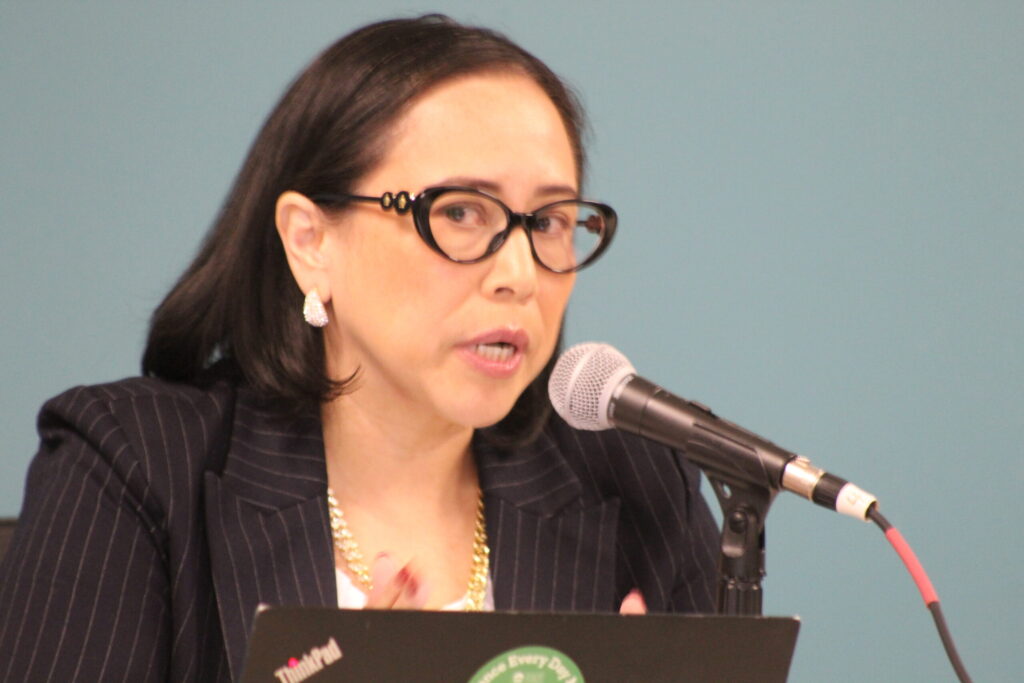
Denver school board elects Gaytán as president
Nico Brambila
nico.brambila@denvergazette.com
Updated 4 days ago
After weeks of jockeying for votes, the Denver Public Schools Board of Education chose a new slate of officers during a specially called meeting Tuesday, selecting Director Xóchitl Gaytán as board president — a role that carries significant control over...

Colorado Higher Education Director Angie Paccione to step down
Marianne Goodland
marianne.goodland@coloradopolitics.com
Updated 1 day ago
Angie Paccione, who has led the Colorado Department of Higher Education since 2019, is returning to the private sector, Gov. Jared Polis said. Paccione’s last day is Jan. 9. The governor’s office said Gov. Jared Polis would decide on the...

Survey reveals widespread dissatisfaction with Colorado’s public education system
Marissa Ventrelli
marissa.ventrelli@coloradopolitics.com
Updated 3 days ago
Most Colorado voters are dissatisfied with the state’s public education system and many lament that it’s headed in the wrong direction, citing – among other worries – “woke” ideology permeating schools, according to a recent poll. Meanwhile, the minority of...

Colorado Springs D-11 board member running for state House seat
Eric Young
eric.young@gazette.com
Updated 1 week ago
A Colorado Springs District 11 board member has thrown their hat into the ring for a seat in the state House of Representatives. A candidate affidavit and committee registration form for Jill Haffley, vice president of D-11’s Board of Education,...
Jeffco Public Schools discusses budget cuts, mill levy
Sage Kelley
sage.kelley@denvergazette.com
Updated 2 weeks ago
A $60 million structural deficit continues to hang over the Jeffco Public Schools. The Jeffco Board of Education met with members of the district’s financial team on Nov. 13 to discuss updates to the Budget Reduction Blueprint — or overall...
Audit: Denver school district owes more than it owns, despite nearly $1B in unspent bond cash
Nico Brambila
nico.brambila@denvergazette.com
Updated 2 weeks ago
Denver Public Schools is operating with a negative net position — owing more in long-term obligations than it holds in assets — a rare and troubling financial posture for a major Colorado school district, according to an audit. Presented on...
DPS board president creates committees that may fall outside public view
Nico Brambila
nico.brambila@denvergazette.com
Updated 2 weeks ago
As one of her last official acts on the Denver Public Schools Board of Education, President Carrie Olson created a two-member committee that will not likely conduct its business in public as state law demands. The two-person committee headed by...
PREV
PREVIOUS
Colorado Department of Education offers $10,000 in aid for aspiring teachers
The Colorado Department of Education is now accepting applications for the 2025-2026 Educator Recruitment and Retention Program, which offers up to $10,000 in financial aid for aspiring teachers. Established through a 2021 law, the grant program provides financial assistance to students pursuing careers in education, specifically in “statewide shortage areas,” such as language arts, social studies, and […]

Colorado test scores show academic performance return to pre-pandemic levels
Statewide test scores released Thursday show Colorado students have returned to, or surpassed, pre-pandemic levels for all subjects and grades — with two exceptions: fourth-grade English, and English and math in eighth grade. But not in Denver. Students in Denver Public Schools trail the statewide recovery. The Colorado Measures of Academic Success (CMAS) — the […]