

Nebraska’s $600 million water project faces resistance from Colorado landowners
On or around April 17, six landowners in Sedgwick County will face a decision: whether to sell their land to the state of Nebraska for a canal that will be at least partially constructed in Colorado, or face what is likely to be an unprecedented land grab.
It is known as the Perkins County Canal, and the state of Nebraska has already invested $500 million in the project, with an expected total cost exceeding $600 million.
The history of the proposed canal dates back more than 100 years, to the compact between Colorado and Nebraska regarding water from the South Platte River.
Article VI of the compact states that Nebraska can divert 500 cubic feet per second during the non-irrigation season, as well as any additional available flows, into the canal. That non-irrigation season runs from Oct. 15 to April 1.
However, Nebraska claims that Colorado has increased its own diversions and related water uses during the non-irrigation season, leaving Nebraska with no choice but to construct the canal and claim its non-irrigation season water.
The canal would start just east of Ovid, in Sedgwick County, and continue into Perkins County, just across the state line in Nebraska.
The 1923 compact allows Nebraska to build the canal, using eminent domain, and to seek it in federal court if necessary.
For one state to grab the land of another is unprecedented, Attorney General Phil Weiser told Colorado Politics earlier this year.
While Colorado agreed to the canal in 1923, that’s not how Weiser sees it now.
Weiser sent a letter to the Sedgwick County commissioners in January, stating that he is opposed to Nebraska’s potential action.
He wrote that he had advised Nebraska’s attorney general that the project would provide little to no benefit to the state of Nebraska. However, if Nebraska moves forward, Colorado will defend its rights, he added.
That doesn’t mean the attorney general will represent those six landowners, Weiser wrote, and those landowners should obtain their legal counsel.
According to Nebraska Public Media, one Holyoke-area landowner agreed in late 2023 to sell 90 acres of land near Julesburg to the state for the canal for $90,000.
However, according to a March 7 letter from their attorney, the Colorado landowners don’t appear to be interested.
The five-page letter stated that the diversion would dry up 30,000 to 60,000 acres of land that rely on groundwater for all or part of their irrigation supply, resulting in property damage of up to $270,000 in Sedgwick, Logan, and Washington counties.
It gets worse: “These figures do not account for the potential impact on over 40 municipal wells supplying water to residents, businesses, parks, schools, hospitals and fire stations in Northern Colorado,” according to attorney Donald Ostrander from the Englewood-based law firm of Hamre, Rodriguez, Ostrander & Prescott, PC.
It would be almost impossible to calculate the cumulative effort the loss of this water would have, Ostrander wrote. “Each municipality and landowner would have its unique damage situation and be entitled to file suit against Nebraska… Suppose Nebraska proceeds with the construction of the Perkins Canal. In that case, we intend to file such claims on behalf of affected landowners, based on the area impacted by the canal’s construction,” Ostrander wrote.
And given that the project is potentially years away, Nebraska’s attempt to take the land appears to be premature, Ostrander wrote. Nebraska lacks 1041 (a local government permit) approval from Sedgwick County, has no approved wetlands mitigation plan, and has no Federal permits, final construction drawings, crossing agreements for utilities, or relocation agreements for displaced owners or tenants. There is no legitimate good faith basis for proceeding at this time,” he concluded.
If Nebraska files for eminent domain, they will have to do it in the Colorado courts, Ostrander wrote.
Colorado will fight back, he warned, and Nebraska will spend a lot of money for minimal gain.
Matthew Manning, an engineer with the Nebraska Department of Natural Resources, wrote in a brief reply on March 20 that “from the tone of your letter, it appears you or the people you represent are not interested in a negotiated resolution.” But if Ostrander’s clients are interested in negotiating, Manning wrote, “We would welcome further contact…should that be the intent of your letter.”
That got the ire of state Sen. Byron Pelton, R-Sterling, who thundered at Nebraska from the floor of the state Senate Monday.
The problem, Pelton said, is that Nebraska has taken every opportunity to threaten eminent domain. Nebraska has not negotiated in good faith and threatened eminent domain on the people of his district, Pelton said. These are generational farms, Pelton told the Senate. This is “against agriculture, the very thing you’re protecting in your state; we’re protecting it in ours!”
Pelton invited Nebraska to sit down and have an actual conversation, leading to a solution, rather than constantly threatening the landowners.
There is a chance the project could go south and fast.
Nebraska is dealing with its own budget shortfall, and the funding for the canal is a top target to shore up that state’s budget. Two bills to transfer the Perkins money to that state’s general fund an a water sustainability fund are awaiting action from the Nebraska legislature, which is adjourned until April 8. The bills also state the project is a “may” instead of a “shall” and that’s prompted Nebraska Farm Bureau to claim the action would “effectively end the project by eliminating necessary resources for design, land acquisition, and legal processes.”

Higher home values, abatements to push DPS tax bills up in 2025
Nico Brambila
nico.brambila@denvergazette.com
Updated 9 hours ago
Denver homeowners will pay more in school taxes next year even though Denver Public Schools (DPS) slightly lowered its overall tax rate. The increase is being driven by rising assessed home values, a full 52.142-mill levy and a dramatic increase...

Trump administration announces $12 billion soybean aid package
RACHAEL WRIGHT Special to The Gazette
rachael-wright-special-to-the-gazette@coloradopolitics.com
Updated 10 hours ago
President Donald Trump and Secretary of Agriculture Brooke Rollins announced Monday that the administration was planning to disburse a $12 billion dollar aid package as part of the Farmer Bridge Assistance (FBA) Program, to make targeted, one-time payments to crop...
Federal judge rejects Tina Peters’ request for release pending appeal
Michael Karlik
michael.karlik@coloradopolitics.com
Updated 12 hours ago
A federal judge rejected the petition of former Mesa County clerk Tina Peters on Monday to be released from incarceration pending the resolution of her criminal appeal. Chief U.S. Magistrate Judge Scott T. Varholak wrote in a Dec. 8 order...
Colorado justices lay down framework for analyzing defamation lawsuits involving ‘public interest’ issues
Michael Karlik
michael.karlik@coloradopolitics.com
Updated 14 hours ago
The Colorado Supreme Court clarified on Monday how judges should evaluate whether lawsuits arising from a person’s speech — in particular, online consumer reviews — are connected to an “issue of public interest” and merit protection from legal liability. As...

Federal judge rejects DPS’ attempt to obtain 9News sourcing documents in First Amendment case
Michael Karlik
michael.karlik@coloradopolitics.com
Updated 15 hours ago
A federal judge rejected Denver Public Schools’ attempt on Monday to obtain documents from 9News related to its interview with a former principal who alleges his termination amounted to a constitutional violation. At the same time, the attorney for plaintiff...
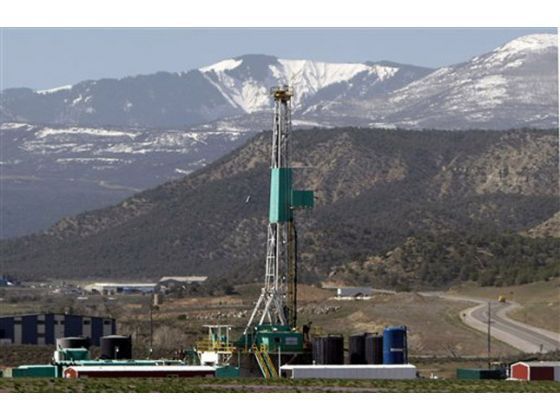
Audit finds major gaps in Colorado’s oil and gas reporting, enforcement
Marissa Ventrelli
marissa.ventrelli@coloradopolitics.com
Updated 13 hours ago
The agencies responsible for regulating Colorado’s oil and gas industry are underperforming when it comes to reporting and enforcement and they also failed to collect payments amounting to hundreds of thousands of dollars in lost revenue, according to a state...

Colorado Gives Foundation turns 50 during giving season
Kyla Pearce
kyla.pearce@gazette.com
Updated 19 hours ago
Colorado Gives Day is Tuesday. The Colorado Gives Foundation, which started as a small hospital fundraising group and has grown into a statewide nonprofit, is celebrating its 50th anniversary shortly after Giving Tuesday. Colorado Gives Day, which was created by...

Colorado Democrat Julie Gonzales launches U.S. Senate primary challenge to incumbent John Hickenlooper
Ernest Luning
ernest.luning@coloradopolitics.com
Updated 11 hours ago
Declaring that Colorado “needs a fighter, not a bystander,” state Sen. Julie Gonzales, a Denver Democrat, on Monday launched her long-anticipated primary challenge to U.S. Sen. John Hickenlooper. Pitching her campaign as a departure from “old-playbook politics,” Gonzales said she’s...

Democrat Shannon Bird to step down from Colorado legislature to campaign full-time for Congress
Ernest Luning
ernest.luning@coloradopolitics.com
Updated 19 hours ago
State Rep. Shannon Bird, a Westminster Democrat, said Sunday that she plans to resign from the Colorado legislature next month in order to focus on running for the 8th Congressional District seat held by Republican U.S. Rep. Gabe Evans. Bird...

Trump administration seeks to roll back protections for imperiled species | OUT WEST ROUNDUP
The Associated Press
the-associated-press@coloradopolitics.com
Updated 5 days ago
MONTANA Endangered species rollback sought BILLINGS — President Donald Trump’s administration moved on Nov. 19 to roll back protections for imperiled species and the places they live, reviving a suite of changes to Endangered Species Act regulations from the Republican’s...