

CU Regents approve 10-year master facilities plan for UCCS, discuss budget options
The University of Colorado Board of Regents approved a new 10-year facility plan for its Colorado Springs campus during its February meeting.
The first plan of this kind for UCCS since 2012, it is the culmination of meetings with stakeholders and campus participants to establish long-range planning for architecture, land use, space use, transportation and utilities, according to a university statement.
The plan establishes a framework to guide future developments and does not guarantee any funding.
Potential renovations include upgrades to the Kraemer family library, the university center’s plaza, Columbine Hall, the school’s engineering and applied science building and all existing residence halls.
A new academic building at the parking lot south of Centennial Hall, a new residence hall to expand housing to meet future demands and new storage facilities were among the additions discussed.
The master plan can be viewed in its entirety here.
Budget discussions
During the same meeting, UCCS presented three general fund scenarios to the board for the university’s 2025-26 academic year. One scenario comes from Gov. Jared Polis’ state budget proposal while all three scenarios include tuition increases for resident and nonresident undergraduate students and increases to merit, wage compression, retention and equal pay.
In the governor’s proposal, overall funding to the CU system and state funding for higher education would be reduced by 0.1%. For UCCS, $2.8 million in funding for its cybersecurity programs and the rural health initiative for student scholarships also would be eliminated.
Total reductions to UCCS in this scenario would be 6.4% or approximately a $3.3 million drop in state support.
During the meeting, UCCS Chancellor Jennifer Sobanet noted the difficult decision in potentially cutting the cybersecurity program, given the role it fills in Colorado’s higher-education portfolio and job sector.
“There’s over 16,000 vacant jobs that need to be filled across Colorado in cybersecurity alone,” she said. “And, so, the fact that we’re the leader of that in that in higher education in the entire state in providing that workforce and economic development in southern Colorado, it’s really tough to see that this could go away because of state budget cuts.”
The second and third scenarios presuppose funding increases along with tuition increases.
In each scenario a budget gap exists, since costs continue to increase at higher rates than projected revenues, resulting in required budget cuts for mandatory expenses such as utilities, inflation, insurance and funding choices like merit pay.
Fund balancing for next year also will include operating reductions, eliminating both vacant and filled positions and combining positions as needed.


Clash of the titans: Democratic race for governor pits two candidates similar in focus, but very different in style | Vince Bzdek
Vince Bzdek
vince.bzdek@gazette.com
Updated 4 hours ago
By Vince Bzdek The race for governor is shaping up to be a clash of Democratic titans, U.S. Sen. Michael Bennet and Attorney General Phil Weiser. They are two of Colorado’s highest profile politicians with deep track records who...

Colorado High School Activities Association reaches settlement with D-49, other school districts in trans athletics lawsuit
Eric Young
eric.young@gazette.com
Updated 1 day ago
Months after adopting new policies restricting students to athletic participation based on their biological sex and filing a federal lawsuit, School District 49 and other Colorado school districts have reached a settlement with the Colorado High School Activities Association (CHSAA)...

New-look Douglas County school board names returning director as president
Noah Festenstein
noah.festenstein@denvergazette.com
Updated 3 days ago
After four new directors swore in earlier than expected, the new-look Douglas County school board met for the first time Tuesday night to elect a new board president and discuss issues addressed by the previous board. Douglas County voters in...
Denver school board elects Gaytán as president
Nico Brambila
nico.brambila@denvergazette.com
Updated 4 days ago
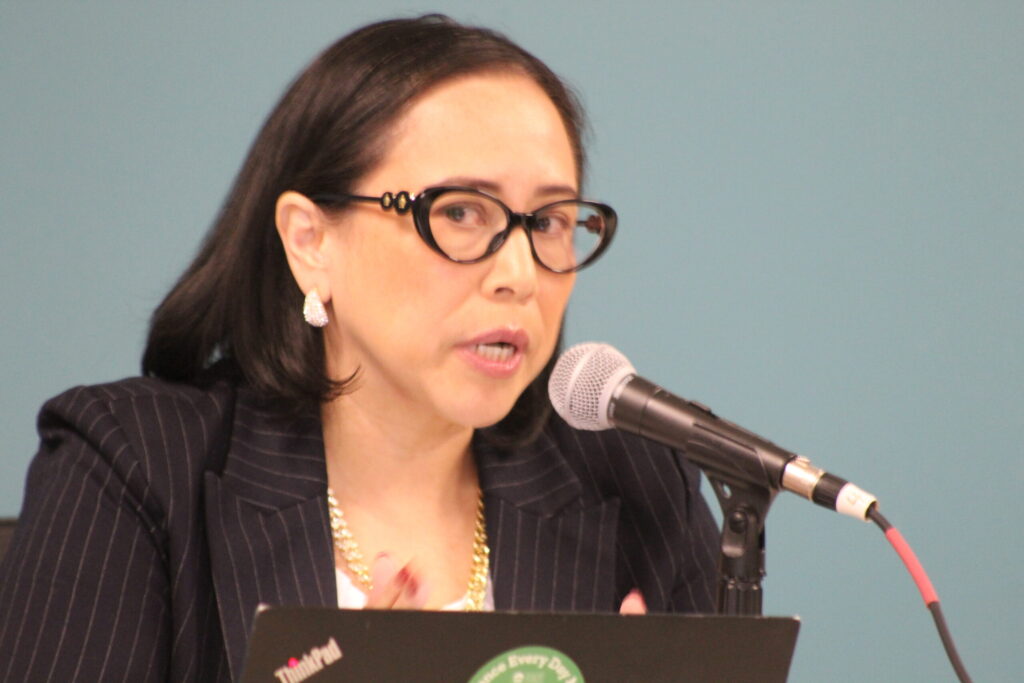
After weeks of jockeying for votes, the Denver Public Schools Board of Education chose a new slate of officers during a specially called meeting Tuesday, selecting Director Xóchitl Gaytán as board president — a role that carries significant control over...

Colorado Higher Education Director Angie Paccione to step down
Marianne Goodland
marianne.goodland@coloradopolitics.com
Updated 1 day ago
Angie Paccione, who has led the Colorado Department of Higher Education since 2019, is returning to the private sector, Gov. Jared Polis said. Paccione’s last day is Jan. 9. The governor’s office said Gov. Jared Polis would decide on the...

Survey reveals widespread dissatisfaction with Colorado’s public education system
Marissa Ventrelli
marissa.ventrelli@coloradopolitics.com
Updated 3 days ago
Most Colorado voters are dissatisfied with the state’s public education system and many lament that it’s headed in the wrong direction, citing – among other worries – “woke” ideology permeating schools, according to a recent poll. Meanwhile, the minority of...

Colorado Springs D-11 board member running for state House seat
Eric Young
eric.young@gazette.com
Updated 1 week ago
A Colorado Springs District 11 board member has thrown their hat into the ring for a seat in the state House of Representatives. A candidate affidavit and committee registration form for Jill Haffley, vice president of D-11’s Board of Education,...
Jeffco Public Schools discusses budget cuts, mill levy
Sage Kelley
sage.kelley@denvergazette.com
Updated 2 weeks ago
A $60 million structural deficit continues to hang over the Jeffco Public Schools. The Jeffco Board of Education met with members of the district’s financial team on Nov. 13 to discuss updates to the Budget Reduction Blueprint — or overall...

Audit: Denver school district owes more than it owns, despite nearly $1B in unspent bond cash
Nico Brambila
nico.brambila@denvergazette.com
Updated 2 weeks ago
Denver Public Schools is operating with a negative net position — owing more in long-term obligations than it holds in assets — a rare and troubling financial posture for a major Colorado school district, according to an audit. Presented on...
DPS board president creates committees that may fall outside public view
Nico Brambila
nico.brambila@denvergazette.com
Updated 2 weeks ago
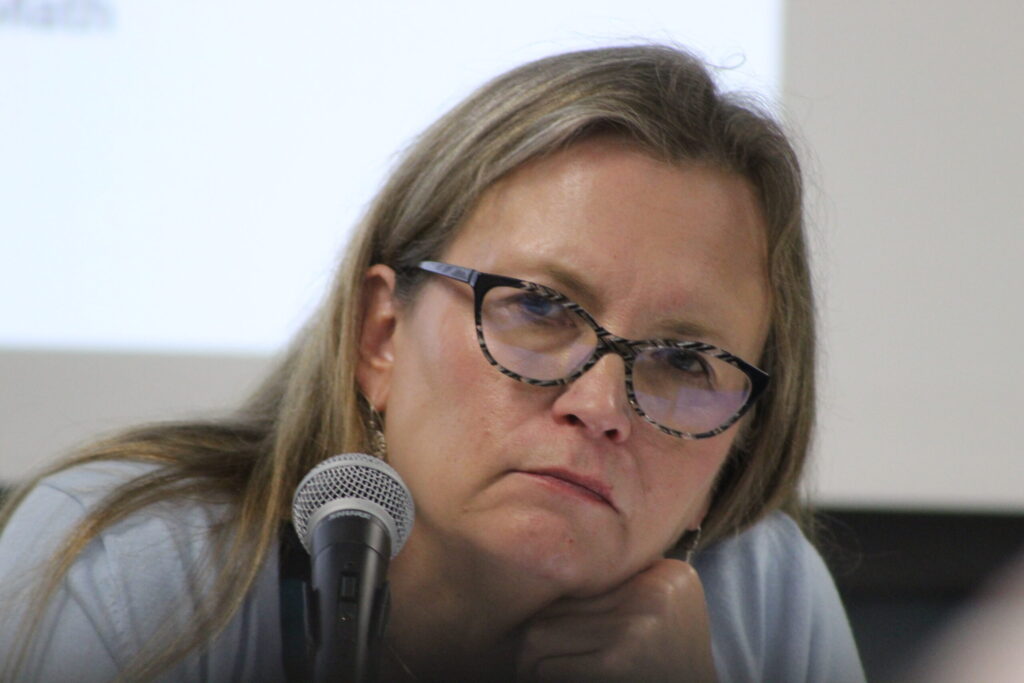
As one of her last official acts on the Denver Public Schools Board of Education, President Carrie Olson created a two-member committee that will not likely conduct its business in public as state law demands. The two-person committee headed by...