

Federal judge grants immunity to Fountain officers for detaining man, entering home without warrant
A federal judge last month threw out a Fountain man’s claims that police officers acted unconstitutionally when they responded to his home for a welfare check, only to restrain him and enter the house without a warrant.
Kyle A. Fisher alleged three officers were unjustified in investigating his children’s wellbeing, and he assumed their visit was the latest in a string of meritless calls by his ex-wife seeking welfare check-ins. However, U.S. District Court Judge Charlotte N. Sweeney noted the officers were actually responding to a call from a concerned neighbor, and Fisher’s combativeness at the doorway gave them further reason to go inside.
“Plaintiff’s aggressive behavior left the officers with little choice but to restrain him,” she wrote in a March 28 order. “(R)easonable officers confronted with the same situation could have concluded that a child in the home was injured or at risk of imminent injury.”
Lawyers for Fisher and for the officer defendants did not respond to emails seeking comment.
Fisher filed suit last year and attached pages of evidence illustrating what he knew when officers knocked on his door on Oct. 1, 2022. For weeks, Fisher’s ex-wife had called police requesting welfare checks at Fisher’s home. Officers came to the house on multiple occasions, spoke with Fisher and left noting the children appeared fine.
Eventually, Fisher stated the repeated visits were disrupting his work. In response, Fountain police told his ex-wife she “could be facing harassment charges if she continues to call” in the absence of extenuating circumstances. The department also subsequently required supervisor approval before officers would be dispatched for her calls.
On Oct. 1, police received a call from a neighbor claiming a child in Fisher’s house was “screaming bloody murder.” Fisher, who is Black, alleged the neighbor had “a demonstrable history of racial animus” against him, but did not elaborate in his lawsuit.
Officers Marcus Howard and Jonathan Kay knocked on Fisher’s door. Fisher admitted he was “visibly frustrated, irritable, and stressed,” and assumed his ex-wife had called for another welfare check.
Fisher shut the door, prompting Howard to yell for him to come back. Fisher returned to tell the officers to “leave me the f–k alone.” Howard grabbed Fisher in the entryway and pulled him onto the porch. Howard and Kay handcuffed Fisher and detained him in their vehicle for 30 minutes. Along with Officer Brandon Anderson, they searched Fisher’s home and found his daughters in bed and upset.
The officers released Fisher with a citation for obstructing a police officer. Days later, the police department told Fisher it was starting an internal investigation and the charge against him would be dropped.

FILE PHOTO
Fisher then sued the city, the officers and the police chief for violating his Fourth Amendment rights against unreasonable searches and seizures.
“Officers Howard and Kay unlawfully entered his home and violently attacked Mr. Fisher and dragged him out of his home while his daughters were sleeping, without any justifiable legal cause,” his lawyers wrote. The “Caucasian Defendant officers suddenly and abruptly stole from Mr. Fisher his most prized possession as an African American man in today’s systemically racist society: his humanity.”
The officers moved to dismiss the lawsuit. They invoked the judicially created doctrine of qualified immunity, which generally shields government employees from civil lawsuits unless they violate a person’s clearly established legal rights. The defendants argued there was no clear prohibition against checking on the welfare of Fisher’s children in light of the neighbor’s call and Fisher’s hostility at the door.
“The need to assist people who are seriously injured or threatened with serious injury excuses an officer’s warrantless entry into a home,” wrote the officers’ attorneys. “The officers had no duty to investigate the 911 call as Mr. Fisher’s evasive and physically and verbally combative behavior, coupled with his effort to retreat inside the home, would have caused an officer to reasonably believe the children — who Mr. Fisher confirmed were inside — could be in danger.”
Sweeney agreed with the officers, finding there were “exigent circumstances” to search the home and confirm the children’s wellbeing without a warrant. She determined police had “specific and articulable facts” suggesting danger, and Fisher’s own conduct “left the officers with little choice but to restrain him.”
“In short, given the information before them, the Court cannot say that the actions of Officers Howard or Kay were unreasonable — let alone unconstitutional,” Sweeney concluded.
The case is Fisher v. City of Fountain.


Federal judge rejects Tina Peters’ request for release pending appeal
Michael Karlik
michael.karlik@coloradopolitics.com
Updated 3 hours ago
A federal judge rejected the petition of former Mesa County clerk Tina Peters on Monday to be released from incarceration pending the resolution of her criminal appeal. Chief U.S. Magistrate Judge Scott T. Varholak wrote in a Dec. 8 order...

Colorado justices lay down framework for analyzing defamation lawsuits involving ‘public interest’ issues
Michael Karlik
michael.karlik@coloradopolitics.com
Updated 6 hours ago
The Colorado Supreme Court clarified on Monday how judges should evaluate whether lawsuits arising from a person’s speech — in particular, online consumer reviews — are connected to an “issue of public interest” and merit protection from legal liability. As...
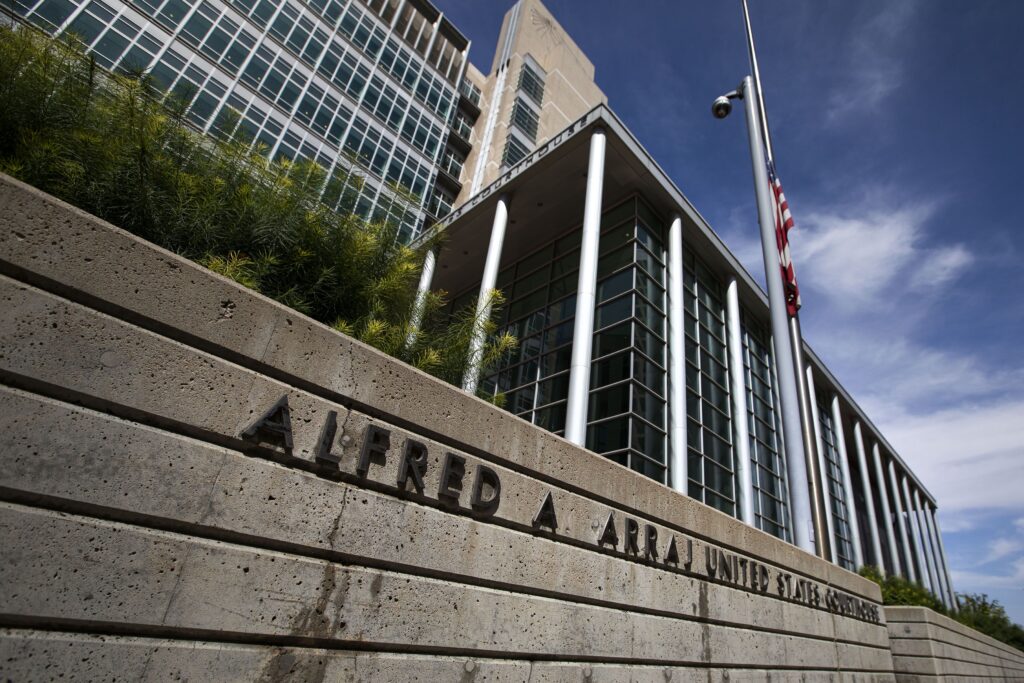
Federal judge rejects DPS’ attempt to obtain 9News sourcing documents in First Amendment case
Michael Karlik
michael.karlik@coloradopolitics.com
Updated 6 hours ago
A federal judge rejected Denver Public Schools’ attempt on Monday to obtain documents from 9News related to its interview with a former principal who alleges his termination amounted to a constitutional violation. At the same time, the attorney for plaintiff...

Federal judge declines to order Denver to let police critic apply for review board
Michael Karlik
michael.karlik@coloradopolitics.com
Updated 1 day ago
A federal judge declined on Friday to order that Denver permit a longtime police critic to apply to join the board tasked with reviewing officers’ use of force. Regan Benson sought to become one of the two community members on...

Colorado Supreme Court to hear case on ballot measure disclosure requirements
Marissa Ventrelli
marissa.ventrelli@coloradopolitics.com
Updated 3 days ago
The Colorado Supreme Court has agreed to hear a case challenging whether the state can require ballot measure committees to disclose the names of their registered agents in election communications. The case stems from a complaint filed during the 2020...
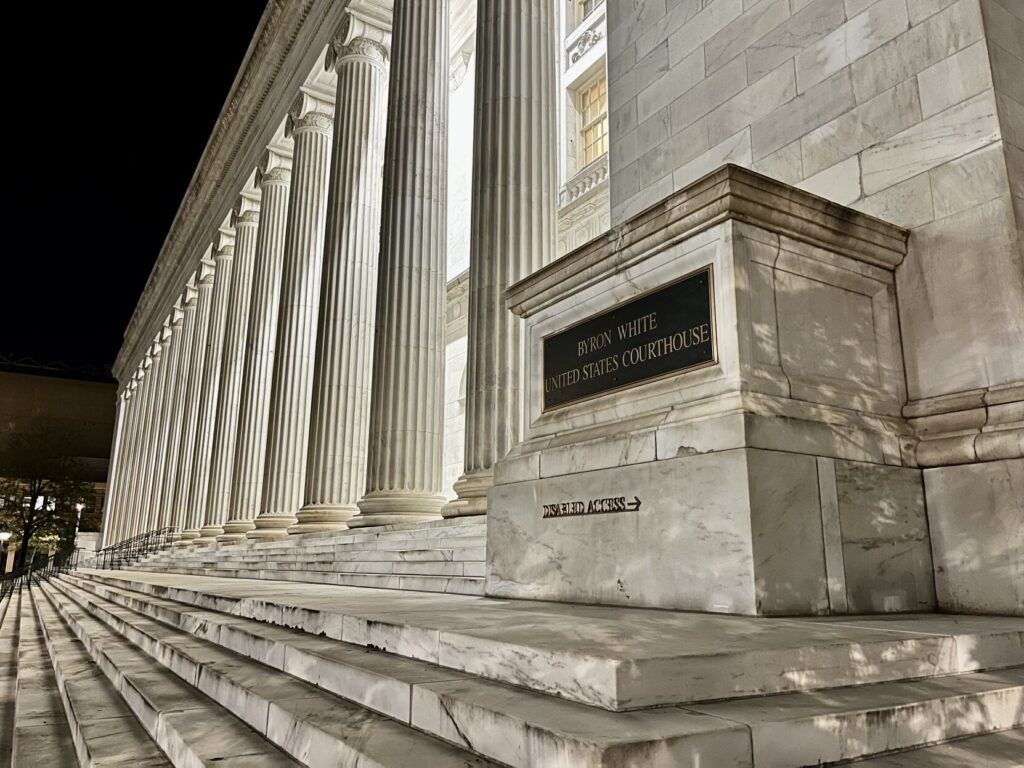
Divided 10th Circuit orders pretrial release of defendant facing drug charges
Michael Karlik
michael.karlik@coloradopolitics.com
Updated 3 days ago
The Denver-based federal appeals court overturned a judge’s order keeping a defendant in custody pending trial on Friday, ruling 2-1 that she was entitled to release under the law. Erika Esmeralda Garcia stands accused of two charges related to the...

Judge denies motion from Gov. Jared Polis to dismiss ICE lawsuit from former state employee
Marianne Goodland
marianne.goodland@coloradopolitics.com
Updated 4 days ago
A Denver District Court judge has denied a request by Gov. Jared Polis to dismiss a lawsuit filed by a former state employee over disclosure of information to federal immigration authorities. The lawsuit filed against the governor by Scott Moss,...

Colorado High School Activities Association reaches settlement with D-49, other school districts in trans athletics lawsuit
Eric Young
eric.young@gazette.com
Updated 3 days ago
Months after adopting new policies restricting students to athletic participation based on their biological sex and filing a federal lawsuit, School District 49 and other Colorado school districts have reached a settlement with the Colorado High School Activities Association (CHSAA)...

Trump calls Jared Polis a ‘sleazebag’ for keeping ‘elderly woman’ Tina Peters in jail, governor responds
The Washington Examiner
the-washington-examiner@coloradopolitics.com
Updated 4 days ago
President Donald Trump took to Truth Social on Wednesday to lambast Colorado Gov. Jared Polis over the case involving former Mesa County Clerk Tina Peters, who was sentenced to nine years in prison in 2024 for charges of giving unauthorized...
Federal judge recommends sanctions on plaintiffs for faulty case citations
Michael Karlik
michael.karlik@coloradopolitics.com
Updated 1 day ago
A federal judge recommended that a pair of self-represented plaintiffs be subject to a range of sanctions for including flawed and non-existent case citations in their filings, potentially by using artificial intelligence. “A federal court is not a workshop for...