

Study says high school graduation is key to curbing lifetime costs for foster children aging out

A new study paints a grim and costly landscape for individuals who “age out” of Colorado’s foster care system, adding that state policy should focus on, among other things, increasing their high school graduation rate.
The report from the Common Sense Institute said those who turn 18 or 21 – and thereby no longer benefit from foster care arrangements, notably services and placements with families – face a slew of challenges, such as unemployment, limited education and access to health care, homelessness, early parenthood, mental health problems and substance abuse.
“Each carries heavy economic and social tolls,” said the report, which looked into the societal costs of 200-plus foster kids aging out of the state system each year on average.
The study said they incur lifetime costs of $66 million to $73 million – or between $309,614 and $343,453 per person.
Over time, the costs compound, the study said.
For five years – meaning for more than 1,000 young people who age out of the system – the costs range from from $330 million to $366 million.
In a decade, the number jumps to as high as $732 million.
To arrive at these figures, the study’s authors looked at the per person cost of incarceration (up to $131,209); education ($195,155 as a result of failing to graduate from high school); early parenthood ($12,200) and homelessness ($4,889).
Colorado’s foster care system had an average of 5,127 youth between 2017 and 2021. In 2020 and 2021, more young people exited than entered the state’s foster care system.
About one in 25 age out of the system each year, the study’s authors noted.
“Coloradans are paying the societal and economic costs on the back end of a foster care intervention that did not lead to permanency,” said study authors John Farnam, DJ Summers and Cole Anderson.
“Policies which pay for performance at the front end and invest in high school graduation are key,” they added.
Indeed, the study’s authors noted that, in 2022, only 30 percent of foster care youth graduated from high school, the worst among students in special curricula. By comparison, homeless children’s high school graduation rate is twice that rate at 55.4 percent.
The authors said that, assuming an average work life of 40 years, the lifetime educational attainment losses amounts to almost $42 million for 213 young people, the average number aging out of the foster care system each year.
The authors noted that, under the Higher Education Support for Foster Youth Act, the state is required to pay whatever a student who had been in foster care cannot raise to attend a public university.
“With the lowest high school graduation rate among Colorado’s students, the state needs to address high school graduation first, before the rest of its postsecondary plans and goals can even be implemented,” the authors said.
The authors also offered a slew of policy proposals they said would help. They included the following:
-
Repurpose child welfare dollars for foster youth education savings accounts, under which the money is redirected to the individual instead of the educational system. Other states have embraced this approach, the authors said.
-
Incentivize efforts to increase graduation rates. The authors proposed giving foster parents, for example, an additional $5,000 cash stipend upon a foster child’s graduation from high school.
-
Eliminate “bureaucratic hurdles” when foster kids try to transfer credit across school, district or state lines. The authors proposed creating a centralized virtual “school district,” which a student enrolls into upon entering foster care.
“The costs borne by this small group of foster youth are borne by the state at large,” the authors said. “Redirecting dollars into their educational success will not only benefit an at-risk population, but the state as a whole.”



Higher home values, abatements to push DPS tax bills up in 2025
Nico Brambila
nico.brambila@denvergazette.com
Updated 11 hours ago
Denver homeowners will pay more in school taxes next year even though Denver Public Schools (DPS) slightly lowered its overall tax rate. The increase is being driven by rising assessed home values, a full 52.142-mill levy and a dramatic increase...

Clash of the titans: Democratic race for governor pits two candidates similar in focus, but very different in style | Vince Bzdek
Vince Bzdek
vince.bzdek@gazette.com
Updated 2 days ago
By Vince Bzdek The race for governor is shaping up to be a clash of Democratic titans, U.S. Sen. Michael Bennet and Attorney General Phil Weiser. They are two of Colorado’s highest profile politicians with deep track records who...

Colorado High School Activities Association reaches settlement with D-49, other school districts in trans athletics lawsuit
Eric Young
eric.young@gazette.com
Updated 4 days ago
Months after adopting new policies restricting students to athletic participation based on their biological sex and filing a federal lawsuit, School District 49 and other Colorado school districts have reached a settlement with the Colorado High School Activities Association (CHSAA)...
New-look Douglas County school board names returning director as president
Noah Festenstein
noah.festenstein@denvergazette.com
Updated 6 days ago
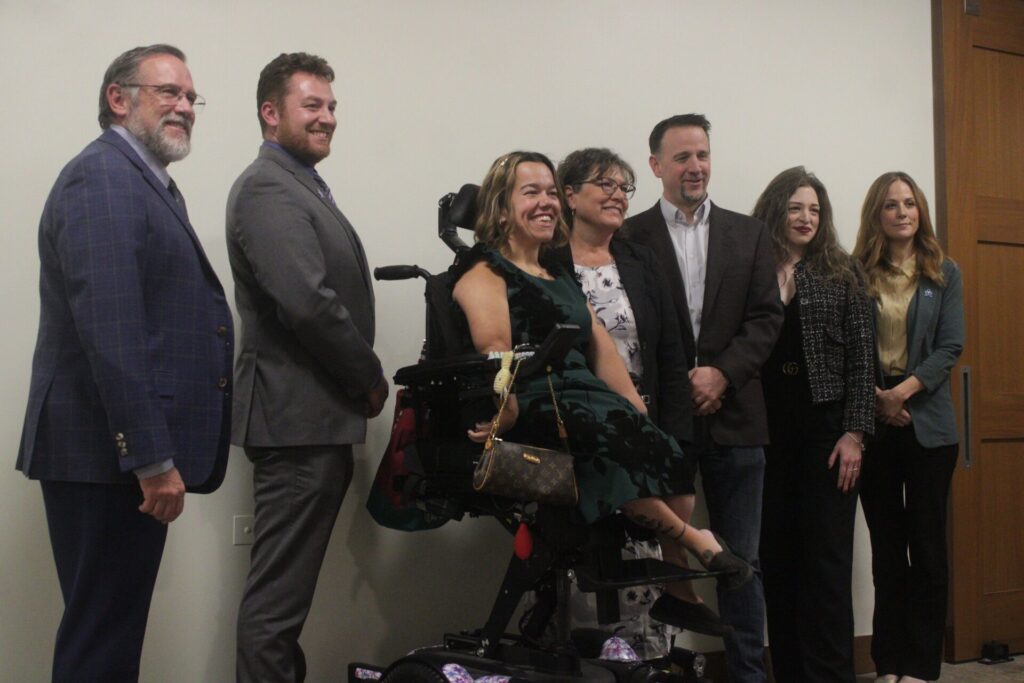
After four new directors swore in earlier than expected, the new-look Douglas County school board met for the first time Tuesday night to elect a new board president and discuss issues addressed by the previous board. Douglas County voters in...
Denver school board elects Gaytán as president
Nico Brambila
nico.brambila@denvergazette.com
Updated 17 hours ago
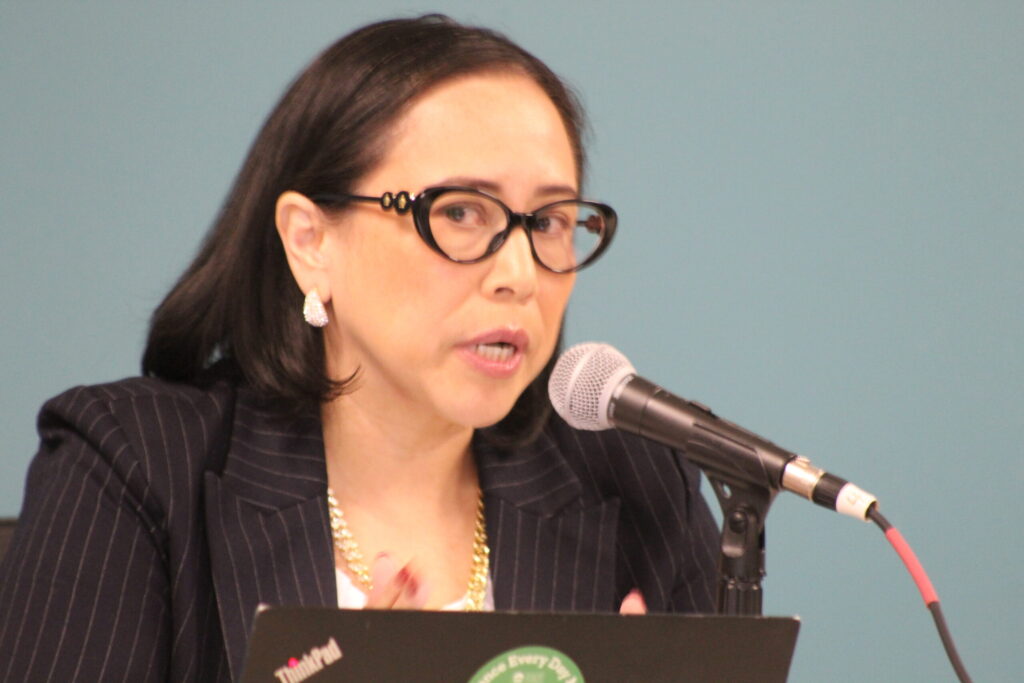
After weeks of jockeying for votes, the Denver Public Schools Board of Education chose a new slate of officers during a specially called meeting Tuesday, selecting Director Xóchitl Gaytán as board president — a role that carries significant control over...

Colorado Higher Education Director Angie Paccione to step down
Marianne Goodland
marianne.goodland@coloradopolitics.com
Updated 2 days ago
Angie Paccione, who has led the Colorado Department of Higher Education since 2019, is returning to the private sector, Gov. Jared Polis said. Paccione’s last day is Jan. 9. The governor’s office said Gov. Jared Polis would decide on the...

Survey reveals widespread dissatisfaction with Colorado’s public education system
Marissa Ventrelli
marissa.ventrelli@coloradopolitics.com
Updated 6 days ago
Most Colorado voters are dissatisfied with the state’s public education system and many lament that it’s headed in the wrong direction, citing – among other worries – “woke” ideology permeating schools, according to a recent poll. Meanwhile, the minority of...
Colorado Springs D-11 board member running for state House seat
Eric Young
eric.young@gazette.com
Updated 2 weeks ago
A Colorado Springs District 11 board member has thrown their hat into the ring for a seat in the state House of Representatives. A candidate affidavit and committee registration form for Jill Haffley, vice president of D-11’s Board of Education,...
Jeffco Public Schools discusses budget cuts, mill levy
Sage Kelley
sage.kelley@denvergazette.com
Updated 2 weeks ago
A $60 million structural deficit continues to hang over the Jeffco Public Schools. The Jeffco Board of Education met with members of the district’s financial team on Nov. 13 to discuss updates to the Budget Reduction Blueprint — or overall...
Audit: Denver school district owes more than it owns, despite nearly $1B in unspent bond cash
Nico Brambila
nico.brambila@denvergazette.com
Updated 2 weeks ago
Denver Public Schools is operating with a negative net position — owing more in long-term obligations than it holds in assets — a rare and troubling financial posture for a major Colorado school district, according to an audit. Presented on...
PREV
PREVIOUS
Lawsuit alleges unsafe conditions at migrant detention facility in New Mexico | OUT WEST ROUNDUP
NEW MEXICO Lawsuit alleges unsafe conditions at migrant detention facility SANTA FE – A new class-action lawsuit alleges that U.S. immigration authorities disregarded signs of unsanitary and unsafe conditions at a detention center in New Mexico to ensure the facility would continue to receive public funding and remain open. The lawsuit announced on Nov. 8 […]

Pro-Palestinian protests draw rebuke from Jewish lawmaker
Pro-Palestinian protesters halted the morning session in the House Saturday as they draped flags and banners in the House gallery and shouted at lawmakers, including yelling “blood on your hands.” The protests were cheered by several lawmakers, including Rep. Tim Hernandez, D-Denver, who said in a post on X, the site formerly known as Twitter, […]