

Polis issues executive order to streamline housing grants in Colorado

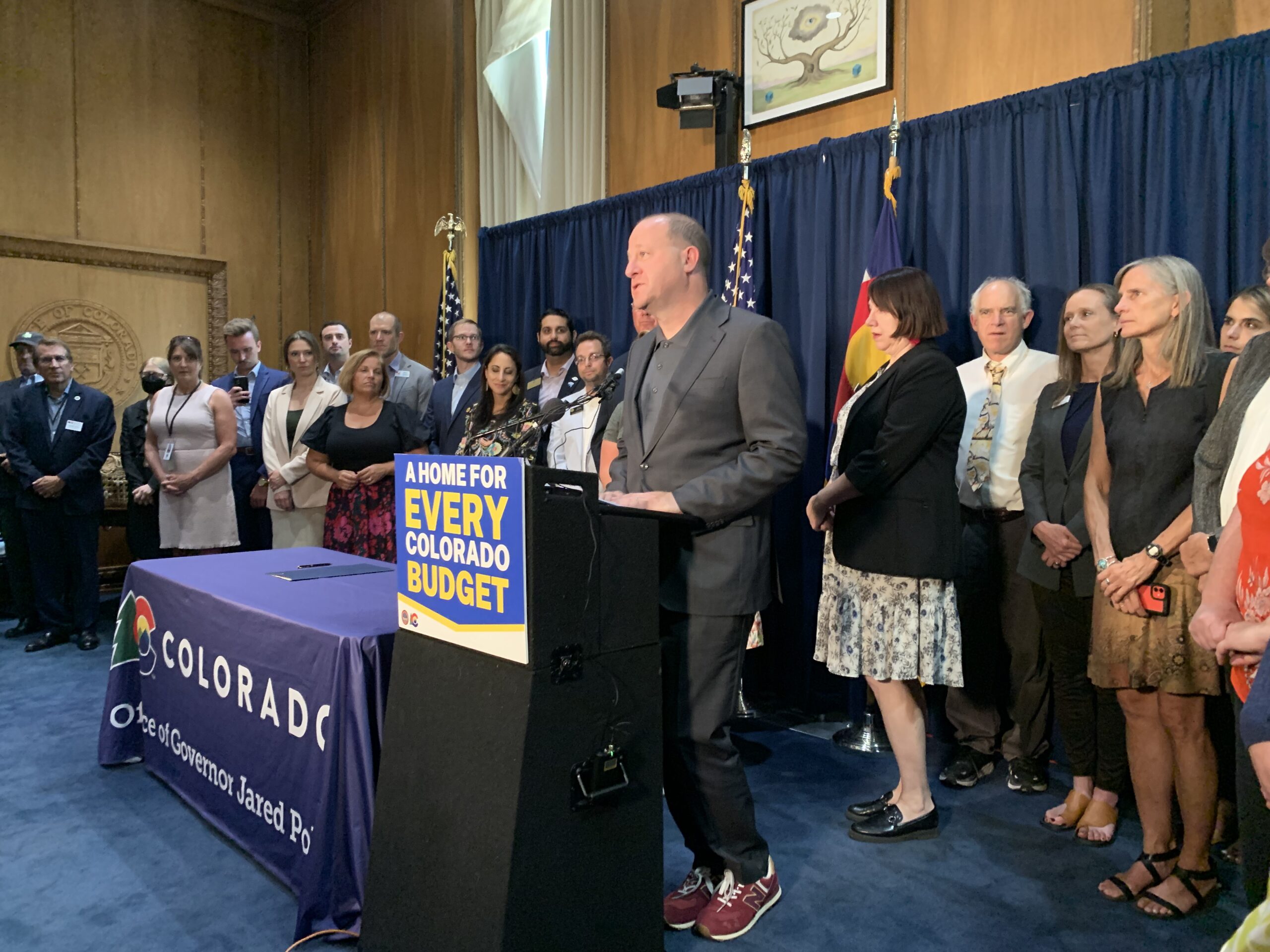
Gov. Jared Polis on Monday signed an executive order that he says will speed up the process for getting more affordable housing into the market.
Key to the effort is ordering the Division of Housing to reduce its timeline for awarding housing grants and loans from its current 240-day turnaround to 90 days.
By Jan. 1, 2024, the division should have its timeline for drafting and executing grants and loans down to 120 days, and then down to 90 days by July 1, 2024.
In addition, the division can use existing state and federal funds to provide “deeper subsidies to maximize unit production, including development in high-need, difficult to develop areas” tied to Proposition 123 funding.
That ballot measure, approved by voters last November, could direct up to $300 million to affordable housing development grants and loans, using 1% of state income tax revenue.
The Polis administration did not provide an estimate on how much this new effort would cost.
Polis told reporters at a Monday news conference the state will prioritize existing resources to get those grants out the door faster.
“We want to show what we are doing as a state to move forward and remove barriers from housing,” Polis said.
The executive order directs coordination among state agencies, some which have never before been involved with housing, to evaluate everything they do that touches housing grants and policies, including utilization of state land.
That would help take into account transit, traffic considerations, water efficiency and open space, the governor said.
“It’s very important that the state has that moral authority and says, ‘We’re moving faster because housing is such a crisis,'” Polis said.
He called Monday’s executive order a “major step towards affordability,” with quicker turnaround and more housing now, “but also a thoughtful approach to how we grow as a state.”
His order means the state is doing its part to support “strategic, sustainable affordability,” Polis said. Coloradans expect the state to deliver more housing choices that fits within their budgets, whether for rent or purchase, he said.
When asked about the cost to implement the aims of the governor’s order, Polis spokesman Conor Cahill said the new executive action “exercises his existing authority as it relates to the housing crisis and ensures the administration leads by example.”
“It directs state agencies to turn around approvals quicker to facilitate more housing being built, gets the government out of the way, cuts red tape and streamlines the processes while aligning existing funds (for example existing ARPA funds and funds from Proposition 123), with the strategic goals outlined by the order,” Cahill said.
The order, he added, “instructs agencies to inventory their own grant and loan programs that provide support to local governments, for housing development, transportation, economic development, and water infrastructure and conservation and develop recommendations to further the strategic growth goals outlined in the Order.”
“Given those directives outlined above, there is not an appropriation at this time as the order prioritizes the use of existing resources to achieve these goals,” Cahill said.
Rick Garcia, executive director at Department of Local Affairs, said the effort to reduce turnaround time on grants is already underway.
“We’ve been working on this for several months,” he told Colorado Politics.
Some of those tactics include better staffing, better technology, reducing some of the overburdensome aspects of contracting required by the state, and working with borrowers to get them in a better position to get their documentation ready so the agency can move the contracts faster.
Surrounded by several House Democrats, Democratic county and city officials and housing supporters, Polls said no executive order will solve the state’s housing crisis, but that the state should lead by example.
The agencies involved in the executive order included Department of Local Affairs, the Office of Economic Development and International Trade, the governor’s Energy Office, and the departments of Personnel and Administration, Natural Resources, Transportation, and Public Health and Environment.
Each agency would be charged with looking at each own grant and local programs and additional funding that provide support to local government partners and others, with a report due to the governor’s office by Dec. 15, 2023 detailing the results of that inventory.
Colorado Counties, Inc., which has been at loggerheads with the governor over his previous plans to strip local governments of zoning authority, said in a statement it appreciates the governor’s effort to look internally at how state agencies and policies might affect delivery of affordable housing.
“Likewise, local governments are also examining their planning process and policies to identify and address obstacles to affordable housing,” CCI President Steve O’Dorisio said. “We are confident that state and local governments can work together to address issues that impact time, costs, accessibility, choice or procedure.”
O’Dorisio said the group looks forward to working with the governor and others throughout the fall to find collaborative solutions to the housing crisis.
One agency not included in the mix is the Department of Regulatory Agencies (DORA), which, among its divisions, regulates occupations and professions.
State Sen. Byron Pelton, R-Sterling, believes leaving out DORA is a misstep, given that it regulates plumbers, electricians and other professions that are also part of the housing industry.
Pelton, who watched the press conference, said he is happy the governor wants to cut more regulations, but he said it should also include some of the regulations it takes to be an electrician or plumber. That move, he said, would get more people into the workforce that builds houses.
Pelton also said the governor ought to do more to support the local governments, which know how to implement housing solutions.
“If he can find a way to just support them on the way they do land use authority, that’s all he needs to do,” Pelton told Colorado Politics.
marianne.goodland@coloradopolitics.com


Clash of the titans: Democratic race for governor pits two candidates similar in focus, but very different in style | Vince Bzdek
Vince Bzdek
vince.bzdek@gazette.com
Updated 2 days ago
By Vince Bzdek The race for governor is shaping up to be a clash of Democratic titans, U.S. Sen. Michael Bennet and Attorney General Phil Weiser. They are two of Colorado’s highest profile politicians with deep track records who...

Q&A: Colorado Chamber of Commerce CEO sees warning signs for state economy, despite strengths | FISCAL ROCKIES
Thelma Grimes
thelma.grimes@coloradopolitics.com
Updated 13 hours ago
Editor’s Note: Once among the nation’s fastest-growing economies, Colorado today confronts mounting challenges that threaten its momentum. This series reveals how a state once defined by prosperity is navigating economic cliffs and ridges. We explore the impact that increased regulations, tariffs,...

Once a step ahead, Colorado’s economy cools, burdened by rising costs and regulations | FISCAL ROCKIES
Thelma Grimes
thelma.grimes@coloradopolitics.com
Updated 13 hours ago
Editor’s Note: Once among the nation’s fastest-growing economies, Colorado today confronts mounting challenges that threaten its momentum. This series reveals how a state once defined by prosperity is navigating economic cliffs and ridges. We explore the impact that increased regulations, tariffs,...

Will pilot program ease Colorado developers’ funding application pain?
Marianne Goodland
marianne.goodland@coloradopolitics.com
Updated 2 weeks ago
When a developer wants to build affordable rental housing, plenty of tax credits and funding sources are available from myriad nonprofits, private companies and government agencies. Developers often cobble together financing from multiple sources, as well as add in “gap”...
Colorado awards first round of grants to promote construction of ‘granny flats’
Marissa Ventrelli
marissa.ventrelli@coloradopolitics.com
Updated 2 weeks ago
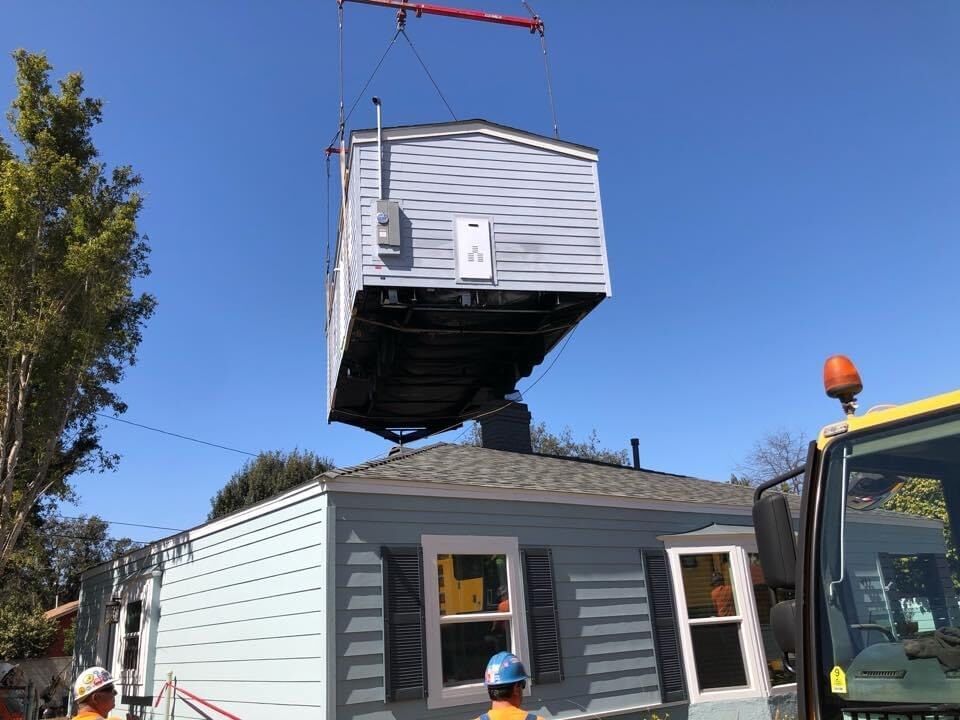
The state has awarded its first round of grants to seven recipients as part of Colorado’s broader campaign to increase the supply of affordable housing options, notably what’s called accessory dwelling units or ADUs. The grants from Colorado Department of...

As market cools, Colorado home prices finally level out
Mark Samuelson Special to The Denver Gazette
mark.samuelson@denvergazette.com
Updated 4 weeks ago
Home prices in Colorado are finally behaving the way that market economics would predict they should, following two years of flat-to-declining real estate sales. They’ve leveled out. That’s according to the newest Market Trends report by the Colorado Association of...
Builders say state’s push fails to create more affordable housing
Mark Samuelson Special to The Denver Gazette
mark.samuelson@denvergazette.com
Updated 1 month ago
What’s the secret sauce for making homes more affordable in Colorado? That’s the question that renters are asking when the median price of a home — now $550,000 — ranks Colorado as one of the least affordable places to live...

Denver ramps up efforts to increase affordable housing
Deborah Grigsby
deborah.smith@denvergazette.com
Updated 1 month ago
With a population of more than 729,000 and growing, the city of Denver has long struggled with an unaffordable housing market and needs to create close to 44,000 affordable units over the next decade, according to the city’s Department of...

Searching for the ‘missing middle’: Denver metro area cities scramble to meet housing needs
Sage Kelley
sage.kelley@denvergazette.com
Updated 1 month ago
As Denver and other cities in the metro area race to comply with state mandates to change zoning and plan for more affordable housing, it remains to be seen if their varied approaches will succeed. Laws enacted in 2024 require...
Polis administration touts local cities’ ‘compliance’ with housing laws
Marianne Goodland
marianne.goodland@coloradopolitics.com
Updated 2 months ago
The Polis administration is taking a victory lap this week on local government compliance with housing laws passed by the General Assembly in the past two years, although the highest level among the metrics is only 60% compliant. In another...
PREV
PREVIOUS

DPS welcomes students back to school as CSOs, SROs strive for safety
Ten-year-old Felix Jones rode to school Monday on a bike, winding through downtown with his parents and younger brother. The 2.1-mile trek to Downtown Denver Expeditionary School – his alma mater – felt more like 10 miles to Jones, who still had to ride another 2 miles to his school, McAuliffe Manuel Middle School. On […]

Sentence enhancers dismissed against two officers in Elijah McClain case
Prosecutors from the Colorado Attorney General’s Office dropped sentence-enhancing counts for assault charges against two Aurora police officers who face criminal charges connected to the 2019 death of Elijah McClain. The two officers, Randy Roedema and Jason Rosenblatt, still face charges of reckless manslaughter, criminally negligent homicide – a lesser, included charge to the manslaughter […]