

Developer’s principals dip into Parker Water election, drawing allegations of ‘takeover’ attempt
Elections for the folks who run water districts are usually as low-key as they come.
For the five-member Parker Water & Sanitation District board of directors, almost everyone who’s run for one of those seats in the last few years hasn’t bothered to conduct much of a campaign. A few had door hangers, and, according to TRACER records from the Secretary of State, paid for those materials out of their own pockets. Out of the nine who ran in the last two elections in 2022 and 2023, all but two didn’t raise a dime for their campaigns.
Then there are the two candidates who ran in 2023: Kory Nelson and Robert Kennah. Nelson lost by 26 votes. Kennah won his seat.
Both were backed with $16,000 in contributions each from principals with Renewable Water Resources, the water investment firm that has been trying for several years to find a way to export water from the San Luis Valley for a yet-to-be-named water provider in Douglas County. That’s more than has been raised collectively by 18 of the 20 candidates for the Parker water board since 2012, according to TRACER records.
The contributions came from RWR principals John Kim and Hugh Bernardi, neither of whom live in the Parker district. Kim is a director on the Roxborough Park Water & Sanitation District board, also in Douglas County.
Some in Douglas County now claim the campaign spending in this year’s board election is an effort by RWR to “take over” the Parker Water board and to find a buyer for the water rights in the San Luis Valley that the water developer has acquired.
RWR dismissed the claims as “conspiracy.”
While RWR may own water rights in the valley, it has yet to outline exactly how it would export that water to Douglas County.
Several have suggested that RWR, if it gained just one more out of the five seats on the board, would work to scrap a deal Parker Water has with the Platte Valley Water Partnership that intends to bring more than 20,000 acre-feet of water to Parker for its future water needs. An RWR-influenced water board could then require the district to buy those San Luis Valley water rights, they said.
RWR critics said that, under that scenario, the fast-growing town of about 63,000 could not only potentially lose its water from the Platte Valley deal but wouldn’t get any water from the San Luis Valley, either, because of the complications of the latter project.
A ‘conspiracy theory’
Sean Duffy, a spokesman for RWR, dismissed the claims that RWR wants to take over the Parker board as a conspiracy theory. He acknowledged that RWR principals have been spending significant money into the Parker Water Board elections but maintained their interest is in “reform-minded candidates,” who, he said, would ask very tough questions about the entity’s water decisions.
And just because RWR may support a candidate, it doesn’t guarantee that person will do the company’s bidding, he said.
“There’s certainly is a desire for some sort of transparency,” including a new look at issues on the water board, Duffy told Colorado Politics. “If there are reform-minded candidates who are at least open-minded to different approaches, [such as] how we deal with a growing water challenge in Douglas County, great.”
He added: “Open-mindedness is all we can ask.”
“We’re proposing something very different,” he said. “There’s a big lift to try to get folks to listen.”
Duffy also pointed out that the San Luis Valley project is not over with. What’s over, he said, is Douglas County’s attempt to use federal American Rescue Plan Act dollars as an investment in the project. But the project still has the support of two county commissioners, Abe Laydon and George Teal, he noted.
The RWR project claims there’s 1 billion acre-feet of water in the confined aquifer. One acre-foot is about 326,000 gallons of water or enough to cover a football field with 1 foot of water.
In pitching for exporting groundwater out of the valley, the RWR project guarantees the valley’s resource would be protected. It notes that the Colorado Water Court already ensures that the San Luis Valley will not lose water. RWR says it would enter the water court process and “prove how the project meets these provisions of the water court.”
The project would invest $68 million to pay farmers and ranchers who voluntarily sell water rights, maintaining that’s three times above market rate, and it is creating a $50 million “Community Fund,” which can be used to improve essential services, such as police, fire and education, an infusion of $3 million to $4 million annually into the local economy.
San Luis Valley water experts, including Sen. Cleave Simpson, R-Alamosa, the manager of the Rio Grande Water Conservation District, dispute water figures offered by RWR.
Platte Valley partnership
The Parker water board has been working with the Lower South Platte Water Conservancy District for several years on a project that both sides hope will secure Parker’s water future, as well as avoid “buy and dry” for agriculture water on the northern Eastern Plains.
The two entities are teaming up for water infrastructure by building a small storage reservoir with water from the South Platte of around 6,500 acre feet near Iliff in Logan County; a larger reservoir that could store up to 72,000 acre feet near Akron in Washington County; and, a pipeline that would bring all that water to Rueter-Hess Reservoir in Douglas County.

The total cost for the Platte Valley Water Partnership is around $680 million, with Parker Water responsible for about $460 million. The utility has already invested about $65 million into the project, which has a completion date of 2038, according to Ron Redd, Parker Water’s district manager.
Supporters said that timeline will allow Parker Water to save up the funds it will need for its share of the project. Castle Rock Water, another of the county’s largest water providers, will cover a share of that cost.
While the Parker water board has been working on the project for several years, Redd said it isn’t cast in stone just yet. The project is waiting on an agreement with the conservancy district tied to 20,000 acre feet in junior water rights, with a court date to hash out the deal set for 2025.
The lack of a final agreement opens up possibility that the whole Platte Valley project could still be scrapped – should the composition of the Parker water board change, Redd said.
“That’s the biggest problem,” Redd told Colorado Politics. “If another interest came in and they said, ‘Ron, take your focus off Platte Valley and we want you to go develop San Luis Valley water,'” that could happen.
Parker Water already owns 9,000 acre feet of junior water rights near where the Platte Valley project is envisioned. That water has already been adjudicated by the state water court for municipal use, plus another 4,000 acre feet in senior water rights currently used for irrigation. The latter also awaits a water court date.
The May 2023 election
Merlin Klotz, who has been on the Parker Water Board on and off for more than a decade, defeated Nelson for the Parker water board seat last May. He told Colorado Politics in an email he believes RWR is interested in “buying” seats on the Parker board for one or more reasons.
They include, he speculated, delaying or preventing Parker Water’s Platte Valley Partnership that could move 22,000 acre feet of already-owned Parker water to Douglas County, which he presumed is competition for RWR’s San Luis Valley project; buying Parker Water’s 22,000 acre feet Platte Valley water at a bargain price; controlling access and rate for participation in the Platte Valley project; diverting reserves set aside to build the Platte Valley project for other, unidentified purposes; and, controlling the use and rates for Rueter-Hess as a storage medium for San Luis Valley water.
In order to “control” the Parker board, RWR would need just one more seat, Klotz claimed.
Under this theory by Klotz and others, Kennah – given the support he received from RWR principals – and Brooke Booth would favor RWR’s proposals.
Booth is the sister-in-law of RWR principal Sean Tonner, the former deputy chief of staff to Gov. Bill Owens, who is also an RWR principal.
Redd pointed to Booth’s support for a motion that would have undone the election results, giving Nelson, who received campaign finance support from RWR principals, a chance to win a seat on the board.
Booth and Kennah did not respond to requests for comment.
Here’s what happened, according to Redd.
One neighborhood didn’t get their ballots for the May election due to a 20-year old “error.” As Redd explained it, this error led to the assessor to exclude 62 property owners – a total of 92 voters – from the water district. The intention, Redd said, was just to exclude a small strip of land. But the error meant the property owners couldn’t vote for the water board, and they also wound up not having to pay property taxes for that 20 years.
The property owners still get their water from the district.
The error came to light just days before the election when a water customer complained that she hadn’t gotten a ballot, and there’s wasn’t enough time to get everyone a ballot.
That led Nelson to challenge the results of the election, where he lost by 26 votes to Klotz.
In June, Nelson showed up at the water board meeting with a resolution in hand to try to overturn the results of the election, Redd said. The resolution would have asked the board to vacate the results of the May election, costing Klotz his seat, at least temporarily, and allowing only the 62 property owners who missed the vote to cast ballots between Klotz and Nelson, with the results added to the May election outcome.
The board’s attorney informed them that what Nelson proposed was not legal under Colorado election law.
Despite the attorney’s advice, Kennah made the motion for the resolution and Booth seconded it. It failed on a 3-2 vote.
Nelson is now suing the board to overturn the May election results. The 60-day deadline for that challenge expired on July 12.
The clock is now running on a last chance, 35-day window to sue the board over the election results, which would set up another election. Parker Water was served with a lawsuit over the election results on Wednesday.
Nelson declined to comment.


Clash of the titans: Democratic race for governor pits two candidates similar in focus, but very different in style | Vince Bzdek
Vince Bzdek
vince.bzdek@gazette.com
Updated 7 minutes ago
By Vince Bzdek The race for governor is shaping up to be a clash of Democratic titans, U.S. Sen. Michael Bennet and Attorney General Phil Weiser. They are two of Colorado’s highest profile politicians with deep track records who...

Q&A: Colorado Chamber of Commerce CEO sees warning signs for state economy, despite strengths | FISCAL ROCKIES
Thelma Grimes
thelma.grimes@coloradopolitics.com
Updated 13 hours ago
Editor’s Note: Once among the nation’s fastest-growing economies, Colorado today confronts mounting challenges that threaten its momentum. This series reveals how a state once defined by prosperity is navigating economic cliffs and ridges. We explore the impact of increased regulations, tariffs,...

Once a step ahead, Colorado’s economy cools, burdened by rising costs and regulations | FISCAL ROCKIES
Thelma Grimes
thelma.grimes@coloradopolitics.com
Updated 2 days ago
Editor’s Note: Once among the nation’s fastest-growing economies, Colorado today confronts mounting challenges that threaten its momentum. This series reveals how a state once defined by prosperity is navigating economic cliffs and ridges. We explore the impact of increased regulations, tariffs,...

Colorado could loosen regulations on intoxicating hemp products, countering new federal ban
Marissa Ventrelli
marissa.ventrelli@coloradopolitics.com
Updated 2 weeks ago
As the federal government is poised to impose a near-ban on intoxicating hemp products next year, Colorado lawmakers are planning to loosen the restrictions imposed by a 2023 law. Last week, Congress included a provision in its funding bill intended...

Washington state leaders rip Colorado over ‘failing’ wolf reintroduction program
Marianne Goodland
marianne.goodland@coloradopolitics.com
Updated 3 weeks ago
Washington’s Fish and Wildlife Commission on Saturday said “no, not now” to sending wolves to Colorado, after a hearing in which the state’s residents vigorously argued against it. The commission voted, 8-1, to send a letter to Colorado stating that...

Fort Collins is now a USDA regional hub: ‘It began to make sense’
Hap Fry, Special to the Gazette
hap-fry@gazette.com
Updated 6 days ago
FORT COLLINS – SeonAh Kendall was initially caught off guard when she got word that the U.S. Department of Agriculture had named Fort Collins as one of its regional hubs. That Fort Collins was being lumped in with larger metropolitan...

Senate votes to ban intoxicating hemp products nationally
Chris Osher
chris-osher@gazette.com
Updated 3 weeks ago
Legislation passed by the U.S. Senate late Monday will ban nearly all hemp-derived THC products, despite Kentucky GOP Sen. Rand Paul’s attempts to block the hemp-ban language from a part of the GOP-proposed deal designed to end the government shutdown. Eight Democrats...
Nebraska says Colorado is stealing its water
Marianne Goodland
marianne.goodland@coloradopolitics.com
Updated 1 month ago
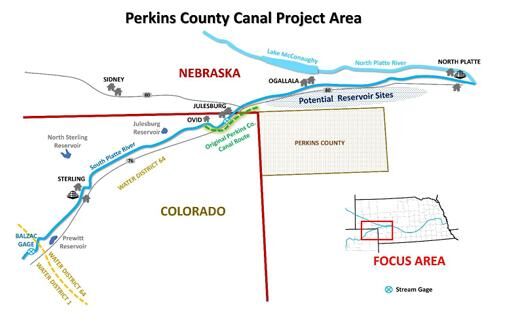
The fight over Nebraska’s attempt to seize privately-owned land in northeastern Colorado persisted this week, with Nebraska accusing Colorado of stealing its water in a filing Wednesday with the U.S. Supreme Court. The issue deals with the Perkins County canal,...

Colorado joins 22-state lawsuit to restore SNAP benefits amid government shutdown
Marianne Goodland
marianne.goodland@coloradopolitics.com
Updated 1 month ago
Colorado joined a lawsuit filed by states against the U.S. Department of Agriculture to attempt to force the restart of the Supplemental Nutrition Assistance Program benefits. Those benefits are set to expire on Nov. 1 due to the federal government...

US Fish and Wildlife Services tells Colorado: No more wolves from Canada, Alaska
Marianne Goodland
marianne.goodland@coloradopolitics.com
Updated 1 month ago
Efforts by Colorado Parks and Wildlife to bring in more wolves from Canada later this year may have hit a snag after the U.S. Fish & Wildlife Service told the state it may not do so. In an Oct. 10...
PREV
PREVIOUS

Colorado Real Estate Alliance objects to proposed large building energy efficiency rule
A proposed state energy reduction rule that could cost large building owners more than $2.5 billion for mandatory building upgrades raised objections from the Colorado Real Estate Alliance. CREA is a coalition of real estate focused organizations with both residential and commercial interests, including associations and businesses that are involved in real estate construction, service, […]

'High school of the future': State and national leaders want to reimagine secondary education
What if in between math and English classes, high schoolers learned how to weld or code or perform first aid? That’s the vision state and national leaders shared Thursday during the Unlocking Pathways Summit at the Community College of Aurora. This latest in a national series of events saw educators, Colorado politicians and members of President […]