

Colorado Supreme Court says Mexican acquittal did not bar man’s Mesa County murder prosecution
Even though Mexico’s judicial system acquitted a man for a murder he committed in Mesa County, there was no prohibition against Colorado prosecutors also charging him for the offense when he returned, the state Supreme Court ruled on Tuesday.
A jury found Rafael Aguilar Garcia guilty of murder in 2017, nearly three decades after he killed Charles Porter in Palisade and five years after Mexican authorities acquitted him of the crime. Garcia initially fled to Mexico after the murder but returned to Colorado under the impression that the constitutional prohibition on double jeopardy would preclude a second prosecution in the United States.
He was wrong.
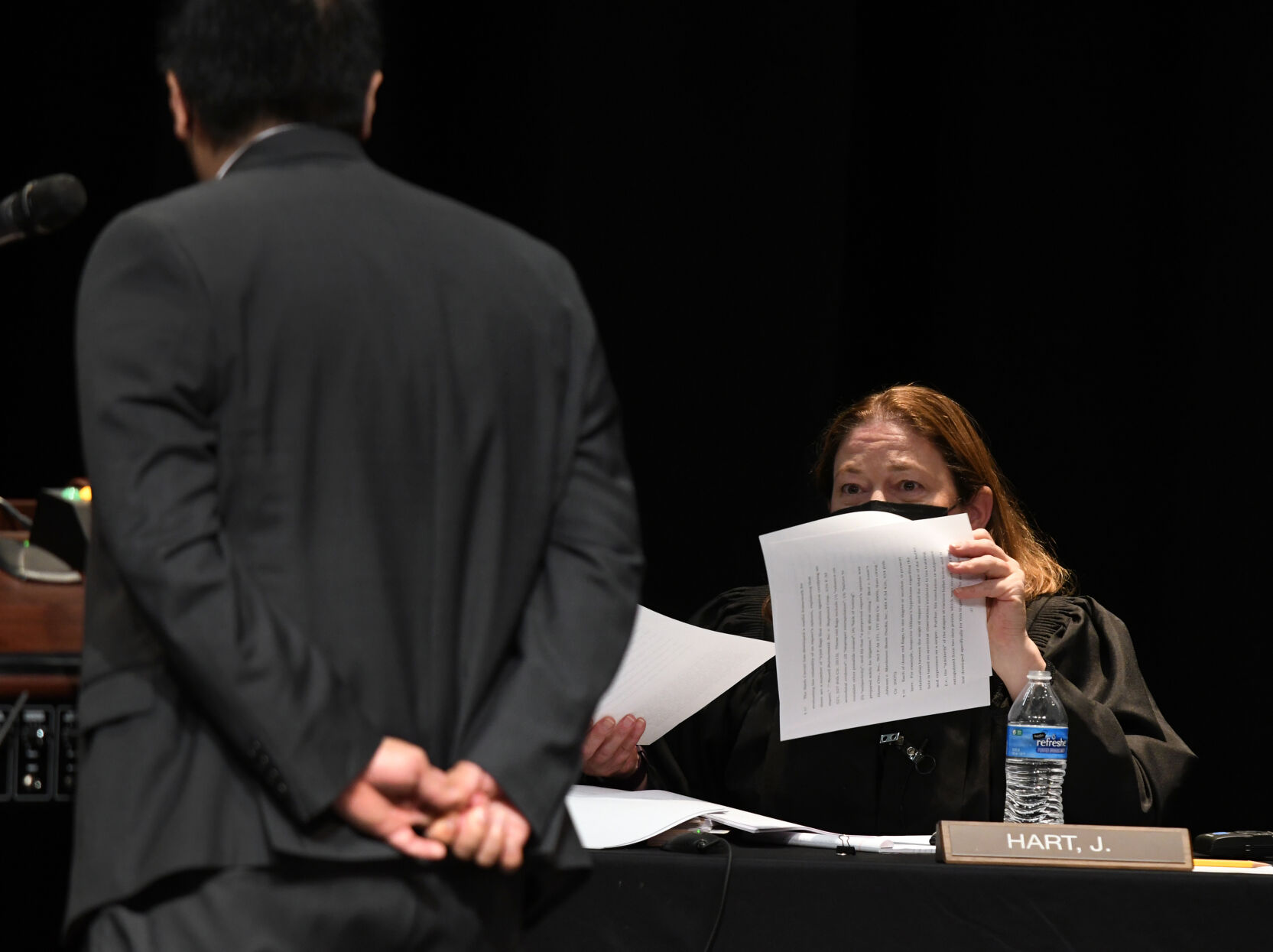
“We reject these claims and conclude that, under both the United States Constitution and state law, Mesa County was entitled to prosecute Garcia despite his earlier prosecution and acquittal in Mexico,” wrote Justice Melissa Hart in the June 20 opinion.

Double jeopardy prohibits the government from prosecuting someone twice for the same offense. There is an exception, however, under the “dual sovereignty doctrine” – the idea that a person’s conduct can violate the laws of both federal and state governments, for example, and can be prosecuted under each.
Colorado has curtailed the dual sovereignty doctrine with a law that bars successive prosecutions involving other states, the federal government or municipalities. The Supreme Court has also acknowledged tribal governments fall into that category.
Garcia argued the law should be read to also encompass the Mexican state where he was originally prosecuted. The justices were unconvinced, reasoning the legislature purposefully omitted foreign states and countries from the list.
“And, while Mexico is made up of states, many other foreign countries are not – for example, Canada is made up of provinces, and France of regions and departments,” Hart wrote.
Garcia also contended his first prosecution was a “sham” that Colorado authorities were actually controlling. Because Mexico would not extradite Garcia given the potential death penalty he would face for murder at the time, state prosecutors sent a “casebook” with evidence to Mexico so that Mexican authorities could prosecute him under Article IV of its federal penal code. Article IV applies to Mexican citizens in Mexico who have committed a crime in another country.
Garcia argued to the Supreme Court that the Mexican case against him was essentially a front for Colorado prosecutors given the level of assistance provided. Again, the Supreme Court disagreed.
“Routine intergovernmental assistance between sovereigns, without more, does not rise to the level required,” Hart wrote. “No Colorado or United States authorities were involved in the courtroom proceedings. No Colorado or United States law was applied. Garcia was tried under Mexican law and acquitted in a Mexican court, and his acquittal was affirmed by a Mexican appellate court.”
Last year, a majority of the U.S. Supreme Court, in a case that originated in Colorado, affirmed that an American Indian man was properly prosecuted in tribal court and then in federal court for the same conduct under the dual sovereignty doctrine. The dissenting justices questioned the validity of the theory, with Justice Neil M. Gorsuch warning that a prosecution in one jurisdiction can serve as a “dress rehearsal” for a prosecution in another.
The case is Garcia v. People.



Federal judge declines to order Denver to let police critic apply for review board
Michael Karlik
michael.karlik@coloradopolitics.com
Updated 21 hours ago
A federal judge declined on Friday to order that Denver permit a longtime police critic to apply to join the board tasked with reviewing officers’ use of force. Regan Benson sought to become one of the two community members on...

Colorado Supreme Court to hear case on ballot measure disclosure requirements
Marissa Ventrelli
marissa.ventrelli@coloradopolitics.com
Updated 2 days ago
The Colorado Supreme Court has agreed to hear a case challenging whether the state can require ballot measure committees to disclose the names of their registered agents in election communications. The case stems from a complaint filed during the 2020...
Divided 10th Circuit orders pretrial release of defendant facing drug charges
Michael Karlik
michael.karlik@coloradopolitics.com
Updated 2 days ago
The Denver-based federal appeals court overturned a judge’s order keeping a defendant in custody pending trial on Friday, ruling 2-1 that she was entitled to release under the law. Erika Esmeralda Garcia stands accused of two charges related to the...

Judge denies motion from Gov. Jared Polis to dismiss ICE lawsuit from former state employee
Marianne Goodland
marianne.goodland@coloradopolitics.com
Updated 3 days ago
A Denver District Court judge has denied a request by Gov. Jared Polis to dismiss a lawsuit filed by a former state employee over disclosure of information to federal immigration authorities. The lawsuit filed against the governor by Scott Moss,...

Colorado High School Activities Association reaches settlement with D-49, other school districts in trans athletics lawsuit
Eric Young
eric.young@gazette.com
Updated 2 days ago
Months after adopting new policies restricting students to athletic participation based on their biological sex and filing a federal lawsuit, School District 49 and other Colorado school districts have reached a settlement with the Colorado High School Activities Association (CHSAA)...

Trump calls Jared Polis a ‘sleazebag’ for keeping ‘elderly woman’ Tina Peters in jail, governor responds
The Washington Examiner
the-washington-examiner@coloradopolitics.com
Updated 3 days ago
President Donald Trump took to Truth Social on Wednesday to lambast Colorado Gov. Jared Polis over the case involving former Mesa County Clerk Tina Peters, who was sentenced to nine years in prison in 2024 for charges of giving unauthorized...
Federal judge recommends sanctions on plaintiffs for faulty case citations
Michael Karlik
michael.karlik@coloradopolitics.com
Updated 3 days ago
A federal judge recommended that a pair of self-represented plaintiffs be subject to a range of sanctions for including flawed and non-existent case citations in their filings, potentially by using artificial intelligence. “A federal court is not a workshop for...
Federal judge deems Jeffco’s appeal ‘frivolous’ in jail death case
Michael Karlik
michael.karlik@coloradopolitics.com
Updated 3 days ago
A federal judge declared Jefferson County’s appeal of his evidentiary decision “frivolous” on Thursday, which enables him to continue handling the civil rights litigation even as an appellate court separately addresses the appeal. The order from U.S. District Court Judge...

Cause of death revealed for self-proclaimed Planned Parenthood gunman
Mackenzie Bodell
mackenzie-bodell@coloradopolitics.com
Updated 3 days ago
The self-proclaimed gunman in the Planned Parenthood shooting in Colorado Springs in November 2015 died from congestive heart failure and other related medical conditions, the Federal Bureau of Prisons said in a recent court filing. The Federal Bureau of Prisons...
Federal judge lets ex-Castle Rock employee’s discrimination lawsuit proceed
Michael Karlik
michael.karlik@coloradopolitics.com
Updated 4 days ago
A federal judge rejected the town of Castle Rock’s effort to dismiss an ex-employee’s age and gender discrimination lawsuit on Wednesday, while deeming the case a close call. Carl E. Filler, who was in his mid-60s when the town hired...
PREV
PREVIOUS

Mayor Yemi Mobolade, former Councilman Wayne Williams highlight unity in final mayoral election ad
Following an “intense” campaign that at times saw candidates trading barbs over their vision for the city or even their political affiliation, Colorado Springs Mayor Yemi Mobolade and his mayoral runoff opponent Wayne Williams are ready to put that all behind them. Mobolade and Williams this week released a 50-second digital ad called “We are […]

Douglas County School District spent $186,000 in legal fees fighting open meeting violation
The Douglas County School District has spent more than $185,000 – and counting – defending board members against a lawsuit stemming from the firing of former Superintendent Corey Wise, The Denver Gazette has learned. The true costs are likely more. That’s because the tally does not include any expenses incurred over the last three weeks. […]