

Appeals court says COVID-19 trial precautions were constitutional
Colorado’s second-highest court ruled for the first time on Thursday that pandemic-era health precautions during jury trials, specifically masking and distancing for jurors, did not violate a defendant’s constitutional rights.
Kenneth L. Garcia’s jury trial in July 2020 was the first to take place in Denver after the onset of the COVID-19 pandemic. Consequently, the judicial branch instituted safeguards to avoid infections, based on public health orders in place at the time.
Following his conviction, Garcia challenged the masking and distancing of participants in the courtroom, alleging the practice violated his constitutional rights to due process, to confront the witnesses against him, and to have a fair and impartial jury. Garcia even blamed the state for not planning constitutionally-compliant protocols based on the last similar crisis – the influenza pandemic of 1918.
But a three-judge panel of the Court of Appeals rejected Garcia’s assertions in their entirety.
“We join the several courts from other jurisdictions that have considered this question and have concluded that such precautions in the face of the COVID-19 pandemic do not violate a defendant’s constitutional rights,” wrote Judge Anthony J. Navarro in the panel’s Dec. 22 opinion.
Prosecutors charged Garcia with multiple offenses based on allegations he robbed the 78-year-old woman who hired him for repair work. A jury found him guilty and he received a nine-year prison sentence.
Although the judicial branch was under an order from the chief justice suspending jury trials, Garcia’s case was the first in Denver allowed to proceed as a pilot. The plan entailed having jurors sit in the public gallery and remain six feet apart, to require mask-wearing, to turn the defense and prosecution tables to enable jurors to see the parties, and to permit witnesses to wear face shields while testifying.
Ahead of trial, the defense filed objections to the procedures. Garcia claimed mask-wearing would inhibit the attorneys from analyzing the suitability of potential jurors, and would make it difficult for jurors to assess the credibility of witnesses or the defendant. Further, some jurors would not be able to see Garcia clearly under the seating arrangement.
“The court believes that it has taken all the appropriate precautions, and if there’s anything further that we can help with, we will – we’ll provide those,” responded District Court Judge Shelley I. Gilman.
On appeal, Garcia raised several of the same concerns. Specifically, he argued it was difficult for the defense to determine whether to dismiss a given member of the jury pool during selection because the lawyers could not accurately gauge facial expressions.
“Because of the procedures, it is impossible for the defense to know whether a juror should have been challenged for cause based on a hidden facial response to questioning or another juror’s responses,” wrote defense attorney Lucy H. Deakins.
Deakins also pointed out the seating arrangement, in which some jurors sat eight feet farther from the defendant than normal, meant they could not assess the demeanor of Garcia or of witnesses as easily. She cited the 1918 flu pandemic as evidence that COVID-19 “should also not have been a surprise,” and the judicial branch should have been better prepared to accommodate defendants’ rights.
The government responded that no legal authority dictated people’s entire faces must be visible in order to comply with the Constitution.
“Defendant had a right to ask the prospective jurors questions – not a right to observe their noses and mouths,” wrote Assistant Attorney General Brian M. Lanni. He added there was overwhelming evidence of Garcia’s guilt, and this was not a case that depended on the credibility of witnesses.
The Court of Appeals panel looked to several other court rulings throughout the country that evaluated similar claims about COVID-19 protocols. It found little support for Garcia’s allegations.
Although the Colorado Supreme Court has acknowledged a juror’s demeanor and body language are important, “a mask covering a juror’s nose and mouth does not make it impossible to assess the juror’s demeanor,” Navarro explained.
“Moreover, even if the prospective jurors’ masks made assessing their demeanor marginally more difficult, both the defense and the prosecution were equally burdened by this challenge,” he continued.
As for Garcia’s seating chart concerns, the panel interpreted the issue as implicating Garcia’s right to confront the witnesses against him. But the appellate judges found no constitutional violation, as the witnesses did not wear masks while they were testifying and Garcia had not alleged jurors were incapable of hearing anyone speak.
The panel called it “debatable” whether a defendant has the right for jurors to observe him throughout trial, but in any event, the seating arrangement furthered an important public policy – “ensuring the safety of everyone in the courtroom in the midst of an extraordinary global pandemic by having jurors sit apart,” Navarro concluded.
The case is People v. Garcia.


Federal judge declines to order Denver to let police critic apply for review board
Michael Karlik
michael.karlik@coloradopolitics.com
Updated 7 hours ago
A federal judge declined on Friday to order that Denver permit a longtime police critic to apply to join the board tasked with reviewing officers’ use of force. Regan Benson sought to become one of the two community members on...
Colorado Supreme Court to hear case on ballot measure disclosure requirements
Marissa Ventrelli
marissa.ventrelli@coloradopolitics.com
Updated 1 day ago
The Colorado Supreme Court has agreed to hear a case challenging whether the state can require ballot measure committees to disclose the names of their registered agents in election communications. The case stems from a complaint filed during the 2020...
Divided 10th Circuit orders pretrial release of defendant facing drug charges
Michael Karlik
michael.karlik@coloradopolitics.com
Updated 24 hours ago
The Denver-based federal appeals court overturned a judge’s order keeping a defendant in custody pending trial on Friday, ruling 2-1 that she was entitled to release under the law. Erika Esmeralda Garcia stands accused of two charges related to the...
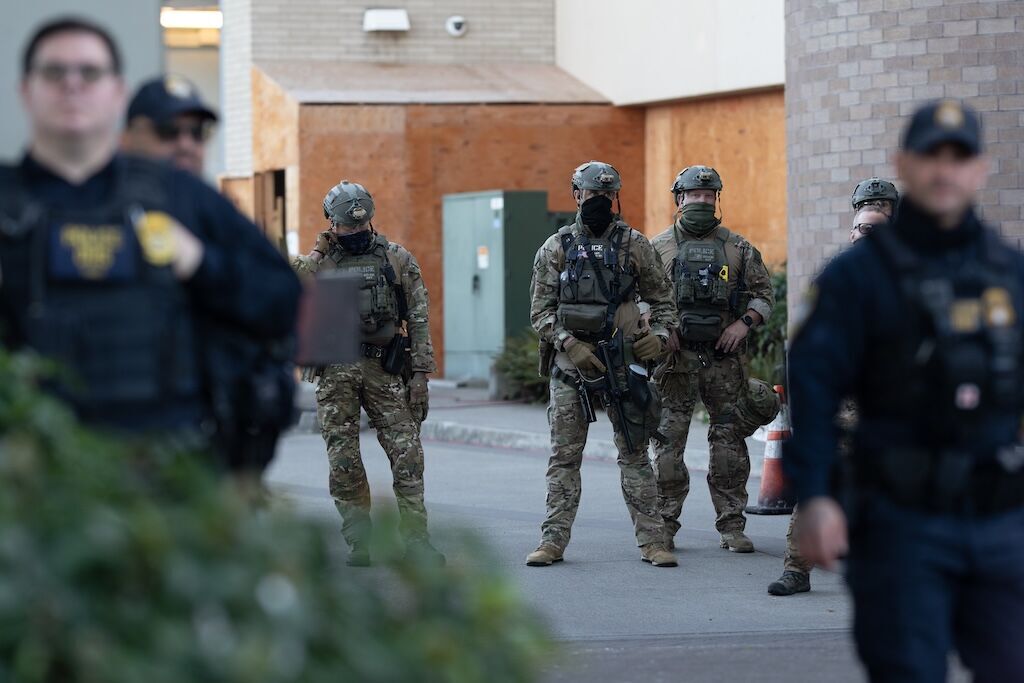
Judge denies motion from Gov. Jared Polis to dismiss ICE lawsuit from former state employee
Marianne Goodland
marianne.goodland@coloradopolitics.com
Updated 2 days ago
A Denver District Court judge has denied a request by Gov. Jared Polis to dismiss a lawsuit filed by a former state employee over disclosure of information to federal immigration authorities. The lawsuit filed against the governor by Scott Moss,...

Colorado High School Activities Association reaches settlement with D-49, other school districts in trans athletics lawsuit
Eric Young
eric.young@gazette.com
Updated 1 day ago
Months after adopting new policies restricting students to athletic participation based on their biological sex and filing a federal lawsuit, School District 49 and other Colorado school districts have reached a settlement with the Colorado High School Activities Association (CHSAA)...
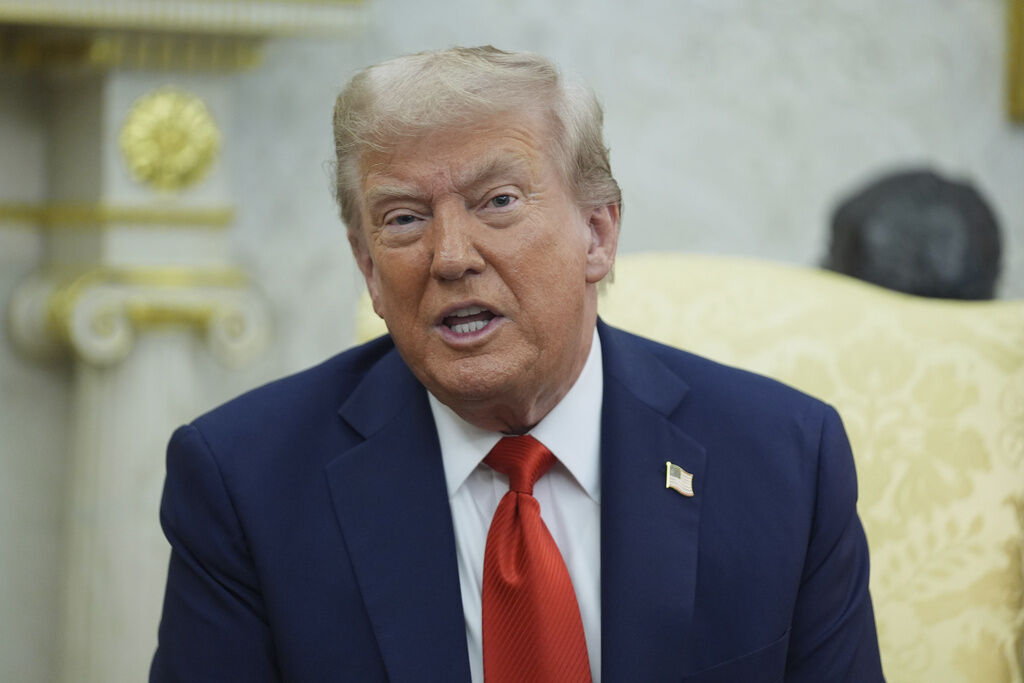
Trump calls Jared Polis a ‘sleazebag’ for keeping ‘elderly woman’ Tina Peters in jail, governor responds
The Washington Examiner
the-washington-examiner@coloradopolitics.com
Updated 2 days ago
President Donald Trump took to Truth Social on Wednesday to lambast Colorado Gov. Jared Polis over the case involving former Mesa County Clerk Tina Peters, who was sentenced to nine years in prison in 2024 for charges of giving unauthorized...
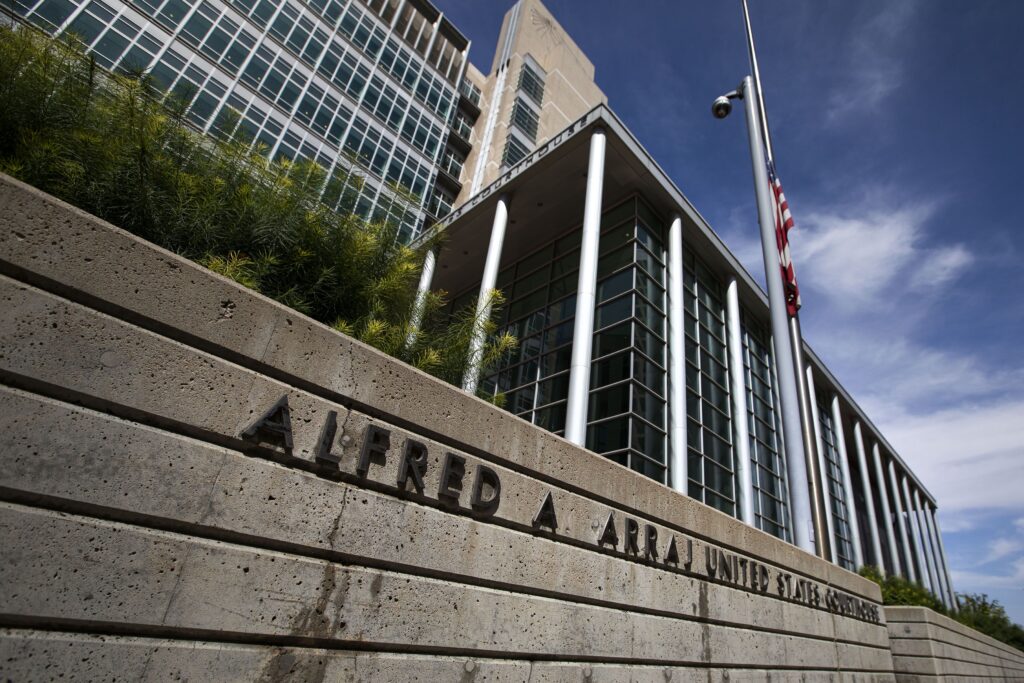
Federal judge recommends sanctions on plaintiffs for faulty case citations
Michael Karlik
michael.karlik@coloradopolitics.com
Updated 2 days ago
A federal judge recommended that a pair of self-represented plaintiffs be subject to a range of sanctions for including flawed and non-existent case citations in their filings, potentially by using artificial intelligence. “A federal court is not a workshop for...
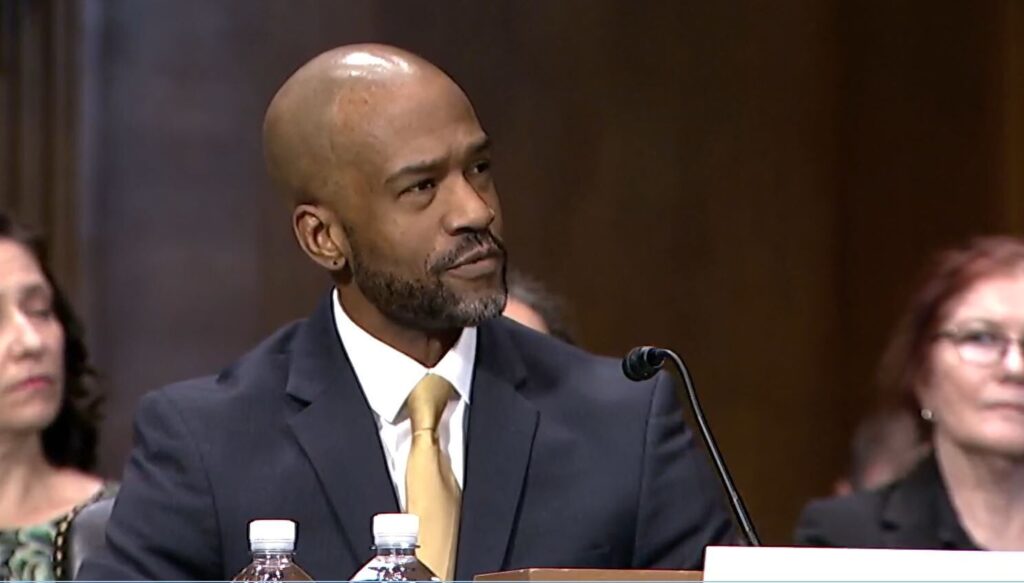
Federal judge deems Jeffco’s appeal ‘frivolous’ in jail death case
Michael Karlik
michael.karlik@coloradopolitics.com
Updated 2 days ago
A federal judge declared Jefferson County’s appeal of his evidentiary decision “frivolous” on Thursday, which enables him to continue handling the civil rights litigation even as an appellate court separately addresses the appeal. The order from U.S. District Court Judge...
Cause of death revealed for self-proclaimed Planned Parenthood gunman
Mackenzie Bodell
mackenzie-bodell@coloradopolitics.com
Updated 2 days ago
The self-proclaimed gunman in the Planned Parenthood shooting in Colorado Springs in November 2015 died from congestive heart failure and other related medical conditions, the Federal Bureau of Prisons said in a recent court filing. The Federal Bureau of Prisons...
Federal judge lets ex-Castle Rock employee’s discrimination lawsuit proceed
Michael Karlik
michael.karlik@coloradopolitics.com
Updated 3 days ago
A federal judge rejected the town of Castle Rock’s effort to dismiss an ex-employee’s age and gender discrimination lawsuit on Wednesday, while deeming the case a close call. Carl E. Filler, who was in his mid-60s when the town hired...
PREV
PREVIOUS

Hickenlooper's bill to reduce space junk unanimously passes Senate
The U.S. Senate on Tuesday unanimously passed a bill co-sponsored by Colorado Sen. John Hickenlooper that seeks to clear dangerous debris in Earth’s orbit. The bill, called the Orbital Sustainability Act, would create a program to research, develop and demonstrate technologies to safely remove debris and to create a new market for these services. The […]
Federal judge dismisses lawsuit over Denver encampment sweeps
Months after a federal appeals court said his intervention was a mistake, a judge has now dismissed a lawsuit that alleged Denver violated the constitutional rights of homeless residents by clearing encampments without proper notice. Nearly two years ago, U.S. District Court Judge William J. Martínez issued a preliminary injunction against the city after concluding […]